

P0420 on 2012-2013 Chevrolet Avalanche: Catalyst Efficiency Causes and Fixes
P0420 on a 2012-2013 Avalanche indicates low efficiency from the driver's side (Bank 1) catalytic converter. The most common cause is a failing converter, often due to engine oil consumption. However, always check for exhaust manifold leaks from broken bolts and faulty oxygen sensors first to avoid a costly misdiagnosis. A new OEM converter can cost over $1,000.
- P0420 on a 2012-2013 Avalanche points to a problem with the driver's side catalytic converter's efficiency.
- Do NOT immediately replace the catalytic converter. First, thoroughly inspect for exhaust manifold leaks, a known issue on these trucks.
- Use a scan tool to analyze oxygen sensor data. If the downstream sensor mimics the upstream sensor, the converter is likely bad.
- Always fix underlying problems like engine misfires or rich fuel conditions before installing a new catalytic converter to prevent repeat failure.
- If replacing parts, consider using high-quality OEM or reputable aftermarket brands like ACDelco, Denso, or Walker, as cheap parts can cause the code to return.
What's Unique About the 2012-2013 Chevrolet AVALANCHE
On these GMT900 trucks, the P0420 code is extremely common and frequently misdiagnosed. While catalytic converter failure is a frequent final outcome, these vehicles are notorious for two specific upstream problems: 1) Exhaust manifold leaks due to broken bolts, especially the rearmost bolt on the driver's side which is exposed to high thermal stress. This leak allows extra oxygen into the exhaust, which fools the oxygen sensors and incorrectly triggers a P0420 code. 2) Excessive oil consumption related to the Active Fuel Management (AFM) system, as detailed in TSB 10-06-01-008M, can foul the catalytic converter with burnt oil, leading to its premature failure.
Diagnostic Flowchart
Tap your situation to follow the diagnostic path that matches what you're seeing on this vehicle.
Symptoms You May Notice
- Check Engine Light is on
- Reduced engine power and acceleration
- Decreased fuel efficiency
- A sulfur or "rotten egg" smell from the exhaust
- Rattling noises from the exhaust if the converter's internal structure has broken apart
- A distinct ticking or tapping sound from the engine bay, especially on a cold start, which often indicates an exhaust manifold leak.
- Replacing the catalytic converter when the actual problem is a less expensive exhaust manifold leak. This is the most common misdiagnosis on this platform.
- Replacing oxygen sensors without first confirming there are absolutely no exhaust leaks.
- Using cheap, low-quality 'universal' or non-CARB compliant aftermarket catalytic converters that don't have enough precious metals and cause the P0420 code to return within a few months.
- Replacing the catalytic converter without addressing the root cause of its failure, such as AFM oil consumption or engine misfires, leading to the new converter failing as well.
Most Likely Causes
- Failing Catalytic Converter 🔴 High Probability Catalytic converters are wear items, but on this platform, they often fail prematurely due to contamination from excessive oil consumption linked to the AFM system. Engine misfires or a persistent rich fuel condition can also superheat and melt the internal substrate.
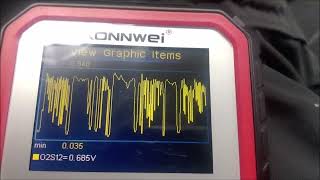
How to confirm: Use a scan tool to watch the live data from the Bank 1 Sensor 1 (upstream) and Bank 1 Sensor 2 (downstream) oxygen sensors. If the downstream sensor's voltage graph mimics the rapidly fluctuating graph of the upstream sensor, the converter is not working. 🎬 See how to use live data to distinguish sensors from converters. An infrared thermometer can also be used; the outlet of a working converter should be at least 100°F hotter than the inlet. A cooler outlet suggests a dead or clogged converter.
Typical fix: Replace the Bank 1 (driver's side) catalytic converter assembly. It is critical to fix any underlying engine issues (especially oil consumption or misfires) first, or the new converter will also fail quickly. Many owners report that only OEM or high-quality aftermarket converters (like MagnaFlow OEM Grade) will keep the code from returning.
Est. part cost: $400-$1500 - Exhaust Leak 🟡 Medium Probability The 5.3L V8 engines in these trucks are notorious for exhaust manifold bolts breaking due to thermal stress. The rearmost bolt on the driver's side (Bank 1) is a common failure point. This creates a leak that lets in unmetered air, confusing the O2 sensors and causing a false P0420 code.
How to confirm: Perform a visual inspection of the driver's side exhaust manifold, looking for black soot trails around the ports or a missing bolt head, particularly the one closest to the firewall. A smoke test is the most definitive way to find small leaks. You may also hear a loud ticking sound from the engine bay on a cold start that quiets down as the engine warms and the metal expands.
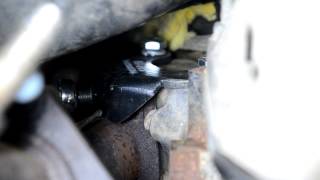
Typical fix: Replace the leaking exhaust manifold gasket and any broken bolts. If a bolt is broken flush with the cylinder head, it may need to be drilled out and extracted, which is a difficult job. Aftermarket repair brackets (e.g., from Kral Auto Parts or Dorman) can be installed to clamp the manifold down without removing the broken bolt, saving significant time and money. 🎬 Watch: How to use a repair bracket for broken manifold bolts.
Est. part cost: $20-$150 - Faulty Downstream (Post-Cat) Oxygen Sensor 🟡 Medium Probability Oxygen sensors are wear items that become less accurate with age. A lazy or failing sensor can send incorrect data to the computer, falsely triggering a P0420 code. Given the age of the vehicle, sensor failure is a strong possibility.
How to confirm: Test the sensor's functionality using a scan tool to monitor its voltage readings at a steady RPM. A healthy downstream sensor should show a relatively stable voltage (typically >0.6V). If it's stuck, switching rapidly like the upstream sensor (with no exhaust leaks present), or not responding, it needs replacement.
Typical fix: Replace the Bank 1, Sensor 2 (driver's side, downstream) oxygen sensor. The OEM part is GM/ACDelco #12718669 (supercedes 213-3866). It is often recommended to use OEM or Denso sensors for reliability.
Est. part cost: $40-$120 - Engine Performance Issues ⚪ Low Probability Issues like engine misfires (from bad spark plugs or coils) or a rich fuel condition (from leaking injectors) can dump unburned fuel into the exhaust, which superheats and destroys the catalytic converter.
How to confirm: Check for other trouble codes, especially misfire codes (P0300-P0308) or fuel trim codes (P0172, P0175). Address and fix any other codes before diagnosing the P0420.
Typical fix: Repair the underlying cause, which could involve replacing spark plugs, ignition coils, or fuel injectors.
Est. part cost: $50-$400
Rare But Worth Checking
- AFM-Related Oil Consumption:
Diagnosis Steps
- Scan for all diagnostic trouble codes. If any other codes are present (especially for misfires, fuel system, or lean conditions), diagnose and repair them first.
- Perform a thorough visual and audible inspection of the exhaust system. Start the engine when cold and listen for a distinct 'ticking' noise from the engine bay that points to an exhaust manifold leak. Visually inspect the Bank 1 (driver's side) exhaust manifold for black soot trails or broken/missing bolts, especially the rearmost bolt near the firewall.
- If an exhaust leak is suspected but not obvious, perform a smoke test to pinpoint its exact location. Do not proceed until you are certain there are no leaks.
- If no leaks are found, use a scan tool to observe the live data stream for the upstream (Bank 1, Sensor 1) and downstream (Bank 1, Sensor 2) oxygen sensors at a steady 2,000-2,500 RPM.
- A healthy system will show the upstream sensor fluctuating rapidly between ~0.1V and ~0.9V, while the downstream sensor remains relatively steady and stable (e.g., above 0.6V).
- If the downstream sensor's voltage is fluctuating in a similar pattern to the upstream sensor, the catalytic converter has most likely failed.
- If the downstream sensor's voltage is flat, stuck, or slow to respond, the sensor itself is likely faulty and should be replaced.
Parts You'll Likely Need
- Catalytic Converter (Bank 1)
(OEM #GM 19418926 (replaces 15896590, 20854453))— This is the most common direct cause for a P0420 code when other issues like leaks and sensor failures have been ruled out. Often fails due to contamination.
Trusted brands: ACDelco (OEM), MagnaFlow (OEM Grade), Walker Exhaust
OEM price range: $800-$1500
Aftermarket price range: $400-$800 - Downstream Oxygen Sensor (Bank 1, Sensor 2)
(OEM #GM 12718669 (replaces 213-3866))— A faulty downstream O2 sensor can send incorrect readings, leading to a misdiagnosis of a bad catalytic converter. It's often replaced as a key diagnostic step.
Trusted brands: ACDelco (OEM), Denso, NTK/NGK, Bosch
OEM price range: $70-$120
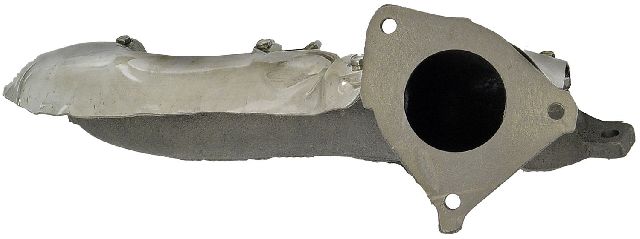
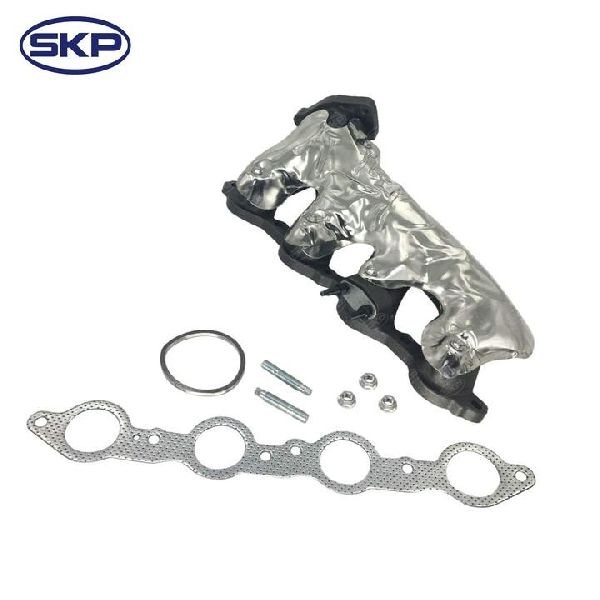
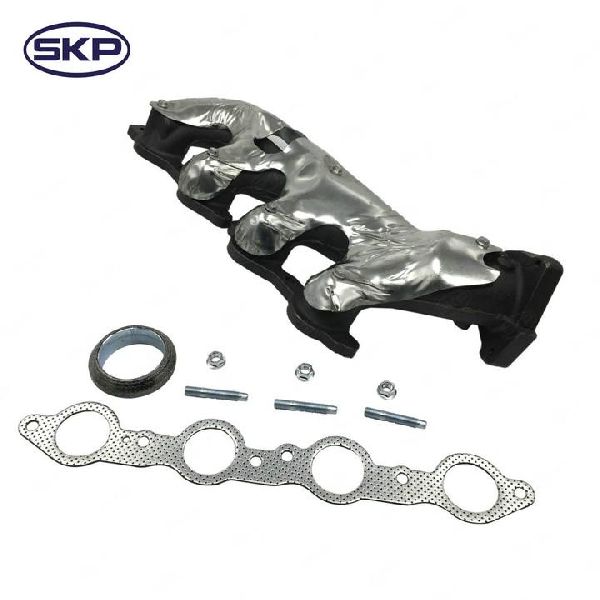
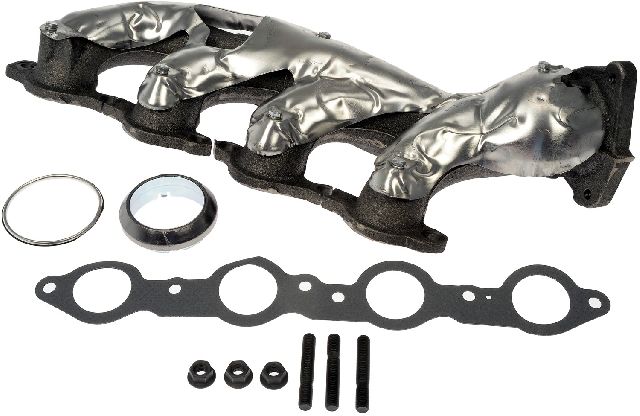
Aftermarket price range: $40-$80 - Exhaust Manifold Gasket and Bolt Kit — Required to fix the very common exhaust manifold leaks on the 5.3L V8 engine that can trigger a false P0420 code. Often the rearmost bolt breaks.
Trusted brands: Fel-Pro, ACDelco, Dorman
OEM price range: $40-$70
Aftermarket price range: $20-$50
Related Codes That Often Appear With This One
- P0430 — This is the same catalyst efficiency code but for Bank 2 (passenger side). It's common for both converters to degrade at a similar rate due to age or systemic issues like oil consumption, causing both codes to appear together.
- P0300-P0308 — These are misfire codes. An ongoing misfire allows unburned fuel to enter the exhaust, which can quickly overheat and destroy the catalytic converter, directly causing a P0420 code.
- P0171 / P0174 — These 'System Too Lean' codes can be caused by the same exhaust manifold leak that triggers a false P0420, as the unmetered air affects the upstream O2 sensor readings.
- P0172 / P0175 — These codes indicate a rich fuel condition on Bank 1 and Bank 2, respectively. A rich condition can overheat and damage the catalytic converter over time.
Technical Service Bulletins (TSBs) & Recalls
- Catalytic Converter Break-In Information To Prevent DTCs P0420 And/Or P0430: This bulletin explains that on new or low-mileage vehicles (or after a converter replacement), the P0420/P0430 diagnostics are disabled for the first hour of engine run time to allow the new converter to break in. If a battery disconnect occurs, this timer can be reset, potentially causing a false code. It provides a specific drive cycle procedure to complete the break-in and clear the code if it was set prematurely.
- Excessive Engine Oil Consumption: This critical TSB addresses excessive oil consumption on 5.3L V8 engines with Active Fuel Management (AFM). The cause is linked to the AFM pressure relief valve and PCV system, leading to fouled piston rings. This oil burning contaminates and ultimately destroys the catalytic converters, making it a primary root cause for recurring P0420/P0430 codes.
Platform-Specific Known Issues
- A Technical Service Bulletin, #PIP3119P, was issued for some 2013 models where P0420 or P0430 codes could appear on low-mileage vehicles due to an incomplete converter break-in cycle, often after a battery disconnect. A specific drive cycle is required to clear it.
- TSB #10-06-01-008M details the widespread issue of excessive oil consumption due to the Active Fuel Management (AFM) system, which is a primary underlying cause of catalytic converter failure on these trucks.
- The rearmost exhaust manifold bolt on both banks is extremely prone to breaking, causing an exhaust leak that is frequently misdiagnosed as a failed catalytic converter.
Mechanic-Grade Diagnostic Values
- Downstream O2 Sensor (Bank 1, Sensor 2) Voltage — expected: Relatively steady voltage, typically above 0.5V - 0.6V at steady RPM.. Failure: Voltage fluctuates rapidly between ~0.1V and ~0.9V, mimicking the upstream sensor, or is stuck at a fixed voltage.
- Upstream O2 Sensor (Bank 1, Sensor 1) Voltage — expected: Constantly fluctuating (switching) between approximately 0.1V (lean) and 0.9V (rich).. Failure: Slow to switch, stuck at a specific voltage, or does not reach peak high/low voltages.
- Mode $06 Catalyst Monitor Test (Bank 1) — expected: The measured value should be below the maximum threshold set by the manufacturer. For example, on some GM vehicles, the test value might be a unitless number where a lower value is better.. Failure: The test value exceeds the maximum limit specified in the Mode $06 data, indicating the PCM has judged the converter as inefficient.
Hidden / Shadow Codes Worth Checking
- Mode $06, TID $A2: This is not a DTC, but a diagnostic monitor test result for the 'Passive monitoring of the oxidation catalyst efficiency (Bank 1)'. It provides the raw data the ECU uses to determine if the converter passes or fails its efficiency test. A technician can view this data to see if the converter is borderline or has definitively failed, sometimes before a pending P0420 code is even set. (see via A professional-grade OBD-II scan tool with Mode $06 capabilities is required. The specific Test ID (TID) or Monitor ID (MID) can vary, but for GMLAN vehicles it is often under MIDs $A2-$A7.)
Scan Tool Commands That Help
- Tech 2 / GDS2: Catalytic Converter Break-In Drive Cycle — As per TSB #PIP3119P, this procedure should be performed after installing a new catalytic converter to prevent a false P0420/P0430 from setting. The diagnostic test is disabled for the first hour of engine run time on a new vehicle, but this protection is not present after a repair. A specific drive cycle is needed to properly 'out-gas' and break in the new converter mat material.
Wiring & Ground Locations
- G104 — On the rear of the driver's side (left) cylinder head. A ground strap often connects from here to the firewall.. This is a critical engine-to-chassis ground. A poor connection at G104 can cause erratic sensor readings and create difficult-to-diagnose electrical issues for components grounded to the engine block, including potentially affecting the ECM's sensor inputs.
- G102 — Located at the left rear of the engine, grounds the 8 ignition coils.. While not directly tied to the O2 sensors, a bad ground here can lead to weak spark and intermittent misfires. An engine misfire is a primary cause of catalytic converter failure, which directly leads to a P0420 code.
- Bank 1 Sensor 2 O2 Sensor Connector — On the driver's side of the vehicle, downstream of the catalytic converter, where the sensor's pigtail connects to the main vehicle harness.. This is the primary input for the catalyst efficiency test. Technicians must test for proper voltage and signal at this connector's pins. Damage from road debris or corrosion here can cause a false code.
Real Owner Repair Stories
- Reddit user in r/MechanicAdvice (GM Truck with a V8) — P0420 code returned after replacing the catalytic converter.
❌ Tried (didn't work) Replacing the catalytic converter, Replacing O2 sensors
✅ What actually fixed it The user had a lean code (Bank 2) that they had been ignoring. The root cause was a corroded ground wire. After cleaning the grounds and replacing the O2 sensors again, the code did not return after a break-in period. The key was that an underlying fuel delivery/sensor issue was destroying the parts. - GenVibe forum user (different vehicle, same code principle) (Pontiac Vibe) — Persistent P0420 code immediately returning after clearing.
❌ Tried (didn't work) Replacing the catalytic converter with a cheap aftermarket unit, Replacing O2 sensors
✅ What actually fixed it The user installed a spark plug non-fouler on the downstream O2 sensor to pull it out of the direct exhaust stream. This 'tricked' the sensor into reporting a steady, clean reading, which kept the P0420 code from setting and allowed the vehicle to pass an emissions test. This does not fix the underlying problem but is a common last-resort workaround.
"I Checked Everything" — The Actual Cause
- A common scenario is a P0420 code with no audible or visible exhaust leak, and a smoke test that comes back clean. The actual cause is often a hairline crack in the exhaust manifold that only opens up under the thermal expansion of a hot, running engine. This is why a cold start 'tick' that goes away is a major clue, even if a later smoke test on a warm engine shows nothing.
OEM Part Supersession History
213-3866→12718669— Standard part lifecycle update by GM.
Heads up: The part number 213-3866 is often listed as the upstream sensor for this vehicle, while other sources list it as the superseded downstream part. It is critical to verify the correct part for the specific position (upstream vs. downstream) using the vehicle's VIN, as they are not interchangeable.
Helpful Videos
We Have This Part in Stock



The information in this article is provided for general reference and educational purposes only. Vehicle specifications, procedures, and part compatibility can vary by production date, trim level, and region. Always consult your vehicle's factory service manual and verify part numbers before purchasing or performing repairs. Safety-critical components such as airbags, seat belts, and braking systems should be installed by a qualified professional.
- Chevrolet AVALANCHE:
- 🎬 Helpful Videos
- 🛍️ Shop This Part
- What's Unique About the 2012-2013 Chevrolet AVALANCHE
- Diagnostic Flowchart
- Symptoms You May Notice
- Most Likely Causes
- Rare But Worth Checking
- Diagnosis Steps
- Parts You'll Likely Need
- Related Codes That Often Appear With This One
- Technical Service Bulletins (TSBs) & Recalls
- Platform-Specific Known Issues
- Mechanic-Grade Diagnostic Values
- Hidden / Shadow Codes Worth Checking
- Scan Tool Commands That Help
- Wiring & Ground Locations
- Real Owner Repair Stories
- "I Checked Everything" — The Actual Cause
- OEM Part Supersession History
- 🎟️ Get 5% Off