

P0420 on 2002-2006 Chevrolet Avalanche 1500: Catalyst Causes & Fixes
On a 2002-2006 Avalanche 1500, P0420 typically points to a failed catalytic converter on the driver's side due to age and high mileage. However, before spending over $2,000 on a new converter, it is critical to rule out much cheaper and common causes like exhaust leaks from broken manifold bolts and faulty downstream oxygen sensors. Proper diagnosis is key to avoiding a costly misdiagnosis.
- P0420 on a 2002-2006 Avalanche points to an inefficient catalytic converter on the driver's side (Bank 1).
- Do not immediately replace the catalytic converter. It is expensive and often misdiagnosed.
- First, thoroughly inspect for exhaust leaks (especially broken manifold bolts) and test the oxygen sensors using a scan tool.
- If an engine misfire or fuel system code is also present, you must fix that problem first to avoid destroying a new converter.
- Due to the age of the vehicle, if sensors and the exhaust system are confirmed to be in good working order, the original catalytic converter has likely reached the end of its service life.
What's Unique About the 2002-2006 Chevrolet AVALANCHE 1500
For the first-generation Avalanche (built on the GMT800 platform), now two decades old, catalytic converter failure is a common result of high mileage and age. The 5.3L V8 engines in these trucks are notoriously prone to issues that shorten a converter's life, especially exhaust manifold leaks from broken bolts, which is a very common cause of a false P0420. A notable GM Technical Service Bulletin (PIP3119P) also exists for this era, acknowledging that P0420 codes could appear at low mileage and that the diagnostic test for this code was even disabled for the first hour of engine run time on new vehicles to allow for a converter 'break-in' period.
Diagnostic Flowchart
Tap your situation to follow the diagnostic path that matches what you're seeing on this vehicle.
Symptoms You May Notice
- Check Engine Light is on
- Reduced engine power or acceleration, especially under load
- A sulfur or "rotten egg" smell from the exhaust
- Decreased fuel economy
- Rough idle or engine misfires
- A ticking or hissing noise from the engine bay when cold, suggesting an exhaust manifold leak
- Immediately replacing the catalytic converter without first testing the oxygen sensors and thoroughly checking for exhaust leaks.
- Replacing the catalytic converter without fixing an existing exhaust leak, leading to the new converter also triggering a P0420 code.
- Replacing O2 sensors when the catalytic converter is genuinely at the end of its life.
- Using cheap, low-quality aftermarket catalytic converters that lack sufficient precious metals and cause the code to return.
Most Likely Causes
- Failed Catalytic Converter 🔴 High Probability Due to the age and typical mileage of these trucks, the catalytic converter's internal materials (platinum, palladium, rhodium) simply wear out and lose their effectiveness. Contamination from burning oil or coolant, or damage from engine misfires, accelerates this failure.
How to confirm: After confirming O2 sensors and the exhaust system are functioning correctly, the converter is the remaining culprit. A scan tool graphing both O2 sensors will show the downstream sensor mimicking the upstream sensor's activity. An infrared thermometer can also be used to check the converter's inlet and outlet temperatures; a working converter should be significantly hotter at the outlet.
Typical fix: Replace the Bank 1 (driver's side) catalytic converter assembly. Many owners report that only OEM or high-quality aftermarket converters solve the problem long-term.
Est. part cost: $500-$2800 - Failed Downstream Oxygen (O2) Sensor 🟡 Medium Probability The rear O2 sensor (Bank 1, Sensor 2) can become 'lazy' or biased with age, sending incorrect data to the PCM and falsely triggering a P0420 code. It's a common wear item and a frequent misdiagnosis point.
How to confirm: Use a scan tool to monitor the live voltage of the Bank 1 Sensor 2. It should be relatively stable (typically >0.5V) at a steady RPM. If it's stuck, flat, or fluctuating rapidly like the upstream sensor, it's likely faulty. Swapping the downstream sensors from Bank 1 and Bank 2 is a good diagnostic trick; if the code changes to P0430, the sensor is bad.
Typical fix: Replace the Bank 1, Sensor 2 (driver's side, after the converter) oxygen sensor. Using OEM ACDelco or quality brands like Denso or NTK is highly recommended.
Est. part cost: $40-$120 - Exhaust Leak 🟡 Medium Probability The 5.3L V8 engines are known for exhaust manifold bolts breaking, especially the rear-most bolts near the firewall, due to thermal cycles. This creates a leak that allows oxygen into the exhaust stream before the O2 sensors, which corrupts the readings and can trigger a P0420 code.
How to confirm: Perform a visual inspection of the exhaust manifolds for black soot trails or missing/broken bolt heads. Listen for a distinct 'ticking' sound when the engine is cold that may quiet down as it warms up. A smoke test can definitively locate hard-to-see leaks.
Typical fix: Repair the leak. This may involve replacing gaskets and hardware. Extracting broken bolts can be difficult; aftermarket exhaust manifold bolt repair clamps are a common solution.
Est. part cost: $20-$400 - Engine Performance Issues ⚪ Low Probability Ignored issues like engine misfires (from bad spark plugs or coils) or a rich fuel condition (from a leaking injector) can send unburned fuel into the exhaust, which superheats and destroys the catalytic converter's internal structure over time.
How to confirm: Check for other diagnostic trouble codes, especially misfire codes (P0300-P0308) or fuel trim codes (P0171, P0172, P0174, P0175). A history of misfires is a strong indicator.
Typical fix: Resolve the root cause of the misfire or fuel system problem before replacing the catalytic converter, or the new converter will also fail.
Est. part cost: $50-$500
Rare But Worth Checking
- Contaminated Fuel: Using leaded fuel (if it can even be found) or significant contamination with other substances like E85 in a non-Flex Fuel vehicle can quickly poison the catalyst materials.
- Internal Engine Wear: If the engine is burning excessive oil or coolant due to worn piston rings or failing gaskets, these contaminants will coat the catalytic converter and render it useless over time. This is a common killer of replacement converters.
Diagnosis Steps
- Check for any other stored DTCs with an OBD-II scanner. Address any misfire, fuel system, or other O2 sensor codes first, as they are often the root cause.
- Visually inspect the exhaust system from the engine to the tailpipe. Look for cracks in the exhaust manifolds, broken bolts (especially the rear-most ones), and black soot indicating a leak. Listen for a cold-start 'tick'.
- Use a scan tool with live data graphing capabilities. Warm up the engine to operating temperature.
- At a steady 2,500 RPM, observe the voltage signals for Bank 1 Sensor 1 (upstream) and Bank 1 Sensor 2 (downstream).
- The upstream sensor (B1S1) should fluctuate rapidly between approximately 0.1 and 0.9 volts. The downstream sensor (B1S2) should remain relatively steady and stable, typically above 0.5-0.6 volts.
- If the downstream sensor's graph mimics the rapid switching of the upstream sensor, the catalytic converter is not storing oxygen and has likely failed.
- If the downstream sensor signal is flat, stuck, or unresponsive, the sensor itself is the likely problem.
- As an additional test, use an infrared thermometer to measure the temperature of the exhaust pipe before and after the catalytic converter. The outlet should be at least 100°F hotter than the inlet on a working converter.
- If all sensors and the exhaust system check out, the catalytic converter is the most likely cause of the code.
Parts You'll Likely Need
- Catalytic Converter (Bank 1)
(OEM #19418941)— This is the most common failure for a P0420 code on a high-mileage vehicle, after other causes are ruled out.
Trusted brands: ACDelco (OEM), Walker, MagnaFlow, AP Exhaust
OEM price range: $1975-$2900
Aftermarket price range: $450-$950 - Downstream Oxygen Sensor (Bank 1, Sensor 2)
(OEM #12587785)— This sensor is responsible for monitoring the converter's efficiency. It can fail and give a false P0420 reading. For a 2005 model, this is the correct part number for the rear sensor.
Trusted brands: ACDelco (OEM), Denso, NGK/NTK, Bosch
OEM price range: $80-$150
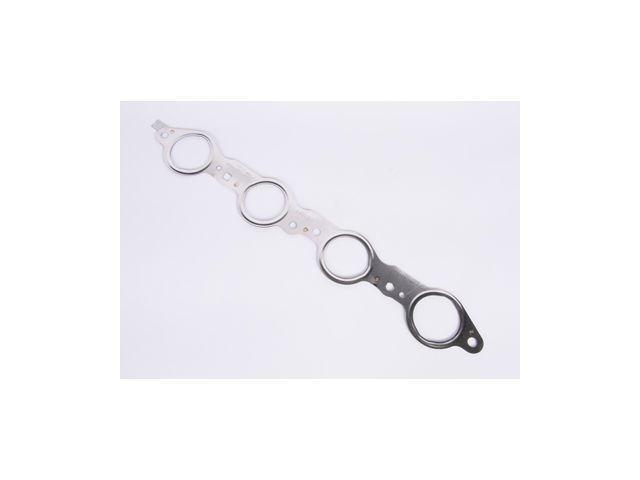
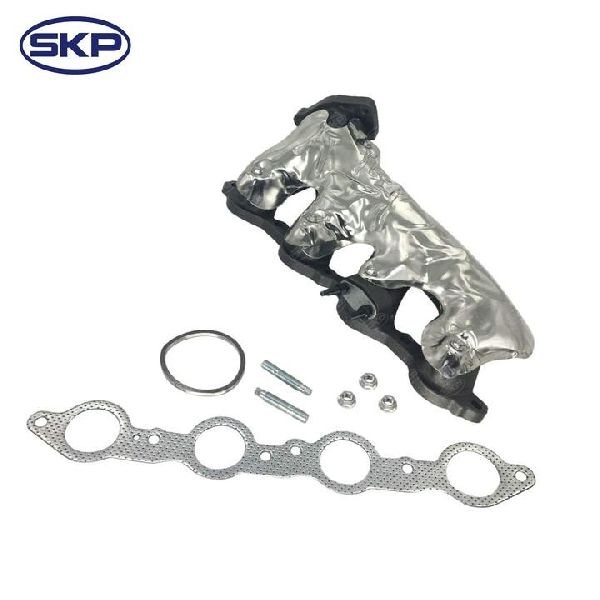
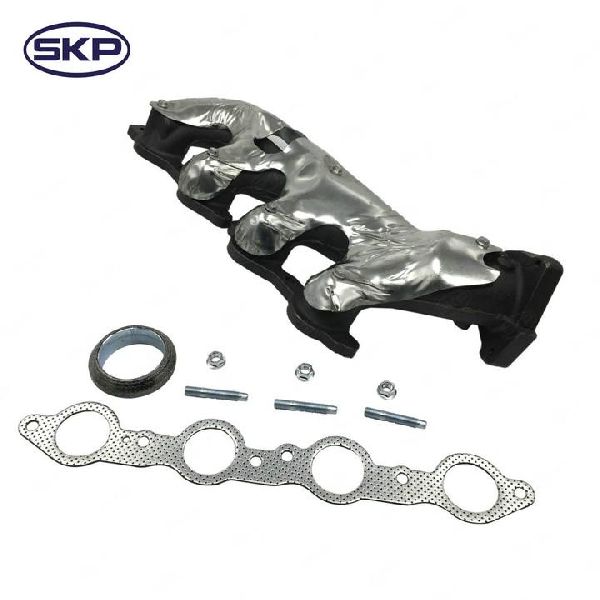
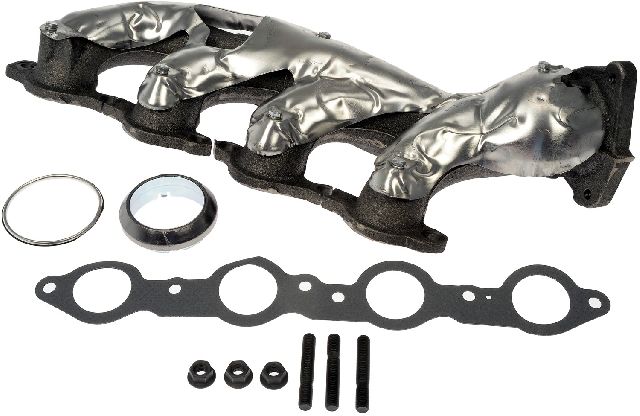
Aftermarket price range: $40-$90 - Exhaust Manifold Gasket & Bolts — Required if an exhaust leak at the manifold is found, which is a common issue on these trucks due to broken bolts.
Trusted brands: Fel-Pro, ACDelco, Dorman
OEM price range: $40-$80
Aftermarket price range: $20-$50
Related Codes That Often Appear With This One
- P0430 — This is the identical code for Bank 2 (passenger side). It's common for both converters to fail around the same time due to age and similar operating conditions.
- P0300-P0308 — These are misfire codes. An engine misfire is a primary cause of catalytic converter failure because it allows raw, unburned fuel to enter the exhaust, which can melt the catalyst substrate.
- P0171 / P0174 — These 'System Too Lean' codes can indicate an unmetered air leak, such as from a broken exhaust manifold bolt, which is a known root cause for a false P0420 on this platform.
Technical Service Bulletins (TSBs) & Recalls
- PIP3119P - Catalytic Converter Break-In Information To Prevent DTCs P0420 And/Or P0430.
Platform-Specific Known Issues
- Broken Exhaust Manifold Bolts: The 5.3L V8 is well-known for the rear-most exhaust manifold bolts breaking off due to thermal stress, causing an exhaust leak right before the upstream O2 sensor. This leak introduces oxygen, fools the sensors, and is a very common cause of a false P0420 code. A ticking noise on a cold start is the classic symptom.
- TSB #PIP3119P: Catalyst Break-In: General Motors issued this TSB for a wide range of V8 trucks, including the 2002-2006 Avalanche. It explains that on new vehicles, the P0420/P0430 diagnostic is disabled for the first hour of engine run time to allow the converter to 'break-in'. It also provides a specific drive cycle procedure to perform after a converter replacement to prevent a false code from setting.
- Owner Experiences with Aftermarket Converters: Forum discussions frequently highlight that cheap, non-CARB compliant aftermarket catalytic converters may not have enough precious metal loading to satisfy the PCM's efficiency test, causing the P0420 code to return shortly after replacement. Many owners who solved the problem permanently did so by using an OEM or a high-quality, EPA-compliant aftermarket part.
Mechanic-Grade Diagnostic Values
- Mode $06, Catalyst Efficiency Monitor (Bank 1) — expected: The test value should be below the maximum threshold specified by the PCM. A passing value indicates the converter's switching ratio is within limits.. Failure: The measured value exceeds the PCM's maximum allowable threshold, indicating the converter is not storing enough oxygen.
- Downstream O2 Sensor (B1S2) Voltage at Steady 2000-2500 RPM — expected: A relatively stable voltage, typically holding steady above 0.5V or 0.6V.. Failure: The voltage fluctuates rapidly, mimicking the upstream O2 sensor's waveform (0.1V to 0.9V). This shows oxygen is passing through the converter unprocessed.
Hidden / Shadow Codes Worth Checking
- Mode $06, Test ID $21 (or similar for GMT800): This is not a trouble code but the specific onboard test for Catalyst Efficiency Bank 1. Viewing this allows a technician to see the raw performance data of the catalytic converter and how close it is to the failing threshold, sometimes before the P0420 code is set. (see via Requires a professional-grade scan tool (like a Tech 2 or modern equivalent) that can display Mode $06 test data.)
Scan Tool Commands That Help
- Tech 2 / Professional Scan Tool: GM Idle Catalyst Monitor Test — This is a specific diagnostic routine run at idle where the PCM intentionally forces rich and lean conditions to measure the catalyst's oxygen storage capacity. Observing the rear O2 sensor response during this test can definitively confirm if the converter is functioning correctly.
Wiring & Ground Locations
- G103 — Located at the left rear of the engine compartment on the cowl, above the brake booster.. This ground serves multiple critical components including the Powertrain Control Module (PCM) and the Data Link Connector (DLC). A poor connection here can cause erratic sensor readings and communication issues.
- G104 (or similar on engine block) — Typically located on the rear of the driver's side cylinder head.. This is a primary ground for the engine sensor data, including the oxygen sensors. A loose or corroded ground strap here can introduce noise and incorrect voltages into the O2 sensor signals, potentially causing a false P0420 code.
- PCM Connector C2 (Green) — At the Powertrain Control Module (PCM), located on the left front of the engine compartment.. Pin 65 (Tan/White wire) is the signal wire for the Bank 1 Sensor 2 (downstream) O2 sensor. Pin 66 (Purple/White wire) is the low reference. These pins can be tested for continuity and voltage to diagnose wiring issues between the sensor and the PCM.
Real Owner Repair Stories
- BobIsTheOilGuy forum user 'Gito' (2002 Silverado with 415,000 miles (mechanically identical to Avalanche)) — P0420 and P0440 codes present.
❌ Tried (didn't work) The user was advised by a muffler shop that the catalytic converter was likely bad.
✅ What actually fixed it The user decided to replace the original O2 sensors first due to the extremely high mileage. While the final outcome wasn't posted in a follow-up, the logical fix for a 415k-mile truck with original sensors would be their replacement before condemning an expensive converter. - Reddit user in r/MechanicAdvice (Not specified, but general P0420 case) — P0420 code appeared. Mechanic quoted for catalytic converter and O2 sensors.
❌ Tried (didn't work) The first replacement catalytic converter did not get up to temperature and still threw the code.
✅ What actually fixed it A second replacement catalytic converter was installed under warranty, which finally resolved the code. This highlights that even new parts can be defective.
OEM Part Supersession History
Varies by year→12587785 (ACDelco P/N 213-1702)— Part consolidation and minor updates over the production run.
Heads up: This part number is widely cited for the 2005 model year downstream sensor. Always verify the correct part number for your specific year and VIN, as early 2002 models may differ from later 2006 models.
Model Year Variations Within This Range
- 2003-2006: Most 2003 and newer 5.3L V8 models switched from drive-by-cable (DBC) to drive-by-wire (DBW) electronic throttle control. While this doesn't directly cause P0420, the PCM and some engine management logic differ.
- Mid-2004 to 2006: Starting in mid-2004, the 5.3L V8 engines received stronger, full-floating wrist pin connecting rods, an upgrade from the previous press-fit design. This improves engine durability but does not directly affect the P0420 diagnosis.
- 2002-2006: Horsepower ratings for the 5.3L V8 slightly increased through the generation, from around 285 hp in 2002 to 295 hp by 2006. This reflects minor tuning and component changes.
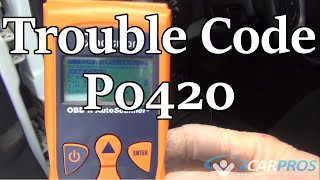
Helpful Videos
We Have This Part in Stock


The information in this article is provided for general reference and educational purposes only. Vehicle specifications, procedures, and part compatibility can vary by production date, trim level, and region. Always consult your vehicle's factory service manual and verify part numbers before purchasing or performing repairs. Safety-critical components such as airbags, seat belts, and braking systems should be installed by a qualified professional.
- Chevrolet AVALANCHE 1500:
- 🎬 Helpful Videos
- 🛍️ Shop This Part
- What's Unique About the 2002-2006 Chevrolet AVALANCHE 1500
- Diagnostic Flowchart
- Symptoms You May Notice
- Most Likely Causes
- Rare But Worth Checking
- Diagnosis Steps
- Parts You'll Likely Need
- Related Codes That Often Appear With This One
- Technical Service Bulletins (TSBs) & Recalls
- Platform-Specific Known Issues
- Mechanic-Grade Diagnostic Values
- Hidden / Shadow Codes Worth Checking
- Scan Tool Commands That Help
- Wiring & Ground Locations
- Real Owner Repair Stories
- OEM Part Supersession History
- Model Year Variations Within This Range
- 🎟️ Get 5% Off