

P0420 on 2012-2013 Cadillac Escalade EXT: Causes and Fixes for Catalyst Efficiency
On a 2012-2013 Escalade EXT, P0420 often points to a failed catalytic converter on Bank 1 (passenger side). However, before replacing this expensive part, you must rule out cheaper, common causes like a faulty downstream oxygen sensor or an exhaust leak from a cracked manifold, which is a known issue on these trucks. Active Fuel Management (AFM) related oil consumption is also a key underlying cause that can destroy the converter.
- P0420 means the passenger-side catalytic converter is inefficient, but the converter itself is not always the root cause.
- DO NOT immediately replace the catalytic converter. It is expensive and may not be the problem.
- First, thoroughly inspect for exhaust leaks, especially cracked exhaust manifolds, which are a known weak point on these trucks.
- Second, test the downstream (Bank 1, Sensor 2) oxygen sensor. Swapping it with the sensor from the other side is a free and effective diagnostic step.
- If you have any engine misfire codes (P0300-P0308), you must fix that problem first to avoid destroying a new catalytic converter.
What's Unique About the 2012-2013 Cadillac ESCALADE EXT
The 6.2L V8 (L94) engine in the Escalade EXT is known for specific issues that lead to a P0420 code. Cracked exhaust manifolds and broken manifold bolts are a very common problem on the GMT900 platform, creating pre-catalyst exhaust leaks that introduce oxygen and trigger a false code. Furthermore, the Active Fuel Management (AFM) system on the 2010+ 6.2L engines can lead to increased oil consumption, which contaminates and ruins both the O2 sensors and the catalytic converter's internal structure over time. GM Technical Service Bulletin (TSB) PIP3119N and its successor, PIP3119P, note that the P0420/P0430 diagnostics are disabled for the first hour of engine run time on a new vehicle to allow for converter break-in, acknowledging the sensitivity of the diagnostic system.
Diagnostic Flowchart
Tap your situation to follow the diagnostic path that matches what you're seeing on this vehicle.
Symptoms You May Notice
- Check Engine Light is on
- Vehicle will fail an emissions test
- Reduced fuel economy
- A ticking noise from the engine bay, especially when cold, which often points to an exhaust manifold leak
- Possible rotten egg (sulfur) smell from the exhaust
- Reduced engine power, especially during acceleration, if the converter is becoming clogged
- Replacing the catalytic converter without first checking for exhaust leaks or testing the oxygen sensors. An exhaust leak or a bad O2 sensor are much cheaper fixes and common causes of this code on the Escalade.
- Replacing an oxygen sensor when the catalytic converter has already been damaged by a long-term engine problem like a misfire or rich fuel condition.
- Performing an exhaust leak test only when the engine is hot. A common failure mode is a cracked manifold that leaks when cold but seals itself when the metal expands with heat, leading to a false 'no leak found' diagnosis.
Most Likely Causes
- Failed Catalytic Converter 🔴 High Probability Converters can be damaged by underlying issues common to this platform, such as engine misfires or oil contamination from AFM-related oil consumption. High mileage is also a factor. Many owners on forums for GMT900 trucks report that once one converter fails, the other is often not far behind.
How to confirm: Use a scan tool to observe live O2 sensor data. If the downstream (Sensor 2) voltage fluctuates rapidly like the upstream (Sensor 1) voltage, the converter is not storing oxygen and is likely bad. A temperature gun can also be used; a working converter should be significantly hotter at the outlet than the inlet (e.g., 100°F+ difference) after the engine is fully warmed up.
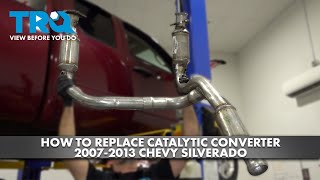
Typical fix: Replace the Bank 1 catalytic converter. 🎬 Watch this walkthrough on how to replace your catalytic converters It's critical to fix the root cause (e.g., misfires, oil burning) before replacement, or the new converter will also fail. Some owners report success with high-quality aftermarket brands like Magnaflow, though others have had the code return with non-OEM parts.
Est. part cost: $400-$900 for aftermarket, $1500+ for OEM. - Faulty Downstream Oxygen (O2) Sensor 🟡 Medium Probability O2 sensors wear out over time and can become 'lazy' or biased, sending inaccurate data that falsely triggers a P0420 code. Oil consumption from the AFM system can also foul the sensor, causing it to fail prematurely.
How to confirm: The easiest way is to swap the downstream O2 sensors between Bank 1 and Bank 2. Clear the codes and drive. If the code returns as P0430 (Bank 2), the sensor is faulty. Alternatively, graph the sensor's voltage on a scan tool; a healthy downstream sensor should show a relatively stable voltage, not flatlined at 0V or fluctuating wildly like the upstream sensor.
Typical fix: Replace the Bank 1, Sensor 2 (downstream) oxygen sensor. Sticking with OEM brands like ACDelco or Denso is highly recommended as these trucks can be sensitive to aftermarket sensors.
Est. part cost: $40-$100 for a quality aftermarket sensor (e.g., Denso, NTK, Bosch). - Exhaust Leak 🟡 Medium Probability Cracked exhaust manifolds and broken manifold-to-head bolts are a well-documented problem on these GM trucks. The rearmost bolts are especially prone to breaking. A leak before the rear O2 sensor allows oxygen to enter the exhaust, skewing sensor readings and tricking the ECM.
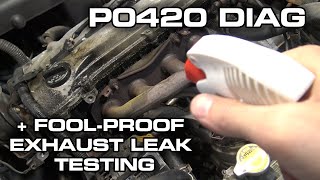
How to confirm: Visually inspect the exhaust manifolds and flanges for black soot marks or cracks. Listen for a distinct 'ticking' noise, especially on a cold start, that may quiet down as the engine warms and the metal expands. A professional smoke test is the most definitive way to find a leak.
Typical fix: Repair the leak. This may involve replacing the exhaust manifold, the manifold gasket, and/or repairing broken bolts. For broken bolts, some owners use clamp-style repair brackets as an alternative 🎬 See this easy fix for leaking exhaust manifolds and broken bolts to extracting the broken stud.
Est. part cost: $150-$500 depending on the severity and parts needed. - Engine Performance Issue ⚪ Low Probability Unaddressed engine misfires (potentially from failing AFM lifters) or rich/lean fuel conditions will send unburnt fuel into the exhaust, which superheats and destroys the catalytic converter's internal structure.
How to confirm: Check for other diagnostic trouble codes, especially misfire codes (P0300-P0308) or fuel trim codes (P0171, P0174). A history of these codes, even if not currently active, can point to the root cause of converter failure.
Typical fix: Diagnose and repair the root cause of the other codes first. This could involve replacing spark plugs, ignition coils, fuel injectors, or addressing vacuum leaks.
Est. part cost: $50-$500+
Rare But Worth Checking
- A bad fuel injector that is leaking can cause a rich condition, leading to carbon buildup that fouls the catalytic converter.
- An engine running too cool due to a faulty thermostat can cause a rich fuel mixture, eventually leading to a P0420 code. One owner of a similar GM truck reported this as the root cause.
- A poorly sealed air filter box can allow dirt and debris to bypass the filter, potentially damaging the O2 sensors and even the converter itself. This is a known issue on GMT900 trucks, documented in TSB #16-NA-111.
Diagnosis Steps
- Scan for all stored trouble codes. If any misfire (P030x), fuel trim (P017x), or O2 sensor circuit codes are present, diagnose and fix them first, as they are likely the root cause.
- Listen for a ticking noise from the engine bay on a cold start, which is a strong indicator of an exhaust manifold leak.
- Visually inspect the exhaust system from the engine to the rear O2 sensor. Look for cracks, holes, or black soot marks indicating a leak, paying close attention to the exhaust manifolds.
- Use a scan tool with live data to graph the voltage of the Bank 1 oxygen sensors. At a steady RPM (around 2500), the upstream sensor (Sensor 1) should fluctuate rapidly between ~0.1V and ~0.9V. The downstream sensor (Sensor 2) should show a much steadier, flatter voltage, typically above 0.5V.
- If the downstream sensor's voltage is fluctuating wildly and mimicking the upstream sensor, the catalytic converter is not functioning correctly.
- If the downstream sensor's voltage is flat or stuck (e.g., at 0V), test the sensor itself. Consider swapping the Bank 1 and Bank 2 downstream sensors to see if the fault moves to the other bank (triggering a P0430).
- Use an infrared thermometer to check the converter's temperature. After a 20-minute drive, the outlet pipe should be at least 100°F hotter than the inlet pipe. If it's the same temperature or cooler, the converter is likely clogged or inactive.
- If a new converter was recently installed and the code returned, perform the GM break-in drive cycle as described in TSB PIP3119P: drive at sustained highway speed for 25-30 minutes, stop and idle for 1 minute, then resume highway speed for another 10-15 minutes before re-running the diagnostic test.
- If all other possibilities are ruled out, the catalytic converter is the likely culprit.
Parts You'll Likely Need
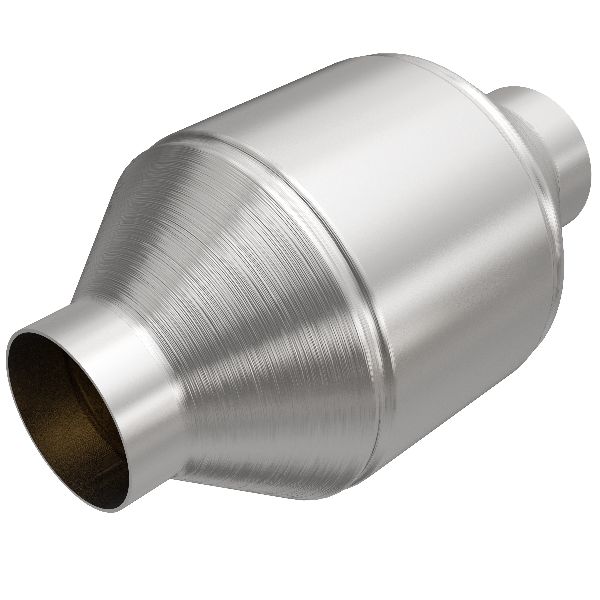
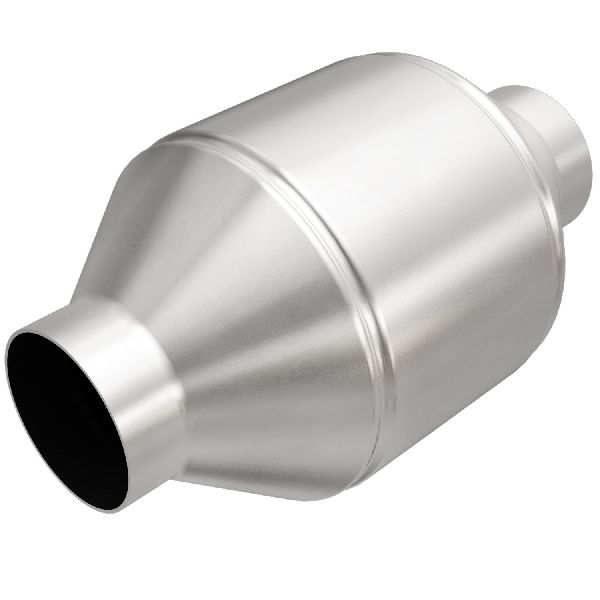
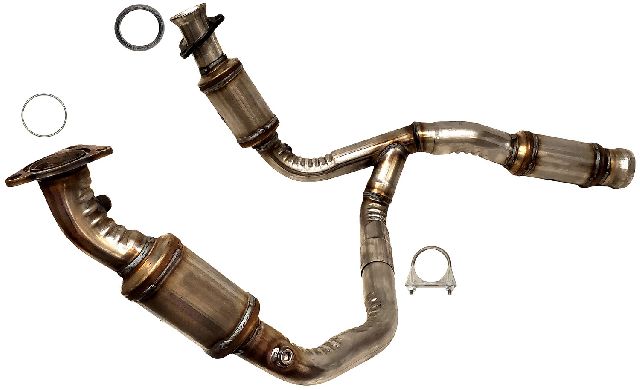
- Bank 1 Catalytic Converter
(OEM #19420110)— This is the part that directly triggers the code when its internal materials have degraded or been contaminated, which is common on high-mileage vehicles or those with underlying engine issues like AFM oil consumption.
Trusted brands: ACDelco (OEM), Walker Exhaust, Magnaflow
Related Codes That Often Appear With This One
- P0430 — This is the identical code for Bank 2 (driver's side). If the vehicle has high mileage or a systemic issue like oil consumption, both converters may be failing around the same time.
- P0300-P0308 — These are misfire codes. An engine misfire is a primary cause of catalytic converter failure, as it allows raw fuel to enter the exhaust and overheat the converter.
- P0171, P0174 — These are 'System Too Lean' codes for Bank 1 and Bank 2. A lean condition can increase combustion temperatures, stressing the converter. These codes can also be caused by an exhaust leak, which is a shared cause for P0420.
Technical Service Bulletins (TSBs) & Recalls
- PIP3119N / PIP3119P: Provides information on a required break-in period for new catalytic converters to prevent false P0420/P0430 codes. It details a specific drive cycle to perform after replacement.
Platform-Specific Known Issues
- A Technical Service Bulletin (PIP3119N, superseded by PIP3119P) was issued for similar models, noting that the diagnostics for P0420 and P0430 are disabled for the first hour of engine run time to allow for a new converter to break-in. This suggests a known sensitivity in the diagnostic system that can set false codes after a converter replacement if a specific drive cycle isn't performed.
- Owners on forums like 'Tahoe Yukon Forum' and 'PerformanceTrucks.net' frequently discuss P0420. A common story involves chasing the code by replacing O2 sensors, only to find the ultimate cause was either a bad catalytic converter due to high mileage/oil consumption or a hard-to-find exhaust manifold leak.
Mechanic-Grade Diagnostic Values
- Downstream O2 Sensor (Bank 1, Sensor 2) Voltage — expected: Relatively stable and steady voltage, typically above 0.5V (e.g., 650mV or 0.65V) when the engine is at a steady 2,500 RPM and in closed loop.. Failure: Voltage fluctuates rapidly between ~0.1V and ~0.9V, mimicking the upstream sensor's pattern. This indicates the catalyst is not storing oxygen.
- Upstream O2 Sensor (Bank 1, Sensor 1) Voltage — expected: Rapidly fluctuating voltage between approximately 0.1V and 0.9V at steady RPM.. Failure: A slow or non-responsive sensor that does not switch rapidly. This points to a bad upstream sensor, not necessarily a bad converter.
- Catalytic Converter Temperature Differential — expected: The outlet pipe temperature should be at least 100°F hotter than the inlet pipe temperature after the engine is fully warmed up and held at ~2,000 RPM.. Failure: The outlet temperature is the same as or cooler than the inlet temperature, indicating the converter is inactive or clogged.
- Mode $06 Catalyst Monitor Test (TID $01, CID $01) — expected: The test value should be below the maximum threshold set by the manufacturer. This data represents the catalyst's oxygen storage capacity.. Failure: The test value exceeds the maximum threshold, indicating the PCM has determined the converter's efficiency is degraded. This is a direct measurement of the data that triggers the P0420 code.
Scan Tool Commands That Help
- GM GDS2/Tech2 or equivalent professional scan tool: Catalyst System Test — This is a guided, active diagnostic function that commands the engine into specific conditions to definitively test the catalyst's oxygen storage capacity. It provides a more reliable pass/fail result than passively observing O2 sensor data during a drive cycle and should be used before condemning an expensive converter.
- Professional Scan Tool (e.g., Launch, Autel): Mode $06 - Catalyst Monitor Data — Use this to view the raw test results the PCM uses to determine catalyst efficiency before a DTC is even set. This can help identify a marginal converter that is close to failing or confirm that a new converter is performing well above the failure threshold.
Wiring & Ground Locations
- G103 — Located on the front of the right cylinder head (Bank 1 side).. This is a primary engine-to-chassis ground. A loose or corroded G103 can cause erratic voltage and signal issues for various engine sensors, including the oxygen sensors, potentially leading to incorrect readings and false trouble codes like P0420.
- Bank 1 Sensor 2 Connector — The downstream O2 sensor is located on the passenger side exhaust pipe, just after the catalytic converter. The wiring harness follows the frame rail up to a connector mounted near the transmission.. This connector and its wiring are exposed to road debris and heat. It's a common point of failure. Before replacing the sensor, inspect the harness for damage and the connector for corrosion or pushed-out pins.
Real Owner Repair Stories
- Reddit user on r/MechanicAdvice (2016 GMC Yukon XL Denali 6.2L (Similar GMT K2XX platform and engine)) — P0420 code for Bank 1.
❌ Tried (didn't work) Replaced the Bank 1 catalytic converter with a direct-fit, CARB-compliant MagnaFlow (51656) unit.
✅ What actually fixed it The P0420 code returned after 3 days and 400 miles of driving. The dealership advised that the ECM is very sensitive and often requires an OEM converter to resolve the code. The user was proceeding with further diagnosis related to lifter issues, highlighting that even a high-quality aftermarket converter may not solve the code if the vehicle's software is sensitive or another underlying issue exists. - Ford Truck Enthusiasts Forum User (2013 F-250 with 6.2L V8 and 171k miles (different platform, but similar code behavior)) — Recurring P0420 code. Bank 1 had an aftermarket cat already installed by a previous owner.
❌ Tried (didn't work) Clearing the code (it would return).
✅ What actually fixed it The owner replaced the entire catalytic converter assembly with a factory Ford part, and also performed a tune-up (plugs and wires). The combination of the OEM converter and tune-up resolved the CEL and improved engine performance at wide-open throttle.
OEM Part Supersession History
25824122, 20854458, 25904627→19420110— Standard part consolidation and updates by the manufacturer over the vehicle's lifespan.
Heads up: Part number 19420110 is the current GM Genuine Parts replacement for the Bank 1 (Right/Passenger Side) catalytic converter assembly for this vehicle. Using earlier part numbers is not recommended.
Model Year Variations Within This Range
- 2012-2013: For the 6.2L V8 engine (RPO code L94), there are no significant mechanical, electrical, or emissions-related differences between the 2012 and 2013 model years that would affect the diagnosis or common causes of a P0420 code. Both years use the same engine, AFM system, and exhaust components.
Helpful Videos
We Have This Part in Stock


The information in this article is provided for general reference and educational purposes only. Vehicle specifications, procedures, and part compatibility can vary by production date, trim level, and region. Always consult your vehicle's factory service manual and verify part numbers before purchasing or performing repairs. Safety-critical components such as airbags, seat belts, and braking systems should be installed by a qualified professional.
- Cadillac ESCALADE EXT:
- 🎬 Helpful Videos
- 🛍️ Shop This Part
- What's Unique About the 2012-2013 Cadillac ESCALADE EXT
- Diagnostic Flowchart
- Symptoms You May Notice
- Most Likely Causes
- Rare But Worth Checking
- Diagnosis Steps
- Parts You'll Likely Need
- Related Codes That Often Appear With This One
- Technical Service Bulletins (TSBs) & Recalls
- Platform-Specific Known Issues
- Mechanic-Grade Diagnostic Values
- Scan Tool Commands That Help
- Wiring & Ground Locations
- Real Owner Repair Stories
- OEM Part Supersession History
- Model Year Variations Within This Range
- 🎟️ Get 5% Off