

P0420 on 2004-2011 Cadillac Escalade EXT: Catalyst Causes and Fixes
Code P0420 on a 2004-2011 Escalade EXT almost always points to a failed catalytic converter on the driver's side (Bank 1). Before replacing this expensive part, first rule out exhaust leaks (especially cracked manifolds or broken bolts) and failing oxygen sensors, which are common and cheaper fixes. A replacement OEM converter can cost over $2,500, while aftermarket options range from $500 to $1,500.
- P0420 on your Escalade EXT means the driver's side catalytic converter is not working efficiently.
- The most likely cause is a failed catalytic converter, but always diagnose cheaper possibilities first.
- Check for exhaust leaks and test the downstream (Bank 1, Sensor 2) oxygen sensor before buying a new converter.
- Address any engine misfire or fuel system codes immediately, as they are a primary cause of converter damage.
- The year range spans two vehicle generations (2004-2006 and 2007-2011), so ensure you buy parts specific to your model year.
What's Unique About the 2004-2011 Cadillac ESCALADE EXT

The Escalade EXT's large V8 engines (6.0L and 6.2L) generate significant heat, which contributes to the eventual failure of the catalytic converters. A common failure point on these GM trucks is cracked exhaust manifolds or broken manifold bolts, which create leaks that can trigger a false P0420 code. Furthermore, the 2007-2011 models with the 6.2L V8 feature Active Fuel Management (AFM), which has been linked to increased oil consumption in some vehicles. This oil burning can contaminate and prematurely destroy the catalytic converters. Owners on forums frequently report P0420/P0430 codes appearing after 100,000 miles, often preceded by an exhaust tick on cold starts that indicates a manifold leak.
Diagnostic Flowchart

Tap your situation to follow the diagnostic path that matches what you're seeing on this vehicle.
Generation note: This range covers two generations: the first generation (2004-2006, GMT800 platform) with the 6.0L V8, and the second generation (2007-2011, GMT900 platform) with the 6.2L V8. While the P0420 code's meaning is the same, the specific catalytic converters, oxygen sensors, and exhaust manifold designs are different and not interchangeable. The GMT900 models are also susceptible to Active Fuel Management (AFM) related oil consumption issues that can damage the converters.
Symptoms You May Notice
- Check Engine Light is on
- Vehicle fails emissions inspection
- Reduced engine performance or acceleration, especially under load
- A sulfur or "rotten egg" smell from the exhaust
- Decreased fuel economy
- Audible exhaust leak or a ticking noise, particularly when the engine is cold
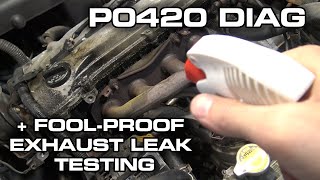
- Immediately replacing the catalytic converter without diagnosing O2 sensors or checking for exhaust leaks. An exhaust manifold leak is a very common issue on these trucks and can directly cause a false P0420. 🎬 Watch: How an exhaust leak can trigger false P0420 codes. Swapping O2 sensors side-to-side is a cheap and effective diagnostic step.
Most Likely Causes

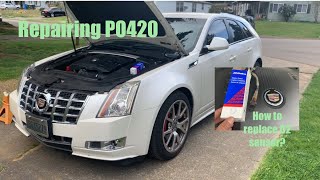
- Failed Catalytic Converter 🔴 High Probability Catalytic converters have a finite lifespan (typically 80,000-150,000 miles) and can be damaged by engine misfires, burning oil (a known issue on some 6.2L engines with AFM), or internal coolant leaks. The high exhaust temperatures from the large V8s contribute to wear over time. Forum discussions confirm this is the ultimate fix in many cases 🎬 See this step-by-step guide on fixing Cadillac P0420 codes. after other possibilities are ruled out.
How to confirm: After ruling out other causes, a technician can use a scan tool to view live O2 sensor data. A healthy downstream O2 sensor will show a steady voltage (typically >0.6V), while a failing converter will cause it to fluctuate similarly to the upstream sensor. An infrared thermometer can also be used to check for a temperature increase across the converter; the outlet should be at least 100°F hotter than the inlet. If there is little to no temperature change, it's not working.
Typical fix: Replace the Bank 1 (driver's side) catalytic converter assembly. It is often recommended to replace both converters at the same time, as they age at a similar rate.
Est. part cost: $400-$2600 - Faulty Downstream Oxygen (O2) Sensor 🟡 Medium Probability O2 sensors wear out and can become 'lazy' or send inaccurate readings, especially after 80,000-100,000 miles. This can trick the PCM into thinking the converter has failed. It's a very common diagnostic step to replace the O2 sensors before condemning the expensive converter.
How to confirm: Use a scan tool to graph the voltage of the Bank 1 Sensor 2. If the readings are stuck, slow to respond, or mirror the upstream sensor without a confirmed bad converter, the sensor is likely faulty. A simple diagnostic trick is to swap the downstream sensors from Bank 1 and Bank 2. If the code changes to P0430 (Bank 2), the sensor is confirmed bad.
Typical fix: Replace the Bank 1, Sensor 2 (downstream, driver's side) oxygen sensor.
Est. part cost: $50-$150 - Exhaust Leak 🟡 Medium Probability Cracked exhaust manifolds and broken manifold-to-head bolts are a well-documented problem on GMT800 and GMT900 trucks. These leaks, if located before or near the upstream O2 sensor, introduce un-metered oxygen and skew sensor readings, leading to a false P0420 code.
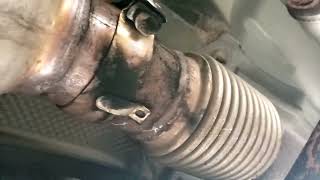
How to confirm: Perform a visual inspection for black soot trails around the exhaust manifold where it meets the cylinder head. Listen for a distinct 'ticking' sound on a cold start that may quiet down as the engine warms and the metal expands. A smoke test is the most effective way to pinpoint the exact location of smaller leaks. 🎬 Watch: Professional tips for diagnosing converters and testing for leaks.
Typical fix: Replace the cracked exhaust manifold and/or broken bolts and install a new gasket.
Est. part cost: $20-$500
Rare But Worth Checking
- Engine Misfires or Fuel System Issues: Unburned fuel from misfires (bad spark plugs, coils) or a rich fuel condition (leaking injectors) can enter the exhaust and overheat the catalytic converter, destroying it. If you have other codes like P030x (misfire) or P0172/P0175 (rich condition), you must fix those first or the new converter will fail quickly.
- Outdated PCM Software: On some GM vehicles, the sensitivity for setting a P0420 code was too high from the factory. A dealer may need to reprogram the Powertrain Control Module (PCM) with an updated calibration. This is a less common fix but should be considered if all hardware checks out.
- Oil Contamination from AFM Issues: For 2007-2011 models with the 6.2L V8, excessive oil consumption related to the Active Fuel Management (AFM) system can foul the catalytic converters. If the vehicle consumes a lot of oil, this underlying issue must be addressed to prevent repeat converter failure.
Diagnosis Steps
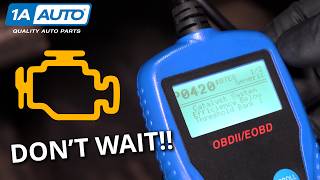
- Read all stored trouble codes with an OBD-II scanner. Address any other codes (misfire, fuel trim, O2 sensor circuit) before P0420, as they are likely the root cause.
- Perform a thorough visual inspection of the entire exhaust system. Look for black soot marks around the exhaust manifolds, indicating a common gasket or manifold crack leak. Listen for a cold-start tick.
- Use a scan tool to view live data for the Bank 1 oxygen sensors (Sensor 1 and Sensor 2). At a steady 2500 RPM, the upstream sensor (Sensor 1) should fluctuate rapidly between ~0.1V and ~0.9V. The downstream sensor (Sensor 2) should show a relatively stable, steady voltage, typically above 0.6V-0.7V.
- If the downstream sensor's voltage is fluctuating wildly like the upstream sensor, the catalytic converter has most likely failed.
- If the downstream sensor's voltage is flat, stuck, or responds very slowly, the oxygen sensor itself is the likely problem. Consider swapping the left and right downstream sensors to see if the code follows to Bank 2 (P0430).
- If sensors appear to be working, perform a temperature check on the catalytic converter using an infrared thermometer. The outlet pipe should be at least 100°F hotter than the inlet pipe after the engine is fully warmed up.
- If O2 sensor data is inconclusive, check for pending TSBs or software updates for the PCM related to emissions diagnostics.
- If all other possibilities are exhausted, the catalytic converter is the confirmed cause.
Parts You'll Likely Need
- Bank 1 Catalytic Converter
(OEM #e.g., GM 15284711 (Varies by year/VIN))— This is the most common failure part that directly causes the P0420 code after its internal materials have degraded or been contaminated.
Trusted brands: ACDelco (OEM), Walker Exhaust, MagnaFlow
OEM price range: $1500-$2800
Aftermarket price range: $400-$900 - Bank 1, Sensor 2 (Downstream) Oxygen Sensor
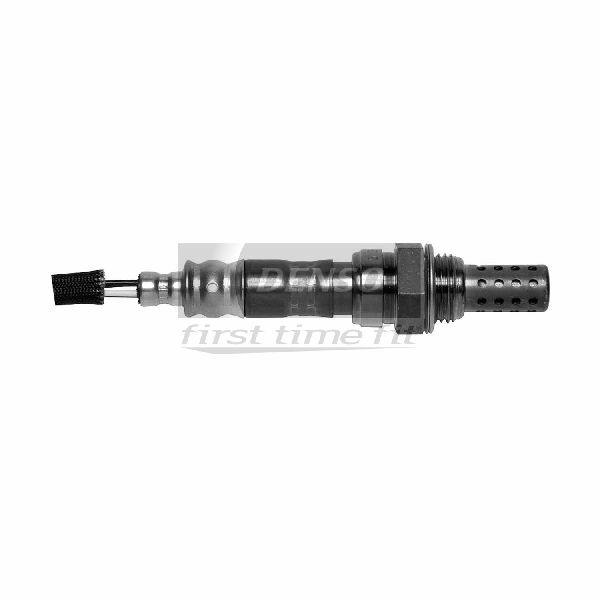
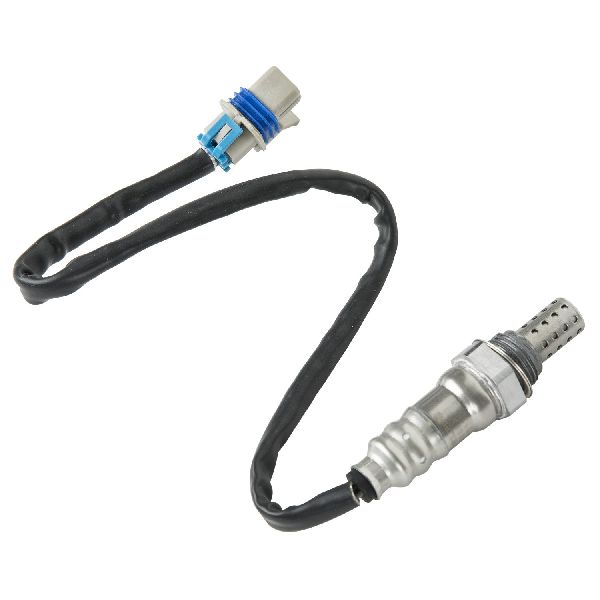
(OEM #ACDelco 213-1698 (GM 12586996) for some 6.0L models. (Verify by VIN))— This sensor is responsible for reporting the converter's efficiency. If it becomes faulty, it can send incorrect data, falsely triggering the P0420 code.
Trusted brands: ACDelco, Denso, Bosch
OEM price range: $80-$150
Aftermarket price range: $50-$100
Related Codes That Often Appear With This One
- P0430 — This is the same catalyst efficiency code but for Bank 2 (passenger side). It's common for both converters to age at a similar rate, or for an underlying issue like oil consumption to affect both banks. Seeing both codes together is not unusual on a higher-mileage vehicle.
- P0300-P0308 — These are misfire codes. An engine misfire is a primary cause of catalytic converter failure, as it sends raw, unburned fuel into the exhaust, which then superheats and melts the converter's internal structure.
- P0172/P0175 — These codes indicate a rich fuel condition on Bank 1 and Bank 2. A rich condition will cause the catalytic converter to overheat and fail prematurely. A user on a forum noted their P0420 code appeared only after fixing a P0172/P0175 condition, suggesting the rich condition had already damaged the converter.
Technical Service Bulletins (TSBs) & Recalls
- PIP3119N: Service Engine Soon Malfunction Indicator Lamp on at low mileage. Technician may find Diagnostic Trouble Codes P0420 and or P0430 stored. The bulletin advises that the catalytic converter efficiency diagnostics are disabled under certain conditions, pointing to potential software logic complexities.
Platform-Specific Known Issues

- A Technical Service Bulletin for 2008 models, #PIP3119N, mentions that the diagnostics for P0420 and P0430 are disabled under certain conditions, suggesting a potential for software-related issues or updates related to these codes.
- Cracked exhaust manifolds and/or broken exhaust manifold bolts are extremely common on this platform. This often presents as a 'ticking' noise on cold starts and is a frequent cause of false P0420/P0430 codes.
- On 2007+ models with the 6.2L V8, Active Fuel Management (AFM) can sometimes lead to high oil consumption, which fouls and destroys catalytic converters.
Mechanic-Grade Diagnostic Values
- Long Term Fuel Trim (LTFT) at Idle — expected: 0% to +5%. Failure: Consistently high positive trims (>10%) or negative trims (<-10%) at idle can indicate vacuum leaks or fuel delivery problems that can harm a catalytic converter.
- Long Term Fuel Trim (LTFT) under moderate to heavy acceleration — expected: Should remain within +/- 10% of zero.. Failure: Maxing out near +25% indicates a significant lean condition (the engine is adding fuel to compensate), which could be caused by a failing fuel pump or dirty MAF sensor.
- Mass Airflow (MAF) Sensor at Idle — expected: 6-8 g/s for a 6.2L V8.. Failure: Readings significantly lower than spec can point to a dirty or failing MAF sensor, causing incorrect fuel calculations.
- Fuel Pressure at Idle — expected: Approximately 60 psi.. Failure: Low fuel pressure will cause a lean condition and high fuel trims, potentially leading to converter damage over time.
- Catalytic Converter Operating Temperature — expected: 350°C - 700°C (662°F - 1292°F) depending on load.. Failure: A temperature below this range or a temperature at the outlet that is not significantly higher (at least 100°F) than the inlet suggests the converter is not functioning.
Hidden / Shadow Codes Worth Checking
- Mode $06 Data: This is not a specific trouble code, but a diagnostic mode that provides access to the results of the PCM's onboard diagnostic tests. For P0420, a technician can view the raw test values for the Catalyst Efficiency Monitor (Test ID $21, Component ID $01 for Bank 1). A value close to the maximum failure threshold, even if it hasn't failed yet, indicates a marginal converter. (see via An advanced OBD-II scan tool with Mode $06 capability. The catalyst monitor test may need to be run via a specific drive cycle before results are available.)
Scan Tool Commands That Help
- Tech2 / GDS2 or equivalent professional scanner: Heater O2 Sensor Relearn — After replacing oxygen sensors on 2007-2013 models, this function should be performed to reset learned values and ensure the new sensors are read correctly by the ECM.
- Tech2 / GDS2 or equivalent professional scanner: Catalyst System Test (Idle or Cruise) — While not a manually triggered command, a technician can use the scan tool to monitor the enable criteria for the catalyst monitor test. GM vehicles often run this test at idle after a specific drive cycle. The tool allows observation of the test as the PCM commands the engine lean, then rich, to measure the converter's oxygen storage capacity.
Wiring & Ground Locations
- G104 — On the rear of the left (driver's side) cylinder head. A major engine ground strap connects here.. The ECM and its sensors, including the oxygen sensors, rely on clean ground connections. A corroded or loose G104 can cause erratic voltage readings from the O2 sensors, potentially leading to a false P0420 code or other driveability issues.
- G103 — On the front of the right (passenger's side) cylinder head.. This is another primary engine ground point. Poor contact here can affect sensor readings across the engine, including those on Bank 1 and Bank 2.
- O2 Sensor Connector — The downstream (Sensor 2) connector is located on the exhaust pipe, after the catalytic converter. The upstream (Sensor 1) is before the converter.. Connectors are exposed to heat and road debris. Wires can become brittle and break, or pins can corrode, causing a loss of signal from the O2 sensor. This can trigger a P0420 or other O2 sensor circuit codes.
Real Owner Repair Stories
- Tahoe Yukon Forum user 'mftrnr' (GMT900 Truck (likely 2007+ Escalade/Yukon/Tahoe)) — Check Engine Light with code P0420 appeared immediately after fixing P0172/P0175 (rich fuel condition).
❌ Tried (didn't work) Hoping the code would clear after fixing the rich condition.
✅ What actually fixed it The catalytic converter had been permanently damaged by the previous rich condition. The ultimate fix was to replace the catalytic converters. Another user in the thread recommended replacing both at the same time and suggested Magnaflow as a more affordable alternative to OEM parts.
When the Usual Fixes Don't Work
- While P0420 often means a bad catalytic converter, there are documented cases where this is not the root cause, especially after a new converter has been installed. GM Technical Service Bulletin PIP3119P details a scenario where a false P0420 can be set simply because the new converter has not completed a 'break-in' drive cycle. In this instance, replacing the new part again would be a costly misdiagnosis; the correct fix is to perform a specific, extended drive procedure. Similarly, other bulletins point to outdated ECM software having overly sensitive thresholds for the catalyst monitor. In these cases, the fix is not hardware replacement but a software update from a GM dealer.
OEM Part Supersession History
PIP3119N→PIP3119P— The Technical Service Bulletin was updated to include later model years and refine the diagnostic procedure.
Heads up: PIP3119N should be discarded as it is outdated. Following the procedure in the older bulletin may not apply to all affected vehicles.
Model Year Variations Within This Range
- 2007-2011: The GMT900 platform introduced the 6.2L L92 V8 with Active Fuel Management (AFM), which was not present on the earlier 6.0L LQ9. The AFM system has been associated with higher oil consumption in some cases, which is a known cause of premature catalytic converter failure.
- 2004-2011 (varies): Oxygen sensor connectors are not consistent across the entire model range. For example, 2002-2006 models may use a different connector than 2008-2013 models. Connectors can be square or gray/blue and have different terminal counts (e.g., 3 vs 4 terminals). It is critical to verify the connector type visually or by VIN before ordering replacements.
Helpful Videos
We Have This Part in Stock


The information in this article is provided for general reference and educational purposes only. Vehicle specifications, procedures, and part compatibility can vary by production date, trim level, and region. Always consult your vehicle's factory service manual and verify part numbers before purchasing or performing repairs. Safety-critical components such as airbags, seat belts, and braking systems should be installed by a qualified professional.
- Cadillac ESCALADE EXT:
- 🎬 Helpful Videos
- 🛍️ Shop This Part
- What's Unique About the 2004-2011 Cadillac ESCALADE EXT
- Diagnostic Flowchart
- Symptoms You May Notice
- Most Likely Causes
- Rare But Worth Checking
- Diagnosis Steps
- Parts You'll Likely Need
- Related Codes That Often Appear With This One
- Technical Service Bulletins (TSBs) & Recalls
- Platform-Specific Known Issues
- Mechanic-Grade Diagnostic Values
- Hidden / Shadow Codes Worth Checking
- Scan Tool Commands That Help
- Wiring & Ground Locations
- Real Owner Repair Stories
- When the Usual Fixes Don't Work
- OEM Part Supersession History
- Model Year Variations Within This Range
- 🎟️ Get 5% Off