

P0420 on 2018 Cadillac Escalade: Catalyst Efficiency Causes and Fixes
On a 2018 Escalade, P0420 means the passenger-side catalytic converter is inefficient. Before replacing the expensive converter, inspect the air filter box for a poor seal as noted in TSB #16-NA-111, check for exhaust leaks from broken manifold bolts, and test the oxygen sensors. These are common, cheaper-to-fix issues on this platform. Also, consider if Active Fuel Management (AFM) related oil consumption has contaminated the system.
- P0420 on a 2018 Escalade points to an inefficient catalytic converter on the passenger side (Bank 1).
- **Crucially, check the air filter box seal first.** A known issue (TSB #16NA111) can cause this code by allowing dirt to damage components.
- Always rule out cheaper fixes like faulty oxygen sensors and exhaust leaks before condemning the expensive catalytic converter.
- If you have engine misfire codes (P030x), you must fix that problem first, or you will destroy a new catalytic converter.
What's Unique About the 2018-2018 Cadillac ESCALADE
The 2018 Escalade, with its 6.2L V8 L86 engine on the K2XX platform, has several specific, documented issues that can cause a P0420 code. GM issued Technical Service Bulletin #16-NA-111 because the air filter housing may not seal correctly, allowing dirt and debris to bypass the filter. This ingested debris can damage the oxygen sensors and physically clog the catalytic converter, leading to a false or premature P0420 code. Additionally, these V8 engines are known for broken exhaust manifold bolts, particularly the rearmost ones, which cause exhaust leaks that trick the O2 sensors. Finally, oil consumption related to the Active Fuel Management (AFM) system can foul the catalytic converter over time, representing another common root cause beyond simple converter failure.
Diagnostic Flowchart
Tap your situation to follow the diagnostic path that matches what you're seeing on this vehicle.
Symptoms You May Notice
- Check Engine Light is on
- Failing an emissions test
- Reduced engine power (if the converter becomes clogged)
- Possible rotten egg or sulfur smell from the exhaust
- Audible ticking or exhaust leak sound, especially when the engine is cold, if caused by a broken manifold bolt.
- Immediately replacing the catalytic converter without checking for cheaper causes like a bad O2 sensor, an air intake leak (per TSB #16-NA-111), or an exhaust leak from a broken manifold bolt.
- Replacing the downstream O2 sensor because it is 'bad', when in reality it is accurately reporting the inefficiency of the catalytic converter.
Most Likely Causes
- Failed Catalytic Converter (Bank 1) 🔴 High Probability Catalytic converters can fail from age or contamination. On the 6.2L V8, issues like excessive oil consumption related to the Active Fuel Management (AFM) system can foul the converter over time, leading to premature failure. Misfires from failing AFM lifters, a known issue on this engine, can also dump raw fuel into the exhaust, destroying the converter.
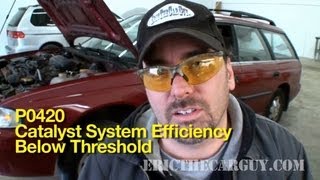
How to confirm: Use a scan tool to graph the voltage of the upstream (Bank 1, Sensor 1) and downstream (Bank 1, Sensor 2) oxygen sensors. A healthy converter shows a steady downstream signal (typically 0.5V-0.8V), while a failed one will have a downstream signal that fluctuates rapidly, mimicking the upstream sensor (0.1V-0.9V). 🎬 Watch: EricTheCarGuy shows how to diagnose a bad catalytic converter. An infrared thermometer can also be used; the outlet of a working converter should be at least 100°F hotter than the inlet after the engine is at operating temperature.
Typical fix: Replace the Bank 1 catalytic converter assembly. It is critical to fix any underlying issues (misfires, oil consumption, air intake leaks) first to avoid damaging the new part.
Est. part cost: $500-$1500 - Faulty Downstream Oxygen (O2) Sensor 🟡 Medium Probability O2 sensors wear out over time and can send inaccurate readings to the ECM. Debris from a faulty air box seal (per TSB #16-NA-111) can also contaminate and damage the sensor element.
How to confirm: The easiest way to test is to swap the downstream O2 sensors between Bank 1 and Bank 2. Clear the codes and drive the vehicle. If the code returns as P0430 (the code for Bank 2), the sensor is bad. If P0420 returns, the sensor is likely good and is correctly reporting a converter issue.
Typical fix: Replace the Bank 1, Sensor 2 (downstream) oxygen sensor.
Est. part cost: $50-$120 - Improperly Sealed Air Filter Housing 🟡 Medium Probability This is a specific, documented issue for this GM truck platform, as detailed in TSB #16-NA-111. The air cleaner assembly may not seal correctly, allowing abrasive sand and dirt to enter the intake, damaging sensors and the converter. This should be a primary inspection point.
How to confirm: Visually inspect the air filter box for a tight seal, checking for broken or missing clips. Open the housing and check the intake tube (downstream of the filter) for any signs of a dust trail, sand, or debris.
Typical fix: Replace the air filter and, if the housing is warped or damaged, the entire air cleaner assembly to ensure a proper seal. Clean the MAF sensor and intake tract.
Est. part cost: $25-$250 - Exhaust Leak ⚪ Low Probability Cracked exhaust manifolds and broken manifold bolts are a known issue on these GM V8 engines, particularly the rearmost bolts near the firewall. A leak between the upstream and downstream O2 sensors allows oxygen to enter the exhaust, which is detected by the downstream sensor and fools the ECM into setting a P0420 code.
How to confirm: Visually inspect the exhaust manifolds and piping for black soot marks or cracks, especially around the bolt heads. A ticking noise that is loudest on a cold start and may quiet down as the engine warms up is a classic symptom. A smoke test is the most effective way to find small leaks. The leak must be before the rear O2 sensor to cause this code.
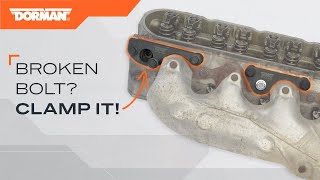
Typical fix: Replace the leaking gasket and any broken bolts. In many cases, a special clamp kit (e.g., Kral Auto Parts KAP-single) can be used to repair a broken rear manifold bolt without removing the manifold. 🎬 See how these repair kits fix broken manifold bolts faster.
Est. part cost: $20-$400
Rare But Worth Checking
- Engine Misfires or Fuel System Issues: Underlying issues like failing spark plugs, ignition coils, or leaking fuel injectors can send unburned fuel into the exhaust, which will overheat and destroy a catalytic converter. If you have any misfire codes (e.g., P0300, P0301) or fuel trim codes (P0171, P0174), you must fix those first. A user on a Tahoe/Yukon forum noted their P0420 appeared immediately after they had fixed a rich condition (P0172/P0175), suggesting the prior rich condition had already damaged the converter.
- New Converter Break-in Not Performed: According to GM TSB #PIP3119P, a P0420/P0430 code can appear on a very low mileage vehicle or shortly after a converter replacement. The diagnostic may run before the new converter's internal matting has been fully broken-in or 'seasoned'. The fix is to clear the codes and perform a specific highway drive cycle to properly heat the new converter.
Diagnosis Steps
- Scan the ECM for any other trouble codes. Address any misfire, fuel system, or O2 sensor circuit codes before diagnosing the P0420.
- Thoroughly inspect the air intake system, specifically the air filter box seal, for any signs of dirt or debris bypassing the filter, as noted in TSB #16-NA-111. Check for a dust trail inside the intake tube past the filter.
- Visually inspect the exhaust system for leaks, paying close attention to the exhaust manifolds for broken bolts, especially the rear-most ones. Listen for a cold-start tick.
- Use a scan tool to monitor live data. Graph the voltage signals from Bank 1 Sensor 1 (upstream) and Bank 1 Sensor 2 (downstream) while holding the engine at a steady 2,500 RPM. A healthy converter shows a steady downstream signal (around 0.7V), while a failed one will have a downstream signal that mimics the rapid up-and-down fluctuations of the upstream sensor.
- If the O2 sensor data is inconclusive, consider swapping the downstream sensors from Bank 1 and Bank 2 to see if the fault code moves to P0430. If it does, the sensor is faulty.
- Check for excessive oil consumption, a known issue with the AFM system on the 6.2L V8, which can poison the converter.
- If all other possibilities are ruled out, the catalytic converter is the likely culprit.
Parts You'll Likely Need
- Catalytic Converter (Bank 1)
(OEM #84114391)— This is the direct cause of the code if the converter has failed due to age or contamination from other issues. Bank 1 is the passenger side.
Trusted brands: ACDelco, Walker Exhaust, MagnaFlow
OEM price range: $1000-$1800
Aftermarket price range: $400-$900 - Downstream Oxygen Sensor (Bank 1, Sensor 2)
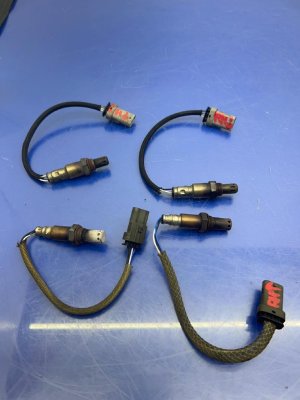
(OEM #12677895)— A faulty or 'lazy' sensor can send incorrect data, falsely triggering the P0420 code. It's a common failure point and a wise part to check or replace before the converter.
Related Codes That Often Appear With This One
- P0430 — This is the identical code for Bank 2 (driver's side). If both codes are present, it strongly suggests a systemic issue like the air box seal problem, contaminated fuel, or severe engine performance problems (like oil consumption) affecting both banks.
- P0300-P0308 — These are misfire codes. An engine misfire is a primary root cause of catalytic converter failure, as it allows unburned fuel to enter the exhaust and damage the converter. Failing AFM lifters are a common cause of misfires on this engine.
- P0171/P0174 or P0172/P0175 — These are lean (171/174) or rich (172/175) fuel trim codes. An uncorrected fuel mixture imbalance will either overheat (rich) or poison (lean) the catalytic converter over time, leading to its failure.
Technical Service Bulletins (TSBs) & Recalls
- Bulletin #16-NA-111: Provides diagnostic information for an air box and air filter seal issue that can cause DTCs P0420 and P0430 by allowing debris into the intake.
- Bulletin #PIP3119P: Notes that the catalytic converter efficiency diagnostic is disabled for a short period on new vehicles to allow for break-in, and a code may set falsely if this process is interrupted or after a replacement.
Platform-Specific Known Issues
- TSB #16-NA-111 documents an issue where the air filter housing may not seal correctly, allowing dirt and sand to bypass the filter, which can damage O2 sensors and the catalytic converter, directly causing P0420 and/or P0430.
- TSB #PIP3119P explains that on new or low-mileage vehicles (or after a converter replacement), the diagnostic monitor may run before the converter is fully broken-in, causing a false P0420/P0430. A specific drive cycle is required to 'season' the new part.
- Broken exhaust manifold bolts, especially the rearmost ones, are a very common failure on the 6.2L L86 and other GM V8s. The resulting exhaust leak introduces oxygen into the exhaust stream and frequently triggers a false P0420 or P0430 code.
Mechanic-Grade Diagnostic Values
- Downstream O2 Sensor (Bank 1, Sensor 2) Voltage — expected: Relatively steady reading between 0.45V and 0.8V at normal operating temperature and steady RPM.. Failure: Voltage fluctuates rapidly, mimicking the upstream sensor's pattern (approx. 0.1V to 0.9V).
- Upstream O2 Sensor (Bank 1, Sensor 1) Voltage — expected: Constantly and rapidly fluctuating between approximately 0.1V and 0.9V as the ECM adjusts the air-fuel mixture.. Failure: A slow, non-responsive, or flat-lined voltage reading.
- Short-Term and Long-Term Fuel Trims (STFT/LTFT) — expected: Within a range of -10% to +10% at idle and steady cruise. Values closer to zero are ideal.. Failure: Consistently high positive values (e.g., > +15%) suggest a vacuum leak or other issue causing a lean condition, while high negative values suggest a rich condition. Both can lead to catalyst damage.
- Mode $06 Catalyst Monitor Bank 1 — expected: Test value should be below the maximum threshold set by the manufacturer.. Failure: A test value that is at or very close to the maximum limit indicates the catalyst is borderline and likely to fail the monitor's next run.
Hidden / Shadow Codes Worth Checking
- TID $21, CID $A0: This is not a DTC, but a Mode $06 test result for the Bank 1 Catalyst Test. It provides the raw data value of the catalyst's efficiency as a normalized ratio. A value approaching the maximum limit indicates a failing converter before the P0420 code becomes permanent. (see via An advanced scan tool capable of displaying Mode $06 data. The tool may or may not translate the hexadecimal values automatically.)
Wiring & Ground Locations
- G103 — On the front of the passenger side (Bank 1) cylinder head.. This is a primary engine ground. A loose or corroded connection here can cause erratic readings from sensors on Bank 1, including the oxygen sensors, potentially leading to a false P0420 code.
- G104 — On the rear of the driver's side (Bank 2) cylinder head.. While on the opposite bank, a poor ground here can affect overall ECM stability and sensor readings. It's a key ground for the engine harness.
- Engine Harness Chafe Points — Common points of contact include the ECM/TCM bracket, driver-side upper control arm, and shock tower bolt area.. GM has identified that the engine harness on the K2XX platform can rub through in these locations, potentially shorting out O2 sensor signal or heater circuits. This can directly cause a P0420 code or other sensor-related DTCs.
Real Owner Repair Stories
- Reddit user in r/mechanicadvice (5.3L Vortec (similar architecture to L86)) — P0420 code present.
❌ Tried (didn't work) Initial diagnosis pointed towards catalytic converter.
✅ What actually fixed it The user had previously replaced the passenger side exhaust manifold and reused old bolts. Two of the bolts snapped. The ultimate fix required extracting the snapped bolts and properly sealing the exhaust manifold, which eliminated the exhaust leak that was causing the P0420 code.
OEM Part Supersession History
12659516→12677895— Unknown, likely an internal revision for improved performance, durability, or manufacturing.
Helpful Videos
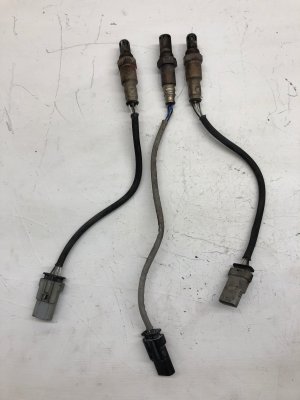
Used OEM Parts in Stock

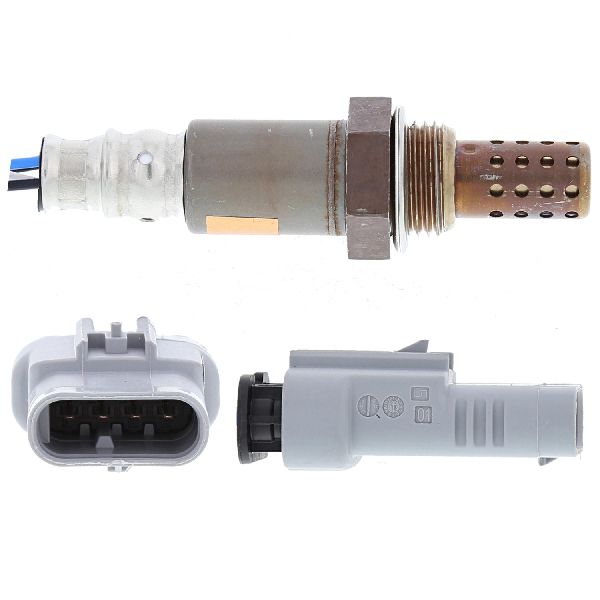
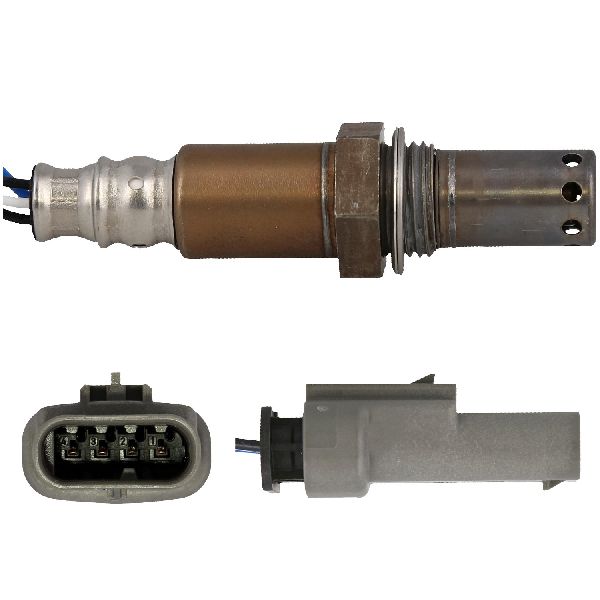
New Aftermarket Parts Available


The information in this article is provided for general reference and educational purposes only. Vehicle specifications, procedures, and part compatibility can vary by production date, trim level, and region. Always consult your vehicle's factory service manual and verify part numbers before purchasing or performing repairs. Safety-critical components such as airbags, seat belts, and braking systems should be installed by a qualified professional.
- Cadillac ESCALADE:
- 🎬 Helpful Videos
- 🛍️ Shop This Part
- What's Unique About the 2018-2018 Cadillac ESCALADE
- Diagnostic Flowchart
- Symptoms You May Notice
- Most Likely Causes
- Rare But Worth Checking
- Diagnosis Steps
- Parts You'll Likely Need
- Related Codes That Often Appear With This One
- Technical Service Bulletins (TSBs) & Recalls
- Platform-Specific Known Issues
- Mechanic-Grade Diagnostic Values
- Hidden / Shadow Codes Worth Checking
- Wiring & Ground Locations
- Real Owner Repair Stories
- OEM Part Supersession History
- 🎟️ Get 5% Off