

P0418 on 2007-2009 Subaru Legacy 2.5L Turbo: Air Pump Relay 'A' Circuit Fixes
This code is almost always caused by a faulty Secondary Air Pump Relay, which was subject to a safety recall (WTM-73). Replacing the small, inexpensive relay (Part No. 25232AA090) usually fixes the problem. If the old relay was stuck on, the air pump itself may have burned out and will also need replacement.
- First, check if your vehicle is affected by Subaru Safety Recall WTM-73. The repair (a new relay) is free at a dealership and will likely fix the code.
- P0418 is an electrical code for the pump's relay circuit. The most likely fix is simply replacing the small, inexpensive relay (Part No. 25232AA090).
- If the pump was making a continuous noise before the code appeared, it was likely running constantly due to a stuck relay and may have burned itself out, requiring replacement of both the pump and the relay.
- Do not ignore this code. While the car may drive fine, the underlying issue presents a documented fire risk.
What's Unique About the 2007-2009 Subaru Legacy
On turbocharged Subarus from this era, including the Legacy GT, the secondary air injection system is a notorious failure point. The primary issue was a defective air pump relay that could stick in the 'on' position due to an internal manufacturing flaw. This led to a major safety recall (NHTSA ID: 16V-738, Subaru #WTM-73) because the continuously running air pump could overheat, melt, and pose a fire risk. The recall covered the 2007-2009 Legacy/Outback (turbo), 2008-2014 Impreza (WRX/STI), and 2009-2013 Forester (turbo). Therefore, this code should be addressed with urgency.
Symptoms You May Notice
- Check Engine Light is on
- SI-Drive system may be disabled, preventing selection of Sport Sharp (S#) mode
- Vehicle may enter a 'limp mode' with reduced engine power
- A continuous whining or buzzing sound from the engine bay after startup if the pump is stuck on
- A burning smell or smoke from the engine bay if the air pump has overheated
- Replacing the secondary air combination valves. While these valves can fail and cause other codes (like P2441 or P2444), they are not the cause of an electrical circuit code like P0418.
- Replacing the air pump without replacing the relay. If the original relay is faulty and stuck on, it will quickly burn out the new pump.
Most Likely Causes
- Faulty Secondary Air Pump Relay 🔴 High Probability A defective relay was installed from the factory, prompting Subaru to issue a safety recall (WTM-73 / NHTSA 16V-738) to replace it. The original relay's internal contacts could weld shut due to a manufacturing process issue, causing the pump to run constantly.
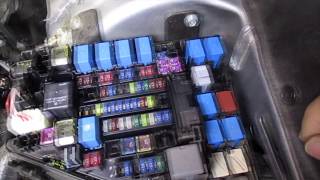
How to confirm: First, check if your vehicle's VIN is covered by the recall and if the service was performed via a dealer or Subaru's website. If the code persists, the relay is the most likely culprit. It is located in the main fuse box in the engine compartment. You can swap it with an identical relay from a non-critical system (like the horn) to see if the problem follows the relay.
Typical fix: Replace the relay with the updated OEM part (Subaru Part No. 25232AA090). This is a simple, plug-and-play replacement.
Est. part cost: $15-$30 - Failed Secondary Air Injection Pump 🟡 Medium Probability The pump fails as a direct consequence of the faulty relay. When the relay sticks on, it forces the pump to run continuously until it overheats and burns out. This can happen quickly, and the recall procedure includes inspection of the pump for this reason.
How to confirm: If a new relay and fuse do not solve the issue, test the pump directly. With a scan tool, command the pump to turn on. If it doesn't respond, check for power and ground at the pump's electrical connector. If power is present but the pump does not run, it has failed. 🎬 Watch: How to troubleshoot and test your Subaru air pump
Typical fix: Replace the secondary air injection pump and the relay simultaneously. If the pump is replaced without also replacing a faulty relay, the new pump will also burn out.
Est. part cost: $250-$500 - Blown Fuse ⚪ Low Probability A short-circuit in the air pump motor (often during its final failure) can draw excessive current and blow the main fuse for the secondary air injection system.
How to confirm: Locate and inspect the fuse for the Secondary Air Injection system in the vehicle's fuse box. If it is blown, replace it. If it blows again, the pump motor is shorted and needs replacement.
Typical fix: Replace the blown fuse after diagnosing the underlying cause (usually a bad pump).
Est. part cost: $1-$5 - Wiring or Connector Issues ⚪ Low Probability The engine bay environment can cause wiring to become brittle or connectors to corrode over time, leading to an open or short in the relay control circuit. The connector at the air pump itself can also melt if the pump overheats severely.
How to confirm: Visually inspect the wiring harness and connectors for the air pump and relay. Look for any signs of melting, corrosion, or breaks. Use a multimeter to check for continuity between the ECU and the relay socket.
Typical fix: Repair or replace the damaged section of the wiring harness or the connector.
Est. part cost: $10-$100
Rare But Worth Checking
- Failed Powertrain Control Module (PCM/ECU): This is extremely rare. The PCM should only be considered a potential cause after all other possibilities, including relays, the pump, fuses, and wiring, have been exhaustively tested and ruled out.
Diagnosis Steps
- Check your vehicle's VIN for Subaru Safety Recall WTM-73 (NHTSA ID: 16V-738). If the recall is open, have a Subaru dealer perform the repair, which involves replacing the relay and inspecting the pump.
- If the recall was performed or does not apply, locate the secondary air pump relay in the main fuse box in the engine compartment.
- Inspect the relay and its socket for any signs of corrosion or melting.
- As a simple test, swap the air pump relay with an identical relay from a less critical circuit (e.g., the horn relay). Clear the codes and see if P0418 returns. If the horn now fails and the code is gone, the relay is bad.
- Inspect the main fuse for the air injection system. If it's blown, suspect a failed air pump motor.
- If the relay and fuse are good, use a capable scan tool to command the air pump to turn on. Listen for the pump's operation.
- If the pump does not run, use a multimeter to verify that it is receiving voltage and has a good ground at its electrical connector when commanded on.
- If voltage and ground are present but the pump does not run, the pump has failed and needs to be replaced.
- If voltage is not present at the pump, trace the wiring back from the relay to diagnose the open circuit.
Parts You'll Likely Need
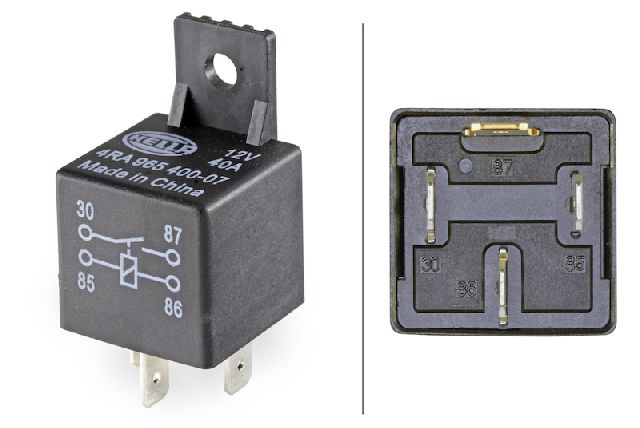
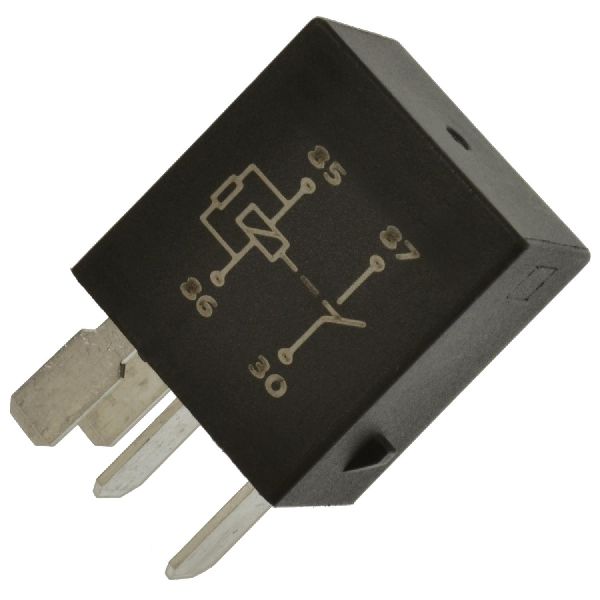
- Secondary Air Pump Relay
(OEM #25232AA090)— This is the most common failure point and was the subject of a safety recall. It's an inexpensive and easy part to replace.
Trusted brands: Subaru (Genuine)
OEM price range: $15-$30
Aftermarket price range: $10-$25 - Secondary Air Injection Pump
(OEM #14828AA050)— Often fails as a direct result of the faulty relay running it continuously until it burns out.
Trusted brands: Subaru (Genuine), Dorman, Standard Motor Products (SMP), WEONEFIT
OEM price range: $450-$550
Aftermarket price range: $200-$400
Related Codes That Often Appear With This One
- P0410 — P0410 indicates a general system flow malfunction. It can appear if the relay (P0418) isn't activating the pump, resulting in no airflow.
- P0413 / P0414 — These codes point to open or shorted circuits for the air switching valve solenoid, another component in the same system that can fail concurrently or cause related symptoms.
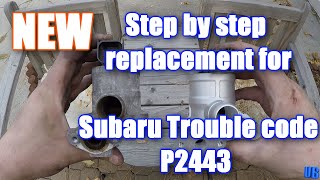
- P2440 / P2441 / P2442 / P2443 / P2444 — These codes indicate that the secondary air combination valves are stuck open or closed. 🎬 Watch: Diagnosing stuck secondary air valves and code P2443 A stuck-open valve can allow hot, moist exhaust gas back into the system, which can damage the air pump over time.
Technical Service Bulletins (TSBs) & Recalls
- WTM-73 / NHTSA ID: 16V-738: Safety recall to replace the secondary air injection pump relay due to a fire risk from the pump overheating. The service bulletin is WTM-73R, last revised July 11, 2017.
Platform-Specific Known Issues
- Safety Recall WTM-73: Turbocharged 2007-2009 Legacy/Outback, 2009-2013 Forester XT, and 2008-2014 WRX/STI models were recalled for a faulty secondary air pump relay that could stick on, causing the pump to overheat and potentially catch fire. This is the primary cause of P0418.
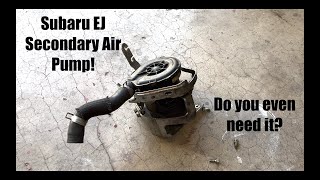
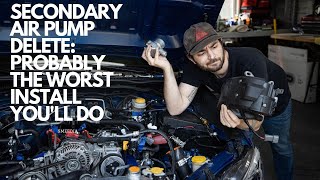
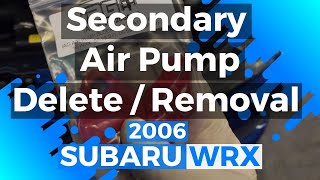
- Off-Road Use 'Delete Kits': Due to the high failure rate and repair cost of the system, many owners in the enthusiast community opt to physically remove the entire secondary air injection system (pump, valves, and plumbing) and use ECU tuning software (like RomRaider) to disable the associated trouble codes (P0410, P0411, P0413, P0414, P0418, P2441, P2444, etc.). 🎬 See this walkthrough on how to remove the air pump This is a popular modification for performance-oriented builds but is not legal for on-road, emissions-controlled vehicles.
Mechanic-Grade Diagnostic Values
- Secondary Air Pump Motor Resistance — expected: Close to 0 Ohms. Failure: A high resistance reading indicates a faulty pump motor.
- Secondary Air Pump Current Draw — expected: 15-30 Amps. Failure: Significantly higher amperage suggests a seized or binding pump motor, while zero amps indicates an open circuit or dead motor.
- Air Pump Relay Socket Pin 30 Voltage — expected: 12V+ at all times (constant battery power). Failure: No voltage indicates a problem with the power supply to the relay, likely a blown main fuse or wiring issue upstream.
- Air Pump Relay Socket Pin 86 Voltage (Control) — expected: 12V+ with key on, engine cold (during the first ~60 seconds). Failure: No voltage when the system should be active points to a fault in the control signal from the ECU or the wiring in between.
- Air Pump Relay Socket Pin 85 (Ground) — expected: Should show ground continuity when the ECU commands the relay on.. Failure: An open on this pin indicates a bad ground path or a faulty ECU driver.
Scan Tool Commands That Help
- Subaru Select Monitor (SSM): Each System Check -> Engine Control System -> Current Data Display & Save — This function allows a technician to view live data from the engine, including the status of emissions components like the secondary air system, to see if the ECU is attempting to activate it.
- Subaru Select Monitor (SSM) or capable generic scanner: Actuator Test / Bidirectional Control for Secondary Air Pump — This command directly orders the ECU to activate the secondary air pump relay. It is the most effective way to test the entire circuit; if the pump runs with this command, the relay, pump, and wiring are likely good, pointing towards a control-side issue.
- RomRaider / EcuFlash (Enthusiast Software): Disable DTCs (P0418, etc.) — For off-road use only, this software can be used to permanently disable the trouble codes related to the secondary air system after the physical components have been removed ('deleted'). This prevents the Check Engine Light and limp mode.
Wiring & Ground Locations
- Main Fuse Box (M/B) — Located on the left side of the engine compartment.. This box contains the secondary air pump relay and the main fuse for the system. It is the central point for electrical diagnosis of this code.
- GB-2 Ground — Located at the left front of the engine compartment.. This is a primary grounding point for several engine bay components. A loose or corroded connection here could potentially cause intermittent electrical issues for the secondary air system.
- Air Pump Connector — On the secondary air pump itself, located on the left side of the engine compartment.. This connector is where you test for power and ground being delivered to the pump motor. It is also prone to melting if the pump overheats severely due to a stuck relay.
Real Owner Repair Stories
- Reddit user in r/subaru (2014 WRX (EJ255 engine, similar system)) — Check Engine Light, disabled traction control, blinking cruise control light, code P2441 (valve stuck).
❌ Tried (didn't work) Dealer diagnosis quoted over $1,000 for valve replacement.
✅ What actually fixed it The owner was considering an 'air pump and TGV delete with tune' as the final, permanent fix if the dealer repair wasn't covered under goodwill. This highlights the community preference for removing the system rather than repeatedly repairing it. - LegacyGT.com forum guide (2008 Subaru Legacy GT Spec.B) — Desire to remove the failure-prone system and clean up the engine bay.
❌ Tried (didn't work) Simply unplugging components, which causes the ECU to 'go haywire' and enter limp mode.
✅ What actually fixed it A complete physical removal of all secondary air system components (pump, valves, plumbing) combined with using tuning software (RomRaider) to disable a list of 14 specific DTCs, including P0418, to prevent the Check Engine Light. - NHTSA ODI #10446143 — An owner reported a failure involving a cluster of codes including P0410, P0411, P0413, P0414, and P0418, noting these are frequently associated with secondary air system failures on this manufacturer's turbocharged platforms.
- NHTSA ODI #10557044 — A report filed for a similar vehicle noted that P0418 often appears alongside other secondary air codes such as P2431, P2432, P2433, P2441, and P2444 during a system failure.
OEM Part Supersession History
Unknown (various)→25232AA090— The original relays were prone to sticking due to a manufacturing defect. The WTM-73 recall replaced them with this updated part number.
Heads up: Part 25232AA090 is the correct, updated relay. It is also used as a fan relay in other Subaru models.
Diagnostic Flowchart
Other Known Issues on This Vehicle
Issues unrelated to this code that are worth knowing about as an owner of this generation:
- Turbo Oil Starvation (Banjo Bolt Filter) 🔴 High — Common issue if not preventatively addressed. The mesh filter in the turbo oil feed line's banjo bolt can clog with debris, starving the turbo of oil and leading to catastrophic failure.
- Piston Ringland Failure 🔴 High — A well-known weakness of the EJ255/EJ257 engines, especially when modified. The area of the piston between the top two compression rings can crack, leading to loss of compression, oil consumption, and misfires.
- Timing Belt Maintenance 🔴 High — A critical maintenance item. The timing belt has a recommended replacement interval of 105,000 miles. Failure to replace it can result in the belt snapping, causing catastrophic engine damage due to piston-to-valve contact.
- Head Gasket Failure 🟠 Medium — While more famous on naturally aspirated EJ engines, the turbo models can also experience head gasket leaks, often due to the increased heat and cylinder pressure.
Used vs. New Parts: Buying Guide for This Vehicle
When a used part is the smart pick: A used Secondary Air Injection Pump can be a cost-effective choice given the high price of a new OEM unit, especially if the vehicle is older. However, it is a gamble as the used part may have limited life remaining.
Donor-vehicle mileage cap: roughly under 60000 miles for the part to have meaningful remaining life.
What to inspect on the donor part:
- Ask for the VIN of the donor car to check if the WTM-73 relay recall was performed. A pump from a car with the old, faulty relay is a high-risk purchase.
- Visually inspect the pump's electrical connector for any signs of melting or heat damage.
- If possible, inspect the air inlet/outlet ports for signs of rust or moisture, which would indicate failure of the combination valves and potential damage to the pump.
- Prefer parts from reputable auto recyclers who offer a short-term warranty (e.g., 30-90 days).
OEM-only on this vehicle (don't cheap out):
- Secondary Air Pump Relay: Given the low cost ($15-$30) and critical safety function of the relay, always buy the new, updated OEM part (25232AA090). Using a used or non-specified aftermarket relay risks repeating the original failure that can lead to a fire.
Aftermarket brands forum-validated for this vehicle:
- Dorman is a widely available aftermarket brand for the air pump, often with a lower price than OEM.
Brands owners have reported issues with on this vehicle:
- Avoid unbranded, extremely low-cost pumps from online marketplaces, as their quality and longevity are highly questionable.
Real Owner Stories
Aggregated from forums and TSBs cited above. Mileages and costs reflect what owners reported in those sources.
2007-2009 Subaru Legacy 2.5L Turbo
Symptoms: The secondary air pump runs constantly due to a stuck relay, which can lead to overheating, a burning smell, smoke, or a potential fire risk.
What fixed it: A Subaru dealer performed the WTM-73 safety recall, which involves replacing the faulty secondary air pump relay and inspecting the pump for any consequential damage.
Source hint: Subaru Safety Recall WTM-73 / NHTSA ID: 16V-738
2007-2009 Subaru Legacy 2.5L Turbo
Symptoms: Check Engine Light on with secondary air pump codes.
What fixed it: The owner physically removed the entire secondary air injection system (pump, valves, plumbing) and used ECU tuning software to disable the associated trouble codes.
Source hint: LegacyGT.com: A thread titled '2007-2009 Air Pump Delete with CEL codes and ECU Fix-Pix too'
2007 Subaru Legacy Spec B
Symptoms: Check Engine Light on with code P2433.
What fixed it: The owner was advised to first check if the WTM-73 recall had been performed, as the faulty relay is the primary culprit for secondary air system codes on this platform.
Source hint: LegacyGT.com: A user in the thread 'Secondary air pump delete'
Related OBD-II Codes
Frequently Asked Questions
My 2008 Legacy GT has a P0418 code. Is this related to the Subaru recall I heard about?
What is the first and easiest thing I should check for a P0418 on my Legacy?
The Check Engine Light is on and my SI-Drive is stuck. I can't select S# mode. Is this because of the P0418 code?
I hear a constant whining noise from the engine bay after starting my car. Could this be the secondary air pump?
If I need to replace the faulty relay, what is the correct part number?
My mechanic says the air pump is burned out. Can I just replace the pump?
I've seen people online talk about 'deleting' the air pump system. What does that involve?
Helpful Videos
We Have This Part in Stock


The information in this article is provided for general reference and educational purposes only. Vehicle specifications, procedures, and part compatibility can vary by production date, trim level, and region. Always consult your vehicle's factory service manual and verify part numbers before purchasing or performing repairs. Safety-critical components such as airbags, seat belts, and braking systems should be installed by a qualified professional.
- Subaru Legacy:
- 🎬 Helpful Videos
- 🛍️ Shop This Part
- What's Unique About the 2007-2009 Subaru Legacy
- Symptoms You May Notice
- Most Likely Causes
- Rare But Worth Checking
- Diagnosis Steps
- Parts You'll Likely Need
- Related Codes That Often Appear With This One
- Technical Service Bulletins (TSBs) & Recalls
- Platform-Specific Known Issues
- Mechanic-Grade Diagnostic Values
- Scan Tool Commands That Help
- Wiring & Ground Locations
- Real Owner Repair Stories
- OEM Part Supersession History
- Diagnostic Flowchart
- Other Known Issues on This Vehicle
- Used vs. New Parts: Buying Guide for This Vehicle
- Real Owner Stories
- 2007-2009 Subaru Legacy 2.5L Turbo
- 2007-2009 Subaru Legacy 2.5L Turbo
- 2007 Subaru Legacy Spec B
- Related OBD-II Codes
- Frequently Asked Questions
- 🎟️ Get 5% Off