

P0412 on 2007-2017 Volkswagen Passat: Secondary Air Injection Valve Circuit Malfunction Fixes
P0412 on a VW Passat indicates an electrical fault with the Secondary Air Injection (SAI) switching valve circuit. The most common causes are a faulty SAI solenoid valve (N112), a blown fuse for the SAI system, or damaged wiring. The N112 valve is a known failure point. Always check the large 40A or 50A fuse in the engine bay fuse box first. Expect to spend $30-$150 for a DIY fix.
- P0412 is an electrical circuit fault, not a mechanical flow problem. Your diagnostic process should focus on electrical components first.
- Always check the easiest and cheapest parts first: the fuse and relay for the Secondary Air Injection system.
- The most likely failed component is the SAI solenoid valve (often labeled N112 on VWs). It can be tested with a multimeter for a resistance between 25-35 ohms.
- You can continue to drive with a P0412 code, but your Check Engine Light will stay on and you will not pass an emissions test.
What's Unique About the 2007-2017 Volkswagen Passat
On many Volkswagen models from this era, including the Passat, the Secondary Air Injection (SAI) system components are known failure points. The SAI pump is susceptible to failure from moisture getting inside, often due to a faulty combi valve allowing exhaust condensation to drain back into the pump. Furthermore, the plastic vacuum lines that control the switching valve (also called a Combi valve) can become brittle and crack over time, a common issue across many VW/Audi platforms. The N112 solenoid valve itself is also a frequent point of electrical failure.
Generation note: The 2007-2017 range covers the B6 (2007-2010) and B7 (2011-2017 NMS) generations of the Passat. While the function of the Secondary Air Injection system is the same, specific part numbers and fuse locations differ. For the B6, the SAI pump fuse is often a 40A or 50A fuse in the engine bay fuse box (E-box). For the B7, it is typically fuse F15 (40A) in the engine compartment fuse box. The N112 valve and combi valve also have slight variations depending on the engine (e.g., 2.0T FSI, 2.0T TSI, 3.6L VR6).
Symptoms You May Notice
- Check Engine Light is on.
- Vehicle will fail an emissions test.
- Louder than usual vacuum cleaner-like noise from the engine bay for 60-90 seconds after a cold start (this indicates the pump is working, suggesting the fault is elsewhere in the circuit).
- No noise from the SAI pump on a cold start (this could indicate a blown fuse, bad relay, or failed pump).
- Rough or unstable idle on a cold start.
- Replacing the Secondary Air Injection Pump. P0412 is an electrical circuit code for the switching valve, not a flow code (like P0411). While a failing pump can blow the fuse and cause P0412, replacing the pump without checking the fuse or N112 valve first is a common mistake.
Most Likely Causes
- Faulty Secondary Air Injection Solenoid Valve (N112) 🔴 High Probability The solenoid coil can fail electrically over time due to heat and vibration, creating an open or short circuit that the ECU detects. It is a very common failure point on VW/Audi engines of this period.
How to confirm: Disconnect the valve's electrical connector. Using a multimeter, measure the resistance across its two pins. A good valve should read between 25-35 ohms. An infinite reading (open circuit) or a near-zero reading (short circuit) confirms the valve is bad.
Typical fix: Replace the Secondary Air Injection Solenoid Valve (N112). It is often located on or near the intake manifold.
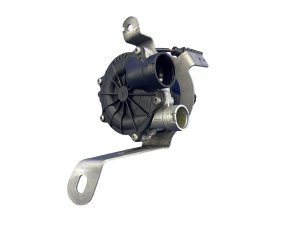
Est. part cost: $40-$100 - Blown Fuse for the SAI System 🟡 Medium Probability The SAI pump motor is a high-current device. If the pump begins to fail, often due to moisture intrusion, it can draw excessive current and blow its fuse. This is a very common root cause for the circuit fault.
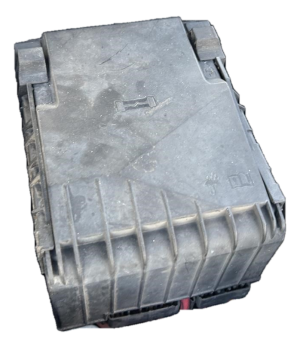
How to confirm: Locate the fuse for the SAI system in the engine bay fuse box. For B6 Passats (2007-2010), check the high-amperage fuses in the E-box. For B7 Passats (2011-2017), check fuse F15 (40A). Visually inspect the fuse. If blown, a seized SAI pump is the likely underlying cause.
Typical fix: Replace the blown fuse. IMPORTANT: If the fuse is blown, you must also inspect/test the SAI pump itself. If the pump is seized, the new fuse will blow immediately.
Est. part cost: $5-$30 - Damaged Wiring or Corroded Connector 🟡 Medium Probability Engine bay heat and vibrations can cause wires to become brittle and crack, or connector pins to corrode, leading to an open or short circuit. The harness to the N112 valve or the main SAI pump are common areas to inspect.
How to confirm: Visually inspect the wiring harness and connector going to the SAI solenoid valve (N112) and the SAI pump for any signs of damage, chafing, or corrosion. Use a multimeter to check for battery voltage at the N112 connector with the key on, engine off (or during the first 60 seconds of a cold start).
Typical fix: Repair the damaged section of wiring or clean/replace the corroded connector.
Est. part cost: $10-$50 - Cracked or Leaking Vacuum Hoses ⚪ Low Probability While more likely to cause a P0411 (incorrect flow) code, a significant vacuum leak affecting the solenoid's ability to actuate the main Combi Valve can sometimes be associated with circuit codes. VW vacuum lines from this era are known to become brittle and crack.
How to confirm: Visually inspect all small vacuum lines connected to the SAI Combi Valve and N112 solenoid. Use a smoke tester or a hand-held vacuum pump to check for leaks.
Typical fix: Replace the cracked vacuum hose(s).
Est. part cost: $15-$40
Rare But Worth Checking
- Failed Powertrain Control Module (PCM): This is extremely rare. The PCM's driver for the SAI solenoid can fail, but this should only be considered after all other possibilities, including all wiring, fuses, relays, and the valve itself, have been exhaustively tested and ruled out.
- Failed SAI System Relay (J299): The relay that powers the SAI pump (often labeled J299 or marked with '100') can fail. A stuck or burnt-out relay will cut power to the entire system, causing a circuit fault. It's located in the engine bay E-box. Terminals can burn, so visual inspection is key.
Diagnosis Steps
- Read the codes with an OBD-II scanner and confirm P0412 is present. Note any other codes like P0411 or P0410.
- On a cold engine, turn the key to the 'ON' position without starting. Listen for the SAI pump in the engine bay. It should run for 60-90 seconds and sound like a loud vacuum cleaner. If you hear nothing, suspect the fuse, relay, or the pump itself.
- Locate and inspect the fuse for the SAI system. For B6 models (2007-2010), check the main fuse box in the engine bay. For B7 models (2011-2017), check fuse F15 (40A) in the engine bay fuse box. If it's blown, the SAI pump is likely seized from moisture and needs replacement.
- If the fuse is good, locate the SAI solenoid valve (N112). It's a small black plastic valve with a 2-pin connector and two vacuum line ports, often mounted on the engine or firewall.
- Visually inspect the N112's electrical connector and nearby wiring for any signs of corrosion, melting, or physical damage.
- Disconnect the N112 connector. Use a multimeter set to Ohms (Ω) to measure the resistance between the two pins on the valve itself. The reading should be between 25-35 ohms. If it's significantly higher (open) or lower (short), the valve is faulty and must be replaced.
- If the valve's resistance is good, test the wiring. With the connector still unplugged, turn the ignition on. Use a multimeter set to DC Volts to check for battery voltage at one of the pins on the harness side of the connector. If there's no voltage, the problem is upstream in the wiring, relay, or PCM.
- If all electrical components test good, perform a vacuum test on the lines to and from the solenoid and the main Combi Valve to check for cracks or disconnections.
Parts You'll Likely Need
- Secondary Air Injection Solenoid Valve (N112)
(OEM #06F131351A, 7.22880.01.0 (Pierburg))— This solenoid is the most common electrical failure point in the circuit, directly causing the P0412 code.
Trusted brands: Pierburg, Bosch, Rein
OEM price range: $70-$120
Aftermarket price range: $40-$80 - SAI System Fuse
(OEM #N10251903 (40A Maxi Fuse))— A common failure point that cuts power to the entire circuit, often blown by a failing SAI pump.
Trusted brands: VW/Audi Genuine, Littelfuse
OEM price range: $10-$20
Aftermarket price range: $5-$10
Related Codes That Often Appear With This One
- P0411 — P0411 indicates 'Incorrect Flow Detected'. If the P0412 electrical fault prevents the switching valve (N112) from opening the main Combi Valve, the system will not see the expected airflow, triggering P0411 as well.
- P0410 — P0410 is a general 'Secondary Air Injection System Malfunction' code. It can appear alongside more specific codes like P0412 when the ECU detects a broad system failure.
Platform-Specific Known Issues
- Water intrusion into the main SAI pump is a well-documented issue on VWs of this era. This happens when the combi (combination) valve fails, allowing hot, moist exhaust gas to flow back into the system after the pump shuts off. The moisture condenses and collects in the pump, causing it to rust and seize. A seized pump will blow the main fuse, resulting in a P0412 code. When replacing a blown fuse, it's critical to disconnect the SAI pump's electrical connector and try starting the car cold again. If the fuse doesn't blow, the pump is almost certainly the root cause.
Mechanic-Grade Diagnostic Values
- Secondary Air Injection Solenoid Valve (N112) Resistance — expected: 25.0 - 35.0 Ohms. Failure: An infinite reading (open circuit) or near-zero reading (short circuit) indicates a failed valve.
- Voltage at N112 Solenoid Connector (harness side) — expected: Battery Voltage (~12V) on one pin when ignition is ON.. Failure: No voltage indicates a problem upstream, such as a blown fuse, faulty relay (J299), or broken wire.
Scan Tool Commands That Help
- VCDS (VAG-COM): Engine -> Output Tests -> Secondary Air Injection Solenoid (N112) and Secondary Air Pump Relay (J299) — This allows a technician to command the N112 valve and the SAI pump relay to activate independently of a cold start. You can listen for the click of the solenoid and the sound of the pump running to confirm the electrical components are functional and being controlled by the ECM.
- VCDS (VAG-COM): Engine -> Basic Settings -> Group 077 — This function initiates a full test sequence of the secondary air injection system. It will run the pump and open the valves, allowing the technician to monitor system response and check for leaks or blockages after electrical faults have been ruled out.
Wiring & Ground Locations
- SAI Pump Relay (J299) — In the engine compartment fuse/relay box (E-box), typically on the driver's side. For B6 Passats, it is often in a relay carrier in this box. The relay itself is frequently a grey relay marked with the number '100'.. This relay provides high-current power to the SAI pump. A failure of this relay will cut power to the system, which can be misinterpreted as a valve or pump failure. The contacts can burn out, causing an open circuit.
- Engine to Chassis Ground Strap — Typically a heavy braided cable running from the engine block or transmission housing to the vehicle's frame rail, often located underneath the car near an engine mount.. A corroded or loose main engine ground can cause a variety of intermittent electrical issues, including faults in emissions systems like the SAI. The ECM and its related sensors/actuators require a stable ground reference to function correctly.
Real Owner Repair Stories
- YouTube video by 'Peter's Garage' (Volkswagen Passat B6 (2005-2010)) — Secondary Air Injection system not working, likely triggering a CEL with codes like P0412.
❌ Tried (didn't work) Assuming the pump or solenoid valve is bad without checking the power supply first.
✅ What actually fixed it The video demonstrates that a common cause is a faulty relay for the SAI system, located in the engine bay fuse box. Replacing the relay restored power to the system. - YouTube video by 'Car Life Nut' (Volkswagen with 2.0L engine) — Check Engine Light with SAI codes (P0410, P0411, P0412).
❌ Tried (didn't work) Replacing the SAI pump without checking the relay.
✅ What actually fixed it The SAI pump relay (marked '100') had burnt terminals. Applying 12V directly to the pump confirmed the pump motor was still good. The fix was to replace the faulty relay, which had failed due to the high amperage draw of the pump over time.
OEM Part Supersession History
7.22880.00.0→7.22880.01.0— Internal revision by the manufacturer, Pierburg. The new part is a direct, fully interchangeable replacement.
Heads up: The OEM VW part number 037906283C is cross-referenced to the Pierburg 7.22880.01.0 part. There are no known incompatibilities; the newer part number is the correct service replacement.
Model Year Variations Within This Range
- 2007-2010 (B6): The engine bay fuse and relay box (E-box) has a different layout than the later B7 models. The SAI relay (J299) and fuse are located in this box, but their specific positions can vary.
- 2011-2017 (B7 NMS): The B7 generation has a more standardized fuse layout. The main fuse for the SAI pump is typically in position F15 (40A) in the engine compartment fuse box.
Diagnostic Flowchart
Other Known Issues on This Vehicle
Issues unrelated to this code that are worth knowing about as an owner of this generation:
- Timing Chain Tensioner Failure (2.0T TSI Engine) 🔴 High — Common on earlier TSI engines (approx. 2008-2013) between 60,000 and 120,000 miles. A rattling noise on cold starts is the primary warning sign. (Ref: VW issued a warranty extension for this issue, but it has since expired. An updated tensioner part is the permanent fix.)
- DSG Mechatronics Unit Failure 🔴 High — Affects cars with the DSG automatic transmission, particularly the 7-speed dry clutch (DQ200). Symptoms include jerky shifting, flashing 'PRNDS' indicator, and complete loss of drive. Failures can occur from 80,000 km onwards. (Ref: Multiple recalls and service campaigns have been issued globally, especially for the DQ200 gearbox.)
- Excessive Oil Consumption (2.0T Engine) 🟠 Medium — Particularly noted in early TSI engines, often due to piston ring design. Owners report needing to add oil frequently between changes. (Ref: A class-action lawsuit was settled regarding this issue, but it primarily covered earlier model years. The fix often involves new pistons and rings.)
- Water Pump Failure (Plastic Housing) 🟠 Medium — The plastic water pump housing can become brittle and crack, leading to coolant leaks. This is a known issue on many VW/Audi engines from this era, including the 2.0T and 3.6L VR6. Failure can occur at any mileage but is more common after 60,000 miles.
- Intake Manifold Flap Motor/Sensor Failure (2.0T FSI/TSI) 🟡 Low — The runner flap motor or position sensor can fail, causing a check engine light (often with code P2015) and sometimes a slight loss of performance. It's a common failure item, often addressed by replacing the intake manifold or using a repair bracket. (Ref: A warranty extension was offered for this component on certain model years.)
Used vs. New Parts: Buying Guide for This Vehicle
When a used part is the smart pick: A used N112 solenoid valve can be a cost-effective option if tested for correct resistance (25-35 ohms) before purchase. Used wiring harnesses or connectors are also viable for repairing damaged sections.
Donor-vehicle mileage cap: roughly under 80000 miles for the part to have meaningful remaining life.
What to inspect on the donor part:
- For SAI Pump: Ask the seller if it was tested. Avoid pumps from vehicles with known front-end damage. Look for zero rust or signs of water staining on the housing.
- For N112 Valve: Bring a multimeter to the junkyard. Disconnect the valve and measure the resistance between the two pins. Ensure it's within the 25-35 ohm spec.
- For Relay: Inspect the plastic housing for melting and check the metal terminals for blackening or corrosion. Avoid any relay that looks heat-stressed.
OEM-only on this vehicle (don't cheap out):
- Secondary Air Injection Pump: Due to the extremely high failure rate from internal water damage, buying a used pump is a major gamble. A new pump, preferably from an OEM supplier like Pierburg, is strongly recommended to ensure longevity.
Aftermarket brands forum-validated for this vehicle:
- Pierburg (often the original OEM supplier for the N112 valve and SAI pump)
- Bosch
- Rein
Brands owners have reported issues with on this vehicle:
- Unbranded, no-name SAI pumps from online marketplaces are notorious for premature failure and should be avoided.
Real Owner Stories
Aggregated from forums and TSBs cited above. Mileages and costs reflect what owners reported in those sources.
2009 Volkswagen Passat 2.0T
Symptoms: The check engine light was on and the SAI pump made no noise at all during a cold start. The main fuse for the system was found to be blown.
What fixed it: The root cause was a seized SAI pump due to water intrusion. Replacing the pump and the blown fuse resolved the P0412 code.
Source hint: vehicle_specific_issues section describing water intrusion in the SAI pump
2008 Volkswagen Passat 2.0T FSI
Symptoms: Owner had a persistent P0412 code and Check Engine Light. The SAI pump could be heard running on cold starts, indicating the problem was with the control circuit.
What fixed it: The problem was a common failure of the N112 solenoid valve. The owner used a DIY guide with photos to locate and replace the faulty valve, which fixed the issue.
Source hint: VWVortex Forums - 'DIY - SAI, N112, N249, EVAP Delete / Simplification for 2.0t FSI'
Related OBD-II Codes
Frequently Asked Questions
Where is the fuse for the Secondary Air Injection (SAI) system on my Passat?
I hear a loud vacuum cleaner noise for a minute after a cold start. Is my SAI pump bad?
I replaced the 40A fuse for the SAI pump and it blew again right away. What's the problem?
How can I test the SAI solenoid valve (N112) on my Passat?
What is the N112 valve and where can I find it?
Are other VW or Audi models with the 2.0T engine also prone to this P0412 code?
We Have This Part in Stock




The information in this article is provided for general reference and educational purposes only. Vehicle specifications, procedures, and part compatibility can vary by production date, trim level, and region. Always consult your vehicle's factory service manual and verify part numbers before purchasing or performing repairs. Safety-critical components such as airbags, seat belts, and braking systems should be installed by a qualified professional.
- Volkswagen Passat:
- 🛍️ Shop This Part
- What's Unique About the 2007-2017 Volkswagen Passat
- Symptoms You May Notice
- Most Likely Causes
- Rare But Worth Checking
- Diagnosis Steps
- Parts You'll Likely Need
- Related Codes That Often Appear With This One
- Platform-Specific Known Issues
- Mechanic-Grade Diagnostic Values
- Scan Tool Commands That Help
- Wiring & Ground Locations
- Real Owner Repair Stories
- OEM Part Supersession History
- Model Year Variations Within This Range
- Diagnostic Flowchart
- Other Known Issues on This Vehicle
- Used vs. New Parts: Buying Guide for This Vehicle
- Real Owner Stories
- 2009 Volkswagen Passat 2.0T
- 2008 Volkswagen Passat 2.0T FSI
- Related OBD-II Codes
- Frequently Asked Questions
- 🎟️ Get 5% Off