

P0412 on 2005-2007 Toyota Sequoia: Air Injection Valve Circuit Causes and Fixes
On a 2005-2007 Sequoia, code P0412 indicates an electrical circuit fault with the Secondary Air Injection (SAI) switching valve. This is very often caused by a failed air pump that has ingested moisture, which then damages other components. Expect to inspect the entire system, but the pump and valves are the most common failure points. Due to the high cost of repair and commonality of the issue, many owners opt for an aftermarket bypass kit.
- P0412 on a 2005-2007 Sequoia points to an electrical fault in the air injection switching valve circuit.
- The root cause is very often a failing air pump that has ingested moisture, which then destroys itself and sends debris to the valves.
- A complete diagnosis is essential. Do not replace just the valve without first inspecting the air pump and cleaning the associated lines.
- This is a well-documented, common problem, and Toyota has issued a Technical Service Bulletin (T-SB-0230-12) about it.
What's Unique About the 2005-2007 Toyota SEQUOIA
The 4.7L 2UZ-FE engine used in this generation of Sequoia, Tundra, 4Runner, and Lexus GX470/LX470 is notorious for Secondary Air Injection system failures. The primary issue stems from the design and placement of the air pump, which is located in the passenger-side fender well where it is susceptible to moisture and water ingestion. This moisture causes the pump's internal foam filter and plastic fan blades to degrade and break apart. This shrapnel is then forced downstream into the air switching valves, causing them to jam open or closed and leading to a cascade of failures. Toyota issued a Technical Service Bulletin (T-SB-0230-12 Rev1) acknowledging that debris from the air pump can contaminate and damage other system components, leading to P0412 and a host of related codes.
Diagnostic Flowchart
Tap your situation to follow the diagnostic path that matches what you're seeing on this vehicle.
Symptoms You May Notice
- Check Engine Light (MIL) is on
- VSC and TRAC OFF lights may also be illuminated
- Vehicle may enter a reduced-power "limp mode", limiting speed and acceleration.
- Loud vacuum cleaner-like or whining noise from the passenger side engine bay on cold starts, lasting for 30-60 seconds.
- Replacing only the Air Switching Valve when the Air Pump is the root cause. The new valve will likely fail again if debris from the old pump is still in the system and the lines are not cleaned.
- Replacing oxygen sensors. While this is an emissions system, P0412 is specific to the air injection circuit and not directly related to O2 sensor readings.
- Using aftermarket valves. Some owners on Tundra forums have reported that aftermarket (e.g., Dorman) switching valves can cause the P0412 code to persist because their internal solenoid resistance does not match the OEM specification expected by the ECU.
Most Likely Causes
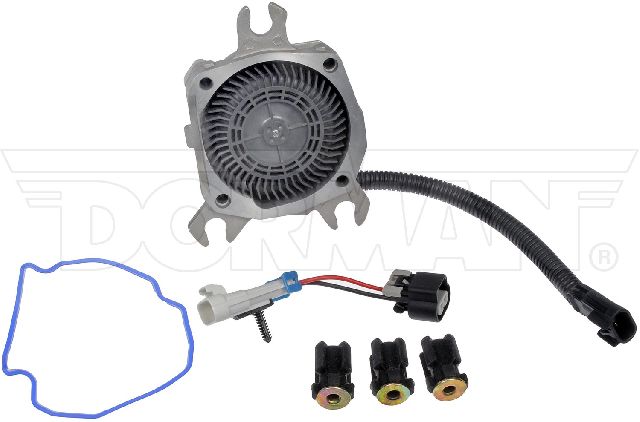
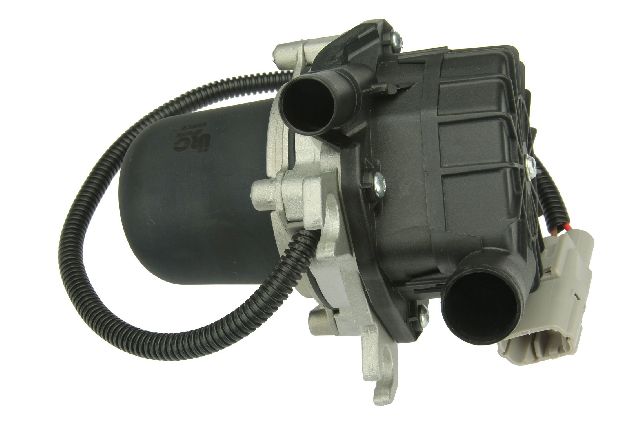
- Failed Air Injection Pump 🔴 High Probability The pump is prone to ingesting moisture due to its location, causing internal corrosion and failure of the motor and fan blades. The pump's failure often sends foam filter debris into the valves, causing them to fail as well.
How to confirm: Use a scan tool to command the pump on. If it doesn't run, check the dedicated 'AIR' fuse and relay. If those are good, check for 12V power and ground at the pump connector during a cold start or when commanded on. If power is present, the pump motor has failed. Also inspect the pump inlet and outlet for signs of water or disintegrated foam debris.
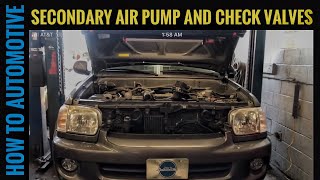
Typical fix: Replace the Air Injection Pump assembly. 🎬 Watch this complete walkthrough for replacing the pump and valves. It is critical to clean the air lines and inspect/clean/replace the switching valves for debris during replacement to prevent repeat failure.
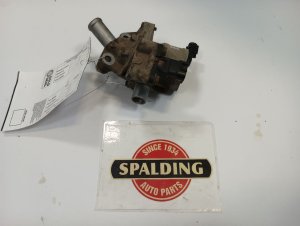
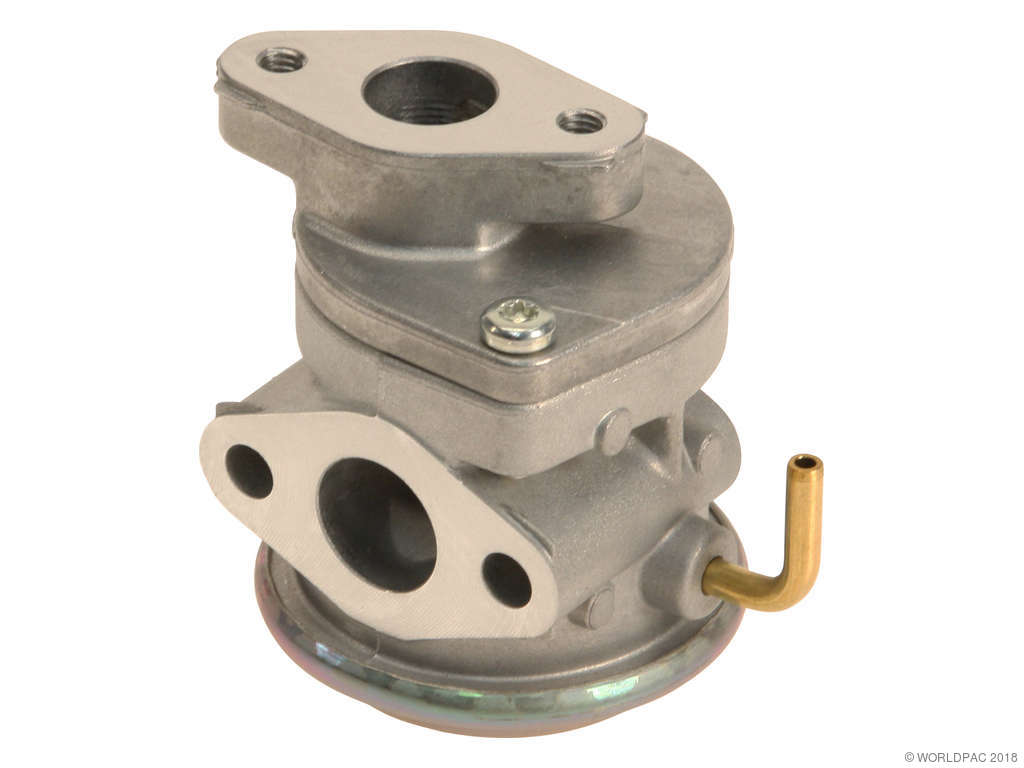
Est. part cost: $200-$500 - Failed Air Switching Valve 🔴 High Probability Valves can fail electrically from the circuit fault itself (P0412), or they can fail mechanically by getting stuck open or closed due to debris from a failed air pump. These valves are located under the intake manifold, making replacement labor-intensive.
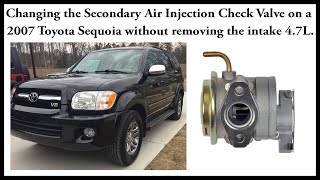
How to confirm: Use a bi-directional scan tool to command the valve to open and close. Check for an audible click. If it doesn't operate, check for power at the valve's electrical connector when commanded. If power is present, the valve solenoid has likely failed. Resistance can be checked with a multimeter; it should be between 4.5 to 5.5 Ohms. Visual inspection for debris may require removing the intake manifold. 🎬 See how to replace the check valve without removing the intake.
Typical fix: Replace the faulty Air Switching Valve assembly and associated gaskets. Due to the difficult access, it is often recommended to replace both valves at the same time.
Est. part cost: $150-$350 - Wiring or Connector Damage 🟡 Medium Probability The wiring for the valves is located under the intake manifold, a prime location for rodents to build nests and chew on wires. The soy-based wire sheathing used in some modern vehicles can attract critters. Heat and vibration can also cause connections to loosen or wires to break over time.
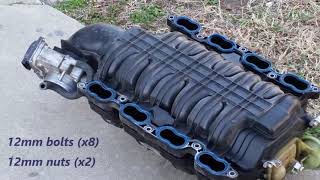
How to confirm: Visually inspect the wiring harness and connectors leading to the switching valve and air pump for any signs of corrosion, breaks, or loose pins. A Tundra owner with a P0412 code found chewed wires under the intake manifold using an inspection scope. 🎬 Watch a real-world P0412 fix and lessons learned on the 4.7L. Perform a continuity test on the circuit from the Air Injection Control Driver to the valve.
Typical fix: Repair or replace the damaged section of the wiring harness or the connector. This may require removing the intake manifold for access.
Est. part cost: $10-$100 - Failed Air Injection Control Driver/Relay ⚪ Low Probability A seized air pump can draw excessive current, potentially overloading and damaging the control driver or the main 'AIR' relay that powers it.
How to confirm: If the pump and valves check out okay but are not receiving power, test the control driver/relay according to the factory service manual procedure. The driver is located on the passenger fender near the firewall. The main 'AIR' relay can be swapped with a known good relay for a simple test.
Typical fix: Replace the Air Injection Control Driver or relay.
Est. part cost: $100-$250
Rare But Worth Checking
- Powertrain Control Module (PCM) Fault: This is extremely rare. The PCM should only be considered after all other possibilities, including wiring and the Air Injection Control Driver, have been exhaustively checked and ruled out.
Diagnosis Steps
- Read all stored DTCs with a capable scan tool. Note any other codes present, especially those related to the SAI system (P0418, P244x, etc.).
- Check the dedicated fuses for the Secondary Air Injection system in the engine bay fuse box. Specifically, check the 'AIR' relay and potentially related ECU fuses.
- On a cold engine, start the vehicle and listen for a loud vacuum-cleaner sound from the passenger side fender area for the first 30-60 seconds. If the sound is present, the pump is likely running. If not, the pump or its circuit is faulty.
- Using a bi-directional scan tool (like Toyota Techstream), command the Air Pump to turn on. Listen for it to run.
- If the pump does not run, verify it is receiving power (12V) and has a good ground at its connector. If power is present, the pump has failed.
- If the pump runs, command the Air Switching Valve 'A' to activate. Listen for a click from the valve under the intake manifold. This may be difficult to hear.
- If no click is heard, check for power and ground at the valve's connector when it is commanded on. If power is present, the valve has failed. Test the valve's internal resistance; it should be 4.5-5.5 Ohms.
- If the valve clicks but the code returns, inspect the air passages and the valve itself for blockage or debris from a deteriorating air pump. This requires removing the intake manifold.
- Inspect the wiring harness under the intake manifold for signs of rodent damage (chewed wires), which is a known issue.
- If no power is reaching the valve or pump, consult a wiring diagram to trace the circuit back to the Air Injection Control Driver and test its function per the service manual.
Parts You'll Likely Need
- Air Injection Pump Assembly
(OEM #17600-0F010)— This is the most common root cause of failure for the entire SAI system on this vehicle due to moisture and debris.
Trusted brands: Dorman, Aisin (OEM)
OEM price range: $400-$600
Aftermarket price range: $200-$350 - Air Switching Valve Assembly
(OEM #25710-50022 (replaces 25710-50020, 25710-50021))— This valve is directly implicated by the P0412 code and often fails due to an internal electrical fault or being clogged with debris from a failed pump.
Trusted brands: Dorman, Genuine Toyota
OEM price range: $250-$350
Aftermarket price range: $150-$250 - Air Injection Control Driver — This module controls the high-current operation of the pump and valves and can fail from electrical overload, especially if the pump seizes.
Trusted brands: Genuine Toyota
OEM price range: $100-$250
Aftermarket price range: $80-$150
Related Codes That Often Appear With This One
- P0418 — This code indicates a fault in the Air Pump circuit, which is often the root cause of the P0412 code. [T-SB-0230-12 Rev]
- P2440, P2441, P2442, P2443, P2445 — These codes indicate that the air switching valves or pump are stuck open, closed, or off. They frequently appear with P0412 as part of a systemic failure caused by debris or moisture.
- P1441, P1442, P1444, P1445 — These are manufacturer-specific codes for the same stuck valve conditions as the P244x series and are often logged together, as noted in TSB T-SB-0230-12. [T-SB-0230-12 Rev]
- C1201 — This is an Engine Control System Malfunction code that often accompanies SAIS codes when the vehicle enters "limp mode," disabling Vehicle Stability Control (VSC) and Traction Control (TRAC).
Technical Service Bulletins (TSBs) & Recalls
- T-SB-0230-12 Rev: Air Injection System MIL "ON". This TSB outlines the common failure pattern where debris from the air pump contaminates the switching valves, causing codes P0412, P0418, and others.
Platform-Specific Known Issues
- A known issue on this platform is the failure of the Secondary Air Injection system, as documented in Toyota's Technical Service Bulletin T-SB-0230-12 Rev1. The bulletin states that debris from the air pump can pass through the system and contaminate other components, causing a variety of DTCs including P0412.
- For vehicles in states without emissions testing, many owners opt for an aftermarket bypass kit from companies like Hewitt Tech. These kits electronically trick the ECU into thinking the system is working correctly and provide block-off plates for the air injection ports. This is a popular, cost-effective, and permanent solution, but it is not a legal repair in states with emissions inspections.
- A real-world repair story from a Tundra forum highlights the importance of checking for rodent damage. An owner was about to replace the pump and valves for a P0412 code but discovered chewed wires under the intake manifold were the actual cause, saving a costly parts replacement.
Mechanic-Grade Diagnostic Values
- Air Switching Valve (ASV) Resistance — expected: 4.5 to 5.5 Ohms at 68°F (20°C). Failure: A reading outside of this range indicates a faulty valve solenoid.
- Air Injection Control Driver (AID) Diagnostic Signal (to ECM) — expected: Duty ratio of 70-90% when system is active; 0% when inactive.. Failure: A duty ratio of 40% indicates a malfunction (open or short) has been detected by the AID.
Scan Tool Commands That Help
- Toyota Techstream: System Check / AIR INJ CHECK — This active test allows a technician to manually command the air pump and switching valves to operate for up to 5 seconds, which is essential for verifying component function without waiting for a cold start. It helps isolate whether the fault is with the pump, valve, or control circuit.
- Toyota Techstream: Read Freeze Frame Data — Use this to see the exact engine conditions (e.g., engine temp, vehicle speed, etc.) when the P0412 code was first triggered. This can help confirm if the fault occurred during a cold start, as expected for this system.
Wiring & Ground Locations
- Air Injection Control Driver (AID) — On the right (passenger side) inner fender, near the firewall.. This is the module that directly controls the air switching valve and pump. It receives commands from the ECM and reports back diagnostic status. All control wiring for the valve originates from this driver, making its connector a key test point.
- Air Switching Valve Connector — Underneath the intake manifold, towards the rear of the engine valley.. This is the final connection point for the circuit. Access is difficult, often requiring intake manifold removal, but it's necessary for direct resistance testing of the valve and voltage testing of the control circuit.
- Engine Wiring Harness — Routed across the top of the engine and under the intake manifold.. The area under the intake manifold is a known nesting spot for rodents, who may chew on the soy-based wiring insulation, causing shorts or open circuits that trigger P0412.
Real Owner Repair Stories
- Tundra Forum User (2008 Toyota Tundra 5.7L (similar 2UZ-FE design principles)) — Check Engine Light, Limp Mode
❌ Tried (didn't work) Initial diagnosis was unclear.
✅ What actually fixed it The user discovered that rats had built a nest under the intake manifold and chewed through the anti-knock sensor wiring. The repair involved removing the intake manifold to replace the damaged harness section. This highlights that rodent damage in this specific location is a real-world cause for various codes, including P0412 which has wiring in the same area.
OEM Part Supersession History
25710-50020→25710-50021, then 25710-50022— Standard part revision and improvement by the manufacturer.
Heads up: The newest part number, 25710-50022, is the correct replacement for the earlier versions and should be used for all repairs.
Helpful Videos
Used OEM Parts in Stock
New Aftermarket Parts Available



The information in this article is provided for general reference and educational purposes only. Vehicle specifications, procedures, and part compatibility can vary by production date, trim level, and region. Always consult your vehicle's factory service manual and verify part numbers before purchasing or performing repairs. Safety-critical components such as airbags, seat belts, and braking systems should be installed by a qualified professional.
- Toyota SEQUOIA:
- 🎬 Helpful Videos
- 🛍️ Shop This Part
- What's Unique About the 2005-2007 Toyota SEQUOIA
- Diagnostic Flowchart
- Symptoms You May Notice
- Most Likely Causes
- Rare But Worth Checking
- Diagnosis Steps
- Parts You'll Likely Need
- Related Codes That Often Appear With This One
- Technical Service Bulletins (TSBs) & Recalls
- Platform-Specific Known Issues
- Mechanic-Grade Diagnostic Values
- Scan Tool Commands That Help
- Wiring & Ground Locations
- Real Owner Repair Stories
- OEM Part Supersession History
- 🎟️ Get 5% Off