

P0404 on 2021 Jeep Wrangler EcoDiesel: EGR Circuit & Cooler Failure Guide
On a 2021 Jeep Wrangler with the 3.0L EcoDiesel, code P0404 is most often caused by a failing EGR valve, which is frequently damaged by a leaking EGR cooler. Expect to replace the entire EGR cooler assembly, not just the valve, for a permanent fix. This is a known issue on this engine and its platform mates, the Ram 1500 and Jeep Gladiator.
- P0404 on a 2021 Wrangler almost always points to the 3.0L EcoDiesel engine.
- The most likely cause is a faulty EGR valve, often damaged by a failing EGR cooler that is leaking coolant internally.
- Check for unexplained coolant loss; this is a key symptom of the root cause.
- For a lasting repair, you will likely need to replace the entire EGR cooler assembly, not just the valve.
- Check if your vehicle is affected by the separate, unrelated recall for the high-pressure fuel pump (HPFP), as it can cause stalling.
What's Unique About the 2021-2021 Jeep WRANGLER
For the 2021 Wrangler and its platform mates (Ram 1500, Jeep Gladiator) using the 3rd Generation 3.0L V6 EcoDiesel, this code is a strong indicator of a well-documented failure pattern. Unlike many vehicles where P0404 is caused by simple carbon buildup, on this engine, it is often a symptom of a cracked EGR cooler. The cooler develops internal leaks, allowing coolant to enter the EGR system. This coolant mixes with soot to form a thick, gooey sludge that contaminates and seizes the EGR valve, triggering the P0404 code. This makes diagnosis more critical, as an unaddressed coolant leak can lead to significant engine damage.
Diagnostic Flowchart
Tap your situation to follow the diagnostic path that matches what you're seeing on this vehicle.
Symptoms You May Notice
- Check Engine Light is on
- Rough or unstable idle, especially when cold
- Engine hesitation or lack of power during acceleration
- Noticeable decrease in fuel economy
- Engine knocking or pinging sounds
- Unexplained coolant loss with no visible leaks on the ground
- White smoke or steam from the exhaust, which may have a sweet smell (indicates burning coolant)
- Strong, sweet, or unusual exhaust odor when idling
- Replacing only the EGR valve when the EGR cooler has failed. The new valve will soon be damaged by coolant and debris, causing the code to return.
- Assuming the issue is only carbon buildup without checking for the more serious underlying EGR cooler coolant leak, identified by wet, sludgy deposits.
- Dismissing slow coolant loss after a pressure test holds 'within spec'. Small internal leaks may not show up as dramatic pressure drops.
Most Likely Causes
- Failing EGR Cooler 🔴 High Probability The 3rd generation 3.0L EcoDiesel engine has a known issue with EGR coolers developing microscopic internal cracks, allowing coolant to leak into the exhaust stream. This issue is documented across the Wrangler, Gladiator, and Ram 1500 platforms.
How to confirm: Check for steady coolant loss in the reservoir without any visible external leaks. A cooling system pressure test may show a slow pressure drop (e.g., 20 psi to 17 psi overnight) that a dealer might deem 'normal' but can still indicate a small internal leak. The definitive check is to remove the EGR diffuser tube and inspect for a 'gooey tar-like buildup' or wet sludge, which is evidence of coolant mixing with soot. Normal buildup should be dry.
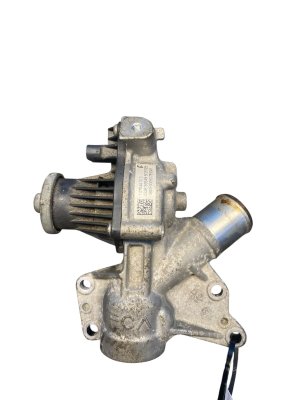
Typical fix: Replace the entire EGR cooler and valve assembly. It is highly recommended to use an updated OEM part or a robust aftermarket version (e.g., from Bullet Proof Diesel) designed to prevent repeat failures. The EGR valve must be replaced at the same time as it will be contaminated.
Est. part cost: $600-$1200 for a complete assembly or upgraded cooler - Faulty or Sticking EGR Valve 🔴 High Probability The EGR valve is almost always a casualty of a leaking EGR cooler. The coolant and soot mixture creates a sludge that seizes the valve mechanism. In a forum post, an owner of a '21 Wrangler EcoDiesel reported their dealer found the EGR system filled with 'coolant and gunk,' leading to a failed valve.
How to confirm: Use a bidirectional scan tool to command the EGR valve open and closed while monitoring the position sensor percentage. If the value doesn't change or moves erratically, the valve is faulty. Visual inspection after removal will show heavy carbon buildup or, more critically, signs of coolant contamination (wet, sludgy residue).
Typical fix: Replace the EGR valve. However, if the EGR cooler is the root cause, replacing only the valve will result in a repeat failure, often within a short period. The valve and cooler are almost always replaced together on this platform.
Est. part cost: $200-$400 for the valve only - Heavy Carbon and Soot Buildup 🟡 Medium Probability While diesel engines naturally produce soot, the issue is severely exacerbated by a leaking EGR cooler. If the cooler is not leaking, simple carbon buildup can still occur and restrict the valve over time.
How to confirm: Physical removal and inspection of the EGR valve and diffuser tube will reveal heavy, but dry, carbon deposits restricting movement. If the deposits are wet or sludgy, the cause is a cooler leak.
Typical fix: Thoroughly cleaning the EGR valve and passages may provide a temporary solution if the buildup is only dry soot. However, given the high failure rate of the cooler, this should be done with caution. Replacement is the more reliable long-term fix.
Est. part cost: $20-$40 for cleaning supplies
Rare But Worth Checking
- Wiring or Connector Issue: The wiring harness to the EGR valve can become damaged, or the connector pins can corrode, leading to an intermittent or lost signal. This should be checked before replacing expensive components.
- Faulty Powertrain Control Module (PCM) or Software: In rare cases, the PCM itself can be the source of the problem. More likely, the PCM may require a software update per TSB #18-001-22 Rev A, which was issued to address P0404 among other codes. This should be checked by a dealer.
Diagnosis Steps
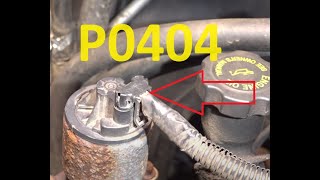
- Connect an OBD-II scanner and check for any other accompanying codes. Note codes 🎬 Watch: A quick overview of P0404 causes and common fixes. like P0401, P040F, or P2457.
- Check the coolant reservoir for signs of unexplained coolant loss. A low level with no visible external leaks is a strong indicator of an internal EGR cooler leak.
- Check with a Jeep dealer if TSB #18-001-22 Rev A applies to your VIN. A PCM software update may be required as a first step or in conjunction with parts replacement to resolve erroneous code setting.
- Using a bidirectional scan tool, actuate the EGR valve. Command it from 0% to 100% and watch the EGR position sensor feedback. The reading should be smooth and match the command. If not, suspect a sticking valve.
- If the valve does not respond or the readings are erratic, inspect the wiring harness and connector at the EGR valve for damage, corrosion, or loose connections.
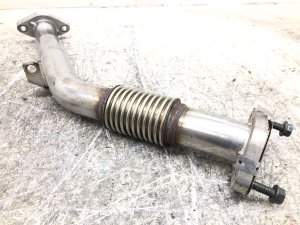
- Remove the EGR diffuser tube (the pipe between the EGR assembly and the intake). Inspect for a wet, gooey, or tar-like residue. This confirms an internal EGR cooler leak. Normal buildup will be dry soot.
- If coolant residue is present, the EGR cooler has failed and must be replaced along with the EGR valve and any contaminated sensors. Thoroughly clean the EGR passages and intake manifold of all sludge.
- If no coolant is present but carbon buildup is severe, cleaning the components may be attempted, but replacement of the clogged parts is the recommended permanent repair.
Parts You'll Likely Need
- Low Pressure EGR Valve
(OEM #68492935AA)— This valve is the component that gets contaminated and seized by the coolant/soot sludge from a leaking EGR cooler, triggering the P0404 code. It is often sold as part of a complete cooler assembly.
Trusted brands: Mopar
OEM price range: $300-$500
Aftermarket price range: $200-$350 - EGR Cooler
(OEM #CSNDVB11AB (Kit))— This is the primary failure point on the 3.0L EcoDiesel, developing internal cracks that leak coolant. It is the root cause of the P0404 code in most cases.
Trusted brands: Mopar, Dorman OE FIX, Bullet Proof Diesel
OEM price range: $400-$700
Aftermarket price range: $500-$900 for upgraded versions - EGR Gaskets
(OEM #68493362AA, 68493361AA)— New gaskets are required when replacing the EGR valve and cooler to ensure a proper seal against exhaust and coolant leaks.
Trusted brands: Mopar
OEM price range: $10-$40 per gasket
Aftermarket price range: $5-$20 per gasket
Related Codes That Often Appear With This One
- P0401 — Stands for 'EGR Flow Insufficient Detected'. This code often appears alongside P0404 if the valve is stuck closed or passages are clogged with carbon or sludge.
- P040F — Stands for 'EGR Temperature Sensor A-B Correlation'. This code was listed with P0404 in manufacturer TSB #18-001-22, indicating a related fault within the EGR temperature monitoring system that can be addressed with a PCM software update.
- P2457 — Stands for 'EGR Cooling System Performance'. This code directly points to a problem with the EGR cooler's ability to cool the exhaust gases, often triggered by internal blockages or lack of coolant flow from a leak.
Technical Service Bulletins (TSBs) & Recalls
- TSB #18-001-22, Rev. A: A PCM software flash to address a list of DTCs including P0404, P040F, and others. The fix is reprogramming the module, not replacing hardware, though it may be done in conjunction with a hardware repair.
Platform-Specific Known Issues
- A Technical Service Bulletin (TSB #18-001-22, Rev. A) was issued by the manufacturer for the 2021 Wrangler. It involves a PCM software update to address a list of DTCs, including P0404, and symptoms like poor cold idle. This suggests the factory logic for monitoring the EGR system was too sensitive or flawed.
- There is a major safety recall (NHTSA #23V-263) for the high-pressure fuel pump (HPFP) on 2021-2023 Wranglers with the 3.0L EcoDiesel. A failing HPFP can cause an engine stall and should be addressed by a dealer, though it is unrelated to the P0404 code.
Mechanic-Grade Diagnostic Values
- EGR Valve Solenoid Resistance (High-Pressure) — expected: 19.9 - 23.4 ohms. Failure: An infinite (OL) reading indicates an open circuit; a near-zero reading indicates a short.
- EGR Temperature Sensor Resistance — expected: 200 - 240 ohms at room temperature (65-75°F / 18-25°C). Failure: A reading outside this range indicates a faulty sensor.
- EGR Valve Connector (E-15) Pin 1 (GRN wire) Voltage — expected: 5V Reference. Failure: Incorrect or missing voltage points to a problem with the PCM or wiring.
- EGR Valve Connector (E-15) Pin 5 (LT GRN/BLK wire) Continuity — expected: Continuity to ground (Low Reference). Failure: Lack of continuity to ground indicates a wiring fault.
Scan Tool Commands That Help
- wiTECH or advanced bidirectional scanner: EGR Valve Control / Actuator Test — Use this function to command the EGR valve from 0% to 100% while monitoring the position sensor feedback. This directly tests the valve's mechanical and electrical response to determine if it is sticking, slow, or unresponsive.
- wiTECH or advanced bidirectional scanner: EGR Valve Recalibration / Reset — This function must be performed after installing a new EGR valve. It resets the PCM's learned adaptive values and establishes the new valve's closed position as the baseline, preventing performance issues or repeat codes caused by the PCM using old data.
- wiTECH: Relative Compression Test — If a severe EGR cooler leak is suspected of causing internal engine damage (hydrolocking), this test can help identify compression differences between cylinders without major disassembly. An acceptable variance is 15 RPM or less between any two cylinders.
Wiring & Ground Locations
- E-15 Connector — Located at the left rear of the engine, behind the intake air flow valve.. This is the main electrical connector for the high-pressure EGR valve assembly. All voltage, ground, and signal tests for the valve's position sensor and control solenoid are performed here.
- Engine Ground Strap — There are multiple key grounds. One is on the driver's side of the engine bay near the brake booster. Another important ground runs from the engine block to the body/frame.. A poor engine ground can cause erratic behavior in various sensors, including the EGR position sensor, leading to incorrect readings and fault codes like P0404. Verifying a clean, tight ground connection is a crucial step in electrical diagnosis.
- EGR Valve Connector Pinout (8-Pin) — At the E-15 connector. Pin 1: 5V Reference (GRN), Pin 5: Low Reference/Ground (LT GRN/BLK), Pins 6, 7, 8: Solenoid Control, Pins 2, 3, 4: Position Sensor Signals.. Knowing the specific pin functions is essential for accurately testing the EGR circuit with a multimeter to isolate a fault between the wiring, the PCM, or the EGR valve itself.
Real Owner Repair Stories
- Jeep Gladiator Forum (2022 Jeep Gladiator EcoDiesel, 34,000 miles) — Slow but consistent coolant loss (total of 40 ounces added over a year), strong exhaust odor when idling.
❌ Tried (didn't work) A dealer performed a cooling system pressure test, which dropped from 20 psi to 17 psi overnight and was deemed 'normal' with no external leaks found.
✅ What actually fixed it The owner self-diagnosed a leaking EGR cooler by removing the EGR diffuser pipe and finding a 'gooey tar-like substance' instead of dry soot, confirming an internal coolant leak. The owner planned to replace the EGR cooler with a more robust aftermarket unit from Bulletproof Diesel.
OEM Part Supersession History
CSNDVB11AA→CSNDVB11AB— This is a revision to the EGR cooler kit. The 'AB' version is the updated replacement for the 'AA' part.
Heads up: According to a safety recall notice, dealers were instructed to order the 'AA' part, but their system might automatically supersede it to the 'AB' version if local stock of 'AA' was depleted. Both are considered usable for the repair.68490113AA, 68509351AA→CSNDVB11AB— These earlier individual part numbers were consolidated into the complete cooler kit (CSNDVB11AB) for service repairs.
Helpful Videos
Used OEM Parts in Stock
New Aftermarket Parts Available



The information in this article is provided for general reference and educational purposes only. Vehicle specifications, procedures, and part compatibility can vary by production date, trim level, and region. Always consult your vehicle's factory service manual and verify part numbers before purchasing or performing repairs. Safety-critical components such as airbags, seat belts, and braking systems should be installed by a qualified professional.
- Jeep WRANGLER:
- 🎬 Helpful Videos
- 🛍️ Shop This Part
- What's Unique About the 2021-2021 Jeep WRANGLER
- Diagnostic Flowchart
- Symptoms You May Notice
- Most Likely Causes
- Rare But Worth Checking
- Diagnosis Steps
- Parts You'll Likely Need
- Related Codes That Often Appear With This One
- Technical Service Bulletins (TSBs) & Recalls
- Platform-Specific Known Issues
- Mechanic-Grade Diagnostic Values
- Scan Tool Commands That Help
- Wiring & Ground Locations
- Real Owner Repair Stories
- OEM Part Supersession History
- 🎟️ Get 5% Off