

P0404 on 2016-2017 Jeep Grand Cherokee: EGR Causes and Fixes
On 2016-2017 Grand Cherokees with the 3.6L engine, P0404 is most often caused by a faulty EGR valve, frequently damaged by aggressive software commands from the PCM. A factory Customer Satisfaction Notification (T23) recommends a PCM software update to prevent repeat failures. The complete fix requires replacing the EGR valve (Mopar P/N 5281256AI) and reprogramming the PCM.
- P0404 on this Jeep means the EGR valve's actual position doesn't match what the computer expects.
- A factory service campaign (T23) confirms that the vehicle's own software can damage the EGR valve, making a PCM update essential.
- The correct fix involves replacing the EGR valve (OEM P/N 5281256AI) AND having a dealer reprogram the PCM.
- Simply replacing the valve without the software update will likely lead to the new valve failing again.
- Platform mates like the Dodge Durango and Chrysler Pacifica with the same 3.6L engine share this exact issue.
What's Unique About the 2016-2017 Jeep GRAND CHEROKEE

For the 2016-2017 Grand Cherokee with the 3.6L engine, this code is specifically addressed by a manufacturer Customer Satisfaction Notification T23. The bulletin notes that an "aggressive seating velocity" commanded by the engine's software can physically damage the EGR valve, leading to the P0404 code. This makes it a known issue where the vehicle's own control strategy is the root cause of the hardware failure, distinguishing it from simple carbon buildup seen on other vehicles. The fix explicitly requires a PCM software update to correct the logic.
Diagnostic Flowchart
Tap your situation to follow the diagnostic path that matches what you're seeing on this vehicle.
Symptoms You May Notice
- Check Engine Light is on
- Rough idle or stalling at low speeds
- Engine hesitation or sluggishness during acceleration
- Knocking or pinging sounds from the engine
- Reduced fuel economy
- Failure to pass an emissions test
- Smell of fuel on a cold start 🎬 Watch: A quick overview of P0404 symptoms and solutions.
- Replacing the EGR valve without performing the required PCM software update. The new valve may fail prematurely due to the same aggressive control logic that caused the original failure.
Most Likely Causes

- Faulty/Damaged EGR Valve 🔴 High Probability A specific TSB for this vehicle (T23) states that aggressive software commands can damage the EGR valve. Over time, the valve's internal motor or position sensor fails, or it can become physically stuck. The valve itself is the most common failure point for this code.
How to confirm: Use a capable OBD-II scanner to command the EGR valve open and closed. Monitor the EGR position sensor data (PID) to see if it moves smoothly and matches the command. If it doesn't, the valve is faulty. Physical inspection after removal can also reveal damage or excessive carbon.
Typical fix: Replace the EGR valve. The Mopar part number has been superseded multiple times, with the latest being 5281256AI. After replacement, the PCM should be reprogrammed per TSB T23 to prevent damage to the new valve.
Est. part cost: $190-$300 - Outdated Powertrain Control Module (PCM) Software 🔴 High Probability Customer Satisfaction Notification T23 explicitly calls for a PCM reprogram on all involved vehicles to correct the aggressive control logic that damages the EGR valve. This is a known factory issue and is the root cause of the hardware failure.
How to confirm: A Jeep dealership or a qualified shop with access to FCA's software (wiTECH) can check the current software calibration number against the latest available version specified in the TSB.
Typical fix: Reprogram the PCM with the updated software. This is often done in conjunction with an EGR valve replacement and is essential to prevent a repeat failure.
Est. part cost: $0 (if under campaign) - Carbon Buildup in EGR Valve or Passages 🟡 Medium Probability Like any EGR system, the passages can become clogged with carbon soot from the exhaust, restricting movement of the valve pintle. While the software issue is primary for this vehicle, carbon can still be a contributing factor or the main cause on higher mileage examples.
How to confirm: Remove the EGR valve and visually inspect it and the mounting passages for heavy carbon deposits that could physically restrict its movement.
Typical fix: Clean the EGR valve and passages with a dedicated cleaner and brush. However, many owners and technicians note that cleaning is often a temporary fix and replacement is more reliable, especially given the electronic nature of the P0404 code.
Est. part cost: $10-$20 - Damaged Wiring or Connector ⚪ Low Probability
How to confirm: Visually inspect the wiring harness and 5-pin connector going to the EGR valve for any signs of damage, corrosion, or loose pins. Perform a wiggle test on the harness while monitoring EGR position data on a scan tool to see if the reading becomes erratic.
Typical fix: Repair or replace the damaged section of the wiring harness or the connector pigtail.
Est. part cost: $20-$100
Rare But Worth Checking
- Faulty Ambient Air Temperature Sensor:
Diagnosis Steps
- Scan for Codes: Use an OBD-II scanner to confirm P0404 is the primary code. Note any other codes like P0401 or P0406.
- Check for TSBs: Confirm Customer Satisfaction Notification T23 applies to your vehicle's VIN. This bulletin is critical for this specific code on this vehicle and confirms the need for a PCM update.
- Inspect Wiring: Visually inspect the EGR valve's electrical connector and wiring for any obvious damage, corrosion, or loose connections.
- Test with Scan Tool: Use a bidirectional scan tool to command the EGR valve to open and close (e.g., in 25% increments). Watch the live data for the EGR position sensor. The position should change smoothly and correspond to the commands.
- Inspect the Valve Physically: If the scan tool test is inconclusive, remove the EGR valve. Inspect it for heavy carbon buildup that could cause it to stick. Also inspect the port on the engine for blockages.
- Clean or Replace: You can attempt to clean the carbon from the valve. However, given the TSB and the high likelihood of internal electronic failure, replacement with an OEM part is the most reliable fix.
- Perform PCM Update: After replacing the EGR valve, ensure the PCM is reprogrammed by a dealer or qualified shop with wiTECH access to prevent the new valve from being damaged by the original software flaw.
Parts You'll Likely Need

- EGR Valve
(OEM #5281256AI (supersedes 5281256AH, AG, AF, AE, AD))— This is the most common point of failure, either from internal electronic faults, carbon buildup, or damage from aggressive PCM commands as noted in TSB T23.
Trusted brands: Mopar
OEM price range: $190-$290
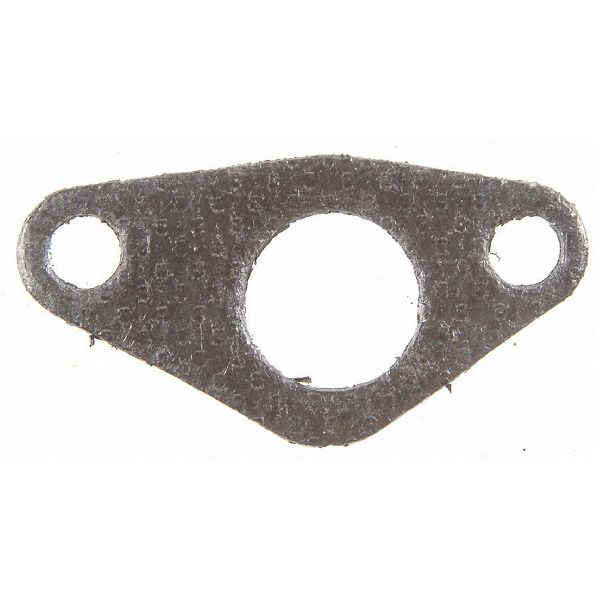
Aftermarket price range: $150-$250 - EGR Valve Gasket — The gasket should always be replaced when the EGR valve is removed to ensure a proper seal and prevent exhaust leaks. Some new valves include it.
Trusted brands: Mopar, Fel-Pro, Standard Motor Products
OEM price range: $5-$15
Aftermarket price range: $3-$10
Related Codes That Often Appear With This One
- P0401 — P0401 (EGR Flow Insufficient) can appear if the valve is stuck closed or its passages are clogged, which are related failure modes.
- P0406 — P0406 (EGR Sensor 'A' Circuit High) can occur if the position sensor inside the EGR assembly fails, sending a signal that is out of the expected range. This is a common companion code.
- P1404 — P1404 is a manufacturer-specific code for "EGR Closed Position Performance," which is very similar to P0404 and often points to the same root causes of a sticking or failing valve.
Technical Service Bulletins (TSBs) & Recalls
- Customer Satisfaction Notification T23: States that an "aggressive seating velocity may damage the EGR valve" causing code P0404, and that "The PCM must be reprogrammed on all involved vehicles." This campaign also applies to the 2016-2017 Dodge Durango and 2017 Chrysler Pacifica with the 3.6L engine.
Platform-Specific Known Issues
- A known issue documented in Customer Satisfaction Notification T23 describes how the factory PCM software can command the EGR valve to close too aggressively, causing physical damage to the valve and triggering code P0404. The official fix requires a PCM software update in addition to replacing the damaged valve. Failure to perform the software update will likely lead to a repeat failure of the new EGR valve.
Mechanic-Grade Diagnostic Values
- EGR Position Sensor Voltage (Key On, Engine Off) — expected: ~0.5V - 1.0V with valve closed. Failure: Voltage significantly higher than 1.0V when closed, or over 4.5V, which can trigger a P0406 fault. Voltage should increase smoothly as the valve is commanded open with a scan tool.
- EGR Valve Internal Resistance — expected: 19.9 - 23.4 Ohms (Cold). Failure: Resistance is significantly outside the specified range, indicating a faulty internal coil.
- EGR Connector 5V Reference Pin — expected: 5 Volts. Failure: Voltage is near 0V or significantly below 5V, indicating a wiring problem or a PCM fault.
Scan Tool Commands That Help

- wiTECH or capable bidirectional scanner: EGR System Test — This function allows the technician to manually command the EGR valve to open in increments (e.g., 25%, 50%, 75%) while observing the position sensor voltage. A valve that is stuck, sticky, or has a faulty sensor will not show a smooth, corresponding change in voltage, confirming a component failure.
- wiTECH or capable bidirectional scanner: Actuate EGR Valve at Idle — To test for EGR flow (often related to P0401 but useful here), command the EGR valve fully open at idle. A functioning EGR system will introduce enough exhaust gas to cause the engine to stumble, run rough, or stall. If the engine's idle does not change, the EGR passages are likely clogged with carbon, even if the valve itself is electronically sound.
Wiring & Ground Locations
- PCM Connector C1 (Black) — Main Powertrain Control Module connector.. This connector contains multiple critical ground wires for the PCM. Specifically, pins 2, 4, and 6 are ground circuit Z909. A poor connection at these pins can cause erratic behavior across multiple engine sensors, including the EGR valve.
- Engine Ground Strap (Mopar P/N 5064962AA) — Connects from the engine block, typically under or near the alternator on the passenger side, to the chassis.. This is a primary ground path for the engine block. Corrosion or a break in this strap can create a floating ground, leading to incorrect sensor readings and seemingly random electrical faults. A P0404 code caused by erratic sensor voltage could potentially be traced back to this strap being compromised, especially in regions with high corrosion.
OEM Part Supersession History
5281256AD, AE, AF, AG, AH→5281256AI— The part has been updated multiple times. At least one of the previous versions (ending in AG) was subject to a recall on 2021-2022 models for a defect that could cause the valve to stick open. The frequent revisions suggest ongoing efforts by the manufacturer to improve the durability and reliability of the valve, likely in response to issues like sticking and damage noted in TSB T23.
Helpful Videos
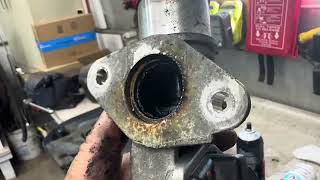

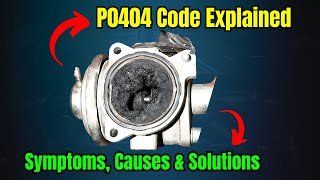
We Have This Part in Stock


The information in this article is provided for general reference and educational purposes only. Vehicle specifications, procedures, and part compatibility can vary by production date, trim level, and region. Always consult your vehicle's factory service manual and verify part numbers before purchasing or performing repairs. Safety-critical components such as airbags, seat belts, and braking systems should be installed by a qualified professional.
- Jeep GRAND CHEROKEE:
- 🎬 Helpful Videos
- 🛍️ Shop This Part
- What's Unique About the 2016-2017 Jeep GRAND CHEROKEE
- Diagnostic Flowchart
- Symptoms You May Notice
- Most Likely Causes
- Rare But Worth Checking
- Diagnosis Steps
- Parts You'll Likely Need
- Related Codes That Often Appear With This One
- Technical Service Bulletins (TSBs) & Recalls
- Platform-Specific Known Issues
- Mechanic-Grade Diagnostic Values
- Scan Tool Commands That Help
- Wiring & Ground Locations
- OEM Part Supersession History
- 🎟️ Get 5% Off