

P0402 on 2017-2018 Ram 1500 3.0L EcoDiesel: Causes and Fixes for Excessive EGR Flow
On a 2017-2018 Ram 1500 EcoDiesel, P0402 most often points to a sticking EGR valve or a software issue. Before replacing parts, check for recalls and TSBs, as a simple PCM reflash often resolves the code for $100-$300. A faulty EGR valve is the next most likely cause, costing around $200-$400 for the part, though cleaning it first is a viable option.
- Always check for software updates first. TSBs 18-068-20 and 18-069-20 show that a PCM reflash is the intended fix for P0402 in many cases.
- Verify if your truck is part of the EGR cooler recall (NHTSA 19V-757). A failing cooler is a known fire hazard and can affect the entire system.
- A sticking EGR valve is the most likely mechanical culprit. Cleaning may work, but replacement is often necessary for a long-term fix.
- The code rarely appears alone. Look for associated codes like P0299 (Turbo Underboost) or P245B (EGR Bypass) to help confirm the diagnosis.
What's Unique About the 2017-2018 Ram 1500

For the 2017-2018 Ram 1500 with the 3.0L EcoDiesel, the P0402 code is frequently linked to broader platform issues. FCA (Chrysler) issued specific Technical Service Bulletins (TSBs) where a simple software update to the PCM is the prescribed fix for P0402 and a host of other codes. Additionally, these trucks were subject to a major recall (NHTSA 19V-757 / FCA VB1) for cracking EGR coolers. A cracked cooler can allow vaporized coolant to enter the EGR system, which can alter system pressures and, in some circumstances, combust within the intake manifold, increasing the risk of a fire.
Diagnostic Flowchart

Tap your situation to follow the diagnostic path that matches what you're seeing on this vehicle.
Symptoms You May Notice

- Check Engine Light is on
- Rough or surging idle, especially when the engine is cold
- Engine hesitation or stalling
- Reduced engine power and acceleration
- Decreased fuel economy
- "Service Electronic Throttle Control" message may appear on the dash.
- Yellowish/brown smoke from the tailpipe under acceleration.
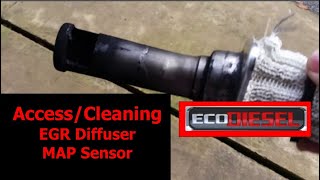
- Replacing the MAP sensor without proper diagnosis. 🎬 See how to locate and clean your MAP sensor
- Replacing oxygen sensors, which are not the primary measurement tool for EGR flow.
- Assuming the EGR valve is bad and replacing it without first checking for required software updates, which is the most common fix.
Most Likely Causes

- Outdated Powertrain Control Module (PCM) Software 🔴 High Probability Manufacturer TSBs #18-068-20 REV. B and #18-069-20 REV. A directly list P0402 as a code fixed by a PCM software update, indicating the original logic was too sensitive or flawed. These were also released as Rapid Response Transmittals (RRT 20-050 and 20-051), urging dealers to perform the update.
How to confirm: A dealership or a properly equipped independent shop can check the current software version against the latest available version using a wiTECH scan tool.
Typical fix: Reprogramming (flashing) the PCM with the latest manufacturer software. This is typically a dealer repair, with owner-reported costs ranging from $100 to $300.
Est. part cost: $0 - Sticking or Failed EGR Valve 🔴 High Probability Diesel EGR systems are prone to heavy soot and carbon buildup, which can cause the valve's pintle to stick in the open position, allowing more exhaust gas to flow than commanded.
How to confirm: Use a capable scan tool to command the EGR valve open and closed while monitoring its position sensor or the effect on engine performance. A physical inspection after removal will often show heavy carbon deposits that prevent the valve from seating correctly.
Typical fix: Remove and thoroughly clean the EGR valve and its passages with a strong degreaser or carbon cleaner. If cleaning is ineffective or the valve's electronic actuator has failed, it must be replaced.
Est. part cost: $200-$400 - Cracked EGR Cooler 🟡 Medium Probability These trucks were part of recall VB1 / NHTSA 19V-757 for EGR coolers that could crack due to thermal fatigue. A crack allows coolant to leak into the exhaust gas stream. This can alter system pressures and has been anecdotally linked by dealers to the P0402 code.
How to confirm: The primary symptom is a slow, unexplained loss of coolant. A pressure test of the cooling system may reveal the leak. The recall procedure involves inspecting and replacing the EGR cooler.
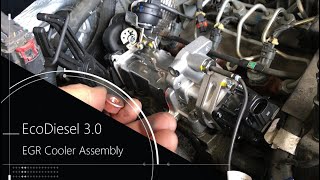
Typical fix: Replace the EGR cooler assembly. 🎬 Watch: Step-by-step guide to replacing the EGR cooler This repair should be covered if the vehicle is part of the recall and has not been serviced. A class-action lawsuit was also filed regarding this issue.
Est. part cost: $0 (if under recall), $500-$800 (if not) - Faulty EGR Cooler Bypass Valve ⚪ Low Probability The PCM flash TSBs also list code P245B (EGR Cooler Bypass Control Circuit Performance), suggesting this component is a known trouble spot that can occur with P0402. This valve controls whether hot exhaust bypasses the cooler, mainly during cold starts to reduce condensation.
How to confirm: Test the valve's operation using a scan tool to command it open and closed. Check for proper vacuum supply and electrical integrity of the control solenoid and its wiring.
Typical fix: Replace the EGR cooler bypass valve actuator/solenoid.
Est. part cost: $50-$100
Rare But Worth Checking
- Faulty EGR Pressure Sensor: While more likely to cause insufficient flow codes, a sensor that is biased or reading incorrectly could potentially lead the PCM to misinterpret flow as excessive.
- Clogged Intake Manifold Passages: While typically causing a P0401 (Insufficient Flow), severe and uneven carbon buildup could potentially disrupt flow in a way that a sensor interprets as excessive under certain conditions.
- Failing Intake Manifold Throttle Valve: Forum members have noted that if the main intake throttle butterfly valve gets stuck or fails to open properly, it can restrict fresh air and cause a stronger vacuum pull from the EGR system, leading to excessive flow and a P0402 code.
- Aftermarket Cold Air Intake (CAI): Owners have specifically reported that some aftermarket cold air intakes, like certain models from Banks, can trigger a P0402 code. This is believed to be caused by the relocation or altered airflow characteristics around the MAF sensor, confusing the PCM's calculations.
Diagnosis Steps
- Check for Recalls and TSBs: Enter the vehicle's VIN into the NHTSA or manufacturer website to check for open recalls (like VB1 for the EGR cooler) or applicable TSBs (like 18-068-20 or 18-069-20). This is the most important first step, as a software flash is the most likely solution.
- Scan for All Codes: Use an OBD-II scanner to read all present codes. The presence of codes like P0299 or P245B strengthens the case for a software issue.
- Analyze Freeze Frame Data: Review the freeze frame data for P0402 to understand the engine conditions (speed, load, temperature) when the code was set.
- EGR Valve Functional Test: Use a bidirectional scan tool to command the EGR valve to open and close. Monitor the EGR position sensor data or listen for an audible click and watch for a change in engine idle quality. A smooth idle that becomes rough when the valve is commanded open (and returns to smooth when closed) indicates a responsive valve.
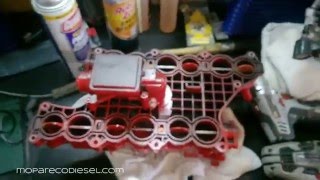
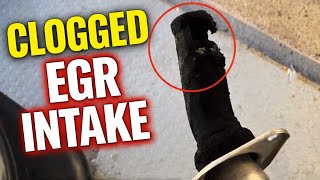
- Inspect EGR Valve: If the functional test is inconclusive, remove the EGR valve and inspect it for heavy carbon buildup that could cause it to stick open. Clean thoroughly before considering replacement. 🎬 Watch: How to clean your EGR cooler and intake
- Inspect Intake Manifold Throttle Valve: Visually inspect the throttle body at the front of the intake manifold. Ensure the butterfly valve moves freely and is not stuck closed or partially closed with carbon buildup.
- Check for Coolant Loss: Inspect the coolant reservoir for a low level, which could indicate a cracked EGR cooler as per the recall.
- Inspect EGR Cooler Bypass Valve: Command the bypass valve and check for proper operation if suspected.
- Inspect Wiring: Visually inspect the wiring harnesses and connectors for the EGR valve, bypass valve, and related sensors for any signs of damage or corrosion.
Parts You'll Likely Need
- EGR Valve
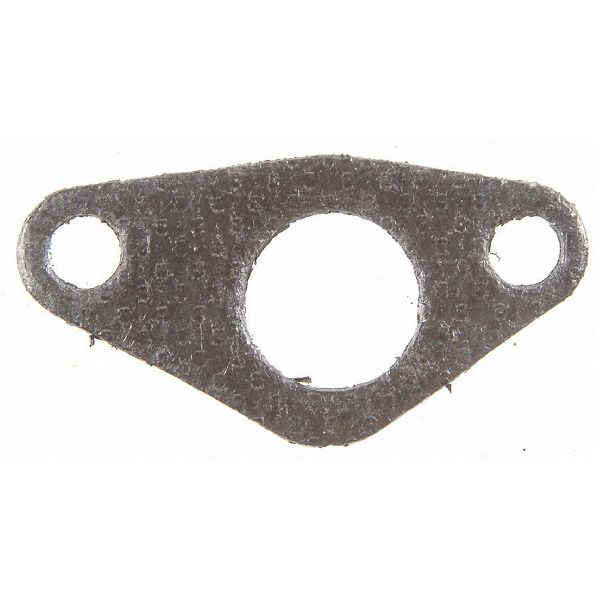
(OEM #68211310AA)— This is the most common mechanical failure point. Carbon buildup causes the valve to stick open, leading directly to the excessive flow condition. The part number 68211310AA is widely confirmed for this application.
Trusted brands: Mopar, Standard Motor Products (SMP), Dorman
OEM price range: $300-$450
Aftermarket price range: $180-$300 - EGR Cooler Kit
(OEM #68445601AA)— Due to a widespread recall for cracking, this part is a known failure item on the 3.0L EcoDiesel. A failed cooler can cause coolant loss and affect EGR system pressures, potentially contributing to a P0402 code.
Trusted brands: Mopar
OEM price range: $500-$800
Aftermarket price range: $350-$600
Related Codes That Often Appear With This One
- P0299 — Turbocharger Underboost. This code is listed in the same TSBs as P0402, suggesting a related software logic issue or that improper EGR flow is affecting turbo performance.
- P245B — EGR Cooler Bypass Control Circuit Performance. This code points to a problem with the valve that directs exhaust gas through or around the EGR cooler, and is often addressed by the same PCM update.
- P20EE — SCR NOx Catalyst Efficiency Below Threshold. This code, mentioned in owner complaints and TSBs, indicates an issue with the diesel emissions after-treatment system, which can be affected by incorrect EGR operation.
Technical Service Bulletins (TSBs) & Recalls
- 18-069-20 REV. A: Flash: Powertrain Control Module (PCM) Updates for 2018 models, addresses P0402.
- 18-068-20 REV. B: Flash: Powertrain Control Module (PCM) Updates for 2017 models, addresses P0402.
Platform-Specific Known Issues
- NHTSA Recall 19V-757 (FCA #VB1): Affects 2014-2019 Ram 1500 EcoDiesels. The EGR cooler is prone to cracking from thermal fatigue, which can allow coolant to leak and potentially cause an intake manifold fire. This should be checked and serviced by a dealer.
- TSB 18-068-20 REV. B (2017 models): A PCM software update was released to fix MIL illumination for a list of codes, including P0402 - EGR Flow Excessive Detected.
- TSB 18-069-20 REV. A (2018 models): A similar PCM software update was released for 2018 models to address P0402 and other DTCs.
- Owner Complaint ODI #11597419: A 2017 Ram owner reported a P0402 code after a previous recall repair, highlighting the recurring nature of EGR issues on this platform.
Mechanic-Grade Diagnostic Values
- EGR Position Sensor Signal Voltage — expected: Approximately 0.9V with valve closed, up to 3.9V with valve fully open.. Failure: Voltage dropping below ~0.3V or exceeding ~4.2V, or not changing when the valve is commanded to move, can indicate a faulty sensor or wiring.
- EGR Valve Actuator Coil Resistance (General Diesel) — expected: Approximately 19-24 ohms or 55-65 ohms, depending on the specific design.. Failure: Resistance that is significantly higher (open circuit) or lower (short circuit) than the specification for the given valve type.
- Voltage at EGR Valve Actuator Connector (General Diesel) — expected: Greater than 11 volts with key on, engine off.. Failure: Voltage below 11 volts indicates a problem in the power supply wiring or the PCM.
Scan Tool Commands That Help
- wiTECH or capable bidirectional scanner: EGR Valve Actuation Test — To functionally test if the EGR valve is physically responding to commands from the PCM. The technician can command the valve open and closed while observing engine RPM and smoothness to see if the valve is moving and sealing correctly.
- wiTECH or capable bidirectional scanner: EGR Learned Values Reset / EGR Valve Adaptation — This is a critical step after replacing the EGR valve. The PCM stores adaptive values for the old, worn valve. This function clears those values, forcing the PCM to relearn the position and flow characteristics of the new valve, preventing performance issues or repeat codes.
- wiTECH or capable bidirectional scanner: Monitor EGR PIDs: Commanded vs. Actual Position — During diagnosis, especially on a test drive, to see if the actual position reported by the sensor matches what the PCM is commanding. A discrepancy points to a sticking valve or faulty position sensor.
Wiring & Ground Locations
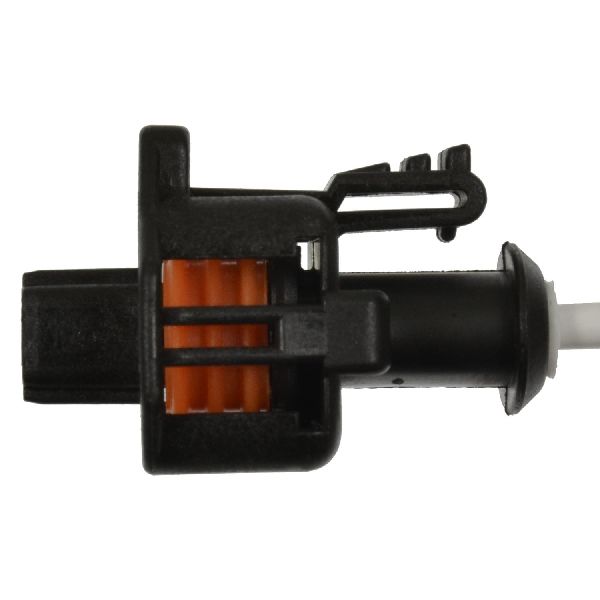
- EGR Valve Connector — On the EGR valve itself, located at the rear of the engine, slightly to the right of center.. This is the primary connection for power, ground, and signal for the EGR valve. A general diesel pinout suggests Pin 1 is a 5V supply and Pin 5 is ground, with other pins for control and signal. Verifying power and ground here is a key electrical diagnostic step.
- EGR Vacuum Solenoid Connector — Near the EGR cooler assembly, as shown in diagrams from the VB1 recall service procedure.. This connector powers the solenoid that controls vacuum to the EGR cooler bypass valve (related to code P245B, often seen with P0402). Damage here can cause related faults.
- Inlet Air Temperature Sensor Connector — On the intake plumbing near the EGR airflow control valve, identified in the VB1 recall procedure.. The PCM uses intake air temperature as a key input for EGR calculations. A bad connection here can corrupt the data and contribute to incorrect EGR flow calculations.
- Engine to Frame Ground — Specific location on the 2017-2018 EcoDiesel is not clearly documented in public-facing diagrams, but is a critical connection to check for any electrical or sensor-related issue.. A poor engine ground can cause floating or incorrect readings on multiple sensors, including those used by the PCM to calculate EGR flow, leading to false codes.
Real Owner Repair Stories
- Reddit user comment in r/Cummins (Dodge Ram, likely diesel (context implies HD, but P0402 is generic)) — P0402 code that would only appear when driving uphill on a light throttle.
❌ Tried (didn't work) Replaced EGR valve (was sticking), Replaced leaking exhaust manifold, Replaced exhaust pressure sensor, Replaced MAF sensor
✅ What actually fixed it A Dodge tech advised the owner that they resolved a similar case by replacing a leaking EGR cooler (leak was only found via coolant system pressure test) and cleaning the heater grid, MAP sensor, and temperature sensor due to soot buildup. The combination of the slight leak and soot on other sensors was the root cause.
"I Checked Everything" — The Actual Cause
- In one documented case, a technician chased a P0402 by replacing multiple common parts like the EGR valve and various sensors. The actual root cause was a combination of two issues that a smoke test would not find: a very slight coolant leak from the EGR cooler, discovered only with a cooling system pressure test, and associated soot buildup on the heater grid, which skewed system pressure readings enough to trigger the code under specific load conditions (light throttle, uphill).
Helpful Videos
We Have This Part in Stock


The information in this article is provided for general reference and educational purposes only. Vehicle specifications, procedures, and part compatibility can vary by production date, trim level, and region. Always consult your vehicle's factory service manual and verify part numbers before purchasing or performing repairs. Safety-critical components such as airbags, seat belts, and braking systems should be installed by a qualified professional.
- Ram 1500:
- 🎬 Helpful Videos
- 🛍️ Shop This Part
- What's Unique About the 2017-2018 Ram 1500
- Diagnostic Flowchart
- Symptoms You May Notice
- Most Likely Causes
- Rare But Worth Checking
- Diagnosis Steps
- Parts You'll Likely Need
- Related Codes That Often Appear With This One
- Technical Service Bulletins (TSBs) & Recalls
- Platform-Specific Known Issues
- Mechanic-Grade Diagnostic Values
- Scan Tool Commands That Help
- Wiring & Ground Locations
- Real Owner Repair Stories
- "I Checked Everything" — The Actual Cause
- 🎟️ Get 5% Off