

P0402 on 2017-2019 Ford F-350 SD 6.7L: EGR Excessive Flow Causes & Fixes
On 2017-2019 F-350s with the 6.7L Power Stroke, P0402 is frequently caused by a powertrain control module (PCM) software issue, not a failed part. A simple dealer-performed PCM reflash, as outlined in Ford TSBs 19-2343 and 16-0152, is the most common fix. Other causes include a soot-covered MAP sensor, a sticking EGR valve, or a soot-clogged throttle body.
- For a 2017-2019 F-350 with a 6.7L engine, your first step for a P0402 code should be to check if Ford TSB 19-2343 or 16-0152 applies to your truck.
- The most likely fix is a PCM software update from a Ford dealer, not an expensive hardware replacement.
- If a software update doesn't apply or doesn't fix it, the next most probable cause is a MAP sensor covered in soot. Cleaning or replacing it is a simple and inexpensive step.
- A mechanically stuck EGR valve is also a possibility, but should be considered after ruling out the more common software and MAP sensor issues on this specific platform.
What's Unique About the 2017-2019 Ford F-350 SD

Unlike many vehicles where P0402 immediately points to a mechanically stuck EGR valve, on the 2017-2019 6.7L Power Stroke, the cause is very often software-related. Ford issued multiple Technical Service Bulletins (TSBs) acknowledging that the PCM's software logic could incorrectly trigger this code by misinterpreting data from the MAP, MAF, and Exhaust Pressure sensors. These TSBs direct technicians to reprogram the PCM, which often solves the problem without replacing any hardware. Another common issue on this platform is a soot-fouled Manifold Absolute Pressure (MAP) sensor, which gives the PCM incorrect data, leading to a misdiagnosis of excessive EGR flow. Some owners have also reported that cleaning heavy soot from the throttle body intake area resolved the code.
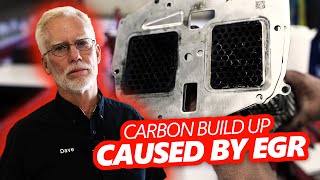
🎬 See how carbon build-up affects your EGR system's performance.Symptoms You May Notice
- Check Engine Light (MIL) illuminated
- Rough idle or stalling, especially when cold
- Engine hesitation or surging, particularly under load or during initial acceleration
- Reduced engine power or 'limp mode', especially when towing
- Increased smoke from the exhaust
- Poor fuel economy
- Replacing the Mass Airflow (MAF) sensor. While TSBs mention resetting the MAF parameters after a PCM reflash, the sensor itself is rarely the cause. One forum user reported their dealer replaced the MAF sensor for a P0402 code, which did not fix the problem, corroborating that this is a common misstep. The primary calculation for this code on the 6.7L relies more on the MAP and Exhaust Pressure sensors.
Most Likely Causes

- Powertrain Control Module (PCM) Software Calibration 🔴 High Probability Ford has officially documented this issue in TSB 19-2343, stating that software strategies can incorrectly trigger P0402 on 6.7L engines built before Jan 9, 2019. This is the most common first step for dealers.
How to confirm: Check the vehicle's build date against the date in TSB 19-2343. A Ford dealer or a shop with a Ford IDS scan tool can verify if the TSB applies and if the PCM has the latest calibration. The repair is covered under the new vehicle limited warranty and emissions warranty.
Typical fix: Reprogram the PCM with the updated software level and perform a MAF sensor parameter reset. This must be done by a dealer or a properly equipped independent shop. Note: TSB 19-2343 explicitly states this update will increase Diesel Exhaust Fluid (DEF) consumption. The labor time is quoted as 0.5 hours.
Est. part cost: $0 - Dirty or Faulty Manifold Absolute Pressure (MAP) Sensor 🟡 Medium Probability The MAP sensor on the 6.7L Power Stroke is positioned where it is easily exposed to soot from the EGR system. Over time, a thick layer of soot can build up, insulating the sensor and causing it to send slow or inaccurate pressure readings to the PCM.
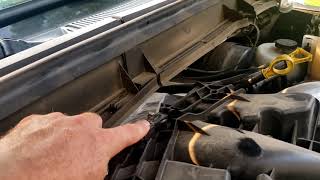
How to confirm: Remove the single 7mm or 8mm bolt holding the MAP sensor in the intake manifold and visually inspect it for heavy carbon/soot buildup. With a scan tool, monitor the MAP sensor voltage; a reading of 0 volts with the key on, engine off, points to a failed sensor or wiring issue, as seen in a real-world diagnosis. 🎬 Watch: Real-world diagnosis of a 6.7L Power Stroke with P0402.
Typical fix: Carefully clean the soot from the sensor tip using electrical contact cleaner or a dedicated MAP sensor cleaner. Do not physically scrape the sensing element. If cleaning does not resolve the issue or the sensor has failed electrically, it must be replaced. Some owners install a MAP sensor spacer to move the sensor out of the direct path of soot buildup.
Est. part cost: $40-$120 - Sticking or Failed EGR Valve 🟡 Medium Probability Like any diesel engine, the 6.7L Power Stroke's EGR valve is susceptible to carbon and soot buildup, which can cause the valve to stick open, leading to excessive flow.
How to confirm: Use a high-level scan tool to command the EGR valve open and closed while monitoring its position sensor to see if it responds correctly and quickly. A physical inspection for carbon buildup may be necessary if scan tool data is inconclusive.
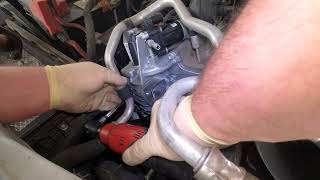
Typical fix: In some cases, the valve can be cleaned, but replacement is often the more reliable, long-term solution, especially on higher mileage trucks. 🎬 Watch: Step-by-step guide to replacing the EGR valve.
Est. part cost: $350-$500 - Clogged EGR Cooler ⚪ Low Probability Excessive idling or short trips can lead to the EGR cooler becoming plugged with a wet, gooey soot, which can disrupt pressure readings and flow calculations, tricking the PCM into setting a P0402.
How to confirm: This is a more involved diagnosis that requires partial disassembly to inspect the inside of the EGR cooler for blockages. This is typically suspected after other, more common causes are ruled out.
Typical fix: The EGR cooler must be removed and either professionally cleaned or, more commonly, replaced.
Est. part cost: $400-$600
Rare But Worth Checking
- Soot-Clogged Throttle Body:
- Biased Exhaust Pressure (EP) Sensor:
Diagnosis Steps
- Connect an OBD-II scanner and confirm P0402 is the primary code. Check for other codes like P0401, P2074, or P0107, as they are often related.
- Check for applicable Technical Service Bulletins (TSBs). For vehicles built on or before Jan 9, 2019, TSB 19-2343 is the primary document. If it applies, a PCM reflash is the first and most likely fix.
- If no TSBs apply or the reflash doesn't work, inspect the Manifold Absolute Pressure (MAP) sensor. It is located on the upper intake manifold and held by one bolt. Remove it and check for heavy soot buildup. Clean it carefully with appropriate cleaner or replace if necessary.
- With a scan tool, monitor live data for the MAP sensor, MAF sensor, and Exhaust Pressure (EP) sensor. Compare MAP and EP readings at key-on, engine-off and while running to ensure they are providing plausible data. A MAP sensor reading 0 volts at KOEO indicates a failed sensor or circuit issue.
- Inspect the throttle body for heavy soot accumulation. If caked with carbon, remove and clean it.
- Inspect the EGR valve. Use a scan tool to command the valve to open and close, and check if the position sensor feedback matches the command. Listen for mechanical movement.
- If the EGR valve appears stuck or unresponsive, remove it for a physical inspection and cleaning or replacement.
- Inspect the vacuum lines (if applicable) and electrical connectors for the MAP sensor, EGR valve, and exhaust pressure sensor for any damage or corrosion.
- If the code persists, a more in-depth diagnosis of the EGR cooler for blockages may be required, especially on trucks with high idle hours.
Parts You'll Likely Need
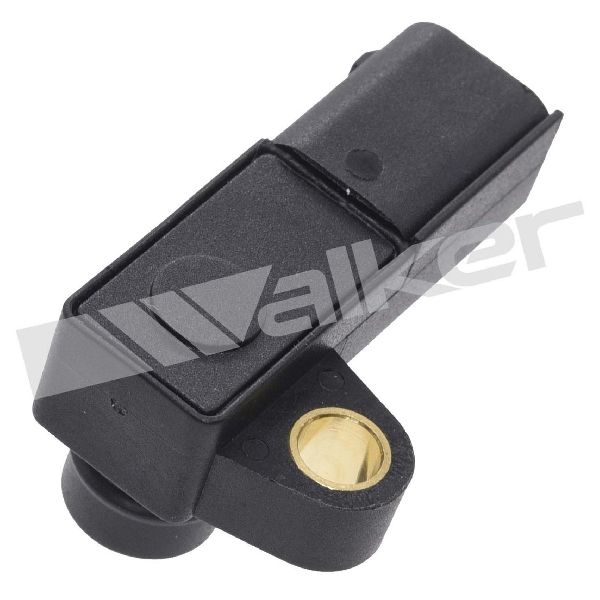
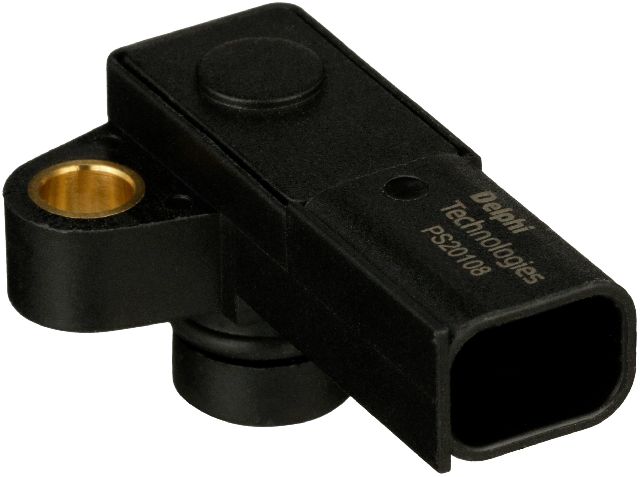
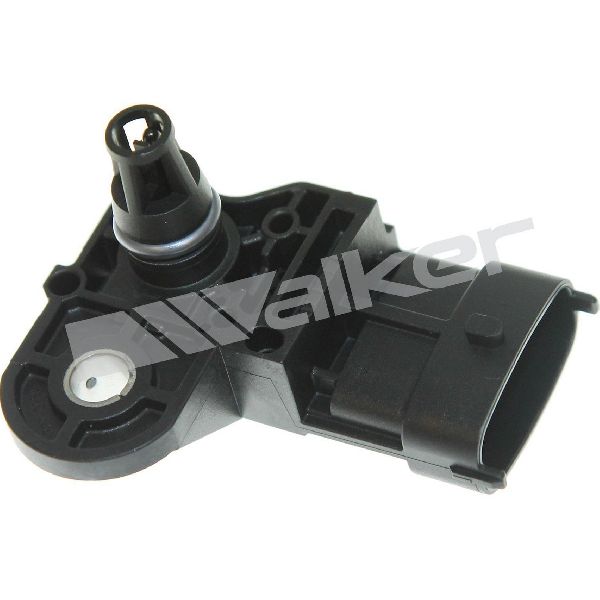
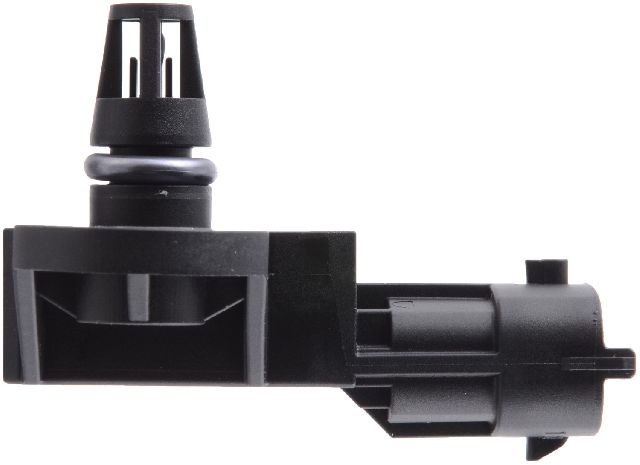
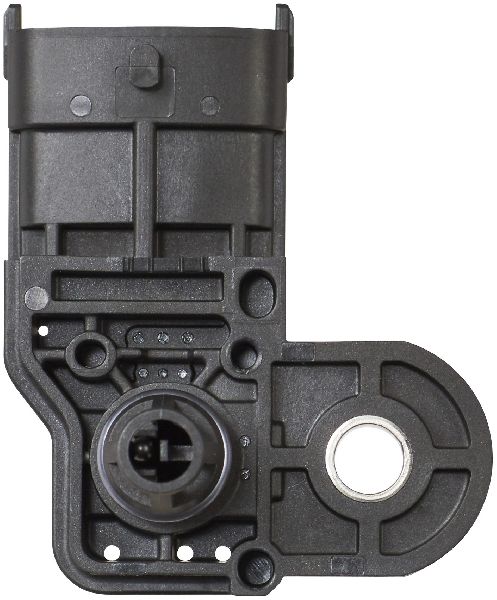
- Manifold Absolute Pressure (MAP) Sensor
(OEM #BC3Z-9F479-B (replaces BC3Z-9F479-A))— A soot-fouled MAP sensor is a very common cause of an incorrect P0402 code on the 6.7L Power Stroke, as it provides faulty data to the PCM. Cleaning is often the first step, but replacement is common.
Trusted brands: Motorcraft, Bosch, Alliant Power
OEM price range: $60-$120
Aftermarket price range: $40-$80 - EGR Valve
(OEM #BC3Z-9D475-J)— This is the primary mechanical component that can stick open due to carbon buildup, causing excessive EGR flow. It is a less frequent cause than software or MAP sensor issues on this platform but is still a notable possibility.
Trusted brands: Motorcraft
OEM price range: $450-$500
Aftermarket price range: $300-$400
Related Codes That Often Appear With This One
- P0401 — Insufficient EGR Flow. TSB 19-2343 lists P0401 and P0402 together as potential codes caused by the same PCM software issue.
- P2074 — Manifold Absolute Pressure/Mass Air Flow - Throttle Position Correlation. Also listed in TSB 19-2343 as being related to the PCM software calibration issue.
- P0107 — Manifold Absolute Pressure/Barometric Pressure Circuit Low. A failed or disconnected MAP sensor can trigger P0107 alongside P0402, as the PCM relies on the MAP sensor to calculate EGR flow. A real-world example showed both codes were fixed by replacing a single failed MAP sensor.
Technical Service Bulletins (TSBs) & Recalls

- TSB 19-2343: Addresses P0402 (and others) due to PCM software on 2017-2019 models, requiring a PCM reprogram.
- TSB 16-0152: Addresses P0402 on early 2017 models due to a MAF sensor adaptation issue, requiring a PCM update.
- SSM 46115: Notes an issue with P0402 on 2017 models and points to a specific diagnostic path in the service manual.
Platform-Specific Known Issues
- TSB 19-2343: PCM Reflash for Multiple DTCs: For 2017-2019 models built on or before 9-Jan-2019, DTCs P0402, P0401, P2074, and/or P0170 can be caused by PCM software logic. The official fix is to reprogram the PCM and perform a MAF parameter reset. Ford explicitly notes this calibration will increase Diesel Exhaust Fluid (DEF) consumption as a side effect.
- TSB 16-0152: MAF Adaptation on Early 2017 Models: For some 2017 models built on or before 24-Oct-2016, P0402 can be set due to the Mass Air Flow (MAF) sensor adaptation feature not having learned yet. The fix involves updating the PCM's 'as-built' data, a specific type of programming done at the dealer.
- Owner Experience: PCM Reflash Cost: Owners on forums have reported being quoted around $300 by a Ford dealer for a PCM reflash if the vehicle is out of warranty.
Mechanic-Grade Diagnostic Values

- MAP vs. EP Sensor Correlation at KOEO — expected: With the Key On, Engine Off (KOEO), the Manifold Absolute Pressure (MAP) and Exhaust Pressure (EP) sensor readings should both be very close to the Barometric Pressure (BARO) reading, which is equivalent to atmospheric pressure at your elevation. All three values should be nearly identical.. Failure: If one sensor reads significantly different from the other two at KOEO, it indicates a biased or faulty sensor. For example, if MAP and BARO are ~14.5 PSI and EP reads 18 PSI, the EP sensor is biased and will cause incorrect EGR flow calculations.
Scan Tool Commands That Help
- Ford IDS (or equivalent high-level scanner): MAF Parameter Reset — This is a mandatory step after reprogramming the PCM per TSB 19-2343. It clears the old learned adaptive values for the MAF sensor, forcing the PCM to relearn airflow characteristics with the new software strategy. The specific path is: Toolbox > Powertrain > Service Functions > Reset/Clear Specified Function > Reset/Clear Functions > MAF Sensor.
- Ford IDS (or equivalent high-level scanner): EGR Valve Actuation / Bidirectional Control — To test the mechanical function of the EGR valve. A technician can command the valve to open and close while monitoring its position sensor PID. This helps determine if the valve is physically sticking or moving slowly due to carbon buildup, without having to remove it first.
Wiring & Ground Locations
- MAP Sensor Connector — On the MAP sensor itself, located on the top of the upper intake manifold.. The MAP sensor uses a 3-wire connector. Damage to this connector or its wiring (pigtail) can cause a loss of signal or incorrect voltage, directly impacting the EGR flow calculation and potentially triggering P0402 and other codes like P0107.
- G105 / G129 — Behind the passenger-side kick panel. The panel is removed by first pulling up the door sill trim, then pulling the kick panel rearward.. These are primary grounding points for various interior modules and potentially sensor circuits that run through the cabin. A poor ground at this location can cause erratic behavior in multiple systems, including creating sensor bias that could lead to an incorrect P0402 calculation.
Real Owner Repair Stories
- Ford Truck Enthusiasts Forum User (2017 F-350 6.7L Powerstroke) — P0402 code returned within 200 miles of a dealer visit.
❌ Tried (didn't work) Dealer performed the TSB reprogram for P0402., Dealer then replaced the Mass Air Flow (MAF) sensor.
✅ What actually fixed it The story documents a common misdiagnosis path. After the MAF sensor replacement failed to fix the issue, other forum members advised the owner to suspect a physically clogged EGR cooler, as the software and a common incorrect part had been addressed. - Ford Truck Zone Forum User 'Biffster' (2017 F-250 6.7L Powerstroke, <40k miles) — P0402 code
❌ Tried (didn't work) Initial diagnosis was not specified, but the truck was brought to the dealer for the code.
✅ What actually fixed it The dealer replaced the EGR valve. This serves as a counter-example to the software-only issue, confirming that direct mechanical failure of the EGR valve can and does happen on these trucks, even at relatively low mileage.
When the Usual Fixes Don't Work
- While the most common cause of P0402 on this platform is a software glitch fixed by a PCM reflash (TSB 19-2343), it is not the only cause. There are multiple documented cases where the TSB did not apply or did not fix the issue. In one instance, a 2017 truck required a full EGR valve replacement to resolve the code, indicating a true mechanical failure. In another case, a dealer performed the reflash and then incorrectly replaced the MAF sensor, but the code returned, leading to the suspicion of a physically clogged EGR cooler. This demonstrates that while checking for the TSB is the correct first step, technicians and owners must not rule out traditional mechanical failures like a stuck EGR valve or clogged cooler if the software update is not applicable or does not resolve the symptom.
OEM Part Supersession History
BC3Z-9F479-A→BC3Z-9F479-B— Standard part revision by the manufacturer. The new part number is the current replacement for the original.
Heads up: The parts are directly interchangeable. BC3Z-9F479-B is the correct service part for the entire 2017-2019 range.
Model Year Variations Within This Range
- 2017-2019: The most critical variation is the vehicle's build date. TSB 19-2343, which addresses the software issue causing P0402, applies specifically to vehicles built on or before January 9, 2019. Vehicles built after this date should have the updated PCM calibration from the factory, making a software issue less likely to be the cause.
Helpful Videos
We Have This Part in Stock


The information in this article is provided for general reference and educational purposes only. Vehicle specifications, procedures, and part compatibility can vary by production date, trim level, and region. Always consult your vehicle's factory service manual and verify part numbers before purchasing or performing repairs. Safety-critical components such as airbags, seat belts, and braking systems should be installed by a qualified professional.
- Ford F-350 SD:
- 🎬 Helpful Videos
- 🛍️ Shop This Part
- What's Unique About the 2017-2019 Ford F-350 SD
- Symptoms You May Notice
- Most Likely Causes
- Rare But Worth Checking
- Diagnosis Steps
- Parts You'll Likely Need
- Related Codes That Often Appear With This One
- Technical Service Bulletins (TSBs) & Recalls
- Platform-Specific Known Issues
- Mechanic-Grade Diagnostic Values
- Scan Tool Commands That Help
- Wiring & Ground Locations
- Real Owner Repair Stories
- When the Usual Fixes Don't Work
- OEM Part Supersession History
- Model Year Variations Within This Range
- 🎟️ Get 5% Off