

P0401 on 2017-2022 Volkswagen Jetta: EGR Flow Insufficient Causes and Fixes
On a 2017-2022 VW Jetta, the P0401 code almost always means the EGR valve or its passages are clogged with carbon. Cleaning the EGR valve and passages is the most common fix. A replacement EGR valve is the next most likely solution. In some cases, especially on TDI models, a clogged DPF or EGR cooler can be the root cause.
- P0401 on a 2017-2022 Jetta means the EGR system has insufficient flow.
- The most likely cause by far is carbon buildup clogging the EGR valve or its passages.
- The fix is often inexpensive if you can DIY, involving cleaning the valve and passages. If that fails, the valve needs to be replaced.
- Ignoring this code will cause you to fail emissions tests and can lead to poor engine performance and lower fuel economy over time.
- While the code indicates an emissions system fault, it does not typically render the vehicle undrivable in the short term.
What's Unique About the 2017-2022 Volkswagen JETTA

The 2017-2022 Jetta spans two generations, the Mk6 (2017-2018) and the Mk7 (2019-2022), but both commonly use small displacement turbocharged engines like the 1.4T EA211. These direct-injection engines are known for carbon buildup on intake valves and in the EGR system, making P0401 a relatively common code. The EGR system on these engines can also include an EGR cooler, which can also become restricted with carbon and soot. Interestingly, official VW Technical Service Bulletins (TSBs) for this period often list P0401 as a secondary code found when customers bring their cars in for entirely unrelated issues like suspension noises or loose mirrors, suggesting the code can be present without causing immediate, severe drivability problems.
Diagnostic Flowchart

Tap your situation to follow the diagnostic path that matches what you're seeing on this vehicle.
Generation note: This range covers the end of the Mark 6 (A6) generation (2017-2018) and the start of the Mark 7 (A7) generation (2019-2022). The most common engine, the 1.4T, is found in both generations (EA211 series). 🎬 Watch: A detailed breakdown of the 1.4T engine design. The core causes of P0401, primarily carbon buildup in the EGR valve, passages, and cooler, are relevant to both generations due to the direct-injection engine design.
Symptoms You May Notice
- Check Engine Light is on.
- Rough idle or engine hesitation.
- Decreased fuel economy.
- Engine knocking or pinging sounds, especially during acceleration.
- Failure to pass an emissions test.
- Reduced power and sluggish acceleration.
- Exhaust smell in the cabin, which could indicate an exhaust leak related to the EGR system.
- Replacing oxygen sensors before checking the EGR system.
- Replacing the mass airflow (MAF) sensor without proper diagnosis.
- Replacing the EGR valve when the passages or EGR cooler are the source of the clog.
Most Likely Causes

- Clogged EGR Passages or Valve 🔴 High Probability Direct-injection engines like the 1.4T do not have fuel washing over the intake valves, leading to carbon (soot) from the exhaust gas building up in the EGR valve and its narrow passages over time, restricting flow. This is the most common cause for P0401.
How to confirm: Remove the EGR valve and visually inspect it and the connecting ports on the intake manifold for thick black carbon deposits. On the 1.4T engine, this may require removing the intake manifold to gain access.
Typical fix: Remove the EGR valve and thoroughly clean it and the associated passages with carburetor cleaner, small brushes, and a flexible cable (like an old speedometer cable) to break up deposits. 🎬 See this clever trick for cleaning a clogged EGR valve. If cleaning is ineffective or the blockage is too severe, the valve must be replaced.
Est. part cost: $0 (if cleaning) - $250 - Faulty EGR Valve 🟡 Medium Probability The valve itself can fail mechanically (stuck closed) or electronically, preventing it from opening when commanded by the ECM. The internal pintle can get stuck due to carbon buildup or simple mechanical failure.
How to confirm: With the valve removed, you can try applying vacuum with a hand pump to see if the pintle moves (for vacuum-operated types). For electronic valves, a capable OBD-II scanner (like VCDS for VW) can command the valve to open while monitoring flow data or sensor readings.
Typical fix: Replace the EGR valve and gasket. The OEM part number for the 1.4T EA211 engine is often cited as 04E131501B or a similar variant.
Est. part cost: $150-$300 - Leaking or Clogged EGR Vacuum Hoses ⚪ Low Probability While many modern VWs use electronic EGR valves, some systems still rely on vacuum. Rubber hoses can crack, perish, or become disconnected over time, leading to a loss of vacuum needed to operate the valve. A related part, the crankcase breather hose check valve (e.g., part no. 03C103175G), can also fail and cause EGR-related codes.
How to confirm: Visually inspect all vacuum lines connected to the EGR solenoid and valve for cracks or loose connections. A vacuum gauge can be used to test for proper vacuum supply.
Typical fix: Replace the damaged vacuum hose(s).
Est. part cost: $10-$30
Rare But Worth Checking
- Faulty EGR Temperature or Pressure Sensor: The ECM uses sensors to verify EGR flow. If a sensor provides an incorrect reading (e.g., DPFE, MAP), the computer might mistakenly believe the flow is insufficient. This will usually be accompanied by another sensor-specific trouble code.
- Clogged EGR Cooler: Some VW engines, particularly TDIs but also some gasoline models, have an EGR cooler to lower exhaust gas temperatures. These coolers can become clogged with soot and carbon, restricting flow and triggering a P0401 code. Symptoms can include engine overheating and loss of coolant.
- Cracked or Faulty Engine Dust Cover: A cracked or poorly sealed engine dust cover (part no. 06Q 103 925 N for the 1.4T) can allow dust and debris to accumulate in the engine bay. One owner of a 1.4T Golf reported this debris migrated into the intake system, clogging the EGR valve and causing a P0401 code.
Diagnosis Steps
- Read the fault codes with an OBD-II scanner and check for any other codes that may be present.
- Visually inspect the EGR valve, its electrical connector, and any associated vacuum hoses for obvious damage, cracks, or loose connections.
- For the 1.4T engine, inspect the engine dust cover (part no. 06Q 103 925 N) for cracks or a bad seal, as this can introduce debris.
- If the EGR valve is vacuum-operated, check for vacuum at the supply hose with the engine running.
- Remove the intake manifold to gain full access to the EGR valve and its passages. This is often necessary for a thorough inspection and cleaning on the EA211 engine. 🎬 Watch: Step-by-step guide to cleaning intake valves on a 1.4T.
- Inspect the valve and the intake/exhaust manifold ports for heavy carbon buildup.
- Clean the EGR valve, EGR cooler (if equipped), and all associated passages thoroughly using carburetor cleaner, small brushes, and a pick or flexible cable to break up deposits.
- If cleaning doesn't resolve the issue or the valve is found to be mechanically stuck or electronically faulty, replace the EGR valve (OEM part number is often 04E131501B).
- Clear the P0401 code with the scanner and perform a test drive, including varied speeds and loads, to ensure the code does not return.
Parts You'll Likely Need

- EGR Valve
(OEM #04E131501B)— This is the component that clogs with carbon or fails internally, directly causing the insufficient flow condition.
Trusted brands: Pierburg, Wahler, Bosch
OEM price range: $200-$300
Aftermarket price range: $120-$220 - EGR Valve Gasket
(OEM #04E131512D)— The gasket should always be replaced whenever the EGR valve is removed to prevent vacuum or exhaust leaks.
Trusted brands: Victor Reinz, Elring
OEM price range: $10-$20
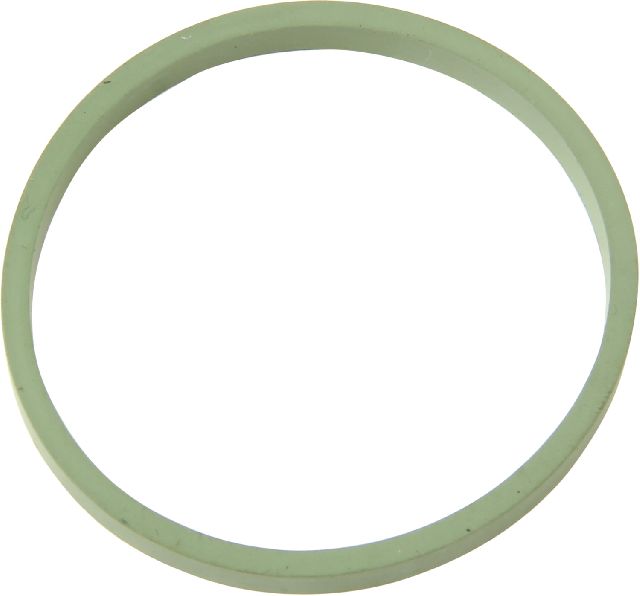
Aftermarket price range: $5-$15 - Intake Manifold Gasket
(OEM #04E129717C)— On the 1.4T EA211 engine, the intake manifold must often be removed to access the EGR passages for cleaning. The gasket is a one-time use part and must be replaced.
Trusted brands: Victor Reinz, Elring
OEM price range: $30-$50
Aftermarket price range: $20-$40
Related Codes That Often Appear With This One
- P0300, P0301, P0302, etc. — If the EGR valve is stuck open (not the cause of P0401, but related), it can cause a lean condition and misfires at idle.
- P2002 — On TDI diesel models (not the common 1.4T gas engine), P0401 is often seen with P2002, indicating a clogged or cracked Diesel Particulate Filter (DPF) is the root cause of the EGR system blockage.
- P2015 — This code for 'Intake Manifold Runner Position Sensor/Switch Circuit Range/Performance' can appear alongside P0401 on TDI models, suggesting a broader issue with intake airflow and carbon buildup affecting multiple components.
Technical Service Bulletins (TSBs) & Recalls
- VIN4APIN20211026: Notes MIL-on with P0401 alongside customer complaints of suspension noise and no-start issues.
- VIN4APIN20210728: Notes MIL-on with P0401 alongside customer complaints of suspension noise and a loose rear view mirror.
- VIN4APIN20210907: Notes MIL-on with P0401 alongside customer complaints of a hood release being inoperative.
- VIN4APIN20200803: Notes MIL-on with P0401 alongside customer complaints of noise from HVAC controls.
- VIN4APIN20210902: Notes MIL-on with P0401 alongside customer complaints of a hood release being inoperative.
- VIN4APIN20210831: Notes MIL-on with P0401 alongside customer complaints of noise during clutch pedal operation.
- VIN4APIN20210802: Notes MIL-on with P0401 alongside other MIL-on complaints with different codes.
Platform-Specific Known Issues
- The EA211 1.4T engine, common in this Jetta range, is a direct-injection engine prone to carbon buildup on intake components, which is the primary cause of EGR passage blockages.
- On TDI models, a cracked or failing Diesel Particulate Filter (DPF) is a known cause of P0401, as soot passes through and clogs the low-pressure EGR filter. A TSB suggests checking for soot inside the exhaust pipe at the EGR filter connection; if soot is present, the DPF and EGR filter should be replaced together.
Mechanic-Grade Diagnostic Values
- EGR Flow Deviation during VCDS Basic Setting Test (TDI Engines) — expected: The deviation between 'EGR ON' and 'EGR OFF' mass air flow readings must be at least 100.0 mg/Str.. Failure: A deviation less than 100.0 mg/Str indicates insufficient flow through the EGR system.
- EVAP Purge Valve (N80) Coil Resistance — expected: 15 to 25 Ohms. Failure: A reading outside this range indicates a faulty valve coil.
Scan Tool Commands That Help
- VCDS (VAG-COM): Basic Settings - Group 003 (TDI) — To actively test the EGR system. The procedure requires the engine to be running, then activating the basic setting while holding both the brake and throttle pedals. The tool will cycle the EGR valve on and off to measure flow deviation.
- VCDS (VAG-COM): Basic Settings - Group 060 — To perform a Throttle Body Adaptation (TBA). This should be done after cleaning or replacing the throttle body or intake manifold, which is common when servicing a P0401, to recalibrate the throttle valve's positions.
- VCDS (VAG-COM): Adaptation - Channels 118 & 123 (TDI) — On some TDI engines, these channels are used to reset the learned values for the low-pressure and high-pressure EGR valves after replacement.
Wiring & Ground Locations
- Main Engine Bay Ground — On the firewall/bulkhead, located above and behind the battery. Typically a stud with multiple brown wires attached.. The electronic EGR valve and its sensors require a solid ground connection to function and report data correctly. A corroded or loose ground at this main point can cause erratic behavior and fault codes.
- EGR Valve Connector — The 6-pin electrical connector that plugs into the electronic EGR valve.. This connector provides power and sends/receives commands and position data from the ECM. The part number for the pigtail is 1J0973713G, which can be cross-referenced to 06D973713G or 8E0973713G.
- Sensor Ground Connection (474) — Located within the engine pre-wiring harness.. This is a specific ground connection for sensors in the engine harness, including the EGR Temperature Sensor (G98). A fault in this part of the harness could lead to incorrect sensor readings and trigger P0401.
Real Owner Repair Stories
- IDParts Blog, Ross-Tech Forums, YouTube Mechanic Channels (2009-2014+ Volkswagen TDI models (Jetta, Golf, Passat)) — Check Engine Light with code P0401, often with no other noticeable driving symptoms. Sometimes seen with code P2002.
❌ Tried (didn't work) Cleaning or replacing only the EGR valve., Replacing the low-pressure EGR filter without checking the DPF., Focusing solely on the EGR system components without inspecting the aftertreatment system.
✅ What actually fixed it The root cause was a cracked Diesel Particulate Filter (DPF). The crack allowed soot to pass through the exhaust system and completely clog the downstream low-pressure EGR filter/pipe. The definitive fix was to replace both the DPF and the low-pressure EGR filter/pipe assembly. A key diagnostic step is to check the tailpipe for black soot; a clean tailpipe is expected on a healthy DPF system, so the presence of soot is a strong indicator of a cracked DPF.
OEM Part Supersession History
1J0973713G→06D973713G, 8E0973713G— These part numbers are listed as interchangeable for the 6-pin EGR valve connector pigtail.
Model Year Variations Within This Range
- 2017-2022: The 2017-2018 Jetta is the Mk6 generation, while the 2019-2022 Jetta is the Mk7 generation. However, both predominantly use versions of the 1.4T EA211 engine (e.g., CZTA, DGXA). The fundamental design of the direct-injection and EGR system is consistent across these years, making the primary cause of P0401 (carbon buildup) a shared issue. The major engine architecture change from the timing-chain-driven EA111 to the timing-belt-driven EA211 occurred before this vehicle range, meaning all 2017-2022 models benefit from the more reliable EA211 design.
Helpful Videos


Used OEM Parts in Stock

New Aftermarket Parts Available



The information in this article is provided for general reference and educational purposes only. Vehicle specifications, procedures, and part compatibility can vary by production date, trim level, and region. Always consult your vehicle's factory service manual and verify part numbers before purchasing or performing repairs. Safety-critical components such as airbags, seat belts, and braking systems should be installed by a qualified professional.
- Volkswagen JETTA:
- 🎬 Helpful Videos
- 🛍️ Shop This Part
- What's Unique About the 2017-2022 Volkswagen JETTA
- Diagnostic Flowchart
- Symptoms You May Notice
- Most Likely Causes
- Rare But Worth Checking
- Diagnosis Steps
- Parts You'll Likely Need
- Related Codes That Often Appear With This One
- Technical Service Bulletins (TSBs) & Recalls
- Platform-Specific Known Issues
- Mechanic-Grade Diagnostic Values
- Scan Tool Commands That Help
- Wiring & Ground Locations
- Real Owner Repair Stories
- OEM Part Supersession History
- Model Year Variations Within This Range
- 🎟️ Get 5% Off