

P0401 on 2009-2016 Volkswagen Jetta: EGR Insufficient Flow Causes & Fixes
On 2009-2016 VW Jetta TDI models, P0401 is most often caused by a cracked Diesel Particulate Filter (DPF) leading to a clogged low-pressure EGR filter. On gasoline models, it's typically a clogged EGR valve or passages. Expect to inspect the DPF on TDI engines before replacing any EGR components.
- For Jetta TDI models, P0401 is a strong indicator of a cracked Diesel Particulate Filter (DPF). Check for soot in the tailpipe before attempting any other repairs.
- If the DPF is found to be cracked on a TDI, you must replace both the DPF and the low-pressure EGR filter (part # 1K0253120) at the same time.
- For gasoline-powered Jettas, the cause is more likely to be a conventional case of carbon buildup restricting the EGR valve or its passages.
- Ignoring this code on a TDI will prevent the DPF from regenerating, leading to more significant and costly problems.
- The code P2002 (DPF Efficiency) often appears alongside P0401, further confirming DPF failure.
What's Unique About the 2009-2016 Volkswagen JETTA

For the 2009-2016 Jetta, especially the 2.0L TDI diesel models (engine codes CJAA/CBEA), the P0401 code has a very specific and well-documented cause. These engines use both a high-pressure and a low-pressure EGR system. The P0401 code almost always refers to a problem in the low-pressure system. Uniquely, the most common root cause is a cracked Diesel Particulate Filter (DPF), which allows soot to pass through and clog the downstream low-pressure EGR filter, triggering the insufficient flow code. This is confirmed by Volkswagen's own Technical Service Bulletin (TSB 26-13-03 / TPI 2031583) and countless owner complaints and forum discussions, where a P0401 is often seen as a direct indicator of a failed DPF.
Diagnostic Flowchart

Tap your situation to follow the diagnostic path that matches what you're seeing on this vehicle.
Generation note: This range covers the end of the Jetta Mk5 (A5, 2009-2010) and the Jetta Mk6 (A6, 2011-2016). The most significant differences relate to the engine. The 2.0L TDI (CJAA/CBEA) engine, common in these years, has a complex dual-EGR system where P0401 is frequently linked to DPF failure. Gasoline engines (like the 2.5L 5-cylinder) have a more conventional EGR system where carbon buildup in the valve and passages is the more typical cause.
Symptoms You May Notice

- Check Engine Light is on.
- Typically no other noticeable driving symptoms like power loss or rough idle.
- Soot or black residue visible inside the tailpipe (on TDI models, this is a strong indicator of a cracked DPF).
- Failure to pass an emissions inspection.
- Potential loss of coolant with no visible external leaks, indicating an internally cracked EGR cooler.
- White smoke or steam from the exhaust, also a symptom of a failed EGR cooler allowing coolant into the exhaust stream.
- Replacing only the low-pressure EGR filter on a TDI model without first checking the DPF. If the DPF is cracked, the new filter will quickly clog, and the code will return, wasting time and money.
- Replacing the high-pressure EGR valve on a TDI for a P0401 code. This code specifically points to the low-pressure EGR circuit, so the issue is almost always downstream of the DPF.
Most Likely Causes

- Cracked Diesel Particulate Filter (DPF) leading to clogged Low-Pressure EGR Filter (TDI Engines) 🔴 High Probability The DPF on the 2.0L TDI engine is known to crack internally over time. This allows soot to bypass the filter, travel downstream, and clog the fine mesh of the low-pressure EGR filter, which directly causes the P0401 insufficient flow condition. VW TSB 26-13-03 explicitly details this failure mode.
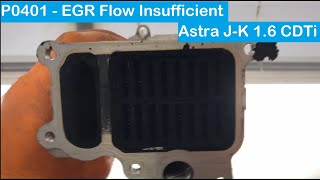
How to confirm: Wipe the inside of the exhaust tailpipe with your finger or a clean cloth. If it comes out covered in black soot, the DPF is almost certainly cracked and allowing unfiltered exhaust through. A healthy DPF should result in a clean tailpipe. Visually inspect the low-pressure EGR filter for heavy soot clogging after removal.
Typical fix: Both the DPF and the low-pressure EGR filter must be replaced together. Simply cleaning or replacing the EGR filter will not solve the problem, as the new filter will quickly clog again from the cracked DPF. After replacement, an adaptation for the new DPF may need to be performed using a diagnostic tool like VCDS.
Est. part cost: $700-$2200 - Clogged or Sticking EGR Valve 🟡 Medium Probability This is a more common cause on the gasoline engines (e.g., 2.5L). Carbon deposits from exhaust gas naturally build up over time, causing the EGR valve's internal plunger to stick or its passages to become restricted. While possible on a TDI, the DPF issue is far more prevalent.
How to confirm: Remove the EGR valve and inspect it and the intake manifold ports for heavy carbon buildup. A scan tool can also be used to command the valve open and closed to check for a response and monitor flow data.
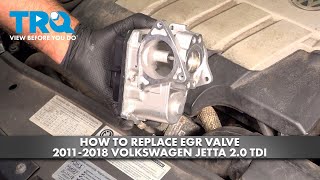
Typical fix: Thoroughly clean the EGR valve and all associated passages with a dedicated EGR/intake cleaner and a brush or speedometer cable. If the valve is electronically faulty or too damaged to clean, it must be replaced. 🎬 Watch: Step-by-step guide to replacing the TDI EGR valve.
Est. part cost: $150-$400 - Clogged EGR Cooler (TDI Engines) 🟡 Medium Probability The low-pressure EGR system on TDI engines includes a cooler that can become internally clogged with soot and carbon, restricting flow. This can happen even if the EGR filter is clean, or it can be clogged as a result of a failing DPF. One owner reported replacing the DPF and EGR filter, but the P0401 code remained until the EGR cooler was also addressed.
How to confirm: The cooler must be removed for inspection. If the EGR filter and valve are clean but the code persists, the cooler is the next likely point of restriction. A clogged or internally leaking cooler can also cause symptoms like unexplained coolant loss or white smoke from the exhaust.
Typical fix: The EGR cooler can sometimes be cleaned by flushing it, but replacement is often necessary for a permanent fix, as dealers will not clean the part.
Est. part cost: $300-$600 - Faulty EGR Sensor (e.g., Pressure or Temperature Sensor) ⚪ Low Probability
How to confirm: Use a scan tool to monitor the sensor's readings while actuating the EGR valve. The readings should change in response to the valve opening and closing. If they are static or erratic, the sensor may be faulty. For example, a faulty Differential Pressure Sensor (VW Part No. 076906051B), which monitors DPF pressure, can cause related codes and issues.
Typical fix: Replace the failed sensor.
Est. part cost: $50-$150
Rare But Worth Checking
- Faulty Exhaust Flap Actuator: A faulty or seized exhaust flap can contribute to incorrect backpressure readings, leading to a P0401 code or a related P240F (EGR slow response). This flap is designed to close to increase backpressure and force exhaust into the low-pressure EGR system.
- Leaking or Disconnected EGR Vacuum Lines: On older models or gasoline engines that use vacuum-actuated EGR valves, a cracked, leaking, or disconnected vacuum hose can prevent the valve from opening, causing an insufficient flow code.
Diagnosis Steps
- Read the fault codes with an OBD-II scanner. Note if P2002 or P240F are also present. 🎬 Watch: How to diagnose P2002 and P0401 codes together.
- On TDI models, perform the 'soot test' as described in VW TSB 26-13-03: wipe the inside of the tailpipe. If heavy black soot is present, a cracked DPF is the primary suspect.
- If the tailpipe is clean (more likely on gasoline models or a different TDI failure), inspect the electrical connector and wiring for the EGR valve and its sensors.
- Use a scan tool (like VCDS for VW) to perform an output test on the EGR valve, commanding it to open and close while monitoring flow sensor data. For gasoline engines, an adaptation can be run via Basic Settings in Group 074.
- Remove and inspect the EGR valve for carbon buildup. Clean or replace as needed.
- On TDI models, if the DPF is suspected to be cracked, remove and inspect the low-pressure EGR filter (located after the DPF). If it's clogged with soot, this confirms a cracked DPF.
- If the EGR valve and filter are clean, inspect the EGR cooler and associated pipes for blockages. Also check for signs of internal coolant leaks like white residue.
- If all components are clean and functional, test the EGR pressure/temperature sensors for correct operation.
Parts You'll Likely Need
- Diesel Particulate Filter (DPF)
(OEM #1K0254708GX / 1K0254708LX)— On TDI models, this is the most common root cause. The original DPF cracks, allowing soot to pass through and cause the P0401 code downstream. Must be replaced with the EGR filter.
Trusted brands: OE VW, Bosal, Walker
OEM price range: $1500-$2500
Aftermarket price range: $600-$1200 - Low-Pressure EGR Filter
(OEM #1K0253120)— This filter becomes clogged with soot as a direct result of a cracked DPF on TDI models, triggering the P0401 code. It must be replaced along with the DPF.
Trusted brands: Genuine VW/Audi
OEM price range: $100-$150
Aftermarket price range: $70-$120 - EGR Valve
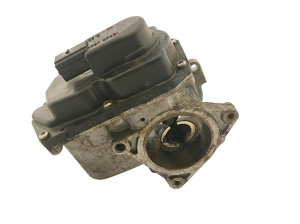
(OEM #03G131502B (Example for older TDI, check specific engine))— The valve itself can become clogged with carbon and stick, which is a more common cause on gasoline engines but can also fail on TDIs.
Trusted brands: Pierburg, Wahler, Bosch
OEM price range: $250-$400
Aftermarket price range: $150-$250 - EGR Cooler — On TDI models, the cooler for the low-pressure EGR system can become clogged internally with soot, restricting flow. This is often the next suspect if a new DPF and filter don't resolve the code.
Trusted brands: OE VW, Mahle
OEM price range: $400-$600
Aftermarket price range: $250-$450
Related Codes That Often Appear With This One
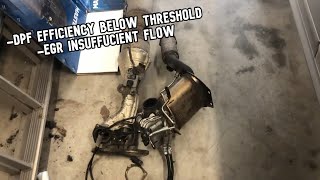
- P2002 — P2002 means 'DPF Efficiency Below Threshold.' This code commonly appears with P0401 on TDI models because a cracked DPF is the root cause for both issues: it fails its efficiency test (P2002) and clogs the EGR filter (P0401).
- P2463 — P2463 indicates 'Diesel Particulate Filter - Soot Accumulation'. This can be triggered alongside P0401 when the system detects excessive restriction, though a cracked DPF is still the likely underlying cause of the system malfunction.
- P240F — P240F means 'EGR System Response Too Slow'. This can be caused by the same blockages that trigger P0401, or by a sticking exhaust flap actuator that is supposed to help force gasses into the EGR system.
Technical Service Bulletins (TSBs) & Recalls
- TSB 01-14-21 (VW #2034898): Titled 'MIL ON, DTC P0401 Exhaust Gas Recirculation Flow Insufficient...'. This bulletin directly addresses the P0401 code on 2009-2014 TDI models. It instructs technicians to perform the 'soot test' on the tailpipe. If soot is present, it directs the replacement of both the DPF and the low-pressure EGR filter together, confirming this is the official factory-recognized repair procedure.
Platform-Specific Known Issues
- Multiple NHTSA owner complaints for the 2010 Jetta TDI explicitly state that the dealer diagnosed a P0401 code and identified a cracked DPF as the required repair.
- The 'Dieselgate' Extended Emissions Warranty may cover this repair on affected TDI models. Owners should check their VIN with a VW dealer to see if the DPF and related EGR components are covered before paying for repairs.
Mechanic-Grade Diagnostic Values
- EGR Valve Stepper Motor Coil Resistance — expected: 19.9 - 23.4 ohms (when cold). Failure: Resistance outside this range indicates a faulty valve motor.
- VCDS - Low Pressure EGR Flow Test (TDI) — expected: Deviation between 'EGR ON' and 'EGR OFF' must be at least 100.0 mg/Str.. Failure: A deviation less than 100.0 mg/Str indicates a flow restriction in the low-pressure EGR path.
- VCDS - Soot Load Calculated (TDI) — expected: Should decrease significantly after a successful DPF regeneration.. Failure: If the value in Measuring Block 241, field 2, does not drop after a regen, it indicates a problem with the DPF or the regeneration process.
Scan Tool Commands That Help
- VCDS (VAG-COM): Basic Settings - Group 074 (Gasoline Engines) — Used to run the adaptation process for the EGR valve after it has been cleaned or replaced. The status should change from 'Run' to 'ADP OK'.
- VCDS (VAG-COM): Basic Settings - Low Pressure EGR System Test (TDI) — Used to test the flow of the low-pressure EGR system. The user must hold the brake and throttle while the test alternates the EGR on and off, checking for a sufficient drop in mass airflow (at least 100.0 mg/Str).
- VCDS (VAG-COM): Adaptation - Channel 118 & 123 (TDI) — On some TDI engines (like CBEA), these adaptation channels are used to reset the learned values for the low-pressure and high-pressure EGR valves, respectively.
- ODIS (Dealer Tool): EGR Flow Test — A VW dealer technician on a forum noted that the dealer-level scan tool can run a definitive flow test to verify if the high-pressure EGR valve is bad, which is necessary before replacement.
Wiring & Ground Locations
- Engine Compartment Ground (Left Side) — Located below the battery tray on the left side of the engine compartment.. This is a primary ground point for multiple engine components and wiring harnesses. A corroded or loose connection here can cause erratic behavior from sensors and actuators in the emissions system.
- Transmission Ground — A ground strap connects from the battery to a ground point on the transmission housing, near the engine block.. This is the main ground for the engine/transmission assembly. Poor contact can lead to a variety of electrical issues, including problems with ECU-controlled components like the EGR valve.
- A-Pillar Ground (Right Side) — Located at the bottom of the right-side A-pillar, accessible from the interior.. This ground point serves various interior and control module circuits. While less likely to be the primary cause, a fault here could potentially affect communication with the ECU or other related modules.
Real Owner Repair Stories
- Reddit user on r/TDI (2012 VW Golf TDI (CJAA), 6-speed manual, ~150k miles) — Persistent P0401 code that would not clear.
❌ Tried (didn't work) Chemical cleaning of the DPF., Replacement of the EGR cooler., Replacement of the DPF and the low-pressure EGR filter.
✅ What actually fixed it After all parts were replaced, the code still remained. The owner then took the car on a 600-mile road trip, and after the long drive, the P0401 code vanished and did not return. This suggests that a long, continuous drive cycle was necessary to complete the system's internal readiness monitors and adaptations after the hardware was replaced. - Reddit user on r/tdi (2014 VW Jetta DSG (CJAA), 246,000 kms) — Check engine light with code P0401.
❌ Tried (didn't work) The user was in the initial diagnosis phase.
✅ What actually fixed it A VW dealer technician commented on the thread, stating that if P0401 is present with P2002, the fix requires a new DPF, a new low-pressure EGR filter, and often a new high-pressure EGR valve, which must be verified with a flow test on the dealer scan tool. Another user confirmed that P0401 on its own generally implies a cracked DPF, which clogs the low-pressure EGR filter.
When the Usual Fixes Don't Work
- While the most common fix for a P0401 on a TDI involves replacing the DPF and EGR filter, one owner's story provides a crucial counterpoint: the repair may not be complete until the vehicle undergoes a specific and potentially very long drive cycle. In a documented case, a 2012 Golf TDI had the DPF, EGR filter, and EGR cooler replaced, yet the P0401 code persisted. The issue only resolved itself after a 600-mile road trip, which presumably allowed the ECU's complex readiness monitors and adaptations to finally complete and verify the new parts were working correctly. This highlights that simply swapping hardware and clearing codes may be insufficient without performing the necessary post-repair drive cycle.
OEM Part Supersession History
Older 'canister' style low-pressure EGR filter→Newer 'mesh' style low-pressure EGR filter (e.g., 1K0253120)— Design improvement for flow and filtration.
Heads up: The two filter designs are reportedly interchangeable as they have the same shape and length, but the mesh style is the updated version.076906051A (DPF Pressure Sensor)→076906051B— Revision and consolidation of part numbers.
Heads up: Part number 076906051B is a common replacement for several older DPF pressure sensor part numbers, including 03G906051G and 03G906051J.
Model Year Variations Within This Range
- 2009-2010 (CBEA) vs 2011-2016 (CJAA): While both are 2.0L common-rail TDI engines with dual-EGR systems, there are slight variations in components and ECU logic. For example, a Ross-Tech wiki notes specific adaptation channels (118 for LP EGR, 123 for HP EGR) for the CBEA engine that may differ from the CJAA. The low-pressure EGR filter also had an early 'canister' design before being updated to a 'mesh' style pipe.
Helpful Videos
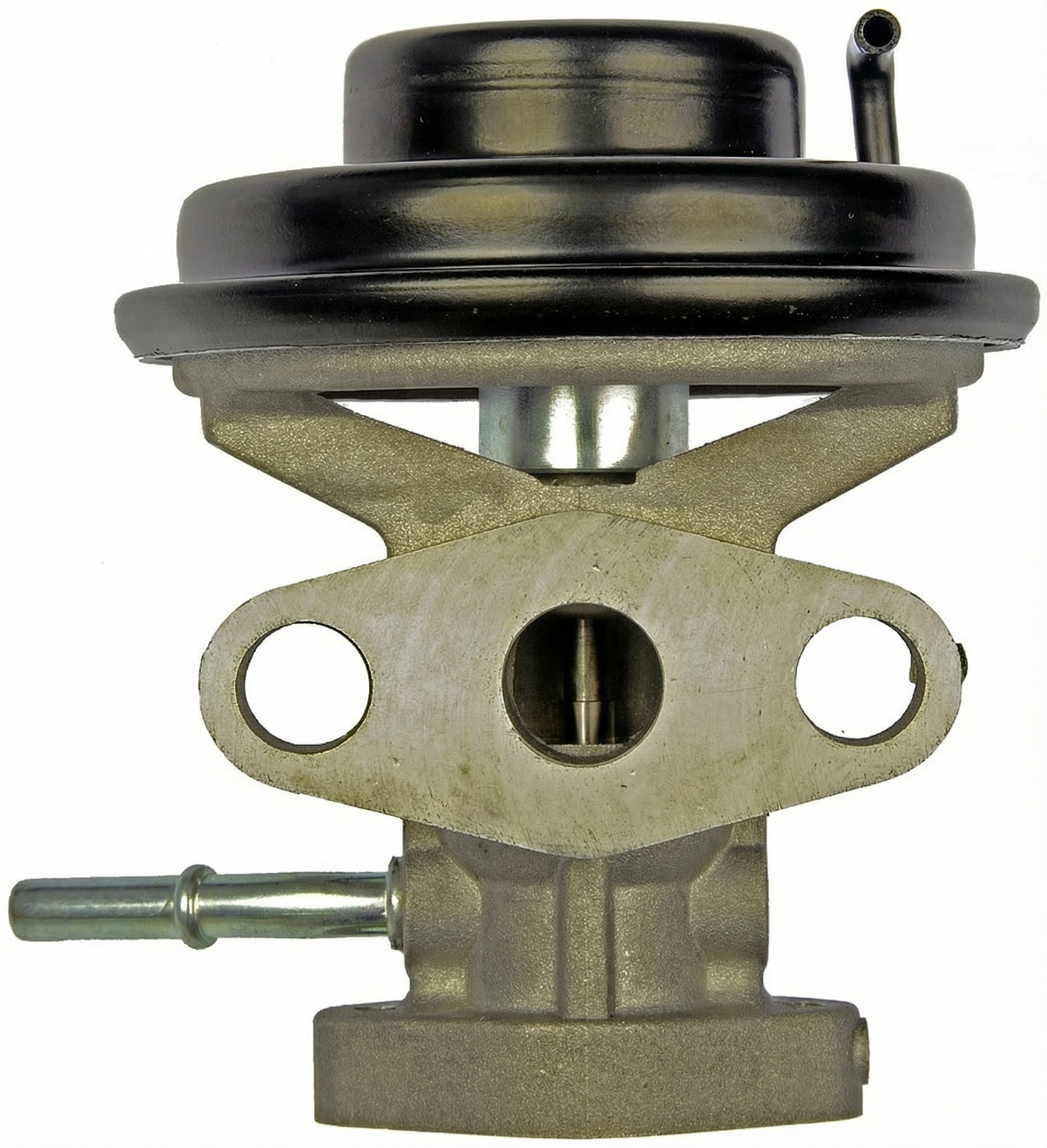
Used OEM Parts in Stock
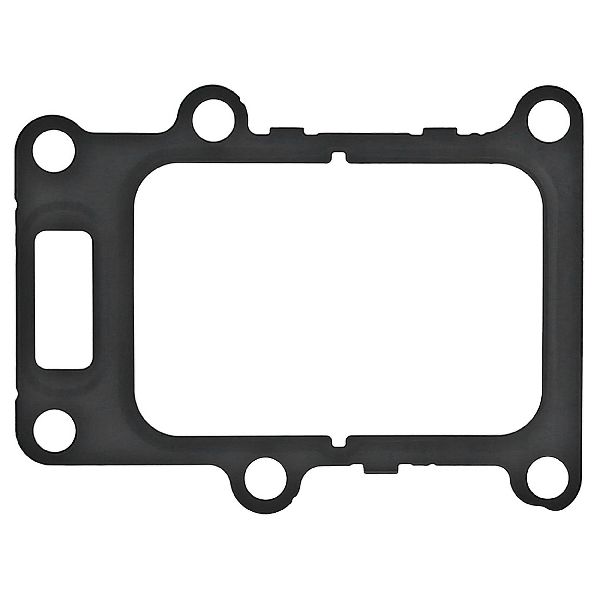
New Aftermarket Parts Available

The information in this article is provided for general reference and educational purposes only. Vehicle specifications, procedures, and part compatibility can vary by production date, trim level, and region. Always consult your vehicle's factory service manual and verify part numbers before purchasing or performing repairs. Safety-critical components such as airbags, seat belts, and braking systems should be installed by a qualified professional.
- Volkswagen JETTA:
- 🎬 Helpful Videos
- 🛍️ Shop This Part
- What's Unique About the 2009-2016 Volkswagen JETTA
- Diagnostic Flowchart
- Symptoms You May Notice
- Most Likely Causes
- Rare But Worth Checking
- Diagnosis Steps
- Parts You'll Likely Need
- Related Codes That Often Appear With This One
- Technical Service Bulletins (TSBs) & Recalls
- Platform-Specific Known Issues
- Mechanic-Grade Diagnostic Values
- Scan Tool Commands That Help
- Wiring & Ground Locations
- Real Owner Repair Stories
- When the Usual Fixes Don't Work
- OEM Part Supersession History
- Model Year Variations Within This Range
- 🎟️ Get 5% Off