

P0401 on 2010-2017 Volkswagen Golf: Causes & Fixes for TDI vs. Gas Engines
On 2.0L TDI diesel models, P0401 is almost always a clogged low-pressure EGR filter, often caused by a failing DPF that must be replaced at the same time. On gasoline engines (TSI/2.5L), the cause is more likely a carbon-clogged or faulty EGR valve.
- The first step is to identify your engine: 2.0L TDI Diesel or Gasoline (TSI/2.5L).
- If you have a TDI, P0401 almost certainly means your low-pressure EGR filter is clogged because your DPF is failing. Both must be replaced.
- If you have a gasoline engine, P0401 is likely a carbon-clogged or failed EGR valve and/or clogged intake passages.
- Simply clearing the code will not fix the problem; it will return until the underlying mechanical issue is addressed.
- On TDI models, do not replace just the EGR filter. The problem will quickly come back if the failing DPF is not also replaced.
What's Unique About the 2010-2017 Volkswagen GOLF

The 2010-2017 Golf platform is unique because of its diverse engine lineup, specifically the 2.0L TDI diesel engines (engine codes CJAA, CBEA) versus the gasoline (TSI/2.5L) engines. The cause of a P0401 code is drastically different between them. On the TDI, the issue stems from the *low-pressure* EGR system, one of two EGR systems on the engine. This code is a well-documented indicator of a specific failure pattern where the Diesel Particulate Filter (DPF) cracks and clogs a downstream filter, which is the direct trigger for the code. Forgetting this distinction is the single biggest cause of misdiagnosis on this vehicle.
Diagnostic Flowchart
Tap your situation to follow the diagnostic path that matches what you're seeing on this vehicle.
Generation note: The 2010-2017 range covers the Golf Mk6 (2010-2014) and Mk7 (2015-2017). The most critical distinction for code P0401 is not the generation, but the engine type. TDI diesel engines (primarily Mk6 CJAA engine code) have a specific, common failure pattern involving the DPF and a low-pressure EGR filter. Gasoline engines (2.5L in Mk6, TSI in Mk6/Mk7) follow a more traditional failure pattern of a clogged EGR valve or passages.
Symptoms You May Notice
- Check Engine Light is on.
- Failed emissions test.
- For TDI models, often no other symptoms are present initially.
- Visible soot or black dust inside the tailpipe (TDI models).
- Engine pinging or knocking, especially under load or at high speeds (more common on gasoline models).
- Rough idling or stalling (uncommon).
- Reduced fuel economy (uncommon).
- On TDI models, replacing only the EGR valve or only the low-pressure EGR filter without also replacing the failed DPF. The code will return.
- On gasoline models, replacing the EGR valve without thoroughly cleaning the clogged passages in the intake manifold.
- On TDI models, attempting to clean the low-pressure EGR filter. It is a fine mesh filter that is not designed to be cleaned once clogged with DPF soot.
Most Likely Causes

- Clogged Low-Pressure EGR Filter (TDI Diesel Engines Only) 🔴 High Probability This is the most common cause for P0401 on the 2.0L TDI (CJAA/CBEA) engine. It is almost always a direct consequence of a failing DPF sending soot downstream and clogging this specific filter, which looks like a small, mesh-filled pipe.
How to confirm: Visually inspect the low-pressure EGR filter pipe (Part No. 1K0253120B) for heavy soot blockage. Per VW TSB 01-18-13 (2034898), swipe the inside of the DPF outlet; if black soot is on your finger, the DPF has failed and caused the clog.
Typical fix: Replace the low-pressure EGR filter. CRITICAL: This must be done in conjunction with replacing the Diesel Particulate Filter (DPF), as a clogged filter is a symptom of a failed DPF.
Est. part cost: $100-$200 for the filter, but $1000+ for the required DPF. - Cracked / Failed Diesel Particulate Filter (DPF) (TDI Diesel Engines Only) 🔴 High Probability The internal ceramic structure of the DPF can crack over time, allowing soot to pass through and clog the downstream low-pressure EGR filter, which triggers the P0401 code. This is the root cause of the issue.
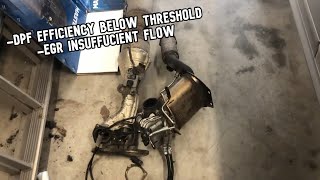
How to confirm: This is the root cause of the clogged EGR filter. The presence of code P2002 (DPF Efficiency Below Threshold) alongside P0401 is a strong indicator. A visual inspection showing soot in the tailpipe or past the DPF outlet confirms it.
Typical fix: Replace the DPF (Part No. 1K0254708GX) and the low-pressure EGR filter at the same time. Replacing only the EGR filter will result in the code returning quickly.
Est. part cost: $1000-$2500+. A Reddit user reported a dealer quote of ~$3,000 for the combined job. - Clogged or Faulty EGR Valve (Gasoline Engines) 🔴 High Probability On gasoline engines, carbon from the exhaust slowly builds up in the EGR valve's pintle and passages, eventually restricting movement and flow.
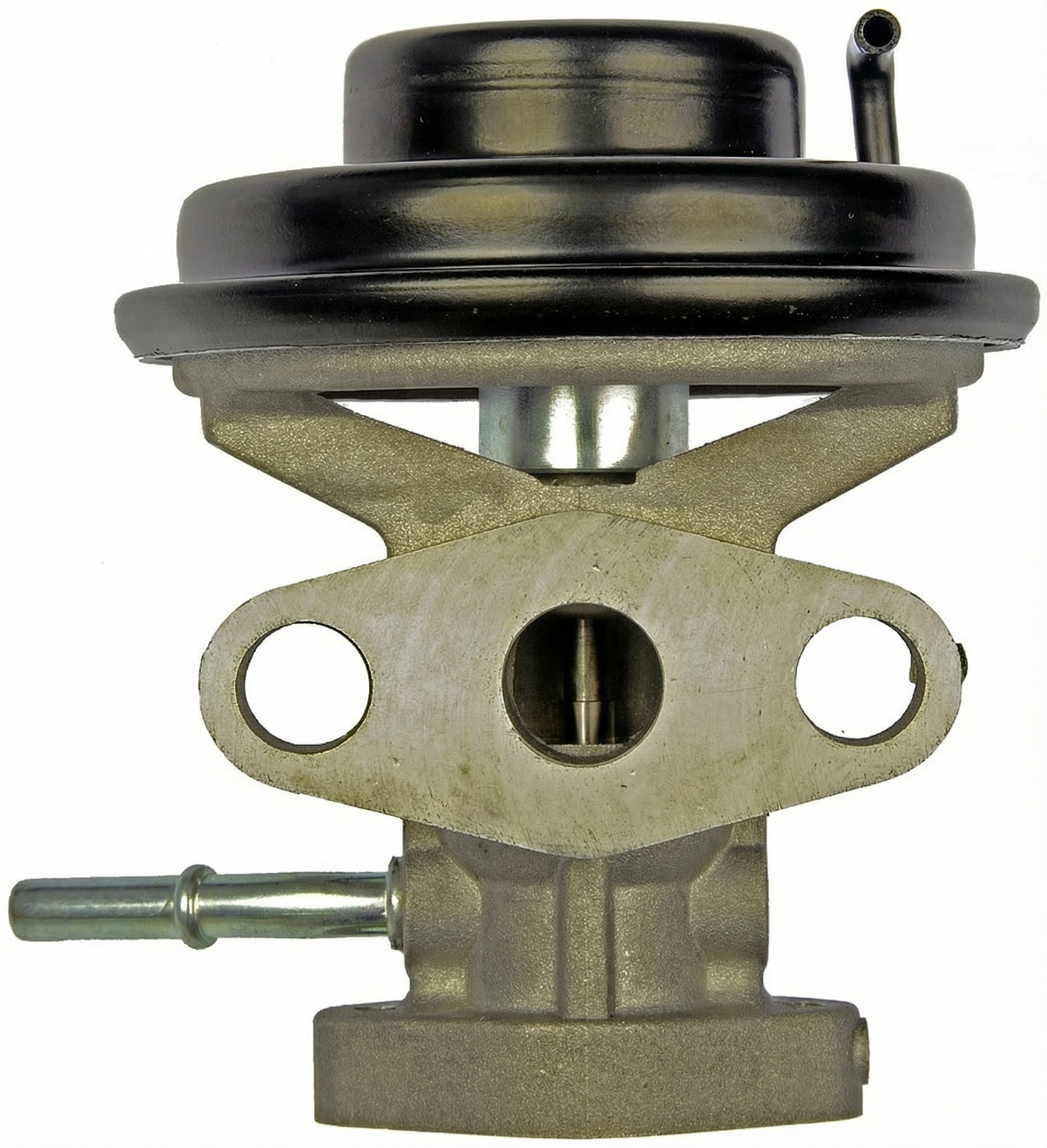
How to confirm: Remove the EGR valve and inspect for carbon buildup. On vacuum-operated valves, use a hand pump to check if the diaphragm holds a vacuum and actuates the valve. On electronic valves, command it open with a scan tool and watch for a change in engine RPM or MAP sensor readings.
Typical fix: Clean the EGR valve and the corresponding passages into the intake manifold with carburetor cleaner and brushes. If the valve is faulty (e.g., diaphragm leak, failed electronic motor), it must be replaced.
Est. part cost: $150-$300 - Clogged EGR Passages (All Engines) 🟡 Medium Probability Carbon can build up not just in the valve, but in the tubes and intake manifold ports where the exhaust gas enters, causing a bottleneck. This is especially true on gasoline direct injection (TSI) engines.
How to confirm: When the EGR valve is removed for inspection, check the port on the intake manifold for heavy carbon blockage. The passages may need to be probed with a wire or an old speedometer cable to check for deep clogs.
Typical fix: Physically scrape and clean out the carbon from the EGR passages and intake manifold ports. This can be a labor-intensive job.
Est. part cost: $0 if DIY, but labor can be significant.
Rare But Worth Checking
- Faulty EGR Temperature Sensor: An inaccurate sensor can provide incorrect data to the ECM, leading it to misinterpret the EGR flow rate. This can sometimes trigger P0401.
- Leaking Vacuum Lines to EGR Valve: On older, vacuum-operated EGR systems (like the 2.5L), a cracked or disconnected vacuum hose will prevent the valve from opening, causing insufficient flow.
- Faulty EGR Pressure Sensor (DPFE): This sensor measures the pressure differential across an orifice in the EGR tube to calculate flow. If it fails or its ports get clogged, it can report insufficient flow even if the flow is adequate.
Diagnosis Steps

- Identify your engine. Is it a 2.0L TDI diesel (CJAA/CBEA) or a gasoline engine (TSI/2.5L)? The diagnostic path depends entirely on this.
- For 2.0L TDI Diesel:
- a. Perform the 'Finger Swipe Test' as per VW TSB 01-18-13 (2034898). Remove the low-pressure EGR filter (the small pipe section before the EGR cooler). Swipe the inside of the DPF outlet pipe that it connects to.
- b. If you find black soot, the DPF has failed. This is confirmation. The only correct repair is to replace both the DPF and the low-pressure EGR filter. Also check for P2002. 🎬 See how to diagnose P2002 and P0401 codes together.
- c. If no soot is found, the issue is highly unusual. Proceed with standard diagnostics: inspect the EGR cooler for clogs, check the high-pressure EGR valve, and verify sensor readings, but this is an unlikely scenario.
- For Gasoline Engines:
- a. Visually inspect all vacuum hoses connected to the EGR valve (if applicable) for cracks or disconnection.
- b. Remove the EGR valve. Inspect the valve itself and the intake manifold port for heavy carbon buildup.
- c. If vacuum-operated, test the EGR valve with a hand vacuum pump to see if it holds vacuum and if the plunger moves.
- d. If the valve and passages are clean, consider testing the EGR pressure (DPFE) and temperature sensors for correct operation using a multimeter and scan tool data.
- e. Ensure the EGR control solenoid is functioning and has proper power and ground.
Parts You'll Likely Need

- Low-Pressure EGR Filter
(OEM #1K0253120B)— This is the most common part to clog on TDI models, directly causing the P0401 code. It is a symptom of DPF failure.
Trusted brands: Volkswagen Genuine
OEM price range: $100-$200
Aftermarket price range: $70-$150 - Diesel Particulate Filter (DPF)
(OEM #1K0254708GX (Exchange Part))— On TDI models, this is the root cause of the P0401 code. A cracked DPF sheds soot that clogs the EGR filter. It must be replaced with the filter.
Trusted brands: Volkswagen Genuine
OEM price range: $1500-$2500+
Aftermarket price range: $800-$1500 - EGR Valve
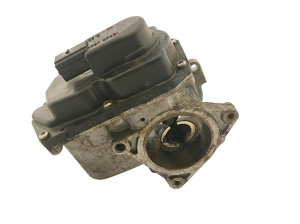
(OEM #03L131512DQ (TDI High-Pressure EGR/Cooler Assembly))— The primary cause of P0401 on gasoline engines due to carbon buildup or diaphragm failure. Note: The TDI part number is for the high-pressure EGR cooler assembly, which is rarely the cause of P0401.
Trusted brands: Bosch, Pierburg, Wahler, Febi Bilstein
OEM price range: $250-$400
Aftermarket price range: $150-$250
Related Codes That Often Appear With This One
- P2002 — On TDI models, P2002 (DPF Efficiency Below Threshold) is commonly seen with P0401. This pair of codes strongly indicates the DPF has failed and is causing the EGR filter to clog.
- P2463 — On TDI models, P2463 (DPF Soot Accumulation) can accompany P0401, pointing to severe issues within the DPF system that are impacting EGR flow.
- P240F — Can be seen with P0401 on TDI models, indicating a slow response from the EGR system, often related to the same DPF clogging issue.
Technical Service Bulletins (TSBs) & Recalls
- 01-18-13 (VW 2034898): This is the primary TSB for P0401 on TDI models. It explicitly instructs technicians to check for soot past the DPF. If soot is present, it mandates the replacement of both the DPF and the low-pressure EGR filter together. It has been revised multiple times but the core instruction remains.
Platform-Specific Known Issues
- On 2.0L TDI engines (CBEA, CJAA), there is a well-documented failure pattern where the Diesel Particulate Filter (DPF) cracks internally. This allows soot to travel past the DPF and clog the fine mesh of the low-pressure EGR filter. This blockage is what the ECM detects as 'insufficient flow,' logging P0401. The actual EGR valves and cooler are often perfectly fine.
- The TDI engine in this platform uses both a high-pressure and a low-pressure EGR system. The P0401 code specifically refers to a fault in the low-pressure circuit, which is post-DPF.
Mechanic-Grade Diagnostic Values
- VCDS Measuring Block Group 074 (Gasoline Engines) — expected: Field 1: Min Position (Volts), Field 2: Max Position (Volts), Field 3: Potentiometer Voltage (should be between min/max), Field 4: Adaptation Status ('OK' or 'ADP OK' after running).. Failure: Adaptation status shows 'Error' or potentiometer voltage is stuck at min/max value, indicating a seized valve.
- VCDS Measuring Block Group 003 (TDI Engines, Basic View) — expected: Field 2 (EGR Specified) and Field 3 (EGR Actual) should closely match each other as RPM changes. At idle, specified value is often ~250-350 mg/stroke.. Failure: A large deviation between the specified and actual values indicates a flow problem or a stuck valve.
Scan Tool Commands That Help
- VCDS (VAG-COM): Engine -> Output Tests (03) -> EGR Valve (N18) — To command the EGR valve to cycle, allowing for visual inspection of its movement (if accessible) or to listen for actuation. This confirms if the valve's motor is responding to commands.
- VCDS (VAG-COM): Engine -> Basic Settings (04) -> Group 074 (Gasoline) or Group 003 (TDI) — To run the EGR adaptation procedure. This is often required after cleaning or replacing an EGR valve to reset its learned values. For gasoline engines, the status should change to 'ADP OK'.
- VCDS (VAG-COM): Engine -> Login (11) -> Code 12233 — On some ECUs, this login code is required to enable access to Adaptation functions for the EGR system.
Wiring & Ground Locations
- Ground connection on engine block — On the engine block itself, a common grounding point for multiple sensors.. A poor engine ground can cause erratic sensor readings for the entire engine management system, including the sensors that monitor the EGR system, potentially leading to false codes.
- 607 - Ground connection in plenum chamber, left — Located in the plenum chamber (the area below the windshield where the wiper motor resides), on the driver's side.. This is a key body ground point. The Engine Control Module (ECM) and other electronics rely on clean ground connections. A corroded ground here can cause a host of intermittent electrical issues.
- Main earth point near battery — A grounding stud with multiple brown wires connected, typically located on the chassis frame rail or bulkhead near the battery.. This is a primary grounding hub for the engine bay. A loose or corroded connection here can affect all engine electronics, including the EGR valve's solenoid or position sensor.
Real Owner Repair Stories
- Ross-Tech Forums user 'Narfman96' (2012 Jetta TDI (CJAA Engine)) — P0401 code causing failed state inspection, soot in tailpipes, engine surging.
❌ Tried (didn't work) The user understood the DPF was the root cause but needed a quick fix to pass inspection.
✅ What actually fixed it As a temporary fix, the user replaced only the clogged low-pressure EGR filter with a clean used one for $40. This cleared the P0401 code long enough to pass inspection, confirming the clogged filter was the direct trigger for the code. - Reddit user 'r/tdi' (2015 Golf TDI (Mk7 CRUA Engine), ~126k miles) — P0401 code appeared, soot in the exhaust.
❌ Tried (didn't work) Clearing the code with a cheap scanner did not work; it came back immediately.
✅ What actually fixed it The dealer replaced the cracked DPF and the low-pressure EGR filter under warranty. However, this repair led to a new issue: significant coolant loss and a P2457 (EGR Cooler Performance) code, indicating the EGR cooler was likely damaged during the service. - Reddit user 'u/TheRealBigLou' (2012 Golf TDI (CJAA Engine), 150k miles) — Persistent P0401 code.
❌ Tried (didn't work) A chemical DPF cleaning, a new EGR cooler, and then a new DPF and new low-pressure EGR filter were all installed, but the P0401 code remained.
✅ What actually fixed it After all the parts were replaced, the code persisted. The owner then took a 600-mile road trip, after which the P0401 code vanished and did not return. This suggests that a specific, extended drive cycle was necessary for the ECU to adapt to the new components and clear the fault condition.
OEM Part Supersession History
3l131512bb, 3l131512bl, 3l131512cf, 3l131512ch→03L131512DQ— This is the part number for the high-pressure EGR cooler assembly on TDI models. The multiple supersessions indicate revisions by the manufacturer to improve reliability or address known failure points.
Heads up: While these parts are superseded, they point to the high-pressure EGR cooler being a component that has been frequently updated.
Model Year Variations Within This Range
- 2015-2017 (Golf Mk7): The 2.0L TDI engine in the Mk7 is the 'CRUA' code, which is different from the Mk6 'CJAA'. While it shares a similar P0401 failure pattern (cracked DPF clogging a downstream filter), its emissions system is more complex and includes an AdBlue/SCR (Selective Catalytic Reduction) system. A repair story for a 2015 model showed that replacing the DPF and filter can sometimes lead to a damaged EGR cooler, causing coolant loss and a new code (P2457).
Helpful Videos

We Have This Part in Stock

The information in this article is provided for general reference and educational purposes only. Vehicle specifications, procedures, and part compatibility can vary by production date, trim level, and region. Always consult your vehicle's factory service manual and verify part numbers before purchasing or performing repairs. Safety-critical components such as airbags, seat belts, and braking systems should be installed by a qualified professional.
- Volkswagen GOLF:
- 🎬 Helpful Videos
- 🛍️ Shop This Part
- What's Unique About the 2010-2017 Volkswagen GOLF
- Diagnostic Flowchart
- Symptoms You May Notice
- Most Likely Causes
- Rare But Worth Checking
- Diagnosis Steps
- Parts You'll Likely Need
- Related Codes That Often Appear With This One
- Technical Service Bulletins (TSBs) & Recalls
- Platform-Specific Known Issues
- Mechanic-Grade Diagnostic Values
- Scan Tool Commands That Help
- Wiring & Ground Locations
- Real Owner Repair Stories
- OEM Part Supersession History
- Model Year Variations Within This Range
- 🎟️ Get 5% Off