

P0401 on 2012-2015 Volkswagen Beetle: EGR Insufficient Flow Causes & Fixes
On the 2012-2015 VW Beetle, P0401 means 'EGR Insufficient Flow.' For TDI diesel models, this is almost always a clogged low-pressure EGR filter, often caused by a cracked Diesel Particulate Filter (DPF). For gasoline engines, it's typically a carbon-clogged EGR valve or passages. Expect to pay $150-$400 for a fix, unless the DPF also needs replacement. Many TDI repairs may be covered under the 'Dieselgate' extended emissions warranty.
- For 2.0L TDI Diesel engines, P0401 almost always points to a clogged low-pressure EGR filter. Before replacing it, check the exhaust tips for soot, as a cracked DPF is the likely root cause.
- For gasoline engines (2.5L, 2.0T), the cause is more likely a standard case of carbon buildup clogging the EGR valve or its passages.
- Do not simply replace the EGR valve or filter without addressing the root cause. On a TDI, a new filter will clog again if the DPF is bad. On a gasoline engine, a new valve won't work if the intake ports are blocked.
- While you can drive with this code, it will cause an automatic emissions test failure and should be addressed to maintain engine health and fuel economy.
What's Unique About the 2012-2015 Volkswagen BEETLE

The 2012-2015 Beetle was available with gasoline (2.5L, 2.0T) and 2.0L TDI diesel engines, and the cause of P0401 differs significantly between them. On the TDI diesel (engine code CJAA), the issue is famously linked to a complex dual-loop EGR system. The P0401 code specifically points to a problem in the *low-pressure* EGR circuit, most commonly a clogged EGR filter that is a direct symptom of a failing (cracked) Diesel Particulate Filter (DPF). For the gasoline engines, the causes are more traditional, usually involving carbon buildup directly on the EGR valve or in its passages.
Diagnostic Flowchart
Tap your situation to follow the diagnostic path that matches what you're seeing on this vehicle.
Symptoms You May Notice

- Check Engine Light is on.
- Failure to pass an emissions inspection.
- Reduced engine performance or slower acceleration.
- Rough idle or engine hesitation.
- Engine pinging or knocking sounds during acceleration.
- For TDI models, you may see black soot inside the exhaust tailpipes, a key indicator of a failed DPF.
- For TDI models, the engine may take longer to warm up or the temperature gauge may fluctuate if the EGR cooler is also failing.
- Replacing the EGR valve without cleaning the passages. If the ports in the intake manifold are clogged with carbon, a new valve will not solve the insufficient flow problem.
- On TDI models, replacing the EGR filter without checking the DPF. If the DPF is cracked, the new EGR filter will quickly become clogged with soot, and the P0401 code will return.
Most Likely Causes


- Clogged Low-Pressure EGR Filter (TDI Diesel Only) 🔴 High Probability The 2.0L TDI engine (CJAA) uses a low-pressure EGR filter post-DPF. If the DPF cracks, it allows soot to pass through and clog this fine mesh filter, triggering P0401. This is the most common cause for this code on TDIs.
How to confirm: Inspect the tailpipe for soot; a clean pipe is expected on a healthy DPF system. If soot is present, the DPF is almost certainly cracked. The filter itself can be removed and inspected for heavy soot blockage. A clogged filter will be visibly black and difficult to blow through.
Typical fix: Replace the low-pressure EGR filter. Crucially, the DPF must also be inspected and likely replaced if it is found to be cracked, otherwise the new filter will clog again quickly.
Est. part cost: $70-$120 for the filter; $1300+ for a DPF. - Clogged EGR Valve and/or Passages (Gasoline & Diesel) 🔴 High Probability All engines recirculate exhaust gas, which contains carbon. Over time, this carbon builds up and can restrict flow or cause the EGR valve to stick closed. This is the most common cause on the 2.5L and 2.0T gasoline engines.
How to confirm: Remove the EGR valve and visually inspect it and the connecting ports on the engine for thick carbon deposits. On gasoline models, this is often called the 'combi valve'.
Typical fix: Clean the EGR valve and all associated passages with a dedicated EGR/intake cleaner and brushes. If the valve is electronically faulty or too damaged to clean, it must be replaced. 🎬 See this clever trick for cleaning a clogged EGR valve.
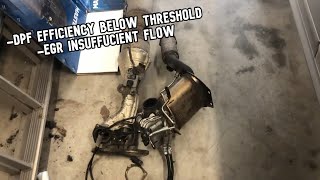
Est. part cost: $10-$20 for cleaning supplies; $150-$350 for a new EGR valve. - Failed Diesel Particulate Filter (DPF) (TDI Diesel Only) 🟡 Medium Probability The DPF can crack internally from age and heat cycles. This is a known issue on this platform and is a primary cause of the clogged EGR filter that triggers P0401. This failure is often seen alongside code P2002 (DPF Efficiency Below Threshold).
How to confirm: The most obvious sign is black soot inside the exhaust tips. A professional diagnosis involves checking pressure differentials across the DPF. VW has a specific TSB (2034898) that instructs technicians to swipe the inside of the exhaust pipe at the EGR filter connection; if black soot is present, the DPF must be replaced along with the EGR filter.
Typical fix: Replacement of the DPF assembly. This is an expensive repair, but may be covered under the 'Dieselgate' Extended Emissions Warranty.
Est. part cost: $1300-$2500 - Faulty EGR Temperature or Pressure Sensor ⚪ Low Probability
How to confirm: The sensor can be tested with a multimeter to check its readings against specifications. A scan tool like VCDS can also monitor the sensor's live data to see if it's responding correctly to EGR operation.
Typical fix: Replace the faulty sensor. Sometimes, simply cleaning heavy carbon deposits off the sensor tip can restore its function.
Est. part cost: $40-$100
Rare But Worth Checking
- Faulty Mass Airflow (MAF) Sensor: On some VW models, the ECM calculates expected EGR flow based on MAF sensor readings. An incorrect MAF reading can mislead the computer into thinking EGR flow is insufficient, even when it's not.
- Leaking Vacuum Lines: If the EGR valve is vacuum-operated, any leak in the vacuum supply lines or a faulty control solenoid will prevent it from opening correctly, causing a P0401 code.
Diagnosis Steps
- Read the fault codes with an OBD-II scanner and note any other codes present, especially P2002 or P240F on TDI models.
- Determine the engine type (TDI Diesel or Gasoline) as the diagnostic path differs significantly.
- For TDI models: Perform the 'finger swipe test'. Check inside the tailpipes for black soot. If soot is present, the DPF is cracked and is the root cause.
- For TDI models: Following VW TSB 2034898, remove the low-pressure EGR filter and inspect it for heavy soot clogging. Also inspect the DPF connection point for soot.
- For Gasoline models: Visually inspect the EGR valve (combi valve), wiring, and any vacuum hoses for damage or leaks.
- For Gasoline models: Remove the EGR valve and inspect the valve itself and the intake manifold ports for heavy carbon buildup.
- If passages are clear, use a scan tool (like VCDS) to command the EGR valve to open while monitoring engine RPM or relevant sensor data. A change should be observed if the valve is working.
- If the valve is vacuum-controlled, use a hand vacuum pump to manually open the valve at idle to see if it causes the engine to stumble or stall, confirming the passages are clear.
- If the valve and passages are clean and functional, investigate related sensors like the EGR temperature/pressure sensor or the MAF sensor for correct operation.
Parts You'll Likely Need
- Low-Pressure EGR Filter (TDI Only)
(OEM #1K0253120, supersedes to 1K0253120A)— This is the most common failure point for P0401 on the 2.0L TDI engine, as it gets clogged by soot from a cracked DPF.
Trusted brands: Volkswagen OE
OEM price range: $70-$120
Aftermarket price range: $50-$90 - EGR Valve
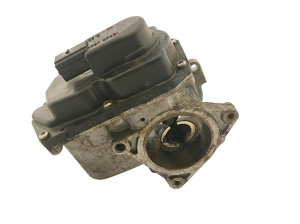
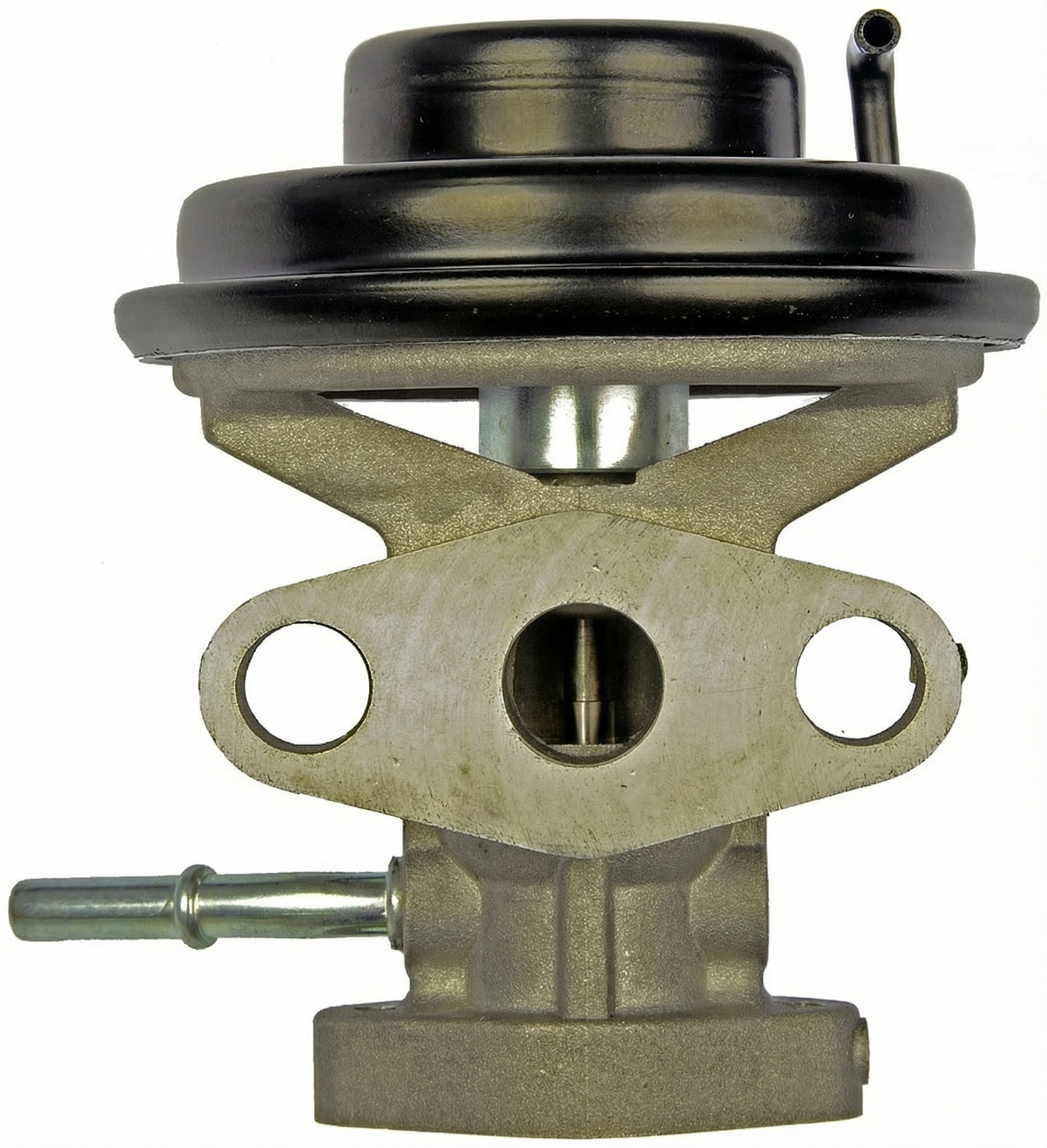
(OEM #TDI: 03L131501F, 03L131501K; 2.5L: 07K131351C)— The valve can get stuck closed due to carbon buildup or fail electronically. This is a primary cause on gasoline engines and can also fail on TDI models.
Trusted brands: Bosch, Pierburg, Valeo
OEM price range: $250-$400
Aftermarket price range: $150-$250 - Diesel Particulate Filter (DPF) (TDI Only) — A cracked DPF is often the root cause of the clogged EGR filter that triggers P0401. If the DPF has failed, it must be replaced to provide a permanent fix.
Trusted brands: Volkswagen OE
OEM price range: $1300-$2500
Aftermarket price range: $800-$1500
Related Codes That Often Appear With This One
- P2002 — On TDI models, this code means 'DPF Efficiency Below Threshold.' It frequently appears with P0401 because a cracked DPF (causing P2002) allows soot to clog the low-pressure EGR filter (causing P0401).
- P240F — This code relates to 'EGR Slow Response' and is often triggered along with P0401 and P2002 on TDI models, pointing to the same DPF/EGR filter issue.
Technical Service Bulletins (TSBs) & Recalls
- VIN4APIN20211026: Notes customer complaint of MIL-on with P0401 on 2014 model.
- VIN4APIN20210907: Notes customer complaint of MIL-on with P0401 on 2014 model.
- VIN4APIN20210902: Notes customer complaint of MIL-on with P0401 on 2014 model.
- VIN4APIN20210831: Notes customer complaint of MIL-on with P0401 on 2014 model.
Platform-Specific Known Issues
- TDI 'Dieselgate' Extended Emissions Warranty: For TDI models that have received the emissions modification, VW offers an extensive warranty covering the entire emissions system, including the DPF, EGR valve, and all related sensors and actuators. This warranty can be for up to 11 years or 162,000 miles for 2015 models. Owners experiencing P0401 should check their VIN on the VW Diesel Lookup website or with a dealer to see if the repair is covered.
- TSB for P0401 on TDI Models: Volkswagen issued Technical Service Bulletin 2034898 (also listed as 01-14-21) which provides a clear diagnostic path for P0401 on TDI engines. It instructs technicians to check for soot at the EGR filter connection. If soot is found, both the DPF and the EGR filter must be replaced together.
Mechanic-Grade Diagnostic Values
- TDI EGR Basic Setting Test (VCDS) — expected: The deviation in Mass Air Flow (MAF) between 'EGR ON' and 'EGR OFF' should be at least 100.0 mg/Str.. Failure: A deviation less than 100.0 mg/Str indicates insufficient flow through the EGR system.
- TDI DPF Soot Mass (VCDS) — expected: Healthy DPFs show calculated and measured soot mass values that are relatively close. Ash volume should be well below the service limit (e.g., under 100 ml).. Failure: A high ash volume (e.g., 90 ml on an 87k mile car) combined with P0401 can indicate the DPF is nearing the end of its life, contributing to flow issues.
Scan Tool Commands That Help
- VCDS (VAG-COM): Engine -> Output Tests -> EGR Valve (N18) — This function allows a technician to cycle the EGR valve and visually confirm if it is physically moving. This is useful to check if the valve is seized or if the electronic motor is functional, provided the valve is partially disassembled for viewing.
- VCDS (VAG-COM): Engine -> Basic Settings -> Group 001 (TDI) — This runs an automated test of the EGR system, switching it on and off and measuring the change in airflow. It provides a 'System OK' or 'System NOT OK' result, which is a primary step for diagnosing P0401 on TDI engines.
- VCDS (VAG-COM): Engine -> Adaptation -> DPF Replacement — This adaptation must be performed after replacing the Diesel Particulate Filter (DPF) on a TDI model. Failure to do so will cause the ECU to operate with incorrect values, potentially leading to further issues.
- VCDS (VAG-COM): Engine -> Meas. Blocks -> Group 074 (Gasoline) — For some gasoline engines, this allows viewing of the EGR valve's learned minimum and maximum voltage positions and its adaptation status ('Run' or 'OK'). This helps confirm if the valve has adapted correctly after cleaning or replacement.
Wiring & Ground Locations
- G15 — On the engine cylinder head (2.0L Turbo models).. A poor ground connection at the cylinder head can affect various engine sensors and actuators, potentially causing incorrect readings or operation of the EGR system components.
- G642 — Located on the frame in the left front of the engine compartment.. This is a primary engine compartment ground point. Corrosion or a loose connection here can cause widespread electrical issues, including problems with the Engine Control Module (ECM) and its ability to accurately control the EGR system.
- Ground Connection 167 — A ground connection located within the engine compartment wiring harness for the TDI (CJAA) engine.. An internal harness ground fault is rare but can cause erratic behavior of components on that harness, such as the EGR temperature sensor or valve motor, leading to a P0401 code.
Real Owner Repair Stories
- Ross-Tech Forums user 'Narfman96' (2012 VW Jetta TDI) — P0401 code causing failure of state inspection, engine surging, high EGTs (1350°F), and visible soot in tailpipes.
❌ Tried (didn't work) The user correctly identified the root cause was likely a cracked DPF but needed a quick fix to pass inspection.
✅ What actually fixed it As a temporary fix, the user replaced the heavily clogged low-pressure EGR filter with a clean used one purchased for $40. This cleared the P0401 code and allowed the car to pass inspection. The user noted the clogged filter was hard to blow through, while the clean one had no restriction. This confirms that a clogged filter is the direct cause of the code, even if the DPF is the root problem. - 2CarPros user 'MJOHNSON0238' (2013 Volkswagen Beetle TDI with 40,000 miles) — Check engine light with P0401 and a DPF-related code.
❌ Tried (didn't work) A dealer first tried cleaning the DPF and EGR valve, but the P0401 code returned the next day. The dealer then replaced the EGR valve, but the light came on again shortly after.
✅ What actually fixed it The issue remained unresolved in the thread, but a mechanic correctly pointed out that the most common cause is a blocked low-pressure EGR filter, which had not been addressed by the dealer's repairs. The final code to appear was P2002, further pointing to the DPF/EGR filter system.
OEM Part Supersession History
1K0253120A→1K0253120— Part revision by manufacturer. Note: This is an unusual supersession where the lettered version is replaced by the non-lettered one.03L131501D, 03L131501E, 03L131501G→03L131501K— Multiple part revisions for the TDI EGR valve, likely for improved reliability or material changes.
Heads up: When replacing, it is critical to use the latest revision (03L131501K) or an OEM equivalent that matches it to ensure compatibility with the vehicle's software and emissions system.
Helpful Videos

We Have This Part in Stock

The information in this article is provided for general reference and educational purposes only. Vehicle specifications, procedures, and part compatibility can vary by production date, trim level, and region. Always consult your vehicle's factory service manual and verify part numbers before purchasing or performing repairs. Safety-critical components such as airbags, seat belts, and braking systems should be installed by a qualified professional.
- Volkswagen BEETLE:
- 🎬 Helpful Videos
- 🛍️ Shop This Part
- What's Unique About the 2012-2015 Volkswagen BEETLE
- Diagnostic Flowchart
- Symptoms You May Notice
- Most Likely Causes
- Rare But Worth Checking
- Diagnosis Steps
- Parts You'll Likely Need
- Related Codes That Often Appear With This One
- Technical Service Bulletins (TSBs) & Recalls
- Platform-Specific Known Issues
- Mechanic-Grade Diagnostic Values
- Scan Tool Commands That Help
- Wiring & Ground Locations
- Real Owner Repair Stories
- OEM Part Supersession History
- 🎟️ Get 5% Off