

P0401 on 2010-2012 Toyota Prius: EGR Insufficient Flow Causes and Fixes
On a 2010-2012 Prius, P0401 almost always means the EGR valve, EGR cooler, and/or intake manifold passages are severely clogged with carbon. The fix is a thorough cleaning of the entire EGR system, and sometimes replacement of the EGR valve itself. This is a very common issue for this specific vehicle, and ignoring it is a known contributor to premature head gasket failure.
- P0401 on a 2010-2012 Prius is almost certainly caused by heavy carbon buildup throughout the entire EGR system.
- A proper fix requires cleaning the EGR cooler, EGR valve, and intake manifold passages. Simply replacing the valve is not enough.
- This is a labor-intensive but manageable DIY job (Difficulty 4/5) that requires new gaskets and a partial coolant drain.
- Symptoms include a check engine light, a distinct engine rattle on cold starts, and rough idling.
- Check for any applicable warranty enhancements from Toyota, as this was a well-documented problem. [ODI #11119570]
What's Unique About the 2010-2012 Toyota PRIUS

The 3rd Generation Prius (2010-2015) with its 2ZR-FXE engine is uniquely prone to code P0401 due to a design that allows for heavy carbon and soot buildup throughout the entire EGR circuit. This isn't just a simple valve issue; the EGR cooler, connecting pipes, and even small passages in the intake manifold are all highly susceptible to clogging. This widespread blockage is so common that it's the first and most probable cause for P0401, often leading to secondary symptoms like engine knocking or a rough idle, especially on a cold start. Critically, prolonged operation with a clogged EGR system increases combustion temperatures and is widely cited by owners and mechanics as a leading cause of premature head gasket failure on this platform.
Diagnostic Flowchart

Tap your situation to follow the diagnostic path that matches what you're seeing on this vehicle.
Symptoms You May Notice

- Check Engine Light is on
- Engine knocking or 'rattling' sound, especially on a cold start or under light acceleration.
- Rough or vibrating idle, particularly when the engine is cold.
- Engine hesitation or stumbling at low RPMs.
- Reduced fuel economy
- Blinking check engine light during acceleration, indicating misfires.
- Replacing only the EGR valve without cleaning the EGR cooler and intake manifold. The clog is system-wide, and replacing just one component will not restore sufficient flow, causing the P0401 code to return quickly.
- Mistaking the P0401 code for a catalytic converter issue. While other codes may accompany P0401, the insufficient flow code itself points directly to the EGR system.
Most Likely Causes

- Clogged EGR Cooler 🔴 High Probability The EGR cooler on the Gen 3 Prius has many small fins that act like a radiator to cool exhaust gases. These fins are extremely prone to getting completely blocked with hard carbon deposits, severely restricting flow to the EGR valve.
How to confirm: The cooler must be removed for visual inspection. If you cannot see light through the channels or easily pass a thin wire through, it is clogged. It is often nearly 100% blocked by 100,000 miles.
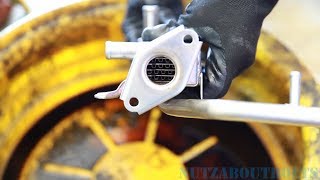
Typical fix: Remove the cooler and soak it in a strong cleaning solution. DIYers on forums like PriusChat report success with extended soaks (several hours to overnight) in products like Easy-Off Oven Cleaner, Purple Power, or an Oxi-Clean solution, followed by aggressive flushing with water, often using a pressure washer. Repeat until all passages are clear. 🎬 Watch: A complete walkthrough for cleaning the EGR cooler and valve. If it cannot be cleaned, it must be replaced.
Est. part cost: $0 (if cleaning) - $250 - Clogged/Sticking EGR Valve 🔴 High Probability Carbon that makes it past the clogged cooler builds up in the EGR valve itself, causing the valve's plunger to stick. Toyota issued Technical Service Bulletin T-SB-0027-16 and a Warranty Enhancement Program (ZF3) for this exact issue.
How to confirm: Remove the valve and inspect for carbon buildup. Manually actuate the valve to see if it moves freely and snaps shut. A bidirectional scan tool can also command the valve open to check for a change in engine RPM or MAP sensor readings.
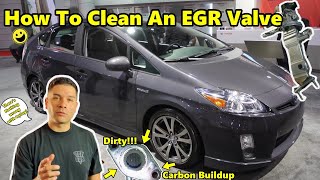
Typical fix: The valve can often be cleaned with brushes and carburetor/throttle body cleaner. If the valve is corroded, the internal plastic ramp is worn, or the motor has failed, it must be replaced. An updated EGR valve is available 🎬 Watch: How to clean and inspect your Prius EGR valve. from Toyota.
Est. part cost: $130-$430 - Clogged Intake Manifold Passages 🟡 Medium Probability The EGR system distributes exhaust gas to each cylinder via small, individual passages in the plastic intake manifold. These small holes are a final chokepoint and frequently get clogged with a mixture of carbon and oil from the PCV system.
How to confirm: After removing the intake manifold, visually inspect the small EGR ports for each cylinder. They are often completely blocked with a thick, oily sludge.
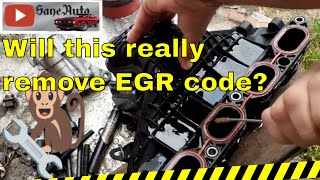
Typical fix: Clean the passages using pipe cleaners, small brushes, and a degreaser or intake cleaner until they are completely clear. This step is critical; skipping it will cause the P0401 🎬 See how to properly clean those clogged intake manifold ports. code to return even if the valve and cooler are clean.
Est. part cost: $0 (if cleaning)
Rare But Worth Checking
- Faulty MAP Sensor: The Manifold Absolute Pressure (MAP) sensor is what the ECU uses to verify EGR flow by detecting a pressure change when the valve opens. If the entire EGR system has been thoroughly cleaned and the code returns immediately, the MAP sensor itself could be faulty and not registering the pressure change.
- Leaking EGR Gasket: If the code appears immediately after cleaning the EGR system, double-check that all gaskets were replaced with new ones and installed correctly. A missing or improperly seated gasket can cause a vacuum or pressure leak, preventing the MAP sensor from detecting the correct pressure change.
- Failed EGR Valve Motor: In some cases, the mechanical valve is clean and moves freely, but the electronic stepper motor that actuates it has failed. One owner documented solving their P0401 issue, after a full cleaning, by replacing only the motor assembly from a used EGR valve.
Diagnosis Steps
- Confirm P0401 is the primary code stored in the ECU.
- Listen for an engine rattle or 'marbles in a can' sound on a cold start, a classic symptom of this issue on the Prius.
- Plan for a full system cleaning. The fix almost always requires removing and cleaning the EGR valve, EGR cooler, and intake manifold. This is a labor-intensive job.
- Begin disassembly, which requires removing the windshield wipers and the entire cowl assembly to gain access to the engine's backside.
- Drain about a gallon of engine coolant from the radiator petcock to avoid spills when disconnecting cooler hoses.
- Remove the EGR valve, EGR pipe, and EGR cooler assembly. This involves removing several nuts, bolts, and hard-to-reach coolant hoses.
- Inspect and clean the EGR cooler. It is the most likely component to be severely clogged. Soak it for several hours in oven cleaner or a strong degreaser, then flush repeatedly with a pressure washer until passages are clear.
- Inspect and clean the EGR valve. Ensure the plunger moves freely. If it's stuck, corroded, or the internal mechanism is worn, replace it.
- Remove the intake manifold and thoroughly clean the small EGR distribution ports for each cylinder using brushes and solvent.
- While the intake is off, it is highly recommended to replace the PCV valve (Part No. 12204-37010), as it is now easily accessible.
- Reassemble the entire system using new gaskets for all components to prevent leaks.
- Refill drained coolant and perform a proper coolant bleeding procedure to remove air from the system.
- Clear the trouble code with a scan tool.
- Perform a test drive, including deceleration from ~40 mph without braking, which is a condition when the ECU often tests the EGR system.
Parts You'll Likely Need
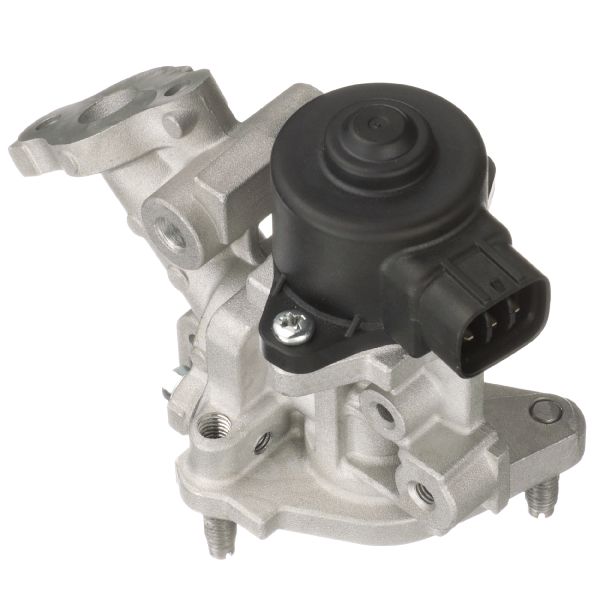
- EGR Valve
(OEM #25620-37120 (replaces 25620-37110))— This is the primary moving part of the system and is prone to sticking from carbon buildup. Often replaced if it cannot be cleaned or is internally damaged.
Trusted brands: Aisan (OEM), Delphi, Standard Motor Products
OEM price range: $290-$430
Aftermarket price range: $130-$315 - EGR Cooler
(OEM #25601-37010 (Pipe Sub-Assembly, w/Cooler))— This part is the most common point of major restriction. While it can usually be cleaned, if it is damaged or the blockage is too severe, it will need to be replaced.
Trusted brands: Toyota Genuine, Dorman
OEM price range: $370-$550
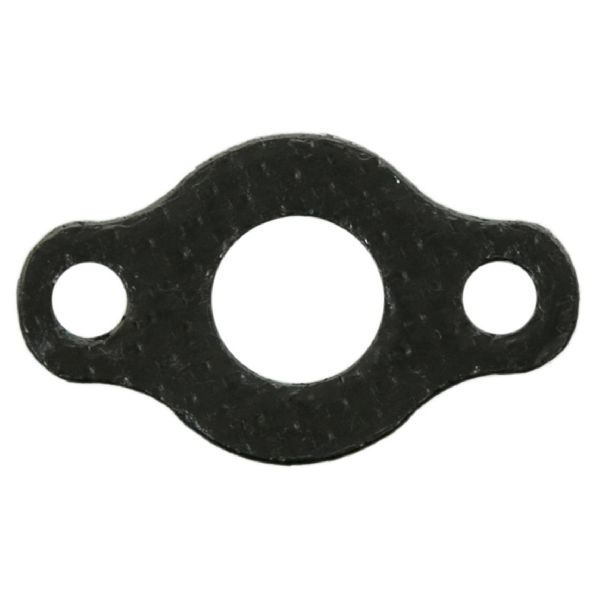
Aftermarket price range: $150-$250 - EGR Valve Gaskets
(OEM #25634-37030 (Valve to Cooler), 25685-37010 (Valve to Pipe))— Gaskets must be replaced any time the EGR components are removed to prevent leaks. A full cleaning requires multiple gaskets for the valve, cooler, and pipe.
Trusted brands: Fel-Pro, Mahle, Toyota Genuine
OEM price range: $3-$10 per gasket
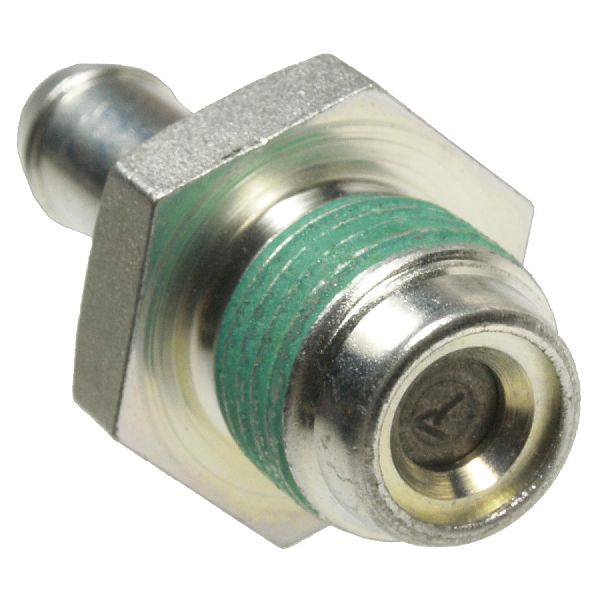
Aftermarket price range: $2-$8 per gasket - PCV Valve
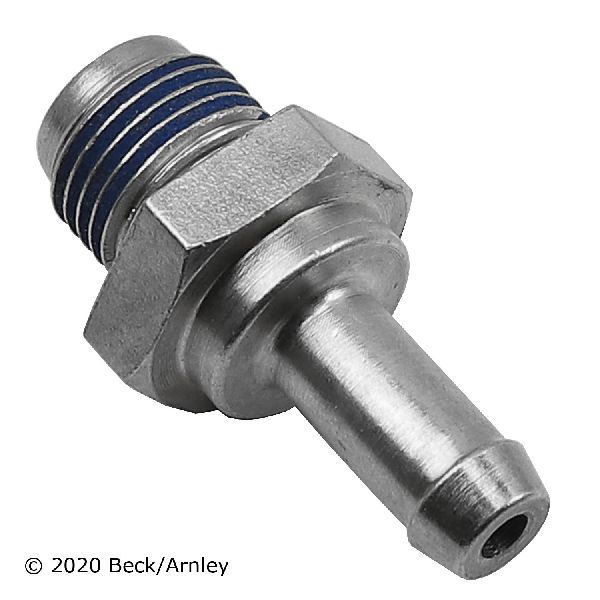
(OEM #12204-37010)— The PCV system contributes to the oily buildup in the intake manifold. Since the intake must be removed for EGR cleaning, this is the perfect time to replace the inexpensive PCV valve as preventative maintenance.
Trusted brands: Toyota Genuine, Standard Motor Products
OEM price range: $6-$10
Aftermarket price range: $4-$8
Technical Service Bulletins (TSBs) & Recalls
- T-SB-0027-16: Addresses a rough idle, tapping noise, and P0401 due to a sticking EGR valve from carbon buildup.
- ZF3 / POL16-04: Details the Warranty Enhancement Program extending coverage for the sticking EGR valve and associated P0401 code.
Platform-Specific Known Issues
- Toyota Technical Service Bulletin T-SB-0027-16: Toyota issued this TSB for 201
Mechanic-Grade Diagnostic Values
- EGR Valve Connector Pin Voltages (Key On, Engine Off, Connector Removed) — expected: Pin 2: 5V, Pin 3: 5V, Pin 4: 12V, Pin 5: 5V, Pin 1 & 6: 0V.. Failure: Any deviation from these voltages can indicate a wiring or ECM issue. Pin 6 showing a short to ground with the key off may be normal as it can be a shared ground with other sensors.
- EGR Valve Motor Coil Resistance — expected: Below 1 Ω between the corresponding pins for each coil (e.g., D28-45 to D10-4).. Failure: An open circuit (infinite resistance) or significantly higher resistance indicates a failed motor coil in the EGR valve assembly.
- EGR Stud Bolts (to cooler assembly) — expected: 9.5 N·m (84 in·lbf).. Failure: Improper torque can lead to exhaust leaks or damaged threads.
- EGR Assembly & Pipe Nuts/Bolts — expected: 21 N·m (15 ft·lbf).. Failure: Improper torque can lead to exhaust or coolant leaks.
Scan Tool Commands That Help
- Toyota Techstream: Active Test: 'Control the EGR Step Position' — This function allows a technician to manually command the EGR valve to open in small increments (steps). On a clean, functional system, the engine idle will noticeably roughen or stall at a low step number (e.g., 15-17 out of 110). If the engine idle does not change as the step number is increased, it confirms a blockage in the EGR cooler, passages, or a non-functional valve.
- Toyota Techstream: Data List: Monitor 'MAP' value during EGR Active Test — While performing the 'Control the EGR Step Position' active test, monitoring the Manifold Absolute Pressure (MAP) value is crucial. When the EGR valve is commanded open, there should be a corresponding change in the MAP reading. If the valve is commanded open and the MAP value does not change, it points to a blockage preventing exhaust gas from entering the intake manifold.
Real Owner Repair Stories
- Torque News article by a technician (2010 Toyota Prius) — P0401 code persisted after a head gasket repair, during which the entire EGR system (valve, cooler, passages) was confirmed to be perfectly clean.
❌ Tried (didn't work) Re-confirming all EGR passages were 100% clean., Resistance testing the EGR valve motor coils., Commanding the EGR valve open with a scan tool., Back-probing and testing the original MAP sensor, which appeared to be within specifications.
✅ What actually fixed it After exhausting all other possibilities, the technician swapped the MAP sensor with one from a known-good Prius. This immediately solved the problem. The original MAP sensor, despite testing within spec, was the root cause. - YouTube channel 'Saint Auto' (2010 Toyota Prius with 1.8L 2ZR-FXE engine) — Persistent P0401 and P0403 codes that would not go away.
❌ Tried (didn't work) Replacing the EGR valve with a brand new one., Cleaning the original EGR cooler (heat exchanger)., Replacing the EGR cooler with a brand new one., Performing a thorough cleaning of the intake manifold, all EGR pipes, and the cylinder head ports.
✅ What actually fixed it The final solution was not explicitly stated in the provided clip, but the video documents the extensive and frustrating process of eliminating all common causes without success, strongly suggesting an unusual root cause like a wiring or ECM issue, which the presenter was lucky to avoid having to diagnose.
OEM Part Supersession History
25620-37110→25620-37120— The part was updated by Toyota. While the exact internal changes are not published, updated parts are generally released to improve reliability or address known failure modes.
Heads up: The parts are physically interchangeable, but it is highly recommended to use the latest part number (25620-37120) for all 2010-2015 models, as it is the improved version.
Helpful Videos
We Have This Part in Stock


The information in this article is provided for general reference and educational purposes only. Vehicle specifications, procedures, and part compatibility can vary by production date, trim level, and region. Always consult your vehicle's factory service manual and verify part numbers before purchasing or performing repairs. Safety-critical components such as airbags, seat belts, and braking systems should be installed by a qualified professional.
- Toyota PRIUS:
- 🎬 Helpful Videos
- 🛍️ Shop This Part
- What's Unique About the 2010-2012 Toyota PRIUS
- Diagnostic Flowchart
- Symptoms You May Notice
- Most Likely Causes
- Rare But Worth Checking
- Diagnosis Steps
- Parts You'll Likely Need
- Technical Service Bulletins (TSBs) & Recalls
- Platform-Specific Known Issues
- Mechanic-Grade Diagnostic Values
- Scan Tool Commands That Help
- Real Owner Repair Stories
- OEM Part Supersession History
- 🎟️ Get 5% Off