

P0401 on 2014-2020 Ram 2500 6.7L Cummins: EGR Performance & Soot Buildup Fixes
On a Ram 2500 with the 6.7L Cummins diesel, P0401 almost always means the EGR system is severely clogged with soot. The fix requires cleaning or replacing the EGR cooler and EGR valve; simply cleaning the valve is not enough. Before paying for repairs, owners should check with a Ram dealer to see if their vehicle is covered under the XQ1 emissions warranty extension, which may cover the entire repair.
- P0401 on a 6.7L Cummins almost always means the EGR system is clogged with soot, with the EGR cooler being the most likely and critical point of restriction.
- Do not just replace the EGR valve. A complete repair requires inspecting and cleaning (or replacing) the EGR valve, EGR cooler, and all associated passages.
- This is a labor-intensive job (DIY difficulty 4/5) that requires removing several components. Always use new gaskets when reassembling to prevent leaks.
- Before starting any repairs, check with a Ram dealer to see if your vehicle's VIN is covered by any emissions warranty extensions that might cover this specific repair.
- Ignoring this code can lead to reduced power, worse fuel economy, and could eventually clog the expensive Diesel Particulate Filter (DPF).
What's Unique About the 2014-2020 Ram 2500

The 6.7L Cummins diesel engine is known for producing a significant amount of soot, which is the primary driver for P0401 on these trucks. This soot combines with oil vapor from the crankcase ventilation (CCV) system to form a thick, sludgy paste that is particularly effective at clogging the small passages of the EGR cooler and valve. While all EGR systems get dirty, the Cummins platform is exceptionally prone to severe blockages, making this a very common and well-documented issue that often requires more than just a simple valve cleaning. The problem is so well-known that Ram has issued multiple Technical Service Bulletins (TSBs) that mention P0401 in relation to clogged EGR components and necessary PCM software updates.
Diagnostic Flowchart

Tap your situation to follow the diagnostic path that matches what you're seeing on this vehicle.
Generation note: This year range covers the end of the Fourth Generation (2014-2018) and the start of the Fifth Generation (2019-2020) Ram 2500. While both use the 6.7L Cummins engine, there are differences in the EGR system components and part numbers between generations, so ensure you get the correct parts for your specific year. For example, TSB 18-023-21 specifically applies to 2016 models for a PCM update related to P0401. The EGR temperature sensor part number also differs for 2019+ models.
Symptoms You May Notice
- Check Engine Light (MIL) is on
- Reduced engine power or 'limp mode'
- Poor fuel economy
- Engine knocking or pinging, especially under load
- Rough idle
- Hesitation during acceleration
- Smell of burning coolant from the exhaust (if cooler is leaking internally)
- Replacing only the EGR valve. On the 6.7L Cummins, the EGR cooler is the most frequent point of blockage. The code will almost certainly return if the cooler and passages are not also cleaned or replaced.
- Assuming the EGR valve is working based on scan tool position data. The position sensor is on the actuator motor, not the valve itself. The actuator can move to the commanded position while the valve remains stuck due to carbon buildup, giving a false 'closed' reading.
- Replacing the EGR valve with a faulty aftermarket part. One user on a forum reported a brand new Delphi EGR valve was bad out of the box and continued to cause a P0401 code until it was replaced with an AC Delco part.
Most Likely Causes

- Clogged or Restricted EGR Cooler 🔴 High Probability The 6.7L Cummins produces heavy soot that mixes with CCV oil vapor and builds up in the fine passages of the EGR cooler, severely restricting or completely blocking flow. This is the most common cause of P0401 on these trucks, and TSBs often direct technicians to check for this.
How to confirm: Remove the EGR cooler and visually inspect the internal passages for heavy, dry soot buildup. If the soot is wet or you see white, crusty deposits, the cooler is leaking coolant internally and must be replaced, not cleaned.
Typical fix: The cooler must be removed and either thoroughly cleaned with a chemical soak (e.g., Purple Power, dedicated EGR cleaner) and pressure washing, or replaced entirely. Replacement is often recommended due to the difficulty of complete cleaning and the high risk of internal leaks developing after a harsh cleaning.
Est. part cost: $300-$1100 - Clogged or Sticking EGR Valve 🔴 High Probability Soot and sludge build up on the valve pintle and seat, preventing it from opening, closing, or moving freely. This is often a secondary failure caused by the same soot that clogs the cooler, or the electronic actuator on the valve can fail on its own.
How to confirm: Remove the EGR valve assembly. Inspect for heavy carbon buildup. Attempt to move the valve manually; it should move smoothly and not be seized. A capable scan tool (like AlfaOBD or wiTECH) can be used to command the valve open and closed to test the actuator's response.
Typical fix: The valve can often be cleaned with a degreaser and a wire brush. However, if the actuator motor has failed or the valve is seized, the entire EGR valve assembly must be replaced. This is almost always done in conjunction with cleaning or replacing the EGR cooler.
Est. part cost: $250-$600 - Clogged EGR Crossover Tubes/Passages 🟡 Medium Probability The entire EGR circuit, including the tubes connecting the components and the passages in the intake horn, is susceptible to soot buildup.
How to confirm: When the EGR valve and cooler are removed for service, inspect all connecting tubes and the intake horn passages for restrictions.
Typical fix: Clean the tubes and passages thoroughly with brushes and solvent while other components are removed.
Est. part cost: $0 (if cleaning during other repairs)
Rare But Worth Checking
- Faulty EGR Temperature or Pressure Sensor: The sensors that provide feedback to the PCM can fail or become coated in soot, sending incorrect data that triggers a P0401 code even if flow is mechanically sufficient. A user on DodgeForum.com reported fixing a persistent P0401 by replacing a pitted EGR temp sensor after the rest of the system was confirmed to be clean.
- Air Leak in the Intake System: TSB #18-130-22 links P0401 with P2281 (Air Leak Between MAF and Throttle Body). An unmetered air leak (boost leak) can disrupt the pressure dynamics the PCM uses to calculate EGR flow, leading to a false P0401 code. An owner on the HD Rams forum with a 2020 Ram 2500 reported getting P0401 along with P0299 (underboost).
- Faulty Powertrain Control Module (PCM) or Software: In rare cases, the PCM itself may be faulty or require a software update. TSB #18-023-21 for 2016 models involves a PCM flash to correct P0401 among a long list of other codes, suggesting an update to the monitoring logic can resolve some false triggers.
Diagnosis Steps
- Scan for all diagnostic trouble codes. Pay close attention to other EGR, turbo, or air intake codes like P0402, P24A5, or P2281.
- Visually inspect the entire EGR system, including the valve, cooler, and crossover tubes, for external soot streaks which indicate a gasket leak.
- With a capable scan tool, command the EGR valve to open and close while monitoring engine RPMs and MAP sensor readings. A change should be observed. Note that this only tests the actuator, not a mechanically stuck valve.
- Perform a visual inspection of the system's internals. This is the most critical step for this truck.
- Remove the EGR crossover tubes and EGR valve to inspect for heavy soot buildup.
- Remove and inspect the EGR cooler. It is highly likely to be restricted or completely blocked with soot. Check for wetness or white deposits indicating an internal coolant leak.
- If the system is mechanically clean but the code persists, inspect and clean the EGR temperature and pressure sensors. Check for physical damage like pitting.
- If no mechanical blockages or sensor faults are found, investigate the possibility of an intake air leak (boost leak), especially if a P2281 or P0299 code is also present.
- Check for applicable TSBs. For 2016 models, TSB #18-023-21 or the superseding TSB #18-130-22 may apply, which involves a PCM software update.
Parts You'll Likely Need
- EGR Cooler
(OEM #68620418AA (supersedes 68224582AA))— This is the component most likely to be clogged with soot, directly causing the insufficient flow condition. The original part was superseded, indicating a potential design revision.
Trusted brands: Mopar, Dorman, Bostech, Bullet Proof Diesel
OEM price range: $700-$1100
Aftermarket price range: $300-$700 - EGR Valve
(OEM #68442472AA)— The second most likely component to fail, either by sticking due to soot buildup or by electronic actuator failure. It is often replaced along with the cooler.
Trusted brands: Mopar, Standard Motor Products (SMP), Delphi
OEM price range: $450-$650
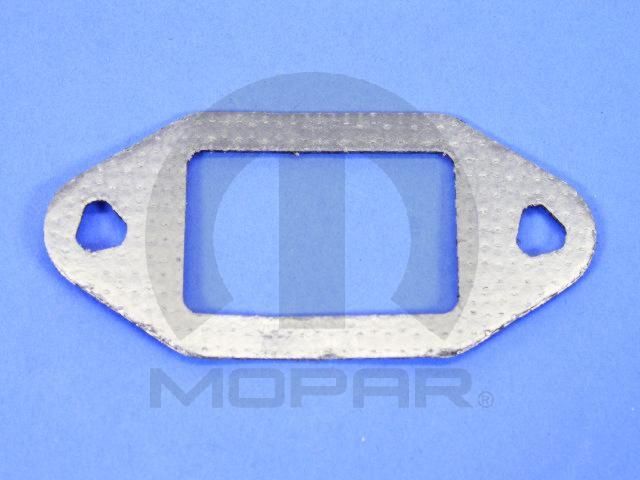
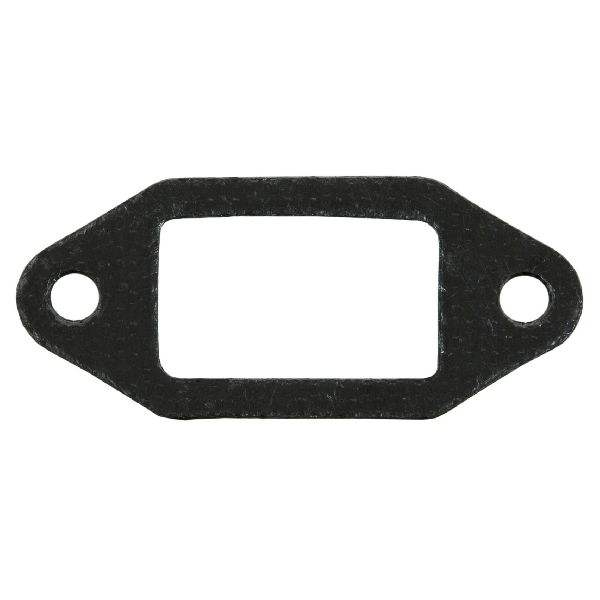
Aftermarket price range: $250-$450 - EGR Gasket and Seal Kit — Mandatory for reassembly to prevent exhaust and coolant leaks. The EGR cooler often comes with the necessary connection gaskets.
Trusted brands: Mopar, Fel-Pro, Mahle
OEM price range: $50-$100
Aftermarket price range: $30-$70
Related Codes That Often Appear With This One
- P0402 — EGR Flow Excessive Detected. A sticking EGR valve can get stuck closed (causing P0401) or stuck open (causing P0402). TSB #18-130-22 notes this relationship.
- P24A5 — EGR Cooler Bypass Bank 1 Control Stuck. This code points to a failure of a specific component within the EGR cooler assembly and is very commonly seen with P0401, as noted in TSB #18-023-21.
- P2281 — Air Leak Between MAF and Throttle Body. As noted in TSB #18-130-22, an intake air leak can trigger an EGR performance code.
- P0234 — Turbocharger Overboost Condition. Mentioned in TSB #18-130-22, this can be related to exhaust flow restrictions from a severely clogged EGR system.
- P040B — Exhaust Gas Recirculation Temperature Sensor 'A' Circuit Performance. This code points directly to a potential root cause of P0401, as the PCM uses this sensor to verify flow.
Technical Service Bulletins (TSBs) & Recalls

- Bulletin #1810222REVA: Mentions P0401-00 - EGR System Performance for 2020 diesel models.
- Bulletin #1808022: Lists P0401 - EGR System Performance as a possible DTC.
- Bulletin #1813022: Lists P0401 - EGR System Performance and notes it can appear with P0402 (Excessive Flow) and P2281 (Air Leak).
- Bulletin #1802321: Mentions P0401 - EGR System Performance and a PCM software update for 2016 models.
Platform-Specific Known Issues
- The combination of heavy soot from the 6.7L Cummins and oil vapor from the CCV system creates a uniquely stubborn sludge that aggressively clogs the EGR system.
- The EGR cooler is often the primary point of restriction, not the valve itself. A repair that only addresses the valve is likely to fail again quickly.
- TSBs #1810222REVA, #1808022, #1813022, and #1802321 all list P0401 - EGR System Performance as a potential DTC that may illuminate the Malfunction Indicator Lamp (MIL).
Mechanic-Grade Diagnostic Values
- EGR Outlet Temperature Sensor Resistance — expected: 200 ohms to 2.4M ohms. Failure: A reading outside this range indicates a faulty sensor.
- EGR Outlet Temperature Sensor Signal Circuit Resistance (between sensor and ECM) — expected: Below 10.0 ohms. Failure: Resistance above 10.0 ohms indicates an open or high resistance in the wiring.
- EGR Valve Position Sensor Voltage (general) — expected: ~0.7V to ~0.9V when closed. Failure: Voltage near zero, stuck at one value, or not changing when commanded open suggests a fault.
- EGR Valve Connector 5V Supply (at Pin 1) — expected: 5 volts with key on. Failure: No voltage indicates a wiring or PCM issue. A shorted sensor on the same circuit can also pull this voltage down.
- Injector Resistance — expected: Less than 1 ohm and greater than 0 ohms. Failure: An out-of-range reading can indicate an injector issue, which might indirectly affect EGR performance through poor combustion.
Hidden / Shadow Codes Worth Checking
- NOx Exceedence - Deactivation of EGR: This is a status flag, not a standard DTC, that indicates the ECM has disabled the EGR system due to other persistent emission-related faults. It often appears alongside P0401 on dealer-level scan tools. (see via Dealer scan tools like wiTECH or advanced aftermarket tools with manufacturer-specific data streams.)
Scan Tool Commands That Help
- wiTECH or capable bidirectional scanner (e.g., AlfaOBD): EGR Valve Actuator Test — Use this to command the EGR valve open and closed while monitoring live data like EGR temperature or differential pressure. It helps confirm if the valve is physically responding to PCM commands, which is crucial for differentiating a stuck valve from a sensor or wiring issue.
Wiring & Ground Locations
- EGR Differential Pressure Sensor — On the passenger side of the transmission, straight up from the rear of the pan. It has two rubber hoses connected to it that come from metal lines off the DPF.. The PCM uses this sensor to measure EGR flow. The sensor itself can fail, but more commonly the small metal tubes or rubber hoses leading to it can become clogged with soot, giving a false 'no flow' reading and triggering P0401.
- EGR Pressure Sensor (Exhaust Back Pressure) — Located in the EGR passageway at the front passenger side corner of the engine.. This sensor provides exhaust pressure data to the ECM. An internally shorted sensor can pull down the entire 5-volt reference circuit it shares with other critical sensors, causing a cascade of fault codes including, potentially, P0401.
- Generic Ground Locations — A 2018 Ram truck wiring diagram shows major ground points including G114, G206, G210, G314, G906, G910A, and G911A. Specific locations require the full service manual diagram.. A poor ground connection for the ECM or any sensor in the EGR circuit can cause erratic readings and trigger false performance codes like P0401.
Real Owner Repair Stories
- DodgeForum.com user (2013 Ram 2500 6.7L Cummins) — Recurring P0401 code and intermittent 'gutless' feeling, even after extensive repairs.
❌ Tried (didn't work) Replaced turbo actuator, Replaced MAP sensor, Replaced exhaust pressure sensor, Replaced MAF sensor, Thoroughly cleaned the EGR valve and EGR cooler
✅ What actually fixed it The user noted the only remaining possibility was the EGR temperature sensor. After removing it, they observed it was sooty and the probe tip was physically pitted. Replacing this sensor was the implied final fix for the persistent P0401 code after all mechanical blockages were ruled out. - Turbo Diesel Register forum user (2014 Ram 2500 6.7L Cummins with 152k miles) — Sputter on highway, CEL with P0403 & P0405, later added P0401 & P0402. Also noticed dried coolant near the upper radiator hose Y-pipe.
❌ Tried (didn't work) Cleaned EGR valve (codes returned).
✅ What actually fixed it The user initially focused on the EGR codes but the coolant leak pointed to a more severe issue. A diesel shop diagnosed a failed head gasket, which was causing the cooling system to over-pressurize and leak. The EGR codes were likely a secondary symptom of the larger engine problem.
OEM Part Supersession History
68224582AA→68620418AA— Not officially stated, but part supersessions often indicate design improvements for durability, performance, or to address a known failure pattern.
Heads up: The new part number (68620418AA) is a direct replacement for the old one on 2013-2018 Ram 2500/3500 trucks.
Model Year Variations Within This Range
- 2019-2020 (Fifth Generation): The EGR system on the 5th generation trucks, while conceptually similar, uses different components and part numbers than the 2014-2018 4th generation. For example, the EGR Temperature Sensor for a 2019+ Ram is Mopar part number 68444792AA, which is different from the sensor used on earlier models. Always verify parts by VIN for these transition years.
Helpful Videos
We Have This Part in Stock


The information in this article is provided for general reference and educational purposes only. Vehicle specifications, procedures, and part compatibility can vary by production date, trim level, and region. Always consult your vehicle's factory service manual and verify part numbers before purchasing or performing repairs. Safety-critical components such as airbags, seat belts, and braking systems should be installed by a qualified professional.
- Ram 2500:
- 🎬 Helpful Videos
- 🛍️ Shop This Part
- What's Unique About the 2014-2020 Ram 2500
- Diagnostic Flowchart
- Symptoms You May Notice
- Most Likely Causes
- Rare But Worth Checking
- Diagnosis Steps
- Parts You'll Likely Need
- Related Codes That Often Appear With This One
- Technical Service Bulletins (TSBs) & Recalls
- Platform-Specific Known Issues
- Mechanic-Grade Diagnostic Values
- Hidden / Shadow Codes Worth Checking
- Scan Tool Commands That Help
- Wiring & Ground Locations
- Real Owner Repair Stories
- OEM Part Supersession History
- Model Year Variations Within This Range
- 🎟️ Get 5% Off