

P0401 on 2017 Ram 1500: EGR Flow Insufficient Causes and Fixes
On a 2017 Ram 1500, P0401 means 'EGR Flow Insufficient.' For the 3.0L EcoDiesel, this is almost always caused by a soot-clogged EGR cooler, a well-known issue often seen with a P0299 underboost code. For the 5.7L Hemi, it's more likely a stuck or failed EGR valve. The most common fix is cleaning or replacing the clogged component, though a PCM software update should be checked for on EcoDiesel models per TSB 18-068-20 REV. B.
- P0401 indicates insufficient EGR flow, but the cause is very different depending on your engine.
- If you have the 3.0L EcoDiesel, the problem is almost certainly a heavily-clogged EGR cooler. This is a common and known issue.
- If you have the 5.7L Hemi, the problem is most likely a bad EGR valve.
- Simply replacing the EGR valve on an EcoDiesel will likely not fix the code; the entire path, especially the cooler, must be inspected and cleaned or replaced.
- This code will cause you to fail an emissions test and can lead to engine knocking and poor performance if ignored.
What's Unique About the 2017-2017 Ram 1500
The cause of P0401 on a 2017 Ram 1500 is highly dependent on the engine. The 3.0L EcoDiesel is notoriously prone to generating heavy, wet soot that clogs the EGR cooler and related passages, making this the primary cause of P0401. This is a well-documented issue that can be more severe than on other vehicles and was subject to a safety recall (NHTSA 19V-757) for potential cracking and fire risk. In contrast, while the 5.7L Hemi can get this code, it's typically due to a more straightforward failure of the EGR valve itself, which can get stuck closed due to carbon buildup or electrical failure.
Diagnostic Flowchart
Tap your situation to follow the diagnostic path that matches what you're seeing on this vehicle.
Symptoms You May Notice
- Check Engine Light is on
- Engine knocking or pinging, especially during acceleration or under load
- Reduced fuel economy
- Rough idle
- Failure to pass an emissions test
- Reduced engine power and acceleration
- 'Service Electric Throttle Control' message appearing on the dash 🎬 Watch: Learn more about common symptoms of a bad EGR valve. (especially on EcoDiesel models when paired with P0299).
- Replacing the O2 sensors. While an O2 sensor code (like P0133) can appear with P0401, the root cause is often the EGR issue affecting the exhaust stream, not a bad sensor. TSB #18-068-20 REV. B lists both codes together as part of a software update fix.
- Replacing the turbocharger (EcoDiesel). P0401 is often seen with turbo underboost code P0299. Forum users on EcoDieselRam.com and Reddit confirm that a clogged EGR system is frequently the real cause of poor engine breathing that leads to both codes. The EGR system should always be diagnosed first.
Most Likely Causes
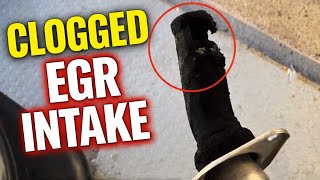
- Clogged EGR Cooler (3.0L EcoDiesel) 🔴 High Probability The 3.0L EcoDiesel engine produces a significant amount of soot which, when mixed with oil vapor from the crankcase ventilation system, creates a thick sludge that severely restricts or completely blocks the EGR cooler. This is a widely known failure, with many owners on forums like ram1500diesel.com debating cleaning versus replacement. 🎬 See how to clean the EcoDiesel EGR cooler and intake. The cooler was also part of NHTSA recall 19V-757 due to a risk of cracking.
How to confirm: Remove the EGR cooler and visually inspect for heavy soot and carbon buildup. The passages will be visibly restricted. The job requires draining coolant and removing several intake components to access the cooler.
Typical fix: Thoroughly clean the EGR cooler and intake passages or, more commonly, replace the EGR cooler assembly. While cleaning is possible, many owners report the code returns, making replacement a more permanent solution. The Dorman OE FIX is a popular aftermarket replacement.
Est. part cost: $300-$900 - Faulty or Stuck EGR Valve (5.7L Hemi) 🔴 High Probability On the gasoline Hemi engine, the EGR valve itself is the most common failure point. It can get stuck closed due to carbon buildup or mechanical/electrical failure. Owners on forums like RamForum.com have reported replacing the valve only to have the code return, indicating the passages were also clogged.
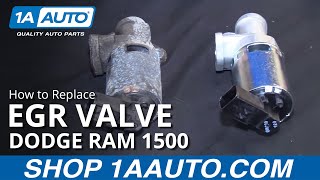
How to confirm: With a scan tool, command the EGR valve to open and check for a change in engine RPM or sensor data. If there is no change, the valve is not opening. Visual inspection after removal can also confirm if it's stuck. A DIY video from 1A Auto shows this process on a similar 5.7L. 🎬 Watch: See this step-by-step EGR valve replacement walkthrough.
Typical fix: Replace the EGR valve and gasket. Cleaning is sometimes possible but often a temporary solution if the electronic portion is failing.
Est. part cost: $150-$300 - Clogged EGR Passages 🟡 Medium Probability Carbon from the exhaust can build up in the tubes and passages leading from the EGR valve to the intake manifold, restricting flow. On the EcoDiesel, the EGR diffuser tube is a common point of blockage. On the Hemi, the port in the cylinder head can clog.
How to confirm: After removing the EGR valve/cooler, inspect the connecting tubes and intake manifold ports for carbon blockage. These must be clear for the system to function.
Typical fix: Physically clean the carbon out of the passages using brushes, picks, and a suitable solvent like carburetor cleaner. This should be done any time the valve or cooler is replaced.
Est. part cost: $10-$20 (for cleaning supplies) - Faulty EGR Temperature or Pressure Sensor ⚪ Low Probability
How to confirm: The PCM uses sensors to verify EGR flow. If a sensor (like the differential pressure sensor or DPFE) is faulty, it may not register flow even if it's occurring. Test the sensor's output with a multimeter or scan tool to see if it responds to changes in pressure or temperature as the engine RPM changes.
Typical fix: Replace the faulty sensor.
Est. part cost: $50-$100
Rare But Worth Checking
- Leaking Intake System: A vacuum or boost leak in the intake system after the mass airflow sensor can sometimes trigger P0401 alongside a P0299 (turbo underboost) code on diesel models. Owners report finding loose boost tube clamps or damaged O-rings.
- PCM Software Issue: For the 3.0L EcoDiesel, TSB #18-068-20 REV. B explicitly lists P0401 as one of several codes that can be resolved by reprogramming the PCM with the latest software. This should be investigated with a dealer before replacing expensive hardware.
Diagnosis Steps
- Read the code with an OBD-II scanner and note any other codes present. Pay special attention to P0299 on EcoDiesel models.
- For 3.0L EcoDiesel: Check with a dealer if TSB #18-068-20 REV. B (PCM Flash) applies to your VIN. Also check for the open recall on the EGR cooler (NHTSA 19V-757).
- Visually inspect the EGR valve, connecting tubes, and vacuum lines (if applicable) for obvious damage, cracks, or loose connections.
- For 3.0L EcoDiesel: Focus on the EGR cooler. This requires draining some coolant. Remove the air intake components to access the EGR system and inspect the EGR diffuser tube and cooler inlet for heavy, wet soot buildup. If heavy clogging is found, the cooler is the likely culprit.
- For 5.7L Hemi: Focus on the EGR valve. Use a scan tool to monitor the EGR sensor position and command the valve to open while observing engine RPM. If the RPM does not change or the sensor reading is static, the valve is likely faulty.
- If the valve appears to be working, remove it and inspect the passages into the intake manifold (Hemi) or the crossover tubes (EcoDiesel) for carbon blockage.
- If passages are clear and the valve seems functional, test the EGR position/temperature sensor circuit for proper voltage and ground.
- If no other cause is found, check for intake system leaks using a smoke tester, especially if turbo-related codes are also present on an EcoDiesel.
Parts You'll Likely Need
- EGR Cooler
(OEM #68273774AA (verify by VIN, may be superseded))— This is the most common failure point on the 3.0L EcoDiesel engine leading to a P0401 code, due to severe soot clogging. Replacement is often more effective than cleaning.
Trusted brands: Mopar, Dorman OE FIX
OEM price range: $600-$900
Aftermarket price range: $300-$600 - EGR Valve
(OEM #53034242AC (for 5.7L Hemi, verify by VIN))— This is the most common failure for the P0401 code on the 5.7L Hemi engine. It can become stuck or the internal sensor can fail.
Trusted brands: Mopar, Standard Motor Products, Bosch
OEM price range: $200-$300
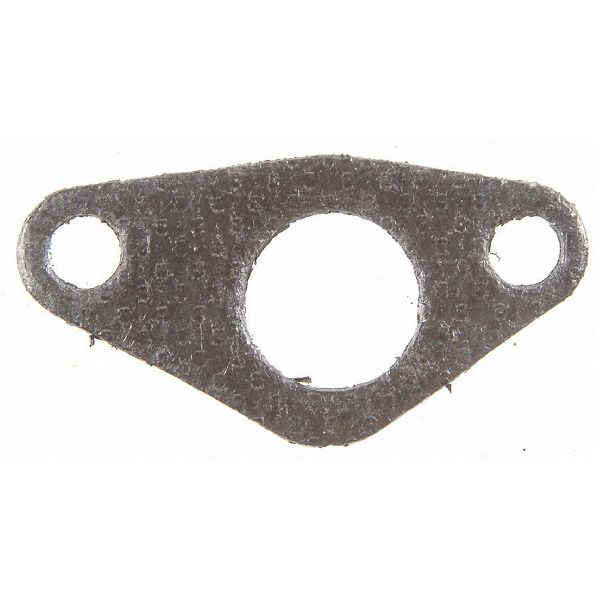
Aftermarket price range: $150-$220 - EGR Gaskets — Gaskets must always be replaced whenever EGR components are removed to prevent exhaust and coolant leaks. New components often include them.
Related Codes That Often Appear With This One
- P0299 — On the EcoDiesel, a clogged EGR system can restrict engine breathing so severely that it causes a turbocharger underboost condition. This is a very common pairing discussed in owner forums. TSB #18-068-20 REV. B also lists this as a related code fixed by a PCM flash.
- P2453 — Diesel Particulate Filter (DPF) Differential Pressure Sensor Circuit Performance. This code is listed alongside P0401 in TSB #18-068-20 REV. B, indicating a related fault in the diesel emissions system that can be addressed with a software update.
- P20EE — SCR NOx Catalyst Efficiency Below Threshold. An improperly functioning EGR system can lead to higher NOx emissions, which can overwhelm the SCR system and trigger this code. It is also cited in TSB #18-068-20 REV. B.
- P0133 — O2 Sensor 1/1 Slow Response. Changes in exhaust gas composition and temperature from the EGR fault can affect the O2 sensor's performance. This is another code listed in TSB #18-068-20 REV. B.
Technical Service Bulletins (TSBs) & Recalls
- 18-068-20 REV. B: Entitled 'Flash: Powertrain Control Module (PCM) Updates', this TSB addresses a Malfunction Indicator Lamp (MIL) caused by a list of DTCs, including P0401. The fix is to reprogram the PCM with updated software. It applies to 2017 Ram 1500s with the 3.0L Diesel engine.
Platform-Specific Known Issues
- The 3.0L EcoDiesel engine has a known history of EGR cooler failures due to soot buildup. This is a widely discussed issue in owner forums and has been the subject of recalls (NHTSA #19V-757) on some related models for fire risk.
- The provided NHTSA Technical Service Bulletin #18-068-20 REV. B for the 2017 diesel model indicates that P0401 is often part of a larger pattern of emissions system faults that may require a dealer visit for a PCM software update, not a hardware replacement.
Mechanic-Grade Diagnostic Values
- EGR Position Sensor Signal Voltage (General) — expected: ~0.9V with valve closed, up to ~3.9V with valve fully open.. Failure: Voltage is static, drops to near 0V, or does not change when the valve is commanded open.
- EGR Valve Solenoid/Actuator Coil Resistance (General) — expected: Approximately 19-25 Ohms or 55-65 Ohms, depending on design.. Failure: An open circuit (infinite resistance) or a short (near zero resistance) when tested with a multimeter.
- EGR Valve Harness Connector Voltage (5.7L Hemi & 3.0L EcoDiesel) — expected: 5-volt reference and 12-volt power (depending on pin), and a good ground (near 0V).. Failure: Absence of 5V reference or 12V power indicates a wiring issue upstream of the valve.
- EGR Valve and Tube Bolt Torque (5.7L Hemi) — expected: 20 ft-lbs (27 Nm).. Failure: N/A. This is an installation specification to prevent leaks.
Scan Tool Commands That Help
- wiTECH (Dealer Scan Tool): EGR System Test / Actuation Test — To command the EGR valve to open and close while monitoring sensor data. This directly tests the valve's mechanical and electrical response, helping to distinguish a stuck valve from a sensor or wiring issue.
- wiTECH (Dealer Scan Tool): Flash Reprogram PCM — Used to apply manufacturer software updates, such as TSB 18-068-20 REV. B for the EcoDiesel, which specifically lists P0401 as a code that can be resolved by a flash. This should be done before replacing hardware.
- Advanced OBD-II Scanner: Clear EGR Learned Values / Relearn — After replacing an EGR valve, the PCM's learned values for the old valve's positions should be cleared. This forces the system to immediately adapt to the new component, preventing potential performance issues during the self-adaptation period.
Wiring & Ground Locations
- EGR Valve Connector (5.7L Hemi) — Located on the front of the passenger side cylinder head, often below the alternator.. This 6-pin connector is the primary test point for the Hemi's EGR system. Pin 2 (Yellow/Pink wire) should have a 5V reference, Pin 3 (Dark Blue/Dark Green wire) is the sensor ground, and Pin 1 (Dark Blue/Light Green wire) is the signal wire. Testing voltages here can quickly isolate a bad valve from a wiring problem.
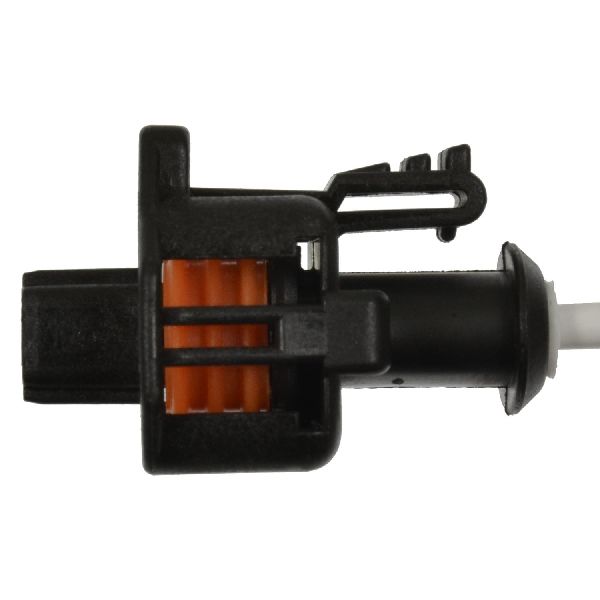
- EGR Valve Connector (3.0L EcoDiesel) — On the EGR valve assembly itself, located at the rear of the engine, slightly to the right of the centerline.. This is the main electrical connection for the EcoDiesel's EGR valve. A general pinout suggests Pin 1 is a 5V supply and Pin 5 is a ground. Verifying power and ground here is a critical first step in diagnosing electrical faults with the valve.
- EGR Diffuser Tube (3.0L EcoDiesel) — Connects the EGR system to the intake manifold, secured with two 10mm bolts on the cooler side and two 8mm bolts on the intake side.. This tube is a major bottleneck for soot and carbon buildup. Its location must be known for inspection and cleaning, which is a very common requirement to fix P0401 on the EcoDiesel.
Real Owner Repair Stories
- YouTube user Fixty, working on a 3.6L Pentastar engine with similar EGR design. (2022 Jeep Wrangler (Pentastar V6)) — P0401 trouble code, rough idle, loss of power.
❌ Tried (didn't work) Removing and thoroughly cleaning only the EGR valve.
✅ What actually fixed it The P0401 code returned after cleaning just the valve. The final fix was removing and cleaning the entire EGR cooler system, which resolved the insufficient flow issue permanently. The user later recommended simply replacing the cooler instead of attempting to clean it.
When the Usual Fixes Don't Work
- While replacing the EGR valve is a common fix for the 5.7L Hemi, it is not a guarantee. In one documented case on a Dodge Ram, a user replaced the EGR valve after cleaning the system, but the P0401 code and symptoms persisted. This highlights that the carbon blockage in the EGR passages within the cylinder head or intake manifold can be severe enough to be the sole cause of the code, even with a new, perfectly functioning valve.
OEM Part Supersession History
68273774AA→Unknown/Multiple Revisions— Part has likely been updated to improve durability and address clogging/cracking issues related to the recall.
Heads up: No definitive public supersession data is available. It is critical to verify the correct part number with a dealer using the vehicle's VIN before ordering.
Helpful Videos
We Have This Part in Stock


The information in this article is provided for general reference and educational purposes only. Vehicle specifications, procedures, and part compatibility can vary by production date, trim level, and region. Always consult your vehicle's factory service manual and verify part numbers before purchasing or performing repairs. Safety-critical components such as airbags, seat belts, and braking systems should be installed by a qualified professional.
- Ram 1500:
- 🎬 Helpful Videos
- 🛍️ Shop This Part
- What's Unique About the 2017-2017 Ram 1500
- Diagnostic Flowchart
- Symptoms You May Notice
- Most Likely Causes
- Rare But Worth Checking
- Diagnosis Steps
- Parts You'll Likely Need
- Related Codes That Often Appear With This One
- Technical Service Bulletins (TSBs) & Recalls
- Platform-Specific Known Issues
- Mechanic-Grade Diagnostic Values
- Scan Tool Commands That Help
- Wiring & Ground Locations
- Real Owner Repair Stories
- When the Usual Fixes Don't Work
- OEM Part Supersession History
- 🎟️ Get 5% Off