

P0401 on 2000-2005 Mitsubishi Eclipse 3.0L V6: EGR Insufficient Flow Causes and Fixes
P0401 on a 3G Eclipse V6 almost always means the EGR passages are clogged with carbon. The fix is often cleaning the EGR valve and, more importantly, the small vacuum ports and passages in the throttle body and intake manifold, rather than replacing the valve itself. A tiny, hidden restrictor in a vacuum line is also a primary culprit.
- Do not immediately replace the EGR valve. The P0401 code on this engine is most often caused by blockages, not a failed part.
- A thorough cleaning is the most likely fix. Focus on the EGR passages, the throttle body vacuum ports, and the tiny restrictor inside the vacuum line.
- You will likely need a new EGR gasket and an intake plenum gasket to do the job correctly.
- This is a manageable DIY job for those comfortable with removing the throttle body, with a difficulty of about 3 out of 5.
What's Unique About the 2000-2005 Mitsubishi Eclipse
On the Mitsubishi 3.0L V6 (6G72) engine, the P0401 code is notoriously caused by very small, easily clogged vacuum passages and restrictors that control the EGR valve, rather than a primary failure of the valve itself. Many owners mistakenly replace the EGR valve, only for the code to return because the root cause—clogged ports inside the throttle body or a tiny restrictor in a vacuum line—was not addressed. A thorough cleaning of these specific, hard-to-see passages is often the key to resolving the code, a fact well-documented in owner forums like Club3G.com.
Symptoms You May Notice
- Check Engine Light is on.
- Failed emissions or smog test.
- Engine pinging or knocking, especially during acceleration or under load.
- Rough idle or stalling (less common).
- Slight decrease in fuel economy.
- Hesitation or reduced power during acceleration.
- Replacing the EGR valve without cleaning the intake manifold and throttle body passages. This is the most common mistake, as the new valve cannot get proper vacuum or flow if the paths are blocked, causing the P0401 code to return.
- Overlooking the tiny, clogged vacuum line restrictor 'pill', which prevents the EGR solenoid from receiving the correct vacuum signal.
Most Likely Causes
- Clogged EGR Passages and/or Throttle Body Ports 🔴 High Probability The 6G72 engine design includes very small vacuum and EGR flow passages within the throttle body and intake manifold that are highly susceptible to carbon buildup over time. This is the most common cause of P0401 on this platform.
How to confirm: Remove the throttle body and inspect the small vacuum ports on the mounting face and inside its bore. The primary culprit is a tiny port that gets completely blocked with carbon. Forum users report needing to use a small drill bit (e.g., 1/16") or stiff wire to manually clear the blockage.
Typical fix: Thoroughly clean the EGR passages in the intake manifold and, most importantly, the ports in the throttle body using carburetor cleaner, small brushes or drill bits (turned by hand), and compressed air. This requires removing the throttle body for proper access. Replace the throttle body gasket upon reinstallation.
Est. part cost: $5-$20 for cleaner and a new throttle body gasket. - Clogged Vacuum Line Restrictor 'Pill' 🟡 Medium Probability Mitsubishi placed a tiny, pinhole-sized plastic restrictor (often called a 'pill') inside one of the vacuum hoses (often the one with a green or white tracer stripe) leading to the EGR solenoid. This restrictor is extremely prone to clogging with debris.
How to confirm: Locate the vacuum hose with the tracer stripe near the EGR solenoid. Feel for a small hard object inside the hose. Remove the hose and try to pass air or a very small wire through the restrictor. If it's blocked, it's clogged.
Typical fix: Carefully remove the restrictor from the hose and clean it out with carburetor cleaner and compressed air. A sewing needle or small wire may be needed to clear the tiny orifice. Do not discard it, as it is crucial for proper vacuum modulation.
Est. part cost: $0-$5 for cleaning supplies. - Stuck or Dirty EGR Valve 🟡 Medium Probability
How to confirm: Remove the EGR valve. Apply vacuum to its port with a hand pump; the pintle should move freely and hold vacuum. If it's stuck, sluggish, or won't hold vacuum, it's faulty. Visually inspect for heavy carbon buildup preventing movement.
Typical fix: Clean the valve's pintle and seat with carburetor cleaner and a wire brush. If it's mechanically failed (e.g., ruptured diaphragm), it must be replaced. This is less common than clogged passages.
Est. part cost: $50-$150 for a new valve. - Faulty EGR Solenoid or Vacuum Hoses ⚪ Low Probability
How to confirm: Inspect all vacuum hoses connected to the EGR valve and solenoid for cracks, brittleness, or loose connections. Test the solenoid by applying 12V to see if it clicks and properly routes vacuum when energized.
Typical fix: Replace any cracked or leaking vacuum hoses. Replace the EGR solenoid if it fails to operate or hold vacuum when energized.
Est. part cost: $5-$20 for hoses, $30-$60 for a solenoid.
Rare But Worth Checking
- Failed Engine Control Module (ECM): A Mitsubishi technical document lists a failed ECM as a possible, though very unlikely, cause. This should only be considered after all other mechanical and electrical parts of the EGR system have been thoroughly tested and proven to be working correctly.
Diagnosis Steps
- Read the code with an OBD-II scanner to confirm P0401 is present.
- Visually inspect all vacuum lines running to and from the EGR valve and EGR solenoid for cracks, leaks, or disconnections.
- With the engine idling, use a hand vacuum pump to manually apply 3.0 in/Hg of vacuum to the EGR valve. The engine idle should become rough or stumble, possibly even stalling. If it does, the valve and the main EGR passage are likely clear. If the idle doesn't change, the valve is stuck closed, its diaphragm is ruptured, or the passage is completely blocked.
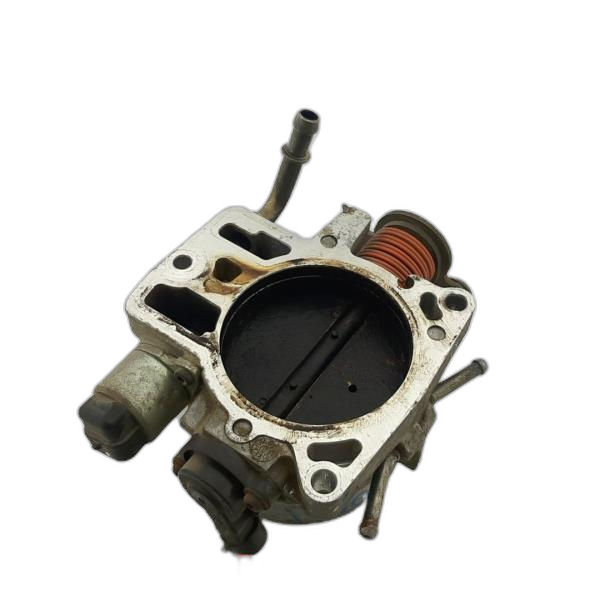
- Remove the throttle body. This is the most critical step. Carefully inspect and clean the small vacuum ports on the throttle body's mounting surface. Use a 1/16" drill bit (turned by hand) or a stiff wire to ream out the carbon from the tiny port that feeds the EGR system.
- While the hoses are accessible, locate the vacuum line with the white or green tracer stripe. Find the hard 'pill' restrictor inside and remove it for cleaning. Ensure it is not blocked.
- Remove the EGR valve. Inspect the valve itself and the port on the intake manifold for heavy carbon buildup. Clean as necessary.
- If all passages are clean and the valve operates manually, test the EGR solenoid to ensure it clicks and redirects vacuum when 12V is applied.
- After cleaning and reassembly with new gaskets, clear the code and perform a drive cycle to see if it returns.
Parts You'll Likely Need
- EGR Valve Gasket
(OEM #MD149764)— Required whenever the EGR valve is removed for cleaning or inspection to prevent vacuum leaks.
Trusted brands: Fel-Pro, Victor Reinz, Mitsubishi Genuine
OEM price range: $5-$10
Aftermarket price range: $2-$5 - Throttle Body Gasket
(OEM #MD184323)— Required because the throttle body must be removed to properly clean the clogged vacuum passages that cause the P0401 code.
Trusted brands: Fel-Pro, Mahle, Mitsubishi Genuine
OEM price range: $8-$15
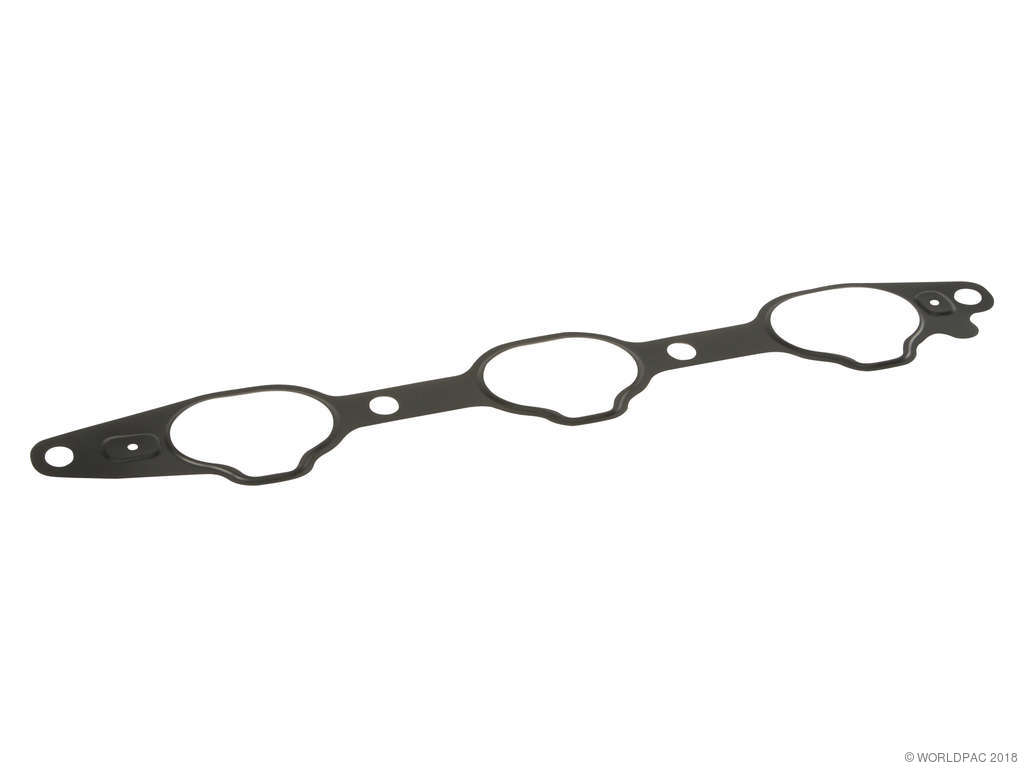
Aftermarket price range: $3-$8 - Intake Manifold Plenum Gasket
(OEM #MD183953)— May be required if the upper intake manifold (plenum) must be removed for deeper cleaning, though often not necessary for just the throttle body ports.
Trusted brands: Fel-Pro, Mahle
OEM price range: $20-$40
Aftermarket price range: $10-$25 - EGR Valve
(OEM #MD199283)— Only needed if the original valve is mechanically broken (e.g., ruptured diaphragm, seized pintle) and cannot be fixed by cleaning.
Trusted brands: Standard Motor Products (SMP), Dorman, Mitsubishi Genuine
OEM price range: $120-$200
Aftermarket price range: $50-$150
Related Codes That Often Appear With This One
- P030x (e.g., P0301, P0302) — A misfire code can sometimes accompany P0401 if the EGR malfunction contributes to lean conditions or poor combustion stability in a specific cylinder. An owner complaint on an Eclipse Spyder noted P0301 appearing with P0401. [ODI #10759569]
- P0400 — This code indicates a general EGR flow malfunction, while P0401 specifically points to insufficient flow. They are closely related and can be triggered by the same set of faults.
Technical Service Bulletins (TSBs) & Recalls
- TSB-23-13-004 (Note: This TSB is for a 2019 Outlander Sport and involves an ECU reflash. It is NOT applicable to the mechanical issue on the 2000-2005 Eclipse but is sometimes confused in searches.)
Platform-Specific Known Issues
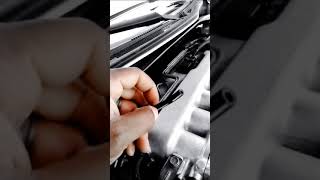
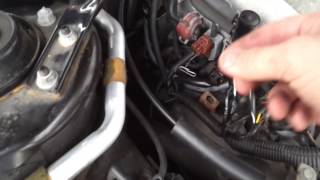
- A common failure point is a small, pinhole-sized vacuum restrictor 'pill' located inside the vacuum line with the white or green tracer stripe, which gets clogged with debris. 🎬 Watch: This video reveals the secret restrictor orifice location.
- The vacuum port for the EGR system, located on the throttle body's mounting face, is notoriously prone to clogging completely with carbon, requiring manual cleaning with a wire or small drill bit.
- Many owners report on forums like Club3G.com that they replaced the EGR valve multiple times to no avail, only to find the solution was cleaning the throttle body port.
Mechanic-Grade Diagnostic Values
- EGR Valve (Stepper Motor Type) Coil Resistance — expected: 20 – 24 Ω at 20°C (68°F). Failure: A reading outside this range indicates a faulty coil.
- EGR Solenoid Valve Resistance (Older Style) — expected: 36 – 44 Ω at 20°C (68°F). Failure: A reading outside this range indicates a faulty solenoid. Note: This may apply to earlier or different Mitsubishi models but provides a useful reference.
- EGR Solenoid Harness Voltage — expected: ~12V (Battery Voltage). Failure: No voltage with key on indicates a wiring or fuse issue upstream of the solenoid.
- Manual EGR Valve Actuation Test (at idle) — expected: Applying 3.0 in/Hg of vacuum should cause the engine to stumble or nearly stall.. Failure: No change in idle indicates a completely blocked EGR passage or a non-functioning valve.
Wiring & Ground Locations
- EGR Solenoid Valve — In the right rear corner of the engine compartment.. This is the location to inspect wiring and vacuum hoses connected to the solenoid that controls the EGR valve.
- G111 — Engine bay ground point located near the battery.. A poor engine ground can cause a variety of electrical issues for sensors and actuators, including the EGR system.
- G112 — Engine bay ground point located on the left side of the engine.. A poor engine ground can cause a variety of electrical issues. A user reported a melted ground wire on the intake plenum causing major problems.
Real Owner Repair Stories
- YouTube video by 'P0401 CEL - 2003 Mitsubishi Eclipse Spyder V6 (Mitsubishi's Secret!)' (2003 Mitsubishi Eclipse Spyder V6) — Check Engine Light with code P0401.
❌ Tried (didn't work) Cleaning the EGR valve itself.
✅ What actually fixed it The video identifies a hidden pinhole-sized restrictor inside the vacuum hose with the green tracer stripe. This restrictor was clogged. The fix was to spray carburetor cleaner through the hose to clear the tiny orifice in the restrictor 'pill'. - Reddit user in r/MitsubishiEclipse (2003 Mitsubishi Eclipse GS) — Check Engine Light with code P0401.
❌ Tried (didn't work) Mechanic replaced the EGR valve, but the code returned., Mechanic performed a 'cleaning' (details unspecified), but the code returned the next day.
✅ What actually fixed it The owner correctly identified that the mechanic likely overlooked the common issue of a clogged restrictor/orifice in the vacuum line and/or the passages in the intake manifold, which is the typical root cause after a new valve fails to fix the issue. - Mitsubishi-Forums.com user post (2000 Mitsubishi Eclipse GT V6) — P0401 code returned after cleaning carbon deposits from EGR piping.
❌ Tried (didn't work) Cleaning the EGR pipes.
✅ What actually fixed it A responding user explained the true cause is often not the main pipes, but a pinhole-sized ported vacuum source just past the throttle plate that clogs with carbon. This blockage prevents enough vacuum from reaching the EGR valve quickly, which the MAP sensor detects as insufficient flow, triggering the code. The fix is to clean this tiny port.
"I Checked Everything" — The Actual Cause
- While not a smoke test issue, a common diagnostic trap is testing only the EGR valve. In one documented case, a technician found the EGR valve's diaphragm was bad because it wouldn't hold vacuum. However, even after manually actuating the valve, the engine idle didn't change. This led to the correct conclusion that the problem was twofold: a failed EGR valve AND clogged passages in the intake manifold. Replacing the valve alone would not have fixed the code.
OEM Part Supersession History
MD199283→N/A— This is the primary OEM part number for the EGR valve assembly for the 2000-2005 Eclipse 3.0L V6.
Heads up: Be aware that some aftermarket listings show K5T58980 as an interchange number. This appears to be the part number for the vacuum solenoid component, not the entire valve assembly, which can cause confusion when ordering.
Model Year Variations Within This Range
- 2000-2005: No significant variations in the EGR system design, common causes, or repair procedures for the 3.0L V6 engine have been noted within the 3rd generation model range. The issue of clogged passages and the vacuum restrictor pill is common to all years in this range.
Diagnostic Flowchart
Other Known Issues on This Vehicle
Issues unrelated to this code that are worth knowing about as an owner of this generation:
- Automatic Transmission Failure (F4A51/W4A51) 🔴 High — Very common. A defective wave spring inside the transmission is known to break, sending metal fragments through the unit, causing catastrophic failure, often without warning. (Ref: No official recall was issued, but Mitsubishi later produced an updated, more robust wave spring design.)
- Valve Stem Seal Degradation & Oil Consumption 🟠 Medium — Common on higher mileage (100k+) engines. The seals harden and fail, causing a puff of blue smoke from the exhaust on startup and after long idles, leading to increased oil consumption.
- Clear Coat / Paint Peeling 🟡 Low — Extremely common across most colors. The factory clear coat is known to fail, leading to large patches of peeling and a chalky appearance, particularly on the roof, hood, and spoiler.
Used vs. New Parts: Buying Guide for This Vehicle
When a used part is the smart pick: A used EGR valve or throttle body from a junkyard is a very smart choice for this repair. The most common failure is carbon buildup, not mechanical breakage. A used part can be thoroughly cleaned with carburetor cleaner and brushes before installation, restoring it to full function for a fraction of the cost of a new part.
Donor-vehicle mileage cap: roughly under 120000 miles for the part to have meaningful remaining life.
What to inspect on the donor part:
- For a throttle body, ensure the butterfly valve moves smoothly and the bore isn't deeply scored.
- For an EGR valve, check that the vacuum nipple is not broken off and the pintle (internal plunger) is not visibly seized.
- Avoid parts from engines that show signs of extreme sludge or neglect (e.g., thick, black deposits under the oil cap).
OEM-only on this vehicle (don't cheap out):
- No parts in this specific EGR system are known to require an OEM-only replacement. The components are relatively simple.
Aftermarket brands forum-validated for this vehicle:
- Standard Motor Products (SMP) is a widely available and reputable aftermarket brand for this component.
Real Owner Stories
Aggregated from forums and TSBs cited above. Mileages and costs reflect what owners reported in those sources.
2000-2005 Mitsubishi Eclipse 3.0L V6 (6G72)
Symptoms: Check Engine Light for P0401. Owner replaced the EGR valve multiple times to no avail.
What fixed it: Cleaning the small vacuum port on the throttle body's mounting surface using a wire or small drill bit to remove carbon buildup.
Source hint: vehicle_specific_issues / Club3G.com forum
2000-2005 Mitsubishi Eclipse 3.0L V6 (6G72)
Symptoms: P0401 EGR Insufficient Flow code; vacuum system not modulating correctly.
What fixed it: Locating the vacuum line with the white or green tracer stripe and cleaning the tiny 'pill' restrictor inside that was blocked with debris.
Source hint: Club3G.com thread titled 'How-To: Fix P0401 EGR Insufficient Flow (The Right Way)'
Frequently Asked Questions
Does TSB-23-13-004 apply to my 2000-2005 Mitsubishi Eclipse P0401 issue?
I've already replaced my EGR valve twice but the P0401 code keeps coming back. What am I missing?
What is the 'pill' everyone mentions in the vacuum lines?
Can I clean the throttle body ports without removing it?
Is the P0401 code related to the blue smoke I see from my exhaust at startup?
How much should I expect to pay to fix P0401 if I do it myself?
Helpful Videos

Used OEM Parts in Stock

New Aftermarket Parts Available


The information in this article is provided for general reference and educational purposes only. Vehicle specifications, procedures, and part compatibility can vary by production date, trim level, and region. Always consult your vehicle's factory service manual and verify part numbers before purchasing or performing repairs. Safety-critical components such as airbags, seat belts, and braking systems should be installed by a qualified professional.
- Mitsubishi Eclipse:
- 🎬 Helpful Videos
- 🛍️ Shop This Part
- What's Unique About the 2000-2005 Mitsubishi Eclipse
- Symptoms You May Notice
- Most Likely Causes
- Rare But Worth Checking
- Diagnosis Steps
- Parts You'll Likely Need
- Related Codes That Often Appear With This One
- Technical Service Bulletins (TSBs) & Recalls
- Platform-Specific Known Issues
- Mechanic-Grade Diagnostic Values
- Wiring & Ground Locations
- Real Owner Repair Stories
- "I Checked Everything" — The Actual Cause
- OEM Part Supersession History
- Model Year Variations Within This Range
- Diagnostic Flowchart
- Other Known Issues on This Vehicle
- Used vs. New Parts: Buying Guide for This Vehicle
- Real Owner Stories
- 2000-2005 Mitsubishi Eclipse 3.0L V6 (6G72)
- 2000-2005 Mitsubishi Eclipse 3.0L V6 (6G72)
- Frequently Asked Questions
- 🎟️ Get 5% Off