

P0401 on 2011-2012 Lexus CT Hybrid: EGR Insufficient Flow Causes & Fixes
On a 2011-2012 Lexus CT200h, code P0401 is almost always caused by carbon buildup clogging the EGR valve, EGR cooler, and intake manifold passages. The most common fix is a thorough cleaning of the entire EGR system, which is labor-intensive but uses few parts. Ignoring it can lead to rough idle, stalling, and is a known contributor to head gasket failure.
- P0401 on a 2011-2012 CT200h is a very common code almost always caused by heavy carbon buildup throughout the entire EGR system.
- The fix requires more than just replacing the EGR valve; you MUST also clean the EGR cooler, connecting pipes, and the EGR passages in the intake manifold.
- Symptoms include a Check Engine Light, rough idle/shaking on cold starts, and a rattling noise.
- Ignoring this code can lead to worsening performance, stalling, and significantly increases the risk of costly head gasket failure.
- Lexus acknowledged this issue through multiple Technical Service Bulletins (TSBs) and released an updated EGR valve.
What's Unique About the 2011-2012 Lexus CT HYBRID

The 2ZR-FXE engine in the Lexus CT200h (shared with the 2010-2015 Toyota Prius) is notoriously prone to developing heavy carbon deposits throughout the entire EGR system. This isn't just a simple valve issue; the carbon clogs the EGR valve, the EGR cooler, and the small passages in the intake manifold. This widespread clogging is the primary reason P0401 is so common on these vehicles and can lead to more severe issues like engine shaking, misfires, and even head gasket failure if not addressed.
Diagnostic Flowchart
Tap your situation to follow the diagnostic path that matches what you're seeing on this vehicle.
Symptoms You May Notice
- Check Engine Light is on
- Engine vibration or rough idle, especially on a cold start, sometimes described as a 'shutter' or 'shake'.
- Tapping, rattling, or knocking noise from the engine area on cold starts, sometimes described as 'marbles in a can'.
- Engine hesitation or stumbling during acceleration.
- Reduced fuel economy.
- Engine stalling
- Pinging or knocking sound from the engine under load or at higher speeds.
- Replacing only the EGR valve without cleaning the EGR cooler and intake manifold. The code will often return because the restriction still exists elsewhere in the system.
- Replacing spark plugs or ignition coils to fix misfires without addressing the root cause, which is the clogged EGR system causing uneven air/fuel distribution.
Most Likely Causes

- Clogged EGR Valve, Cooler, and/or Intake Manifold Passages 🔴 High Probability The 2ZR-FXE engine design is susceptible to oil consumption and carbon buildup, which heavily deposits in the entire EGR circuit, restricting flow. This is a well-documented issue for this platform, with symptoms often appearing around 70,000 miles.
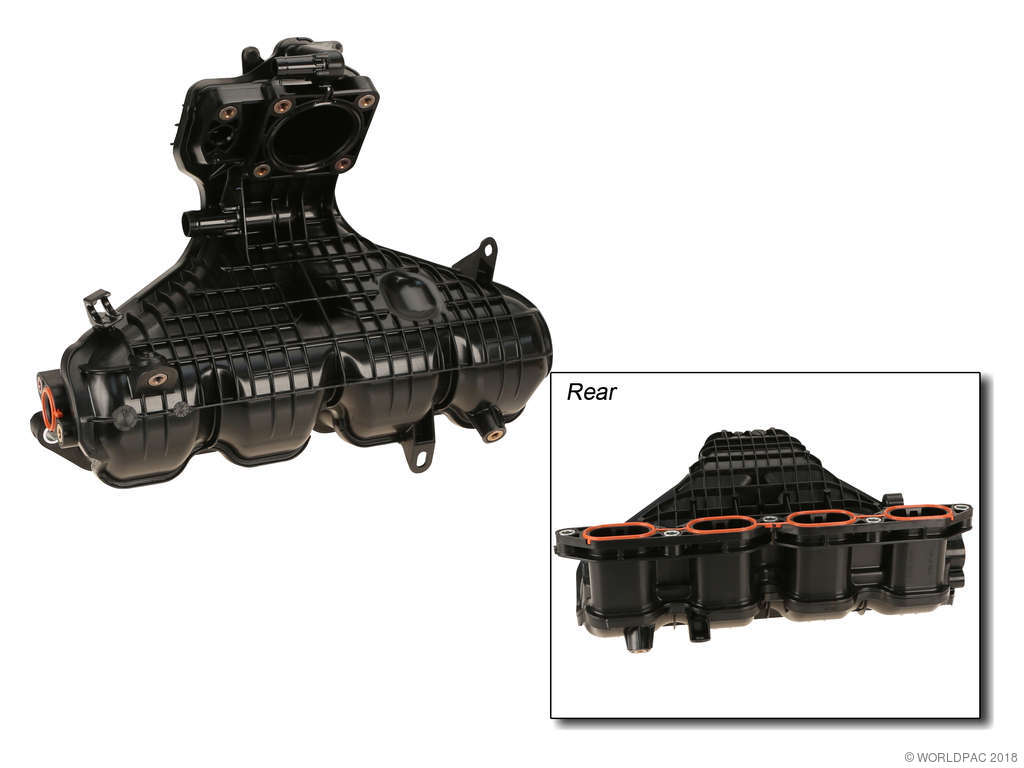
How to confirm: Remove the EGR pipe, EGR valve, and ultimately the intake manifold to visually inspect for thick, black carbon deposits blocking the passages. The four small EGR ports on the intake manifold are often completely blocked.
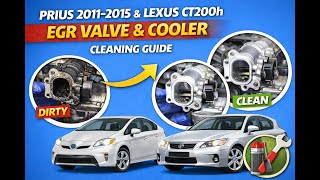
Typical fix: Thoroughly clean the EGR valve, EGR cooler, connecting pipes, and all EGR ports on the intake manifold. Many owners use a combination of carburetor cleaner, oven cleaner (for the cooler), and various brushes to remove the hardened carbon. In severe cases, or for a less messy job, replace the clogged components. 🎬 Watch this step-by-step guide to cleaning your EGR valve and cooler.
Est. part cost: $20-$50 for gaskets and cleaning supplies (brake/carb cleaner, brushes); $300-$600+ for replacement parts. - Failed EGR Valve (Stuck Closed) ⚪ Low Probability While clogging is more common, the electronic part of the valve can fail or the valve plunger can seize with carbon. Lexus issued TSBs for an improved EGR valve (part of kit 04004-58137) to address this condition.
How to confirm: Use a capable scan tool to command the EGR valve to open and close while monitoring engine RPMs. 🎬 See how to properly diagnose and test your hybrid's EGR system. If it doesn't respond, and it's not physically seized with carbon, the motor has likely failed. A simple physical test is to push on the valve plunger (with the engine off) to see if it moves smoothly or gets stuck.
Typical fix: Replace the EGR valve assembly. It is critical to clean the rest of the EGR system (cooler, pipes, intake ports) at the same time to prevent a rapid recurrence of the code.
Est. part cost: $150-$400
Diagnosis Steps
- Confirm code P0401 is present using an OBD-II scanner.
- Check for any Technical Service Bulletins (TSBs) related to your vehicle's VIN. TSBs L-SB-0028-13 and L-SB-0015-16 are highly relevant.
- Inspect the engine for a rough idle or rattling sound when starting from cold, as described in TSB L-SB-0015-16.
- Remove the engine cover and air filter housing to access the EGR system.
- Remove the EGR pipe that connects the EGR valve to the intake manifold and inspect it for heavy carbon buildup. This is the first and easiest place to see the extent of the problem.
- Remove and inspect the EGR valve itself. Check if the plunger is stuck or moves freely. It will likely be heavily caked in carbon.
- If significant carbon is found in the pipe or valve, it is necessary to also remove and clean the EGR cooler and the intake manifold, as they are the source of the restriction. The small EGR ports on the intake manifold are a critical chokepoint.
- For the EGR cooler, many DIYers recommend soaking it in oven cleaner or a strong degreaser (like Purple Power) for several hours, followed by flushing with a pressure washer until water runs clear. 🎬 Watch the best way to deep clean a carbon-clogged EGR cooler.
- For the intake manifold, use brake cleaner, carb cleaner, and long brushes to scrub the four small EGR ports until they are completely clear.
- After cleaning or replacing components, use new gaskets, clear the code, and perform a test drive to ensure the issue is resolved.
Parts You'll Likely Need

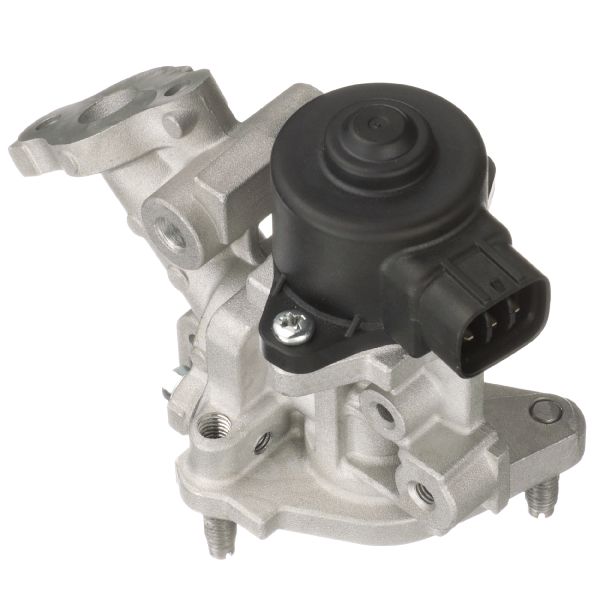
- EGR Valve Kit
(OEM #04004-58137)— This is the primary component that gets clogged with carbon. TSBs recommend an updated part. The kit often includes the valve (25620-37120) and necessary gaskets.
Trusted brands: Lexus/Toyota (OEM), Aisan
OEM price range: $165-$400
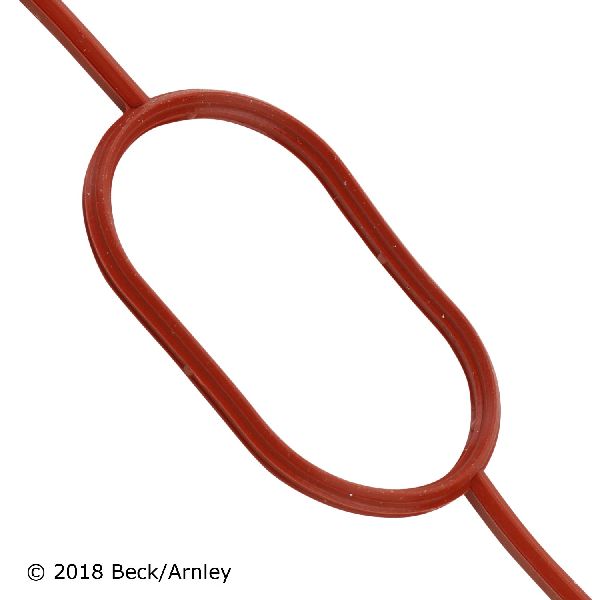
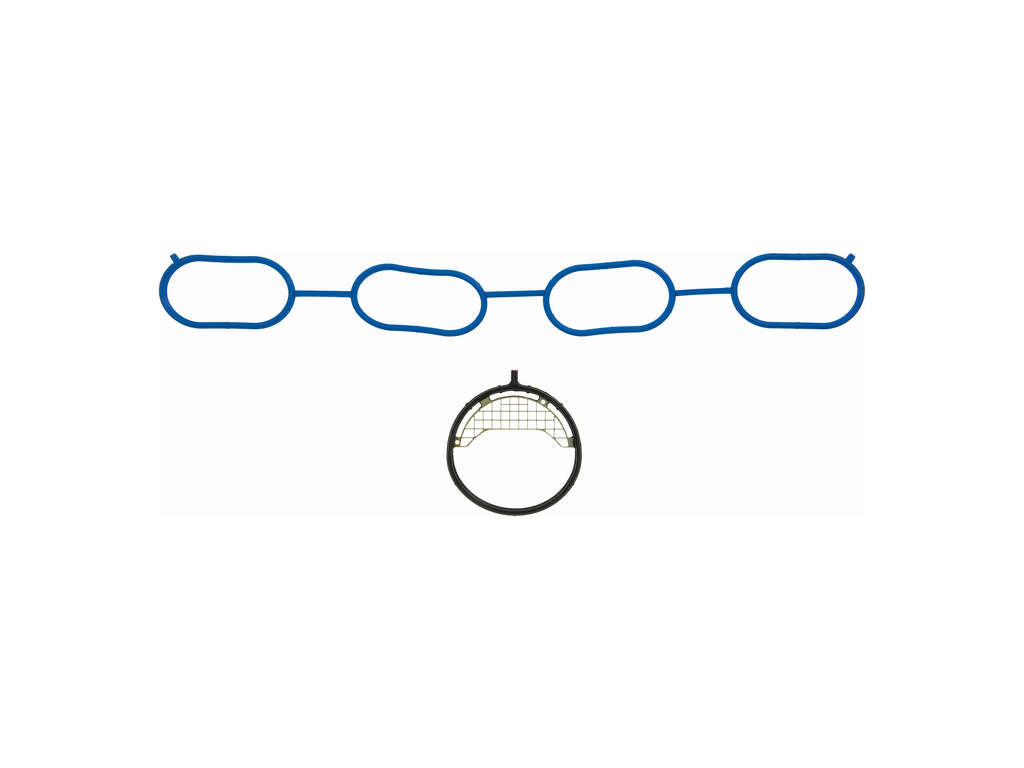
Aftermarket price range: $150-$250 - Intake Manifold Gasket
(OEM #17176-37010)— Must be replaced when the intake manifold is removed for cleaning the EGR ports.
Trusted brands: Lexus/Toyota (OEM), Fel-Pro, Mahle
OEM price range: $15-$25
Aftermarket price range: $5-$15 - EGR Cooler Gasket
(OEM #25685-37010)— Must be replaced if the EGR cooler is removed for cleaning.
Trusted brands: Lexus/Toyota (OEM)
OEM price range: $10-$20
Aftermarket price range: $5-$10 - EGR Pipe Gaskets
(OEM #25627-37010, 25634-37010)— The metal gaskets for the EGR pipe connections should be replaced to prevent exhaust leaks after reassembly.
Trusted brands: Lexus/Toyota (OEM)
OEM price range: $5-$10 each
Aftermarket price range: $2-$5 each
Related Codes That Often Appear With This One
- P0300, P0301, P0302, P0303, P0304 — Misfire codes can occur because the clogged EGR system causes uneven air/fuel distribution and engine shudder, especially on cold starts. Cylinder 1 (P0301) is often the first to misfire due to its proximity to the EGR inlet on the manifold.
- P0A0F — This code, "Engine Failed to Start," can be triggered by the severe engine shaking and stumbling caused by the clogged EGR system during startup.
Technical Service Bulletins (TSBs) & Recalls
- L-SB-0015-16 REV: Addresses vibration, rough idle, tapping noise, and P0401 due to excess carbon buildup in the EGR valve. Recommends replacement with an updated part kit and potential ECU reprogram.
- L-SB-0028-13: Notes that an improved EGR valve is available to fix the P0401 condition on 2011-2012 models. This TSB was later superseded by L-SB-0015-16.
- ZLF_DEALER LETTE / Pol-16-02: Details a warranty enhancement program extending coverage for a sticking EGR valve causing P0401 to 10 years/150,000 miles.
Platform-Specific Known Issues
- Lexus issued Technical Service Bulletin L-SB-0028-13 for 2011-2012 CT200h models, acknowledging that some vehicles may exhibit a MIL 'ON' with DTC P0401 and that an improved EGR valve was made available to address the condition.
- A later TSB, L-SB-0015-16 REV, expanded on the issue, linking P0401 to cold start vibration, rough idle, and tapping noises due to excess carbon buildup causing the EGR valve to stick. The fix involved replacing the EGR valve with an updated kit and potentially reprogramming the ECU.
- A warranty enhancement program (ZLF / POL16-02) was also initiated for some vehicles, extending coverage for a sticking EGR valve to 10 years or 150,000 miles.
- The widespread carbon issue is so prevalent that failure to clean the EGR system is a known contributor to eventual head gasket failure on the 2ZR-FXE engine. The theory is that clogged EGR passages cause hot spots and increased pressure, particularly in cylinder #1, leading to the failure.
- Many owners proactively clean the entire EGR circuit every 60,000-80,000 miles as preventative maintenance to avoid P0401 and mitigate the risk of head gasket failure.
Scan Tool Commands That Help
- Toyota Techstream: Active Test: Control the EGR Step Position — This test allows a technician to command the EGR valve to open in small increments (steps) while the engine is idling. By observing the engine speed (RPM) and Manifold Absolute Pressure (MAP) in the Data List, you can confirm if the valve is physically opening and if the passages are clear. On a healthy system, the idle will become rough and may stall as the EGR is opened to around 14-17 steps, indicating good flow. If there is no change in idle, it confirms a blockage in the system or a failed valve.
- Toyota Techstream: Utility: Flash Reprogram ECM (PCM) — After replacing the EGR valve with the updated part, as specified in TSB L-SB-0015-16, the Engine Control Module (ECM) may need to be reprogrammed. This TSB provides new calibration IDs to address the P0401 and rough idle conditions. The utility is used to flash the ECM with the updated software.
Wiring & Ground Locations
- EGR Valve Connector — On top of the EGR valve assembly, located on the top of the engine toward the driver's side.. The EGR valve is electronically controlled and has a 6-pin connector. A poor connection, corrosion, or damaged wiring at this connector can prevent the valve from operating as commanded by the ECM, leading to flow issues that can be mistaken for a clog. TSB L-SB-0028-13 instructs technicians to modify the wiring harness by adding heat-resistant tape to prevent chafing.
Real Owner Repair Stories
- ClubLexus Forum Member (2011 Lexus CT200h with ~110,000 miles) — Engine warning light on the dashboard.
❌ Tried (didn't work) The Lexus dealership diagnosed a faulty EGR valve and replaced it at a significant cost.
✅ What actually fixed it The check engine light returned on the drive home from the dealership. The owner returned, and the dealership then performed a cleaning of a "vent or tube or passageway," which finally resolved the issue. This highlights the common misdiagnosis of replacing only the valve without cleaning the entire clogged EGR circuit (cooler, pipes, and intake manifold ports). - YouTube Mechanic/Owner (2012 Lexus CT200h with over 200,000 miles) — Rough running at or near idle, engine shaking, and rattling (the 'death rattle').
✅ What actually fixed it The video provides a diagnostic tip before performing a full cleaning: temporarily block the EGR pipe (between the valve and intake manifold) with a putty knife and run the engine briefly. If the shaking and rattling stop, the problem is confirmed to be EGR-related. The ultimate fix is a thorough cleaning of the EGR valve, EGR cooler, and especially the small ports in the intake manifold, which are identified as a primary culprit.
OEM Part Supersession History
25620-37110→25620-37120— The original EGR valve was prone to sticking due to carbon buildup. The new part is an improved design to address the condition causing P0401, as noted in TSB L-SB-0028-13.
Heads up: The new part (25620-37120) is a direct replacement for the old one (25620-37110) and is fully compatible.
Helpful Videos
Used OEM Parts in Stock

New Aftermarket Parts Available


The information in this article is provided for general reference and educational purposes only. Vehicle specifications, procedures, and part compatibility can vary by production date, trim level, and region. Always consult your vehicle's factory service manual and verify part numbers before purchasing or performing repairs. Safety-critical components such as airbags, seat belts, and braking systems should be installed by a qualified professional.
- Lexus CT HYBRID:
- 🎬 Helpful Videos
- 🛍️ Shop This Part
- What's Unique About the 2011-2012 Lexus CT HYBRID
- Diagnostic Flowchart
- Symptoms You May Notice
- Most Likely Causes
- Diagnosis Steps
- Parts You'll Likely Need
- Related Codes That Often Appear With This One
- Technical Service Bulletins (TSBs) & Recalls
- Platform-Specific Known Issues
- Scan Tool Commands That Help
- Wiring & Ground Locations
- Real Owner Repair Stories
- OEM Part Supersession History
- 🎟️ Get 5% Off