

P0401 on 2009-2011 Jeep Liberty: EGR Insufficient Flow Causes & Fixes
On a 2009-2011 Jeep Liberty with the 3.7L V6, code P0401 is most often caused by a carbon-clogged or faulty EGR valve. The most common and reliable fix is replacing the EGR valve and thoroughly cleaning the associated intake manifold passages. The part costs between $50 and $180.
- P0401 on your Jeep Liberty means the EGR system isn't flowing enough exhaust gas.
- The most likely cause is a faulty EGR valve and/or carbon-clogged passages in the intake manifold.
- Always aggressively clean the EGR ports in the intake when you replace the valve to prevent the code from returning.
- A PCM software update (TSB #18-092-16) could be a potential fix, especially if you also have starting issues.
- Replacement of the EGR valve is generally more reliable than cleaning it.
What's Unique About the 2009-2011 Jeep LIBERTY
The 2009-2011 Jeep Liberty (KK generation) uses a 3.7L PowerTech V6 engine with an electronically controlled EGR valve. This system is notoriously prone to heavy carbon buildup in the EGR valve itself and, critically, in the passages within the intake manifold where the gas enters. This blockage is the primary cause of the P0401 code. Additionally, a manufacturer Technical Service Bulletin (TSB #18-092-16) indicates that in some cases, the P0401 code can be triggered by a PCM software issue, which may also cause hard starting or no-start conditions.
Diagnostic Flowchart
Tap your situation to follow the diagnostic path that matches what you're seeing on this vehicle.
Symptoms You May Notice
- Check Engine Light is on
- Engine pinging or knocking, especially during acceleration or under load
- Failed emissions test
- Reduced engine performance or slower acceleration
- In some cases, hard to start, long crank time, or a no-start condition (as noted in TSB #18-092-16)
- Rough idle or stalling if the valve is stuck partially open
- Replacing the MAP sensor before thoroughly inspecting and cleaning the EGR valve and its passages.
- Replacing the EGR valve without aggressively cleaning the clogged intake manifold port, leading to the code returning almost immediately.
- Cleaning the EGR valve but not the EGR tube or intake port, which is often the point of greatest restriction.
Most Likely Causes
- Faulty or Stuck EGR Valve 🔴 High Probability The electronic EGR valve on the 3.7L V6 is highly susceptible to carbon buildup, which can cause the internal pintle to stick closed or become slow to respond. The internal electronic sensor can also fail, which cleaning will not resolve.
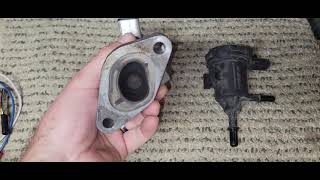
How to confirm: Remove the valve and inspect for heavy carbon deposits. You can try cleaning it with carburetor cleaner, but replacement is often more reliable. A scan tool can command the valve to open; 🎬 Watch: How to test the EGR and purge solenoid. a lack of change in engine RPM or MAP sensor readings points to a faulty valve. Some owners on forums have successfully tested the valve by applying battery voltage directly to its pins to see if it actuates.
Typical fix: Replace the EGR valve and gasket. Cleaning is sometimes a temporary fix, but the code often returns.
Est. part cost: $50-$180 - Clogged EGR Passages 🔴 High Probability Carbon from exhaust gases builds up heavily over time in the EGR tube and, more importantly, the port on the intake manifold where the tube connects. This is a very common point of failure on the 3.7L engine.
How to confirm: When the EGR valve and tube are removed, inspect the port on the intake manifold for heavy, hard-packed carbon deposits. The opening can be reduced to a tiny hole, severely restricting flow.
Typical fix: Thoroughly clean the carbon out of the passages. This is critical. Many DIYers use a combination of picks, small brushes, a shop vacuum to remove debris, and a speedometer cable spun with a drill to act as a flexible auger. This should 🎬 See this easy tip for cleaning clogged EGR ports. always be done when replacing the EGR valve.
Est. part cost: $0-$20 (for cleaning tools) - PCM Software Issue ⚪ Low Probability A specific TSB (#18-092-16) was issued that addresses the P0401 code via a software update, linking it to drivability issues like hard starts.
How to confirm: A Jeep dealership or a qualified shop with a wiTECH scan tool can check your vehicle's VIN to see if the latest PCM software has been installed.
Typical fix: Reprogram the Powertrain Control Module (PCM) with the updated software. This is typically a dealer-only procedure.
Est. part cost: $0 (if under warranty) - $200
Rare But Worth Checking
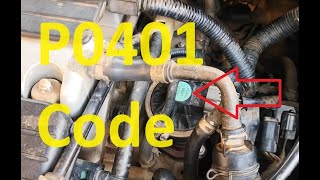
- Faulty MAP Sensor: The PCM uses the Manifold Absolute Pressure (MAP) sensor to verify EGR flow. If the sensor is faulty or slow to respond, it may not detect the pressure change when the EGR valve opens, falsely triggering a P0401 code. 🎬 Watch: A breakdown of common P0401 causes and fixes. There are forum reports of a MAP sensor replacement fixing the code after EGR cleaning/replacement failed.
- Damaged EGR Tube: The tube connecting the exhaust manifold to the EGR valve can crack or develop leaks, though this is far less common than clogging. A leak would typically introduce other symptoms like exhaust noise.
- Clogged EGR Cooler: While more common on diesel engines or newer gasoline direct injection engines, the EGR cooler (if equipped) can become clogged with soot, restricting flow. On some platforms, cleaning the cooler is necessary to resolve a persistent P0401.
Diagnosis Steps
- Read the trouble codes with an OBD-II scanner and confirm P0401 is present. Note any other codes, such as those for the MAP sensor or EGR control circuit.
- Visually inspect the EGR valve (located on the rear passenger side of the engine), its electrical connector, and the EGR tube for any obvious damage or loose connections.
- With the engine running, use a capable scan tool to command the EGR valve to open. Listen for a change in engine idle (it should stumble or run rough) and watch the MAP sensor data for a corresponding change. No change strongly suggests a flow blockage or failed valve.
- Allow the engine to cool completely. Disconnect the negative battery terminal.
- Remove the EGR tube that connects the valve to the intake manifold. It is typically held on by two 8mm bolts on each end. Be prepared for these bolts to be rusty.
- Remove the EGR valve. It is typically held by two T45 Torx bolts. These can be difficult to access and may be seized.
- Crucial Step: Inspect the port on the intake manifold and the EGR tube for heavy carbon buildup. This is the most likely point of restriction.
- Thoroughly clean the EGR passages in the intake manifold and the EGR tube. Use picks, brushes, carburetor cleaner, and a vacuum to prevent debris from falling into the intake.
- Clean the EGR valve with carburetor cleaner or replace it. Given the high failure rate and electronic components, replacement with a new gasket is the recommended and more reliable fix.
- Install the new or cleaned EGR valve with a new gasket. Reinstall the cleaned EGR tube with new gaskets if possible.
- Reconnect the battery, clear the trouble codes, and perform a drive cycle (including highway speeds) to see if the code returns.
- If the code persists, investigate the MAP sensor's operation or check with a dealer about TSB #18-092-16 for a potential PCM reflash.
Parts You'll Likely Need
- EGR Valve
(OEM #53034192AB)— This is the most common failure point. The valve gets clogged with carbon and sticks, or the internal electronics fail. The OEM part number 53034192AB supersedes previous numbers 53032948AC, 53032948AD, and 53034192AA.
Trusted brands: Mopar (OEM), Standard Motor Products (EGV1150), Delphi (EG10678), Walker Products (19003)
OEM price range: $120-$180
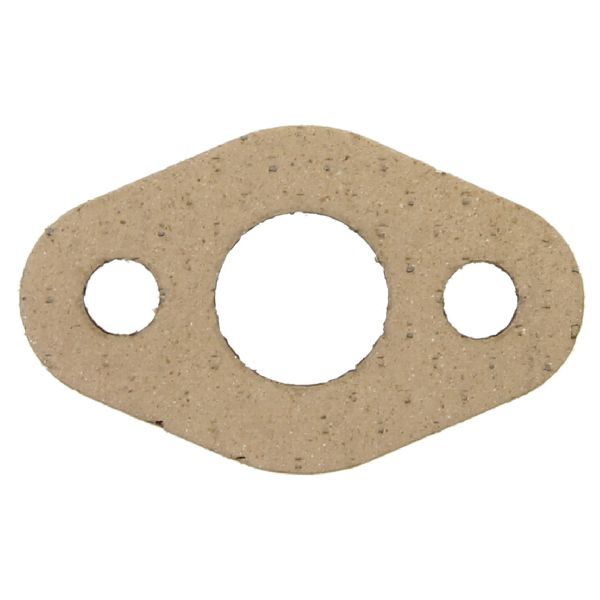
Aftermarket price range: $50-$150 - EGR Valve Gasket — A new gasket is required to ensure a proper seal when replacing or reinstalling the EGR valve. Most new valves include one.
Trusted brands: Fel-Pro, Victor Reinz
OEM price range: $5-$15
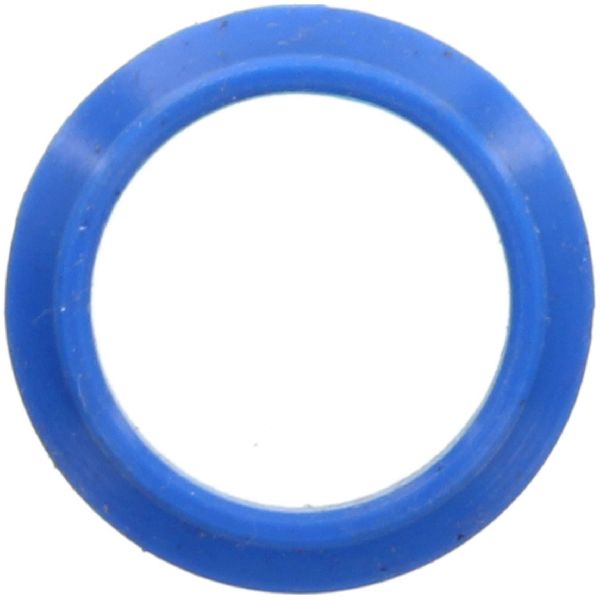
Aftermarket price range: $2-$10 - EGR Tube Gaskets — The metal tube connecting the EGR valve to the intake manifold uses a gasket on each end. It is best practice to replace these to prevent vacuum or exhaust leaks after the service.
Trusted brands: Mopar, Fel-Pro
OEM price range: $10-$20 (for a set)
Aftermarket price range: $5-$15
Technical Service Bulletins (TSBs) & Recalls
- Bulletin #18-092-16: Addresses P0401 - EGR System Performance and suggests a PCM reflash may be the solution, also linking the code to potential hard starting conditions for 2009-2012 models.
Platform-Specific Known Issues
- A Technical Service Bulletin (TSB #18-092-16) was issued for 2009-2012 Jeep Liberty models with the 3.7L engine. It notes that code P0401 could be resolved with a PCM software update. This TSB also links the code to symptoms like 'Hard to start, long crank time or even a no start.'
- Owners on forums like 'Jeep KJ and KK Liberty Forum' frequently report that simply replacing the EGR valve is not enough. The key is to aggressively clean the carbon from the intake manifold port, which is often almost completely blocked.
Mechanic-Grade Diagnostic Values
- EGR Solenoid Control Circuit Voltage — expected: Below 0.5 volts when the valve is commanded OPEN during a scan tool system test.. Failure: Voltage does not drop below 0.5V, indicating excessive resistance in the control circuit.
- EGR Position Sensor Signal Voltage — expected: A smooth voltage change as the valve is commanded open and closed with a scan tool.. Failure: Voltage is erratic, does not change, or is above the maximum threshold of 4.89 volts, indicating a faulty sensor or circuit issue.
Scan Tool Commands That Help
- wiTECH or equivalent professional scan tool: EGR System Test — This is a bidirectional test used to command the EGR valve to open and close while the engine is running. It is the primary method for verifying if the valve is mechanically stuck or if the control circuit is functioning. A lack of engine stumble or change in MAP sensor readings during this test points to a blockage or failed valve.
Wiring & Ground Locations
- EGR Valve Connector (6-Pin) — On the EGR valve itself, located on the rear passenger side of the 3.7L engine.. This is the central connection point for all power, ground, and signal wires for the EGR valve. Testing voltages and signals here is critical for diagnosis. The pinout is as follows: Pin 1: (K834) EGR Signal; Pin 2: (F856) 5 Volt Supply; Pin 3: (K900) Sensor Ground; Pin 4: (Z939) Ground; Pin 5: N/A; Pin 6: (K35) EGR Solenoid Control.
- G102 — Right rear of the engine compartment.. This is a major engine compartment ground point. While not the specific ground for the EGR valve circuit, a poor connection here can cause a variety of unpredictable electrical issues in engine components.
Real Owner Repair Stories
- Jeep KJ and KK Liberty Forum (2009 Jeep Liberty) — Engine would start but not idle, would stall immediately. No engine codes were present initially.
❌ Tried (didn't work) Checking fuel pressure (was good at 58 psi), checking for bad grounds.
✅ What actually fixed it The user unplugged the EGR valve's electrical connector, and the engine started and ran perfectly, which immediately confirmed the EGR valve was stuck open and flooding the engine with exhaust gas. He then pulsed the valve by applying battery voltage to the pins to free it, which resolved the stalling. This points to a mechanically stuck valve as the root cause.
OEM Part Supersession History
53032948AC, 53032948AD, 53034192AA→53034192AB— Standard part revision and improvement by the manufacturer.
Heads up: No known incompatibilities. The newest part number, 53034192AB, is the correct service replacement for all previous versions on the 2007-2012 3.7L V6.
Model Year Variations Within This Range
- 2010-2011: TSB #18-092-16, which addresses the P0401 code, also includes specific software enhancements for the Auto Shutdown (ASD) Relay to improve fuel pump initialization for 2010-2012 model years. This means that on these later models, a P0401 accompanied by a hard-start or no-start condition is even more likely to be related to the PCM software issue mentioned in the bulletin.
Helpful Videos


We Have This Part in Stock


The information in this article is provided for general reference and educational purposes only. Vehicle specifications, procedures, and part compatibility can vary by production date, trim level, and region. Always consult your vehicle's factory service manual and verify part numbers before purchasing or performing repairs. Safety-critical components such as airbags, seat belts, and braking systems should be installed by a qualified professional.
- Jeep LIBERTY:
- 🎬 Helpful Videos
- 🛍️ Shop This Part
- What's Unique About the 2009-2011 Jeep LIBERTY
- Diagnostic Flowchart
- Symptoms You May Notice
- Most Likely Causes
- Rare But Worth Checking
- Diagnosis Steps
- Parts You'll Likely Need
- Technical Service Bulletins (TSBs) & Recalls
- Platform-Specific Known Issues
- Mechanic-Grade Diagnostic Values
- Scan Tool Commands That Help
- Wiring & Ground Locations
- Real Owner Repair Stories
- OEM Part Supersession History
- Model Year Variations Within This Range
- 🎟️ Get 5% Off