

P0401 on 2011-2015 Ford F-350 SD 6.7L: Clogged EGR Cooler Causes and Fixes
On a 2011-2015 F-350 with the 6.7L Powerstroke, P0401 almost always means the EGR cooler is clogged with soot. This is a well-known pattern failure. Ford acknowledged this with a warranty extension program (Customer Satisfaction Program 21M04) for 2011-2014 models, covering the repair for 11 years or 120,000 miles. The definitive fix is to replace the EGR cooler core and all associated gaskets, a job that can cost between $1,100 and $1,600 at a shop.
- For a 2011-2015 F-350 6.7L, P0401 is almost certainly caused by a soot-clogged EGR cooler.
- Ford recognized this issue on 2011-2014 models with a warranty extension program (21M04). Check your vehicle's service history to see if this was performed.
- The correct fix is to replace the EGR cooler core and all associated gaskets; simply cleaning the EGR valve is usually not enough.
- While the job can be done DIY, it is labor-intensive (4-6 hours) and rated as difficult.
- Ensure you get the correct parts for your specific model year, as there are differences between 2011-2014 and 2015 trucks.
What's Unique About the 2011-2015 Ford F-350 SD
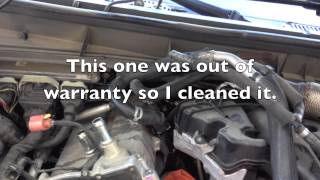
The first-generation 6.7L Powerstroke (2011-2014) is notorious for EGR cooler clogging issues, which is the primary cause of P0401 on these trucks. 🎬 Watch: A quick overview of P0401 on the 6.7 Powerstroke. The original cooler design was highly susceptible to becoming restricted with soot, leading Ford to issue Customer Satisfaction Program 21M04. This program extended the warranty for this specific failure to 11 years or 120,000 miles, and it specifically applies when DTC P0401 and/or P2457 are present. While other causes are possible, the clogged cooler is so common that it should be the first suspicion. For the 2015 model year, Ford updated the coolant routing for the EGR system, sourcing it from the primary (high-temp) cooling system instead of the secondary (low-temp) one, though the cooler itself can still clog.
Diagnostic Flowchart
Tap your situation to follow the diagnostic path that matches what you're seeing on this vehicle.
Generation note: The 2011-2015 F-350 SD is part of the third generation. However, there are key differences within this range. The 2011-2014 models with the first-generation 6.7L Powerstroke are particularly prone to EGR cooler clogging, as addressed by Customer Satisfaction Program 21M04. The 2015 model year introduced the second-generation 6.7L Powerstroke, which included changes to the EGR system's coolant supply, using the primary engine cooling loop instead of the secondary one. Because of this, gaskets and some procedures differ between the 2011-2014 and 2015+ models.
Symptoms You May Notice
- Check Engine Light is on
- Reduced engine power or entering 'limp mode', especially under load or towing.
- Decreased fuel economy.
- Engine knocking or pinging sounds, especially under load
- Rough or unstable idle.
- Replacing the EGR valve when the EGR cooler is the actual point of restriction.
- Replacing sensors like the MAF or MAP sensor without first inspecting the EGR cooler and passages for physical blockages.
- Assuming a fuel additive caused the problem. A user on Reddit reported the code appeared after using an additive, but the underlying issue was likely the pre-existing clogged cooler.
Most Likely Causes
- Clogged EGR Cooler Core 🔴 High Probability The original EGR cooler design on 2011-2014 models had small internal passages that were highly susceptible to becoming restricted with soot and carbon buildup. This is a well-documented pattern failure, often attributed to driving styles with excessive idling or short trips, and fuel quality. Ford's TSB 21M04 directly addresses this widespread issue.
How to confirm: Remove the EGR cooler outlet pipe that runs to the intake manifold. With the pipe off, you can use a light and a mirror to visually inspect the internal passages of the cooler core. They will be visibly blocked with black soot, preventing light from passing through, unlike a clean core.
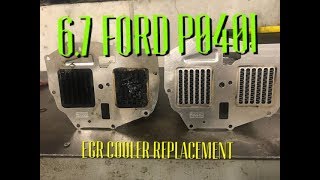
Typical fix: Replace the EGR cooler core and all associated gaskets. While cleaning is sometimes attempted by owners, it is often a temporary fix, and replacement with a new OEM or quality aftermarket core is the recommended long-term solution. The job is labor-intensive, requiring draining both primary and secondary cooling systems. 🎬 See this complete walkthrough of the EGR cooler core replacement.
Est. part cost: $250-$550 - Clogged or Sticking EGR Valve 🟡 Medium Probability The same soot that clogs the cooler can also cause the EGR valve itself to become gummed up with carbon, preventing it from opening and closing correctly and causing insufficient flow. Coolant leaks from a failing EGR cooler can also damage the valve's electronics.
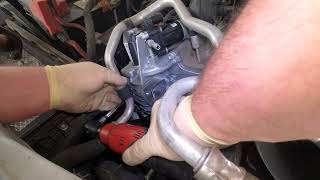
How to confirm: Remove the EGR valve and inspect for heavy carbon buildup 🎬 Watch: How to remove the EGR valve for inspection. that could restrict its movement. Test its mechanical and electrical function using a capable scan tool to command it open and closed while observing its position.
Typical fix: Thoroughly clean the valve with carbon cleaner and a brush. If it's damaged, fails functional tests, or if the cooler has leaked coolant, the valve must be replaced.
Est. part cost: $250-$450 - Restricted Air Filter ⚪ Low Probability The PCM monitors EGR flow by watching for a drop in the Mass Air Flow (MAF) sensor reading. A severely clogged engine air filter can disrupt this calculation by altering expected airflow values, potentially leading to a false P0401 code.
How to confirm: Visually inspect the engine air filter (Motorcraft FA-1902). If it is visibly dirty or has been in service for an extended period, replace it.
Typical fix: Replace the engine air filter with a quality OEM-spec part, such as one from Motorcraft. This is a simple and inexpensive first step in diagnosis.
Est. part cost: $30-$60
Rare But Worth Checking
- Faulty Sensor (MAP/EP): The PCM uses the Manifold Absolute Pressure (MAP) and Exhaust Pressure (EP) sensors to monitor EGR flow. A failure or clogging of one of these sensors, particularly the MAP sensor on top of the intake which can get clogged with carbon, could lead to a P0401 code. This is uncommon and would typically be accompanied by other sensor-specific trouble codes.
- Leaking EGR Pipe: A leak in the pipe that transports exhaust from the manifold to the EGR cooler can reduce the pressure and volume of gas entering the system, causing an insufficient flow condition. The bolts securing these pipes are known to sometimes break, causing a leak.
Diagnosis Steps
- Check for any other Diagnostic Trouble Codes (DTCs). Address any sensor-specific or hard-fault codes first, as P0401 is a conditional code.
- Inspect the engine air filter and replace if dirty. Ensure no aftermarket filters are contaminating the MAF sensor.
- Check for any software updates for the Powertrain Control Module (PCM). Ford has issued PCM recalibrations to improve EGR monitoring logic.
- Visually inspect for exhaust leaks in the EGR system piping between the exhaust manifold and the EGR cooler. Check for broken bolts.
- Remove and inspect the MAP sensor on top of the intake manifold for carbon buildup. Clean carefully if restricted.
- Remove the EGR valve and inspect for heavy carbon buildup. Clean or replace as necessary.
- If the code persists, remove the EGR cooler outlet pipe to visually inspect the cooler core passages for blockage. This is the most likely culprit.
- If the cooler is clogged, replace the EGR cooler core and all related gaskets. It is highly recommended to replace the EGR valve at the same time, as the labor is already done.
Parts You'll Likely Need
- EGR Cooler Core and Gasket Kit
(OEM #BC3Z-9V425-A (Cooler Core), BC3Z-9P455-B (Gasket Kit))— This is the most common failure point for a P0401 code on 2011-2019 models due to a design prone to clogging with soot. The TSB and warranty extension program specifically call for its replacement.
Trusted brands: Motorcraft, Dorman (904-405)
OEM price range: $400-$550
Aftermarket price range: $250-$400 - EGR Valve
(OEM #BC3Z-9D475-D (Wide Frame/Pickup) or BC3Z-9D475-C (Narrow Frame/Chassis Cab))— If the valve itself is stuck or fails to actuate due to carbon buildup or electronic failure, it will prevent proper EGR flow. It is often replaced preventatively with the cooler.
Trusted brands: Motorcraft (CX-2638 for Pickup), Alliant Power (AP63522 for Chassis Cab)
OEM price range: $350-$700
Aftermarket price range: $250-$450
Related Codes That Often Appear With This One
- P2457 — This code for 'EGR Cooler Performance' is often triggered alongside P0401 because a clogged cooler is both inefficient at flowing (P0401) and cooling (P2457). Ford's Customer Satisfaction Program 21M04 specifically addresses both codes occurring together as a sign of a failed EGR cooler.
Technical Service Bulletins (TSBs) & Recalls
- 21M04: Certain 2011-2014 Model Year Super Duty Vehicles Equipped with a 6.7L Diesel Engine Exhaust Gas Recirculation Cooler with Diagnostic Trouble Codes P0401 and/or P2457.
- 12-6-14: A previous TSB that provided diagnostic and repair information for a restricted EGR cooler core, which was a precursor to the warranty extension program.
Platform-Specific Known Issues
- Customer Satisfaction Program 21M04: Ford issued this program for 2011-2014 models, extending the warranty for EGR cooler replacement to 11 years or 120,000 miles when codes P0401 and/or P2457 are present. This officially acknowledges the high failure rate of the original part. Owners who paid for this repair out-of-pocket before the program was announced were eligible for a refund from Ford if they had proper documentation.
- Owner Repair Story: Reddit: A user on the r/FordDiesels subreddit with a 2011 F-series at 58k miles was quoted $1,579 by a dealer for an EGR cooler replacement to fix a P0401 code. The quote included 9 hours of labor ($1,125) and parts ($454). After the repair, the owner noted a slight increase in MPG.
Mechanic-Grade Diagnostic Values
- EGR Flow Test (Scan Tool) — expected: At 1200 RPM with EGR commanded open, the Mass Air Flow (MAF) reading should decrease significantly (e.g., from 29 g/s to 12 g/s). A drop of over 50% indicates good flow.. Failure: A small or no decrease in MAF reading when the EGR valve is commanded open indicates a blockage.
- EGR Cooler Efficiency Test (Scan Tool) — expected: At high idle, while toggling the EGR cooler bypass valve command, the change in MAF reading should be less than 5 g/s.. Failure: A change greater than 5 g/s may indicate a restriction or issue within the cooler or bypass circuit.
- EGR Valve Control Voltage (KOEO) — expected: With the key on and engine off, voltage on the unplugged EGR valve harness connector at pin 1 (EGRVCH - EGR Valve Control High) to ground should be 0 volts.. Failure: Measuring voltage (e.g., 5 volts) on this pin indicates a short to power, potentially within the wiring harness or an internal PCM fault.
- Low-Pressure Fuel System (KOER) — expected: Normal operating pressure is between 53-73 PSI.. Failure: Pressure below 52 PSI will trigger the low-pressure switch and can indicate failing lift pump or clogged filters, which can affect overall engine performance but is not a direct cause of P0401.
Hidden / Shadow Codes Worth Checking
- P2457 (during KOER test): EGR Cooler Performance. While not a hidden code itself, Ford's diagnostic procedure specifies running a Key On Engine Running (KOER) self-test. If P0401 is present and the KOER test then triggers a P2457, it is a strong confirmation that the EGR cooler core is the root cause and requires replacement. (see via Ford IDS or equivalent professional scan tool capable of running a KOER self-test.)
Scan Tool Commands That Help
- Ford IDS (or equivalent): EGR Valve Command (%) — Used during the EGR Flow Test. The technician manually commands the EGR valve from 0% to 50% while monitoring the MAF sensor PID to verify that exhaust gas is flowing.
- Ford IDS (or equivalent): EGR Cooler Bypass Valve Command — Used to test the efficiency and flow characteristics of the EGR cooler itself. By commanding the bypass on and off at high idle, a technician can observe the change in MAF reading to assess the cooler's condition.
- Ford IDS: Automated EGR Test — This is a guided diagnostic routine within the factory scan tool that automates a sequence of static and dynamic tests on the EGR system to pinpoint faults, checking voltages and flow characteristics against programmed specifications.
Wiring & Ground Locations
- EGR Valve Connector Pin 1 (EGRVCH) — The EGR valve connector is located at the front top of the engine, behind the radiator fan shroud. Pin 1 is for the EGR Valve Control High circuit.. This pin is commanded by the PCM to control the valve. A documented edge case shows this pin shorting to 5V, causing a P0401 even with a clean EGR system. The circuit runs to pin 81 of the PCM-E connector.
- GD176 — A primary ground point relevant to engine controls.. A poor ground connection at this point can cause a wide range of intermittent electrical issues and erroneous sensor readings, potentially contributing to false diagnostic codes. It is especially important to check if the cab has been removed for other service.
Real Owner Repair Stories
- Diesel Technician Society Forum (Ford 6.7L Power Stroke (year not specified)) — Check Engine Light with codes P0401 and P1249 (Turbocharger Boost Pressure Low).
❌ Tried (didn't work) Not specified, user went straight to EGR cooler inspection.
✅ What actually fixed it The user removed the EGR cooler and found it was completely plugged with soot. Replacing the EGR cooler core resolved both the P0401 and P1249 codes.
"I Checked Everything" — The Actual Cause
- A common diagnostic dead-end occurs when a technician replaces the EGR cooler and/or EGR valve for a P0401 code, but the code returns. In one documented case, the actual cause was not a physical blockage but an electrical fault. A diagnostic test (Ford factory test 'W8') revealed 5 volts on the EGR Valve Control High (EGRVCH) pin 1 of the harness, which should have 0 volts KOEO. This indicated a short to voltage, likely originating from an internal fault within the Powertrain Control Module (PCM), which was the ultimate cause of the code.
OEM Part Supersession History
BC3Z-9D475-D→BC3Z-9D475-J, CX2405 (Motorcraft)— Standard part lifecycle replacement/update.
Heads up: This applies to the Wide Frame (Pickup) models. Chassis Cab models use a different part number (BC3Z-9D475-C).
Model Year Variations Within This Range
- 2011-2014: The EGR cooler is cooled by the secondary, low-temperature cooling system. These models are the primary subject of Ford's Customer Satisfaction Program 21M04 for clogged coolers.
- 2015: The EGR cooler was moved to the primary, high-temperature cooling system. This required different cooler gaskets. Additionally, the 2015 model year received an updated, more reliable Garrett GT37 turbocharger (replacing the previous SST) and revised fuel injectors and CP4.2 injection pump.
Helpful Videos
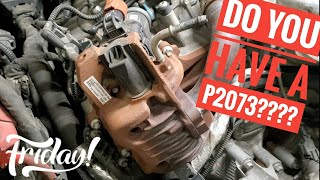

We Have This Part in Stock

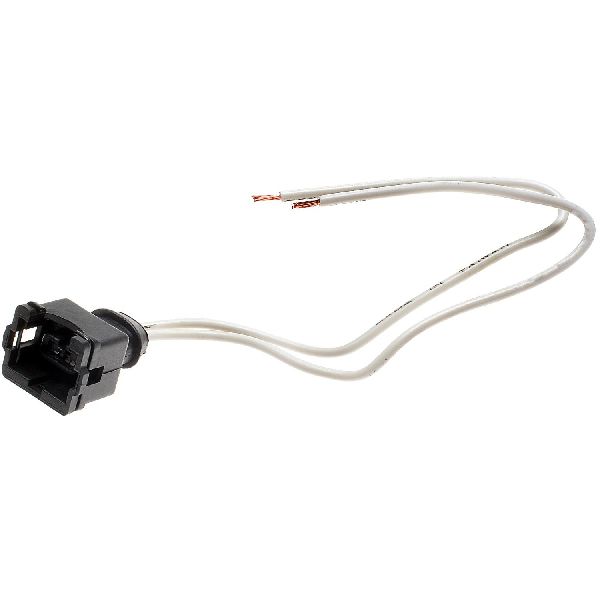
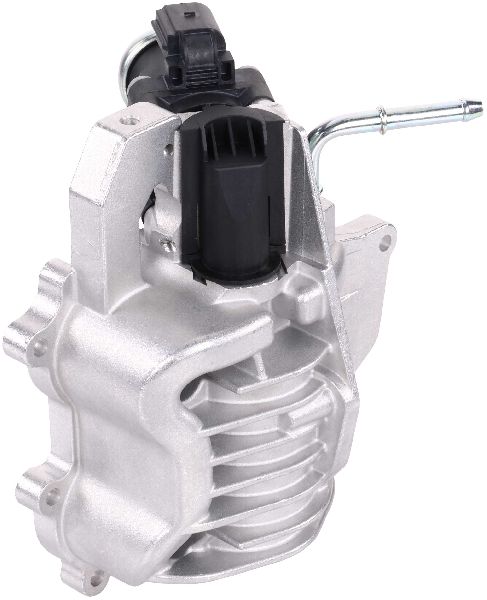


The information in this article is provided for general reference and educational purposes only. Vehicle specifications, procedures, and part compatibility can vary by production date, trim level, and region. Always consult your vehicle's factory service manual and verify part numbers before purchasing or performing repairs. Safety-critical components such as airbags, seat belts, and braking systems should be installed by a qualified professional.
- Ford F-350 SD:
- 🎬 Helpful Videos
- 🛍️ Shop This Part
- What's Unique About the 2011-2015 Ford F-350 SD
- Diagnostic Flowchart
- Symptoms You May Notice
- Most Likely Causes
- Rare But Worth Checking
- Diagnosis Steps
- Parts You'll Likely Need
- Related Codes That Often Appear With This One
- Technical Service Bulletins (TSBs) & Recalls
- Platform-Specific Known Issues
- Mechanic-Grade Diagnostic Values
- Hidden / Shadow Codes Worth Checking
- Scan Tool Commands That Help
- Wiring & Ground Locations
- Real Owner Repair Stories
- "I Checked Everything" — The Actual Cause
- OEM Part Supersession History
- Model Year Variations Within This Range
- 🎟️ Get 5% Off