

P0401 on 2011-2015 Ford F-250 6.7L Diesel: EGR Insufficient Flow Causes and Fixes
On the 2011-2015 F-250 with the 6.7L Power Stroke engine, P0401 almost always means the EGR cooler is clogged with soot. This is a common, well-documented issue. Ford created Customer Satisfaction Program (21M04) for 2011-2014 models, extending the warranty for this specific repair to 11 years or 120,000 miles and offering refunds for previous out-of-pocket repairs.
- For a 2011-2015 F-250 6.7L with code P0401, the problem is almost certainly a clogged EGR cooler.
- Before paying for repairs on a 2011-2014 model, check with a Ford dealer to see if your vehicle is covered under Customer Satisfaction Program 21M04.
- Do not replace the EGR valve in an attempt to fix P0401; this is a common misdiagnosis and will not solve the problem.
- The repair is labor-intensive (5-8 hours) and requires replacing the EGR cooler core and all associated gaskets.
- The code is often accompanied by P2457, which further confirms a clogged EGR cooler.
What's Unique About the 2011-2015 Ford F-250 SD

Unlike many vehicles where P0401 might point to a bad EGR valve or sensor, on the 6.7L Power Stroke, the cause is overwhelmingly a clogged EGR cooler. The design of the cooler features small internal passages that are highly susceptible to clogging with soot from diesel exhaust. The problem was so prevalent on 2011-2014 models that Ford issued Customer Satisfaction Program 21M04, which specifically covers P0401 and/or P2457 codes by replacing the cooler at no cost within 11 years/120,000 miles.
Diagnostic Flowchart
Tap your situation to follow the diagnostic path that matches what you're seeing on this vehicle.
Symptoms You May Notice
- Check Engine Light is on
- Reduced engine power or performance, especially when towing or under load, often described as 'limp mode' or 'derate'.
- Engine knocking or 'pinging' sounds, especially under load.
- Reduced fuel economy.
- In severe cases of an internally leaking cooler (not just clogged), white smoke (steam) from the exhaust and unexplained coolant loss.
- Code may appear specifically after a DPF regeneration cycle, as the system tests EGR flow post-regen.
- Replacing the EGR valve without checking the EGR cooler. On the 6.7L Power Stroke, a P0401 code is almost always caused by the clogged cooler, and a new valve will not fix the insufficient flow issue.
- Replacing the Mass Air Flow (MAF) sensor. A mechanic in one forum thread suggested this, but the owner community confirmed the issue was the EGR cooler.
Most Likely Causes

- Clogged EGR Cooler 🔴 High Probability The 6.7L Power Stroke's EGR cooler design has small passages that are easily blocked by soot and carbon buildup from diesel exhaust. This is the most common cause of P0401 on this platform. Early 2011-2012 models had coolers with thinner fin walls, making them fail at higher rates.
How to confirm: The definitive test is removal and visual inspection; you will not be able to see light through the core. A diagnostic scan showing P0401 alongside P2457 is a strong confirmation, as noted in TSB 21M04. A heavily sooted MAP sensor is another strong indicator of a clogged system.
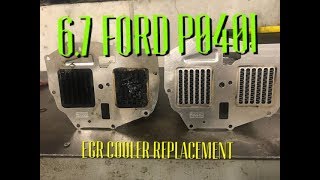
Typical fix: Replacement of the EGR cooler core and associated gaskets is the standard repair. Cleaning is often attempted 🎬 Watch: A complete walkthrough of the EGR cooler core replacement. but is difficult and usually not a long-term solution. Ford dealers will only replace the unit.
Est. part cost: $400-$1050 - Stuck or Failed EGR Valve ⚪ Low Probability While less common than a clogged cooler for this specific code, the EGR valve can still fail or get stuck closed due to carbon buildup. However, it's often misdiagnosed as the primary culprit for P0401. A stuck valve is more likely to cause a P0402 (Excessive Flow) code.
How to confirm: Use a bidirectional scan tool to command the EGR valve open and closed while monitoring sensor data (like MAP and MAF) to see if airflow changes. If there's no change, the valve may be stuck or the passage is blocked.
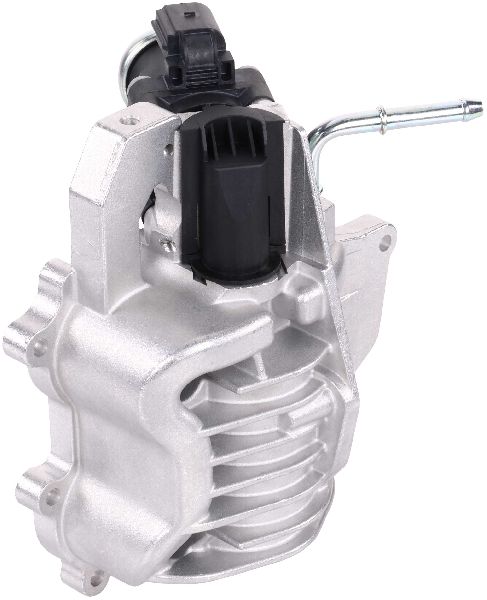
Typical fix: Replace the EGR valve and gasket.
Est. part cost: $150-$350 - Clogged EGR Passages or Pipes ⚪ Low Probability The tubes and passages leading to and from the EGR cooler and valve can also accumulate soot, but the cooler itself is the most common bottleneck and the primary failure point. In some cases, the intake passages behind the throttle body can become severely caked with soot, causing a restriction that mimics a clogged cooler.
How to confirm: Visual inspection after removing the components. Check the intake manifold ports for heavy carbon buildup.
Typical fix: Manually clean the passages and ports. This is typically done during an EGR cooler or valve replacement.
Est. part cost: $0 (if cleaning during other repairs)
Rare But Worth Checking
- Faulty Sensor (MAP/EBP/MAF): The PCM diagnoses P0401 by comparing the pressure ratio between the Manifold Absolute Pressure (MAP) sensor and the Exhaust Back Pressure (EBP) sensor to determine if flow is sufficient. A MAP sensor that is clogged with soot or a faulty Mass Air Flow (MAF) sensor can provide incorrect data, leading the PCM to misinterpret EGR flow and set the code. Cleaning the MAP sensor is a common first diagnostic step.
Diagnosis Steps

- Scan for Diagnostic Trouble Codes (DTCs). Confirm P0401 is present and check for other codes, especially P2457.
- Check for TSBs and Recalls. For 2011-2014 models, check if the vehicle's VIN is eligible for Ford's Customer Satisfaction Program 21M04, which covers EGR cooler replacement for this code for 11 years/120,000 miles. Also check for TSB 15-0021, which involves a PCM reflash that should be performed before further diagnosis.
- Inspect and Clean the MAP Sensor. The MAP sensor is located on the intake manifold and is easy to access. It often becomes caked with soot, which is a good indicator of the overall system's condition. Remove it (one 8mm bolt), inspect for soot, and clean it with dedicated MAF/MAP sensor cleaner.
- Command the EGR Valve. Use a bidirectional scan tool (like Ford IDS or FORScan) to perform an EGR system test. Command the valve to open and monitor the MAF, MAP, and EBP sensor PIDs. A lack of expected change in airflow or pressure ratios confirms a blockage.
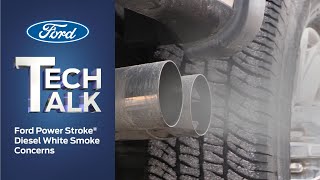
- Inspect for Coolant Leaks. Check the coolant reservoir for unexplained coolant loss and look for white smoke from the exhaust, which indicates a more serious internal leak in the EGR cooler, not just a clog. 🎬 Watch: Ford technicians explain white smoke and coolant loss concerns.
- Remove and Inspect EGR Cooler. If all signs point to a blockage, the final step is to remove the EGR cooler assembly for a definitive visual inspection. The internal passages will be visibly packed with soot, preventing light from passing through.
Parts You'll Likely Need

- EGR Cooler Core
(OEM #BC3Z-9V425-A)— This is the primary failure point for code P0401 on the 6.7L Power Stroke. The original design is prone to clogging with soot.
Trusted brands: Motorcraft, Dorman (904-405), Bullet Proof Diesel
OEM price range: $600-$900
Aftermarket price range: $400-$1050 - EGR Cooler Gasket Kit
(OEM #BC3Z-9P455-B)— These are single-use gaskets and O-rings that must be replaced any time the EGR cooler is removed for service.
Trusted brands: Motorcraft, Fel-Pro
OEM price range: $50-$100
Aftermarket price range: $30-$70
Related Codes That Often Appear With This One
- P2457 — This code for 'EGR Cooler System Performance' is often triggered along with P0401. Ford's own Customer Satisfaction Program 21M04 lists both codes together as the primary indicators for a clogged EGR cooler requiring replacement.
Technical Service Bulletins (TSBs) & Recalls
- Customer Satisfaction Program 21M04: Not a traditional TSB, but a Ford program that covers the replacement of the EGR cooler on certain 2011-2014 Super Duty vehicles with the 6.7L Diesel engine that present with DTC P0401 and/or P2457. It extends coverage to 11 years or 120,000 miles.
- TSB 15-0021: Recommends updating the PCM calibration to the latest level before performing any diagnostics for P0401. This update addresses several concerns, including this DTC, but will not fix a physically clogged cooler.
Platform-Specific Known Issues
- Customer Satisfaction Program 21M04: Ford acknowledged the high failure rate of the EGR cooler on 2011-2014 models. The program extends the warranty on the EGR cooler to 11 years or 120,000 miles for vehicles that present with DTCs P0401 and/or P2457. The program also allows for reimbursement of previous owner-paid repairs if performed before the program's announcement.
- Repeated Failures & Repair Stories: An owner of a 2013 model reported P0401 as a "common repeat failure for the 6.7 diesel," noting that replacement parts may only last around 20,000 miles and cost $2,000 for repair. [NHTSA ODI #11231590] Another owner on a forum noted they were on their third EGR cooler at 151,000 miles. A Reddit user with a 2011 F-250 was quoted $1,579 for a dealer repair (9 hours labor at $1,125 plus $454 in parts).
- The 'EGR Delete' Option: Due to the high cost and frequency of failures, many owners on forums discuss an 'EGR delete'. This involves physically removing the EGR system and using a tuner to reprogram the PCM to prevent check engine lights. While this is a permanent solution to the clogging problem, it is strictly for off-road use and is illegal in many jurisdictions as it violates federal emissions laws.
Mechanic-Grade Diagnostic Values
- EGR Valve Position Sensor Signal Voltage — expected: Approx. 0.9 volts (closed) to 3.9 volts (fully open). Failure: Voltage dropping below 0.3V or going above 4.2V, or not changing when commanded.
- Low-Pressure Fuel System Pressure (KOEO) — expected: 53-73 PSI. Failure: Pressure below 53 PSI can indicate a lift pump issue, which can affect overall engine performance and potentially contribute to poor combustion and excess soot.
- High-Pressure Fuel Rail Pressure (Cranking) — expected: Must achieve at least 5,000 PSI for injectors to fire.. Failure: Failure to meet 5,000 PSI indicates a high-pressure fuel system issue (CP4 pump, injectors, pressure control valve).
Scan Tool Commands That Help
- Ford IDS (or FORScan): EGR System Test — This is a key bidirectional test to diagnose P0401. The PCM commands the EGR valve and its bypass to open and close, while monitoring MAF, MAP, and EBP to check for expected changes in flow and pressure. Failure to see the expected change confirms a restriction.
- Ford IDS (or FORScan): EGR Valve Actuation / Bidirectional Control — Allows a technician to manually command the EGR valve to a specific percentage (e.g., 0%, 50%, 100%) while watching the EGR_VP (Valve Position) PID to confirm the valve is moving as commanded and not sticking.
Wiring & Ground Locations
- PCM Connector C1232e — This is the engine connector at the Powertrain Control Module (PCM).. The EGR valve control and position sensor circuits run through this connector. For example, on a 2011 model, EGRVCH (EGR Valve Control High) is on Pin 81 (White/Violet wire) and EGRVCL (EGR Valve Control Low) is on Pin 82 (Yellow/Blue wire). A short or open in these wires can cause EGR control faults.
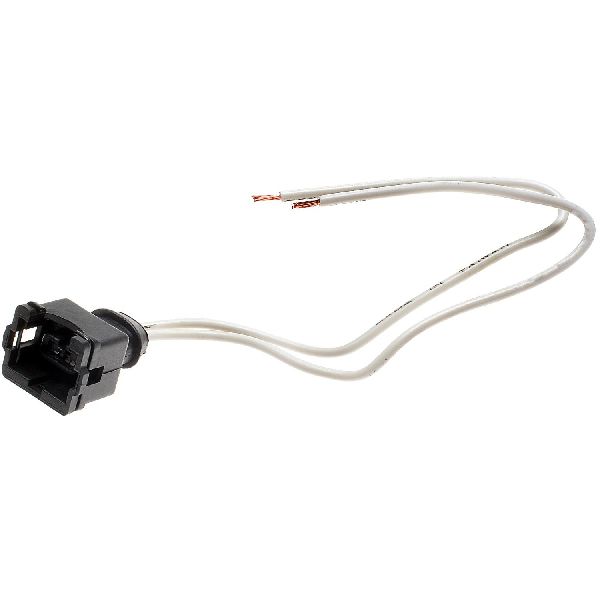
- EGR Valve Connector — On the EGR valve itself, located on the passenger side of the engine.. This is the primary connection point for testing the EGR valve motor and position sensor circuits directly. A diagnostic test involves checking for 5V reference, ground, and signal voltage at this connector's pins.
Real Owner Repair Stories
- YouTube channel 'Diesel Tech Ron' (2019 Ford 6.7L Powerstroke) — Recurring P0401 code. Another dealer had already replaced the EGR cooler core, but the code returned.
❌ Tried (didn't work) Replacing the EGR cooler core.
✅ What actually fixed it The intake ports located directly behind the throttle body were severely caked and clogged with soot. After cleaning out the restriction in the intake, scan tool tests showed proper EGR flow was restored and the MAF sensor readings responded correctly. - Ford Truck Enthusiasts Forum user 'gma1965' (2011 F250 6.7L) — P0401 code present.
❌ Tried (didn't work) The user was following the Ford diagnostic manual and found an electrical fault during testing.
✅ What actually fixed it The user found 5 volts on the EGRVCH (EGR Valve Control High) circuit at the valve connector when there should have been none. The wiring schematic showed a direct point-to-point wire from the EGR valve to the PCM. The conclusion, though not explicitly confirmed with a final repair post, was that the PCM itself was faulty and was incorrectly sending voltage, requiring a PCM replacement.
OEM Part Supersession History
BC3Z-9V425-A→BC3Z-9V425-A (current)— While the part number has remained the same for the 2011-2016 core, aftermarket manufacturers note that the original OE design used a fin style prone to clogging. Aftermarket replacements often use a spiral or tube-style internal design to improve flow and reduce the likelihood of clogging. Ford itself revised the cooler design in 2013 to use thicker fin walls compared to the early 2011-2012 models.
Model Year Variations Within This Range
- 2011-2014: The EGR cooler is cooled by a combination of the primary (high-temp) and secondary (low-temp) cooling systems. These models are the primary subject of Ford's Customer Satisfaction Program 21M04.
- 2015-2016: For the 2015 model year, Ford rerouted the EGR cooler's coolant feed. It is now cooled entirely by the primary (engine's main) cooling system, drawing from the heater core supply line. This change also means the gaskets and coolant line routing are different from the 2011-2014 models.
- 2011-2012: Early production trucks from these two years used an EGR cooler with thinner fin walls, leading to a higher failure rate from cracking and leaking. These years are also more susceptible to secondary cylinder head damage when the cooler fails.
Helpful Videos
We Have This Part in Stock



The information in this article is provided for general reference and educational purposes only. Vehicle specifications, procedures, and part compatibility can vary by production date, trim level, and region. Always consult your vehicle's factory service manual and verify part numbers before purchasing or performing repairs. Safety-critical components such as airbags, seat belts, and braking systems should be installed by a qualified professional.
- Ford F-250 SD:
- 🎬 Helpful Videos
- 🛍️ Shop This Part
- What's Unique About the 2011-2015 Ford F-250 SD
- Diagnostic Flowchart
- Symptoms You May Notice
- Most Likely Causes
- Rare But Worth Checking
- Diagnosis Steps
- Parts You'll Likely Need
- Related Codes That Often Appear With This One
- Technical Service Bulletins (TSBs) & Recalls
- Platform-Specific Known Issues
- Mechanic-Grade Diagnostic Values
- Scan Tool Commands That Help
- Wiring & Ground Locations
- Real Owner Repair Stories
- OEM Part Supersession History
- Model Year Variations Within This Range
- 🎟️ Get 5% Off