

P0401 on 2009-2011 Dodge Nitro: EGR Insufficient Flow Causes and Fixes
P0401 on a Dodge Nitro almost always means the EGR valve is clogged with carbon or has failed. Cleaning the valve and passages may work, but replacement is often necessary. The valve is located on the back of the engine and can be difficult to access. Expect to pay $150-$290 for a new valve and consider replacing it yourself to save on labor.
What's Unique About the 2009-2011 Dodge NITRO
For the Dodge Nitro, the P0401 code is a straightforward emissions issue, typically pointing to the EGR system itself. Unlike some vehicles where this code is caused by complex sensor interactions, on the Nitro it's usually a mechanical problem of carbon buildup or a failed valve. A notable Technical Service Bulletin (TSB #18-092-16) also indicates that in some cases, a software update for the Powertrain Control Module (PCM) can resolve the P0401 code, sometimes bundled with fixes for other unrelated issues like hard starting. The EGR valve is located on the rear of the engine, making access a common complaint among owners.
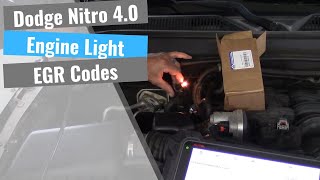
🎬 Watch: A mechanic explains common Nitro EGR valve problems.Diagnostic Flowchart
Tap your situation to follow the diagnostic path that matches what you're seeing on this vehicle.
Symptoms You May Notice
- Check Engine Light is on
- Engine pinging or knocking, especially on acceleration
- Rough idle
- Reduced fuel efficiency
- Failure to pass an emissions/smog test
- Engine may run rough or stall when the EGR valve is commanded open by a scan tool, but show no change if passages are blocked.
- Replacing oxygen sensors. While the PCM uses O2 sensor readings to help monitor the EGR system, the sensors themselves are rarely the cause of a P0401 code.
- Replacing the catalytic converter. This is an expensive and incorrect repair for an insufficient EGR flow code.
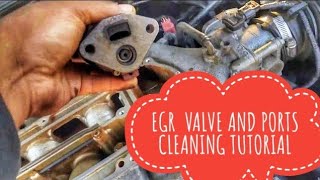
- Replacing the EGR valve without cleaning the passages. Many owners replace the valve only to have the P0401 code return because the actual blockage was in the intake manifold ports. 🎬 Watch: How to thoroughly clean EGR valves and ports.
Most Likely Causes
- Clogged EGR Valve and/or Passages 🔴 High Probability Carbon from exhaust gas naturally builds up over time, restricting flow through the EGR valve's pintle and the associated passages in the intake manifold. This is the most common reason for P0401 across many vehicle makes.
How to confirm: Remove the EGR valve and visually inspect it and the intake manifold ports for heavy carbon deposits. The passages will be visibly blocked or restricted. A common DIY method involves using a small wire brush to probe the passages for blockages.
Typical fix: Remove the EGR valve and thoroughly clean it and the intake passages with a carbon cleaner (like carburetor or throttle body cleaner) and wire brushes. Ensure the valve's pintle can move freely. If cleaning is not sufficient or the valve is stuck, it must be replaced.
Est. part cost: $10-$20 for cleaning supplies - Failed EGR Valve 🔴 High Probability The electronic solenoid or internal position sensor of the EGR valve can fail, causing it to become stuck closed or report its position incorrectly, preventing the PCM from verifying exhaust gas flow. This is a common failure item after many years and heat cycles.
How to confirm: With a scan tool, command the EGR valve to open while the engine is idling. A functioning valve with clear passages will cause the engine to stumble or stall. If there is no change in engine idle, the valve is likely not opening or the passages are completely blocked. Also, monitor the EGR position sensor voltage; a stuck reading (e.g., 5V) indicates an internal failure.
Typical fix: Replace the EGR valve assembly and gasket. It is highly recommended to clean the EGR passages in the manifold at the same time.
Est. part cost: $150-$290 - Outdated Powertrain Control Module (PCM) Software ⚪ Low Probability A manufacturer TSB (#18-092-16) specifically lists P0401 as an issue that can be corrected by a software update. The original software's logic for detecting EGR flow may be too sensitive, leading to false positives.
How to confirm: A Dodge dealership or a qualified shop with a J2534 pass-through device (like wiTECH) can check the current software calibration version and see if the update specified in TSB 18-092-16 is available and has not been applied.
Typical fix: Reflash the PCM with the updated software calibration. This must be done by a dealer or properly equipped independent shop.
Est. part cost: $100 - $250
Rare But Worth Checking
- Wiring or Connector Issue: The wiring harness to the EGR valve can become damaged from heat, or the connector pins can corrode, leading to a loss of signal. This is worth checking if a new EGR valve does not solve the problem, though a direct valve failure is more common.
Diagnosis Steps
- Connect an OBD-II scanner and confirm P0401 is the only code present. Note any other codes, especially EGR circuit codes (P0403, P0404, P0405, P0406).
- Check for any applicable Technical Service Bulletins (TSBs). TSB #18-092-16 is known for this issue on both the 3.7L and 4.0L engines.
- Visually inspect the EGR valve, its wiring connector, and any vacuum lines for obvious damage, cracks, or loose connections. The valve is at the rear of the engine.
- With a capable scan tool, monitor the EGR position sensor voltage with the key on, engine off. A reading stuck at 5V suggests an internal valve fault.
- With the engine idling, use the scan tool's bidirectional control to perform an 'EGR System Test' or 'EGR Duty Cycle Control' to command the valve open. Listen for a change in engine idle (it should become rough or stall). If there is no change, the valve is likely not opening or the passages are completely blocked.
- Turn off the engine and allow it to cool completely. The EGR system gets very hot.
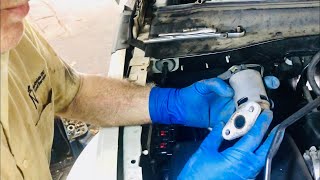
- Remove the EGR valve. This can be difficult due to its location. It is typically held by two T45 Torx bolts which may be rusty. Using penetrating oil and tools like a swivel socket and extension is recommended.
- Inspect the valve and the intake manifold ports for heavy carbon buildup. This is the most likely cause.
- Clean the valve and passages thoroughly with carburetor cleaner and a wire brush/pipe cleaner. Ensure the valve's pintle can move freely.
- If cleaning does not resolve the issue or the valve fails the actuation test in step 5, replace the EGR valve and gasket. It is wise to use a new gasket regardless.
- If a new valve does not fix the code, investigate the possibility of a PCM software update with a dealership, referencing TSB 18-092-16.
- As a final step, check for correct voltage at the EGR valve connector with a multimeter to rule out a wiring problem. Check for 5V reference, good ground, and a non-shorted signal wire.
Parts You'll Likely Need
- EGR Valve
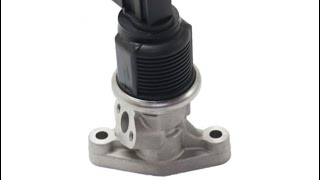
(OEM #53034192AB (for 3.7L V6), 4593888AA (for 4.0L V6))— This is the most common failure point. The valve gets clogged with carbon or the internal position sensor fails, preventing it from opening or reporting its position correctly, causing the P0401 code.
Trusted brands: Mopar, Dorman, Standard Motor Products (SMP), Delphi
OEM price range: $280-$430
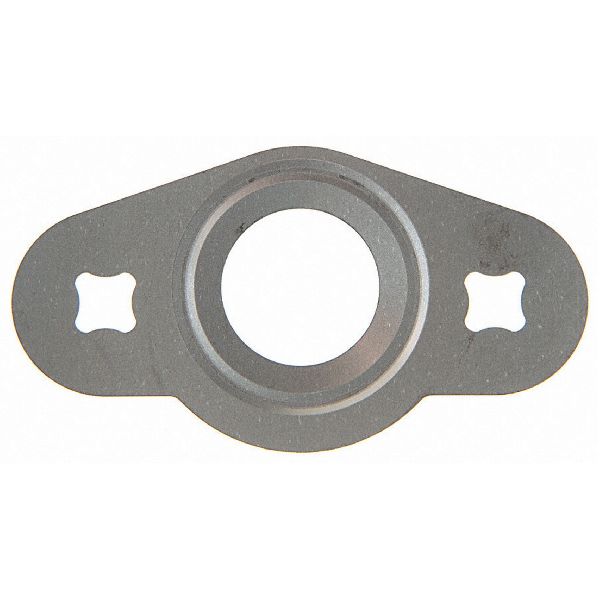
Aftermarket price range: $50-$140 - EGR Valve Gasket — A new gasket is required whenever the EGR valve is removed to ensure a proper seal and prevent exhaust leaks. Most new valves include one.
Trusted brands: Mopar, Fel-Pro, Dorman
OEM price range: $5-$15
Aftermarket price range: $2-$10
Technical Service Bulletins (TSBs) & Recalls
- 18-092-16: Flash: Powertrain Diagnostic And System Improvements. This TSB, dated July 27, 2016, involves reprogramming the PCM for various issues, explicitly including DTC P0401 - EGR System Performance for 2009-2011 Nitros with the 3.7L or 4.0L engine.
Platform-Specific Known Issues
- Difficult Access: The EGR valve is located on the rear of the engine, near the firewall, making it difficult to access. Owners report needing swivel sockets and extensions to reach the bolts.
- TSB for Software Update: A Technical Service Bulletin (TSB #18-092-16) exists for the 2009-2011 Nitro (and Jeep Liberty) that addresses the P0401 code via a software update to the Powertrain Control Module (PCM). This TSB also covers other issues like hard starting.
Mechanic-Grade Diagnostic Values
- EGR Position Sensor Signal Voltage (Key On, Engine Off) — expected: Approx. 4.0 Volts on a new, known-good, closed valve.. Failure: A reading stuck at 5.0 Volts indicates an open circuit, missing ground, or internal failure of the position sensor.
- EGR Position Sensor 5V Reference — expected: ~5.0 Volts (approx. 4.99V) at the connector.. Failure: No voltage indicates a wiring problem between the PCM and the EGR valve.
- EGR Position Sensor Ground Voltage Drop — expected: Near 0 Volts (e.g., 9 millivolts) when measured between the ground pin and battery negative.. Failure: High voltage (e.g., 5V) indicates a bad ground connection, which will cause the signal voltage to read high.
- EGR Control Circuit Voltage (during scan tool test) — expected: Below 0.5 Volts when the scan tool commands the EGR valve to open.. Failure: Voltage does not drop, indicating a problem in the control circuit or the PCM's ability to command the valve.
Scan Tool Commands That Help
- wiTECH or equivalent professional scan tool: EGR System Test / EGR Duty Cycle Control — This bidirectional test is used to command the EGR valve to open and close while the engine is running. It confirms if the PCM can control the valve and if the valve is physically capable of moving. A successful test on a system with clear passages will cause the engine idle to become rough or stall.
Wiring & Ground Locations
- EGR Valve Assembly — On the rear of the engine, near the firewall.. This is the central component. Its location makes it subject to heat and difficult to access for service.
- (K35) EGR Control Circuit — Wiring between the Powertrain Control Module (PCM) and the EGR valve connector.. This is the specific circuit the PCM uses to command the EGR solenoid to open. A fault here would set a circuit code (like P0403) but could be misdiagnosed.
- (Z904) EGR Solenoid Ground Circuit — Wiring providing the ground path for the EGR solenoid, controlled by the PCM.. A failure in the ground circuit would prevent the EGR solenoid from actuating.
- G105 Ground — Located on the left rear of the engine compartment.. This is a major engine-related ground point. While not exclusive to the EGR, a poor connection here could cause various engine control issues.
Real Owner Repair Stories
- South Main Auto Repair YouTube Channel (Dodge Nitro 4.0L V6 (year not specified, but within platform)) — Check Engine Light with high voltage code for EGR, came from another shop that suspected a broken wire.
❌ Tried (didn't work) The previous shop's diagnosis of a broken wire in the harness was incorrect.
✅ What actually fixed it The EGR valve itself had an internal failure. A scan tool showed the EGR sense voltage was stuck at 5V. The technician tested the 5V reference, ground, and signal wires at the connector and confirmed they were all good. Plugging in a new EGR valve (before installation) showed a normal resting voltage of ~4V, confirming the original valve was faulty. The final fix was replacing the EGR valve.
OEM Part Supersession History
53032948AC, 53032948AD, 53034192AA→53034192AB— Standard part revision and improvement.4593688AB, 4593688AC, 4593688AD→4593888AA— Standard part revision and improvement.4593888AA→4593888AC— Standard part revision and improvement.
Model Year Variations Within This Range
- 2009-2011: The 3.7L V6 and 4.0L V6 engines use different EGR valves with distinct part numbers and supersession paths. Ensure the correct part is sourced for the specific engine in the vehicle.
Helpful Videos
We Have This Part in Stock


The information in this article is provided for general reference and educational purposes only. Vehicle specifications, procedures, and part compatibility can vary by production date, trim level, and region. Always consult your vehicle's factory service manual and verify part numbers before purchasing or performing repairs. Safety-critical components such as airbags, seat belts, and braking systems should be installed by a qualified professional.
- Dodge NITRO:
- 🎬 Helpful Videos
- 🛍️ Shop This Part
- What's Unique About the 2009-2011 Dodge NITRO
- Diagnostic Flowchart
- Symptoms You May Notice
- Most Likely Causes
- Rare But Worth Checking
- Diagnosis Steps
- Parts You'll Likely Need
- Technical Service Bulletins (TSBs) & Recalls
- Platform-Specific Known Issues
- Mechanic-Grade Diagnostic Values
- Scan Tool Commands That Help
- Wiring & Ground Locations
- Real Owner Repair Stories
- OEM Part Supersession History
- Model Year Variations Within This Range
- 🎟️ Get 5% Off