

P0400 on 2015-2020 Subaru Legacy: EGR Flow Malfunction Causes and Fixes
On a 2015-2020 Subaru Legacy, code P0400 is often caused by outdated engine software, especially in cold weather. A dealership ECM update per TSB 11-200-20R may be the fix. Otherwise, the cause is typically a clogged EGR pipe or a faulty EGR valve due to heavy carbon buildup.
- If you live in a cold climate, your first step for a P0400 code should be to ask a Subaru dealer about TSB #11-200-20R for an ECM update.
- The most common physical cause is not the EGR valve itself, but heavy carbon buildup completely blocking the EGR pipes or passages.
- Always clean the entire EGR path (pipes, ports) when you remove the valve; simply replacing the valve is a common misdiagnosis and may not fix the problem.
- You will need new gaskets for the EGR valve and any pipes you remove. It is highly recommended to have these on hand before starting the repair.
What's Unique About the 2015-2020 Subaru LEGACY
For this specific generation of Subaru Legacy (and its platform mates like the Outback), a P0400 code doesn't always mean a part has failed. Subaru issued Technical Service Bulletin 11-200-20R acknowledging that the ECM software could mistakenly trigger a P0400 code when ambient temperatures are below freezing. The bulletin explains that the logic was changed to prevent the EGR system test from running when temperatures do not meet the specified criteria. Therefore, the first diagnostic step, especially for owners in cold climates, is a software update, not immediate parts replacement.
Diagnostic Flowchart
Tap your situation to follow the diagnostic path that matches what you're seeing on this vehicle.
Generation note: This range covers the end of the sixth generation (2015-2019) and the first year of the seventh generation (2020). The primary causes, including the software issue mentioned in TSB 11-200-20R, are relevant to vehicles across this entire year span and also apply to the Subaru Outback of the same years.
Symptoms You May Notice
- Check Engine Light is on
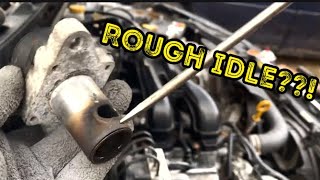
- Rough or fluctuating idle, sometimes stalling immediately after a cold start
- Engine hesitation or stumbling during acceleration
- Reduced fuel economy
- Engine knocking or pinging sounds during acceleration
- Hard starting in sub-freezing temperatures
- Surging or vibration at highway speeds, especially in high-altitude areas
- Replacing the EGR valve without cleaning the associated pipes and intake ports. A new valve cannot function correctly if the passages it connects to are blocked with carbon. This is a common complaint in owner forums.
Most Likely Causes
- Outdated Engine Control Module (ECM) Software 🔴 High Probability Subaru TSB #11-200-20R explicitly states that the ECM may test the EGR system in error when ambient / intake air temperatures are below freezing, causing a false P0400 code. This TSB covers the Legacy, Outback, Forester, Impreza, and Crosstrek.
How to confirm: Contact a Subaru dealership and provide your vehicle's VIN. They can check their system to see if the reprogramming from TSB #11-200-20R has been performed on your vehicle.
Typical fix: A Subaru technician reprograms the ECM with updated software. The TSB notes this also addresses concerns of hard starting 🎬 See this professional diagnosis and repair of the P0400 code. in sub-freezing temps and surging at high altitudes.
Est. part cost: $0 (if covered) or dealer labor charge for reprogramming (~$150-$250) - Clogged EGR Passages or Pipes 🔴 High Probability Direct injection engines are prone to carbon buildup. Forum users with this specific Legacy generation and its Outback platform mate have confirmed finding the upper EGR pipe completely clogged with carbon, preventing flow even with a new, functioning valve.
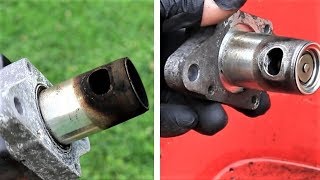
How to confirm: Remove the EGR valve (typically two 12mm bolts) and the metal pipes connecting it to the intake and exhaust. Visually inspect for heavy, hard carbon (soot) buildup that restricts or completely blocks the pathway. A wire coat hanger or flexible wire can be used to probe the passages.
Typical fix: Thoroughly clean the EGR valve, pipes, and intake manifold ports with a suitable solvent (like carburetor or brake cleaner) and wire brushes to remove all carbon deposits. Ensure the passages are completely clear before reassembly.
Est. part cost: $10-$25 (for cleaners and new gaskets) - Faulty EGR Valve 🟡 Medium Probability The valve's internal pintle can become seized with carbon and get stuck open or closed. The internal electronic motor or position sensor can also fail, which may sometimes trigger a 'circuit low' code in addition to P0400.
How to confirm: After removing the valve for cleaning, you can try to manually actuate the valve pintle with a screwdriver to see if it moves freely. If it's an electronic valve, a capable scan tool may be able to command it open and closed to test its function and monitor for a change in engine RPM.
Typical fix: If the valve is seized, doesn't actuate smoothly after a thorough cleaning, or has an internal electrical fault, it must be replaced. Cleaning is often attempted first.
Est. part cost: $150-$400
Rare But Worth Checking
- Damaged wiring or poor connection: A damaged wire or loose/corroded connector at the EGR valve can interrupt the signal from the ECM, causing a flow malfunction code. Always inspect the harness and connector when servicing the valve.
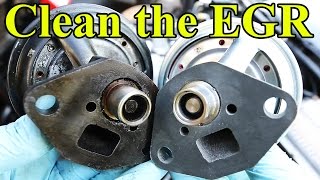
- Clogged EGR Cooler: On models equipped with an EGR cooler, the internal passages of the cooler can also become clogged with carbon, restricting flow. This was noted by an owner of a 2017 Impreza, 🎬 Watch: A walkthrough on cleaning and replacing a Subaru EGR valve. a platform mate, who was quoted for a cooler replacement by the dealer for a P0400 code.
Diagnosis Steps
- Check for Technical Service Bulletins (TSBs). Before any other step, contact a Subaru dealer with your VIN to see if your vehicle is eligible for the ECM reprogramming under TSB #11-200-20R, especially if the code appeared in cold weather.
- Scan for other codes. Verify that P0400 is the only code present. If other codes exist, address them first as they may be related.
- Inspect the EGR system visually. Check the electrical connector and wiring harness going to the EGR valve for any signs of damage, corrosion, or looseness.
- Remove the EGR valve and pipes. Disconnect the battery. The EGR valve is typically held by two 12mm bolts. Carefully remove the valve and any associated metal pipes.
- Inspect for carbon buildup. This is the most likely physical cause. Thoroughly check the valve itself, the pipes, and the ports on the intake manifold and exhaust for heavy soot and carbon deposits that could block flow.
- Clean all components. Use carburetor cleaner, small wire brushes (a battery terminal brush can be effective), and picks to meticulously remove all carbon buildup from the valve and passages. Ensure the valve pintle moves freely after cleaning.
- Test the EGR valve (if possible). With the valve reinstalled, a bidirectional scan tool can command it to open at idle. The engine should stumble or stall, confirming the valve works and the passages are clear. If no scan tool is available, this step is skipped.
- Reassemble and test. Reinstall all components using new gaskets to prevent leaks. Clear the trouble code with a scan tool and perform a drive cycle, including varied speeds and conditions, to see if the code returns.
Parts You'll Likely Need
- EGR Valve
(OEM #14710AA741 (Verify with VIN))— The valve can fail mechanically by getting stuck or electrically. It's often replaced if a thorough cleaning doesn't restore its function.
Trusted brands: Subaru (OEM), Dorman, Standard Motor Products
OEM price range: $250-$400
Aftermarket price range: $150-$250 - EGR Valve Gasket
(OEM #14719AA060 (Verify with VIN))— The gasket for the EGR valve should always be replaced whenever the component is removed to prevent exhaust leaks.
Trusted brands: Subaru (OEM), Fel-Pro
OEM price range: $5-$15
Aftermarket price range: $2-$10 - EGR Pipe Gasket
(OEM #14738AA110 (Verify with VIN))— If the EGR transfer pipe is removed for cleaning, its gaskets must also be replaced to ensure a proper seal upon reassembly.
Trusted brands: Subaru (OEM)
OEM price range: $5-$15
Aftermarket price range: $3-$10
Related Codes That Often Appear With This One
- P0401 (EGR Insufficient Flow Detected)
- P0402 (EGR Excessive Flow Detected)
- P2097 (Post Catalyst Fuel Trim System Too Rich) - can be triggered because the absence of inert exhaust gas makes the mixture effectively richer.
Technical Service Bulletins (TSBs) & Recalls
- Bulletin #11-200-20R: Announces availability of an ECM reprogramming to fix issues including DTC P0400 being set in error during sub-freezing temperatures. Applies to 2015-20 Legacy/Outback, 2019-20 Forester, 2017-20 Impreza, and 2018-20 Crosstrek.
Platform-Specific Known Issues
- A known software issue can cause the P0400 code to be set incorrectly in sub-freezing temperatures. This is documented in Subaru TSB #11-200-20R and is fixable with an ECM update. The TSB also addresses hard starting and high-altitude surging.
- The EGR system, particularly the transfer pipe between the valve and intake, is highly susceptible to complete blockage from carbon buildup, which is a more common failure point than the valve itself.
Mechanic-Grade Diagnostic Values
- EGR Valve Stepper Motor Coil Resistance — expected: 19.9 - 23.4 Ohms. Failure: A reading significantly outside this range, or an open circuit (infinite resistance), indicates a faulty internal motor coil.
Wiring & Ground Locations
- Engine Wiring Harness — Inspect the harness section near the airbox and where it routes around the engine.. A frayed or damaged wire in the harness leading to the EGR valve can cause a P0400 code, even if the valve itself is functional. This was the confirmed fix in at least one documented repair.
- Main Engine Ground — The primary ground strap connecting the engine block to the vehicle chassis.. A poor engine ground can cause erratic behavior and fault codes from various electronic components, including the EGR valve and its sensors.
Real Owner Repair Stories
- YouTube channel 'Guru Scott' (2004 Subaru Outback H6 (demonstrates a failure mode applicable to other Subarus)) — Check Engine Light with code P0400.
❌ Tried (didn't work) The initial diagnosis pointed towards a common failure: the EGR solenoid.
✅ What actually fixed it Upon inspection before replacing parts, a frayed and cut wire was discovered in the wiring harness near the airbox. Repairing the damaged wiring resolved the P0400 code. - YouTube channel 'Andy's Auto Care' (Subaru Impreza (platform mate with similar EGR system)) — Car would start and then immediately drop to ~200 RPM, almost stalling, before recovering. Check Engine Light with P0400 and a 'circuit low' message.
❌ Tried (didn't work) Initially suspected a completely failed solenoid due to the 'circuit low' code.
✅ What actually fixed it The EGR valve was removed and found to have significant carbon buildup. A thorough cleaning of the valve and its passages, followed by reinstalling and clearing the code, resolved the stalling issue and the P0400 code.
Model Year Variations Within This Range
- 2015-2019 vs 2020: The 2020 model year marked the beginning of the seventh-generation Legacy, a complete redesign. While it uses a revised version of the 2.5L FB25 engine with slightly more power (182 hp vs 175 hp), the core EGR system architecture and control logic appear similar, as the software-related TSB #11-200-20R applies to the entire 2015-2020 range.
Helpful Videos
We Have This Part in Stock


The information in this article is provided for general reference and educational purposes only. Vehicle specifications, procedures, and part compatibility can vary by production date, trim level, and region. Always consult your vehicle's factory service manual and verify part numbers before purchasing or performing repairs. Safety-critical components such as airbags, seat belts, and braking systems should be installed by a qualified professional.
- Subaru LEGACY:
- 🎬 Helpful Videos
- 🛍️ Shop This Part
- What's Unique About the 2015-2020 Subaru LEGACY
- Diagnostic Flowchart
- Symptoms You May Notice
- Most Likely Causes
- Rare But Worth Checking
- Diagnosis Steps
- Parts You'll Likely Need
- Related Codes That Often Appear With This One
- Technical Service Bulletins (TSBs) & Recalls
- Platform-Specific Known Issues
- Mechanic-Grade Diagnostic Values
- Wiring & Ground Locations
- Real Owner Repair Stories
- Model Year Variations Within This Range
- 🎟️ Get 5% Off