

P0369 on 2016-2017 Dodge Durango 3.6L: Intermittent Camshaft Sensor Causes and Fixes
On the 3.6L V6 Durango, P0369 most often points to a failing passenger-side (Bank 1) exhaust camshaft position sensor or its wiring. Before replacing parts, always check the engine oil level and condition, as low or incorrect oil is a very common cause of this code on Pentastar engines. A PCM software update may also be required to reduce fault sensitivity.
- P0369 on a 2016-2017 Durango points to the passenger side exhaust cam sensor, and is specific to the 3.6L V6 engine.
- ALWAYS check the engine oil level, condition, and filter type before buying any parts. This is a free check and a common cause.
- The most likely failed parts are the sensor itself or its wiring harness, which can be damaged by heat or oil leaks.
- If the sensor and wiring are good, ask a dealer about TSBs #18-049-20 and #18-024-17, as a PCM software update might be the required fix.
What's Unique About the 2016-2017 Dodge DURANGO

This code is specific to the 3.6L Pentastar V6 engine, as the 5.7L V8 has a different sensor configuration. The Pentastar engine's variable valve timing (VVT) system is highly dependent on clean engine oil of the correct viscosity and pressure. Consequently, issues that seem electrical, like P0369, are frequently caused by underlying oiling problems, such as a low oil level, a non-OEM oil filter causing pressure drops, or contaminated oil. This sensitivity is a well-documented quirk of the Pentastar engine across multiple platforms like the Jeep Grand Cherokee and Ram 1500.
Diagnostic Flowchart
Tap your situation to follow the diagnostic path that matches what you're seeing on this vehicle.
Symptoms You May Notice
- Check Engine Light is on
- Traction control warning light may illuminate simultaneously
- Engine stalls intermittently, sometimes while driving
- Rough or unstable idle
- Difficulty starting the engine or long crank times
- Hesitation or stumbling during acceleration
- Vehicle may enter a reduced power "limp mode", often under load or at highway speeds
- Engine rattle or ticking noises, which could indicate a more serious mechanical issue like failing phasers or rocker arms
- Replacing the crankshaft position sensor instead of the camshaft position sensor.
- Immediately replacing the camshaft sensor without first checking the engine oil level, condition, and filter type, which is a very common cause on this specific engine.
- Replacing the sensor with a cheap aftermarket part, which may fail quickly or be dead-on-arrival, leading to the same code returning.
Most Likely Causes

- Low or Incorrect Engine Oil/Filter 🔴 High Probability The 3.6L Pentastar's cam phasers are hydraulically actuated. Low oil pressure from an incorrect level, wrong viscosity (5W-20 is specified), or a collapsed aftermarket oil filter can cause the phaser to respond slowly, which the sensor interprets as an intermittent fault. This is the most common and first-to-check cause.
How to confirm: Check the engine oil level on the dipstick. Verify the oil change history for correct viscosity. Ensure an OEM-style cartridge oil filter is installed, as cheap aftermarket filters are known to cause issues.
Typical fix: Correct the oil level or perform an oil and filter change using the manufacturer-specified products. A Mopar or other high-quality filter is recommended.
Est. part cost: $30-$70 - Faulty Camshaft Position Sensor (Bank 1, Exhaust) 🟡 Medium Probability The sensor is exposed to extreme engine heat and vibration, which can cause internal electronics to fail over time. Oil leaks from the valve cover can also contaminate the sensor and its connector, causing failure.
How to confirm: Swap the Bank 1 (passenger side) exhaust sensor with the Bank 2 (driver side) exhaust sensor. Clear the codes. If the code changes to P0394 (Bank 2, Sensor 2 Intermittent), the sensor is faulty. A multimeter or oscilloscope can also test the sensor's signal.
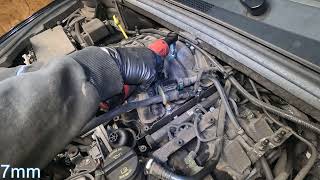
Typical fix: Replace the Bank 1 exhaust camshaft position sensor. 🎬 See this walkthrough for replacing the sensor on a Durango. It is highly recommended to use an OEM Mopar part to avoid repeat failures.
Est. part cost: $40-$90 - Wiring Harness or Connector Damage 🟡 Medium Probability The engine harness is subject to heat, vibration, and potential oil contamination, which can lead to chafed wires, loose pins in the connector, or corrosion. The intermittent nature of the code often points to a wiring issue.
How to confirm: Visually inspect the wiring leading to the passenger-side cam sensor. Wiggle the harness and connector with the engine running to see if it triggers the fault or causes the idle to stumble. Check for voltage (5V reference) and ground at the connector with a multimeter.
Typical fix: Repair the damaged section of the wiring harness or clean/replace the connector pigtail.
Est. part cost: $5-$150 - PCM Software Update Needed ⚪ Low Probability TSB #18-049-20 indicates the original PCM software may be too sensitive and can set this code erroneously. The update changes P0369 from a one-trip to a two-trip fault, meaning the intermittent issue must be detected on two consecutive drive cycles before illuminating the check engine light.
How to confirm: A Dodge dealership or a properly equipped independent shop can check the vehicle's current software version against the latest available updates using a wiTECH scan tool.
Typical fix: The dealership performs a PCM software reflash. This should be considered after verifying the oil, sensor, and wiring are good.
Est. part cost: $0-$200
Rare But Worth Checking
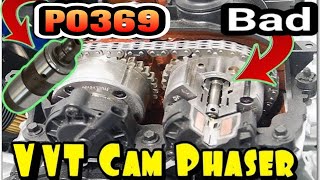
- Failing Camshaft Phaser or Oil Control Valve (OCV): If oil, sensor, and wiring are all confirmed good, the mechanical phaser itself or its controlling solenoid (OCV) may be sticking or failing. This causes erratic cam timing that the sensor correctly reports as an intermittent fault. This is a more complex and expensive repair.
- Damaged Camshaft Tone Ring: The reluctor wheel (tone ring) on the camshaft that the sensor reads can become damaged, loose, or even magnetized by accident (e.g., contact with a magnetic tool during a repair). This is uncommon and typically only occurs during major engine work.
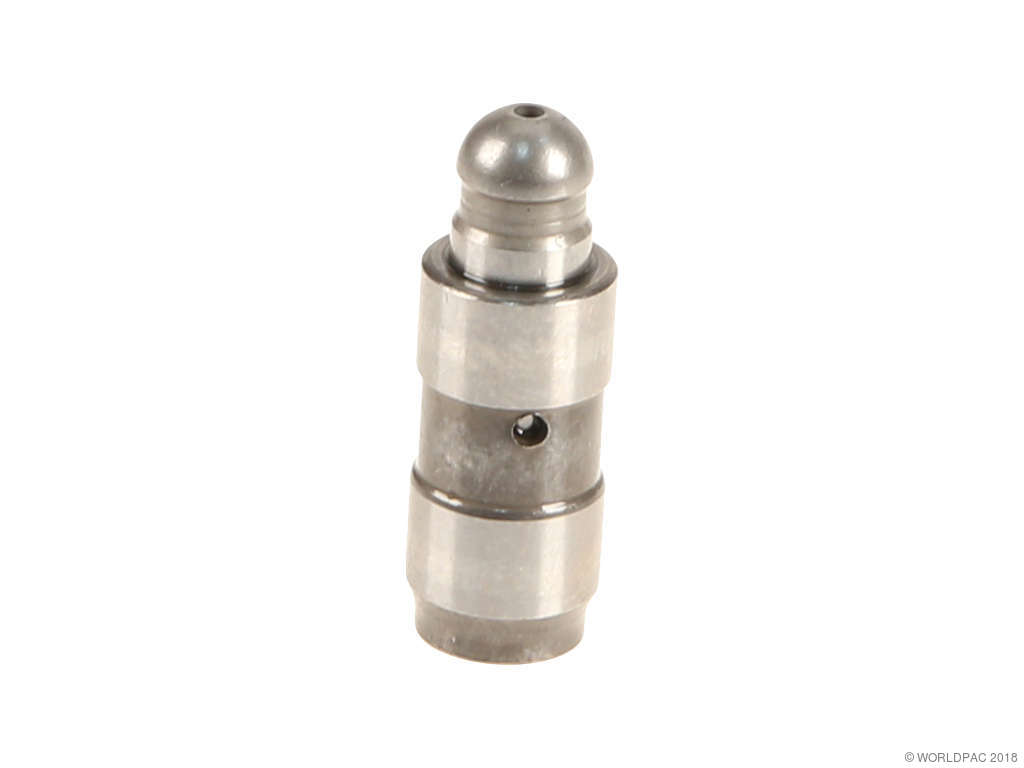
- Failing Rocker Arms/Lifters: Many owners report the P0369 code appearing immediately after replacing the engine's rocker arms and lifters, a common repair on the 3.6L Pentastar. This suggests that either the wiring was disturbed during the repair, or the new components have altered the valve timing slightly, causing the sensor to report a fault.
Diagnosis Steps
- Check the Oil First: Verify the engine oil level is correct and the oil appears clean. Confirm the correct viscosity (5W-20) and a quality, OEM-style oil filter is installed. This is the #1 cause of this code on the Pentastar engine.
- Scan for Other DTCs: Scan for other codes. Codes like P0344, P0016, or P06DD provide critical clues that the issue may be mechanical or oil-related rather than just a bad sensor.
- Inspect Wiring: Visually inspect the wiring harness and connector for the Bank 1 (passenger side) exhaust camshaft position sensor. Look for signs of oil saturation, corrosion, chafed wires, or physical damage.
- Perform a 'Wiggle Test': With the engine idling, carefully wiggle the sensor connector and nearby harness. If the idle stumbles or the code re-sets, it indicates a wiring issue.
- Swap Sensors: Swap the Bank 1 (passenger side) exhaust sensor with the Bank 2 (driver side) exhaust sensor. They are typically the same part. Clear the codes and drive the vehicle. If the fault code moves to Bank 2 (now showing P0394), the original sensor is bad.
- Check for TSBs: If the sensor and wiring appear good, ask a dealer if TSB #18-049-20 applies to your VIN. A PCM reflash may be all that is needed.
- Test the Circuit: Use a multimeter to test for the correct voltage (usually a 5V reference) and a solid ground at the sensor connector.
- Consider Mechanical Issues: If all else fails, the problem may be mechanical. Consult a professional to perform an oil pressure test or use an oscilloscope to analyze the sensor's waveform, which can reveal issues with the cam phaser or tone ring.
Parts You'll Likely Need

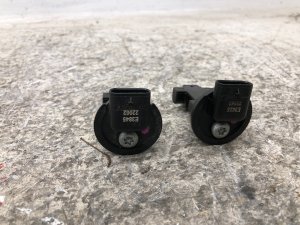
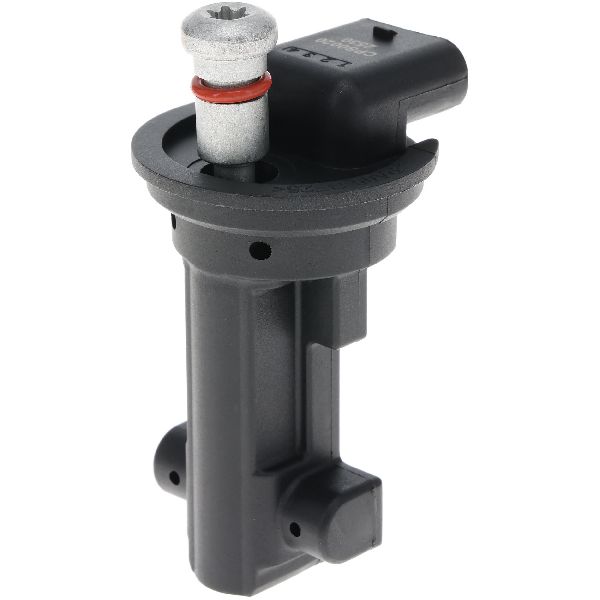
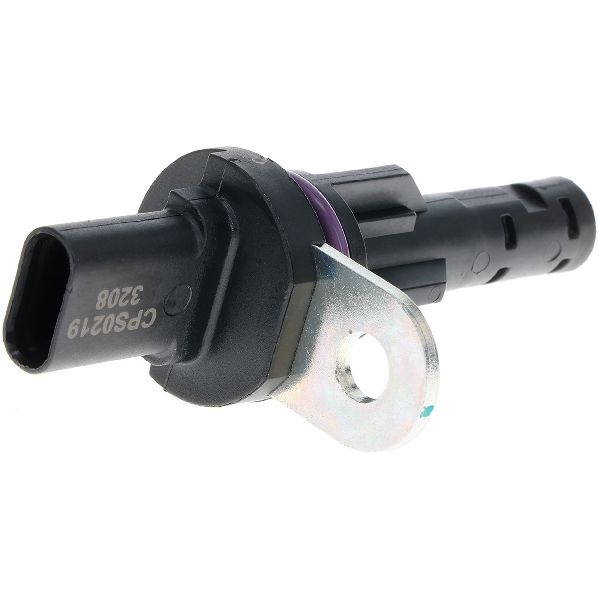
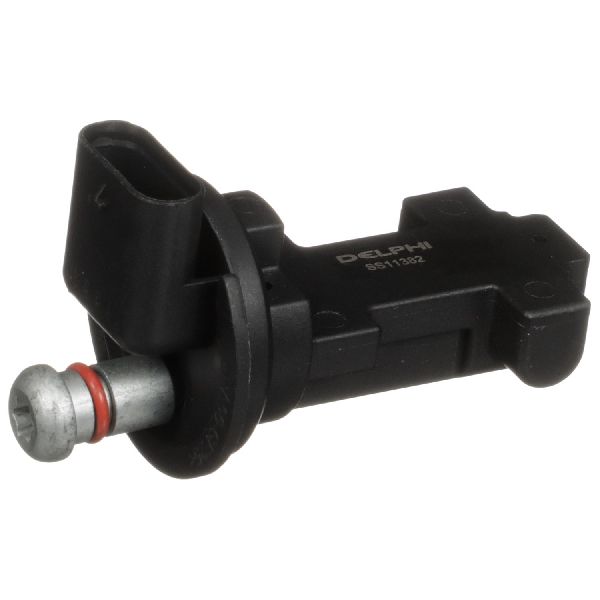
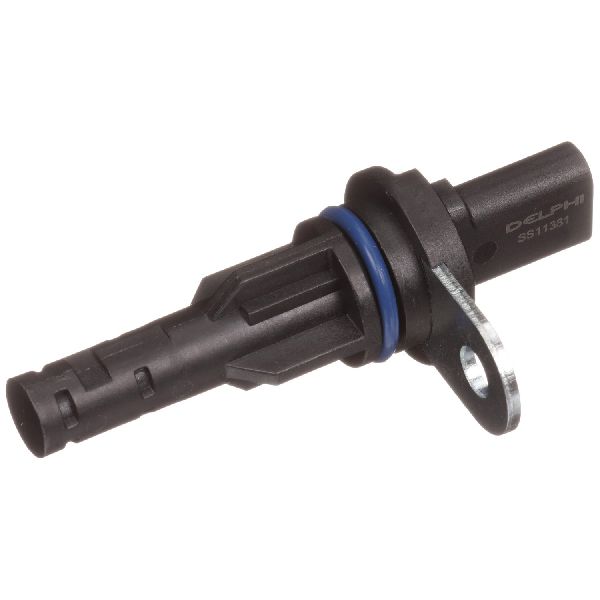
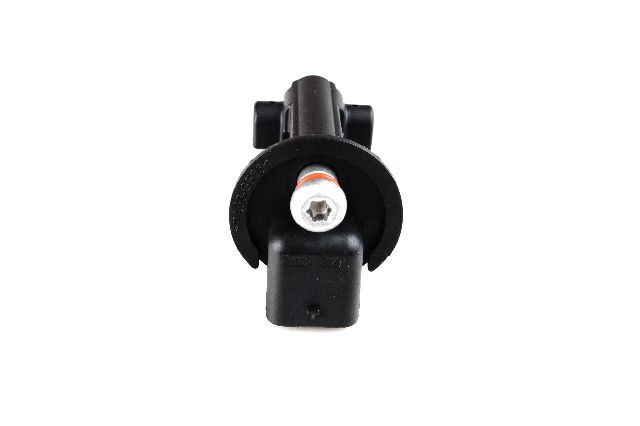
- Camshaft Position Sensor (Bank 1, Exhaust)
(OEM #5149141AF (Note: Always verify with VIN))— This sensor is the most common part to fail that directly causes the P0369 code, after ruling out oil and wiring issues. Using an OEM Mopar part is strongly recommended to prevent premature failure.
Trusted brands: Mopar, NTK, Delphi
OEM price range: $60-$100
Aftermarket price range: $40-$80 - Engine Oil and Filter
(OEM #Mopar MO-349 (Filter))— Incorrect oil level, viscosity, or a non-compliant filter is a frequent root cause of VVT-related codes on the 3.6L Pentastar engine. An oil change with a quality filter is a critical first diagnostic step.
Trusted brands: Mopar
Related Codes That Often Appear With This One
- P0344 — This code is for an intermittent fault on Bank 1, Sensor 1 (the intake cam sensor). Since both intake and exhaust sensors for Bank 1 are located near each other on the passenger side head, a wiring harness issue, oil pressure problem, or a failing cam phaser affecting the entire bank can trigger both codes.
- P0016 or P0017 — These codes indicate a correlation problem between the crankshaft and camshaft. They can appear with P0369 if the underlying cause is mechanical, such as a failing cam phaser, stretched timing chain, or low oil pressure affecting the VVT system.
- P06DD — This code indicates low oil pressure. It strongly suggests that the P0369 code is a symptom of an oiling problem, not an electrical one. The VVT system cannot function correctly without proper oil pressure.
Technical Service Bulletins (TSBs) & Recalls
- 18-049-20: Supersedes the older TSB. Recommends a PCM software update to change P0369 from a one-trip to a two-trip fault to prevent erroneous MIL illumination for transient glitches.
- 18-024-17 REV. C: This TSB is superseded by 18-049-20 but contained similar information regarding a PCM reflash for various cam sensor codes, including P0369.
Platform-Specific Known Issues
- Technical Service Bulletin #18-049-20 was issued for this and other camshaft position sensor codes. The fix involves a software update for the Powertrain Control Module (PCM) to make it less sensitive to minor signal variations. Specifically, it changes the logic to require two consecutive trips with a fault before turning on the Check Engine Light. This should be considered if the sensor and wiring are confirmed to be in good condition.
Mechanic-Grade Diagnostic Values
- Camshaft Position Sensor Connector Voltage — expected: One pin should have a 5V reference from the PCM with the key on, engine off. One pin should be ground.. Failure: Voltage below 5V or an open/high resistance on the ground circuit indicates a wiring or PCM issue, not a sensor failure.
- VVT Solenoid (Oil Control Valve) Coil Resistance — expected: Between 5 and 20 Ohms when measured across the two pins of the solenoid.. Failure: A reading of 0 Ohms (short circuit) or infinite/OL (open circuit) indicates a failed solenoid coil.
- VVT Solenoid Connector Voltage — expected: One pin in the harness connector should show battery voltage (~12V) with the ignition on.. Failure: No voltage suggests a problem with the power supply circuit, such as a blown fuse or wiring fault, rather than the solenoid itself.
- Mechanical Oil Pressure Test — expected: Consult the factory service manual for exact pressure specifications at idle and various RPMs. This test requires a special adapter at the oil filter housing.. Failure: Low oil pressure is a strong indicator that P0369 is a symptom of a larger oiling problem (e.g., bad oil pump, internal leak) and not an electrical fault.
Scan Tool Commands That Help
- wiTECH or equivalent professional scan tool: VVT Solenoid Actuation Test — This bidirectional control allows a technician to command the VVT solenoid on and off while the engine is running. It is used to verify if the solenoid is mechanically responding to electrical commands from the PCM, helping to isolate a faulty solenoid from a wiring or PCM driver issue.
Wiring & Ground Locations

- Camshaft Position Sensor Bank 1, Sensor 2 — On the front of the passenger side (Bank 1) cylinder head. It is the lower of the two sensors, corresponding to the exhaust camshaft. It is typically held in by a single T30 Torx bolt.. This is the precise location of the sensor that triggers the P0369 code. Its position makes it susceptible to oil leaks from the valve cover and heat from the front of the engine.
- Engine to Body Ground Strap — While specific G-numbers are not readily available, a primary ground strap connects the engine block to the vehicle's chassis/body, often near the engine mounts or transmission.. A poor engine ground can introduce electrical noise and voltage drops, causing intermittent and false signals from sensitive sensors like the camshaft position sensor.
Real Owner Repair Stories
- JT the Car Guy, YouTube (Dodge 3.6L Pentastar (model not specified, but engine is identical)) — Persistent P0369 code, check engine light.
❌ Tried (didn't work) Replacing the camshaft position sensor twice with aftermarket parts.
✅ What actually fixed it The technician found a loose oil gallery plug underneath the valve cover on Bank 1. This caused an internal oil pressure leak, which disrupted VVT phaser operation and triggered the P0369 code. Tightening the plug to the correct torque specification resolved the issue. - Reddit user, r/AskMechanics (2015 Dodge Challenger 3.6L V6 with 170,800 miles) — P0369 code appeared immediately after performing a rocker arm and lifter replacement job.
❌ Tried (didn't work) Replacing the sensor with a Duralast (aftermarket) part., Resetting the ECM by pulling fuses.
✅ What actually fixed it The user's diagnostic journey was unresolved in the post, but it provides extremely high value by highlighting potential causes during a related repair. The user suspected they may have accidentally magnetized a VVT component (oil control valve or phaser tone wheel) with a magnetic flashlight, or that the aftermarket sensor was faulty. This story serves as a strong caution about using magnetic tools near VVT parts and the risk of using non-OEM sensors.
"I Checked Everything" — The Actual Cause
- In cases where all wiring and sensors test perfectly, the root cause can be a mechanical oil pressure leak internal to the engine, such as a loose oil gallery plug under the valve cover. This will not be found with electrical tests, sensor swaps, or smoke tests. It requires a mechanical oil pressure test and/or removal of the valve cover for visual inspection to find.
OEM Part Supersession History
5149141AF→N/A— This appears to be the stable and current part number for the specified vehicle range.
Heads up: Multiple sources confirm 5149141AF (or 05149141AF) as the correct OEM part. No supersession information was found in the search results.
Model Year Variations Within This Range
- 2016-2017: The 2016 model year added engine start-stop (ESS) technology to the 3.6L V6. The 2017 model year saw the GT trim replace the Limited trim. These changes are not noted to have a direct impact on the diagnosis or common causes of a P0369 code, as the core engine, VVT system, and sensor hardware remained the same.
Helpful Videos
Used OEM Parts in Stock
New Aftermarket Parts Available

The information in this article is provided for general reference and educational purposes only. Vehicle specifications, procedures, and part compatibility can vary by production date, trim level, and region. Always consult your vehicle's factory service manual and verify part numbers before purchasing or performing repairs. Safety-critical components such as airbags, seat belts, and braking systems should be installed by a qualified professional.
- Dodge DURANGO:
- 🎬 Helpful Videos
- 🛍️ Shop This Part
- What's Unique About the 2016-2017 Dodge DURANGO
- Diagnostic Flowchart
- Symptoms You May Notice
- Most Likely Causes
- Rare But Worth Checking
- Diagnosis Steps
- Parts You'll Likely Need
- Related Codes That Often Appear With This One
- Technical Service Bulletins (TSBs) & Recalls
- Platform-Specific Known Issues
- Mechanic-Grade Diagnostic Values
- Scan Tool Commands That Help
- Wiring & Ground Locations
- Real Owner Repair Stories
- "I Checked Everything" — The Actual Cause
- OEM Part Supersession History
- Model Year Variations Within This Range
- 🎟️ Get 5% Off