

P0366 on 2009-2011 Chevrolet Aveo: Exhaust Cam Sensor Causes & Fixes
On a 2009-2011 Chevy Aveo, code P0366 almost always means the exhaust camshaft position sensor has failed. This is a known issue confirmed by a GM Technical Service Bulletin (PIP5329C). Replacing the sensor is an easy, low-cost DIY fix, typically costing $25-$60 for a new part. Owners strongly recommend using an OEM ACDelco part to avoid premature failure of aftermarket alternatives.
- P0366 on a 2009-2011 Aveo points directly to the exhaust camshaft position sensor.
- The most likely cause is a failed sensor, a known issue confirmed by GM TSB #PIP5329C.
- Replacement is a simple DIY job that requires basic tools (10mm socket, 5mm Allen key) and can be completed in under an hour.
- Using a quality OEM (ACDelco part #25195556) or reputable aftermarket (Delphi, NTK) sensor is highly recommended for a lasting repair, as cheap aftermarket sensors are known to fail.
- If you also have code P0341, replace both the intake and exhaust sensors at the same time as they are the same part and fail under similar conditions.
- Check for oil leaks from the valve cover gasket, as this is a common secondary cause that can foul the new sensor's connection.
What's Unique About the 2009-2011 Chevrolet AVEO

The 1.6L Ecotec engine family used in the Aveo and other small GM vehicles is known for this specific problem. General Motors issued Technical Service Bulletin #PIP5329C, which acknowledges that P0366 (and the related intake sensor code P0341) is a common issue. The bulletin's primary recommendation is to simply replace the sensor, indicating a high rate of component failure rather than a more complex underlying problem like wiring or timing, especially if P0366 appears alone.
Diagnostic Flowchart
Tap your situation to follow the diagnostic path that matches what you're seeing on this vehicle.
Symptoms You May Notice
- Check Engine Light is on
- Engine is hard to start or cranks but won't start
- Rough, uneven idling or stalling, especially when coming to a stop
- Poor acceleration and loss of power, sometimes described as hesitation above 2,000 RPM
- Decreased fuel economy
- Engine may misfire, potentially triggering other codes like P0300
- Replacing the crankshaft position sensor (this would set P0335 or P0336)
- Replacing the intake camshaft position sensor (this would typically set code P0341)
- Assuming the timing belt has slipped without first trying the much more common and simpler sensor replacement.
Most Likely Causes

- Faulty Exhaust Camshaft Position Sensor 🔴 High Probability This is a well-documented, common failure part on this engine, as confirmed by GM's own Technical Service Bulletin #PIP5329C. Many owners on forums report that aftermarket sensors can fail quickly, and strongly recommend using the OEM ACDelco part.
How to confirm: After confirming no visible wiring damage, replacing the sensor is the most direct diagnostic step due to the high failure rate and low part cost. An oscilloscope can confirm an erratic or missing waveform, but is often unnecessary for a DIY diagnosis on this specific fault.
Typical fix: Replace the exhaust camshaft position sensor with a genuine GM/ACDelco part.
Est. part cost: $25-$80 - Wiring or Connector Issue 🟡 Medium Probability The sensor wiring is in the engine bay, exposed to heat and vibration. A very common issue on this engine is oil leaking from the valve cover gasket, which drips directly onto the sensor connectors and degrades the wiring insulation and pins, causing a poor connection.
How to confirm: Visually inspect the sensor's wiring harness for cracks, fraying, or signs of heat damage. Unplug the connector and check for engine oil inside. Wiggle the connector with the engine running to see if it affects idle. If the valve cover is oily or wet, the gasket is likely leaking and should be replaced. 🎬 See how to replace the valve cover gasket on this engine.
Typical fix: Repair the damaged section of wiring or clean the oil out of the connector with electrical contact cleaner. If the connector is saturated or damaged, it should be replaced. The source of any oil leak (e.g., valve cover gasket) must also be fixed.
Est. part cost: $5-$50 - Slipped or Worn Timing Belt ⚪ Low Probability The 1.6L Ecotec is an interference engine with a timing belt that requires replacement at regular intervals (typically 60,000-100,000 miles). If the belt stretches, slips a tooth, or the tensioner fails, the cam/crank correlation will be incorrect, triggering P0366 often alongside a P0016 correlation code.
How to confirm: Inspect the timing belt for wear, damage, or improper tension. Verify mechanical timing by aligning the crankshaft and camshaft timing marks. 🎬 Watch: A complete guide to installing the timing belt and pump. This is a more likely cause if the code appeared immediately after a timing belt service or on a high-mileage engine with an original belt.
Typical fix: Replace the timing belt, tensioner, and idler pulleys as a kit.
Est. part cost: $100-$250
Rare But Worth Checking
- Damaged Camshaft Reluctor Ring: The toothed wheel on the camshaft that the sensor reads can be damaged or broken, especially during other engine repairs like a head gasket replacement. One owner on a Spanish-language forum for a Chevy Tracker (a platform mate) with P0366 found the small tab on the reluctor ring had broken off, causing the code to persist after sensor replacement. A visual inspection of the camshaft through the oil filler cap or with the valve cover removed is needed to confirm.
- Faulty Powertrain Control Module (PCM): This is very rare. All other possibilities, especially the sensor, wiring, and mechanical timing, should be exhausted before considering a PCM failure. A technician would need to verify the PCM is not sending the required 5V reference signal to the sensor.
Diagnosis Steps
- Read the trouble codes with an OBD-II scanner to confirm P0366 is present. Note any other codes, like P0341 or P0016.
- Remove the plastic engine cover, which is typically held on by four 5mm Allen head bolts.
- Locate the exhaust camshaft position sensor. On the 1.6L Aveo engine, it is on the passenger side (right side) of the engine, toward the front of the vehicle (exhaust manifold side). The intake sensor is on the same side but toward the firewall.
- Visually inspect the sensor's electrical connector and nearby wiring for obvious damage, corrosion, or oil contamination from a leaky valve cover gasket.
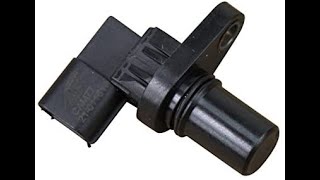
- If wiring appears intact, the most common fix is to replace the sensor. 🎬 Watch: This walkthrough shows how to replace the Aveo camshaft sensor. Disconnect the electrical connector by pulling back the gray locking tab and pressing the release.
- Remove the single 10mm bolt holding the sensor in place.
- Carefully remove the old sensor. It may be necessary to gently twist it back and forth to break the O-ring seal.
- Lubricate the O-ring on the new sensor with a small amount of clean engine oil before installation.
- Install the new sensor, tighten the 10mm bolt, and reconnect the electrical connector, ensuring the lock tab clicks into place.
- Clear the trouble codes with the scanner and start the engine. Test drive the vehicle to see if the code returns.
- If the code returns, perform a more in-depth check of the wiring for continuity using a multimeter. If wiring is confirmed good, the next step is to investigate mechanical timing (timing belt and reluctor ring).
Parts You'll Likely Need

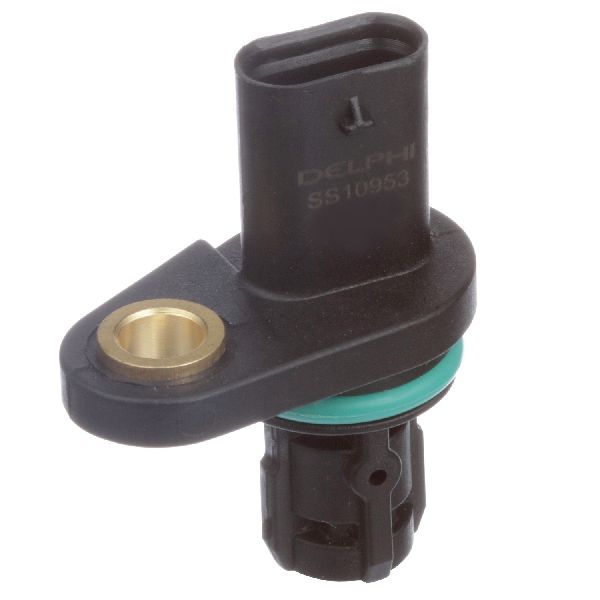
- Exhaust Camshaft Position Sensor
(OEM #25195556)— This is the component that fails most frequently for this code on this vehicle, as documented by GM's own service bulletin. This part number is used for both the intake and exhaust sensors. It replaces the older part number 55565709.
Trusted brands: ACDelco (GM Original Equipment), Delphi (Often an OEM supplier), NTK, Bosch
OEM price range: $50-$80
Aftermarket price range: $25-$50
Related Codes That Often Appear With This One
- P0341 — This code is for the intake camshaft position sensor ('A' sensor). The sensors are identical parts (GM 25195556) and often fail around the same time due to similar age and operating conditions. The TSB #PIP5329C mentions both codes together. It is common practice to replace both sensors at the same time to prevent a repeat failure.
- P0016 — This code indicates a Crankshaft/Camshaft Correlation error. If the timing belt has slipped or a camshaft phaser is faulty, it can cause P0366 along with P0016, indicating a mechanical timing problem rather than just a sensor failure.
Technical Service Bulletins (TSBs) & Recalls
- PIP5329C: Addresses a Service Engine Soon lamp with DTC P0341 and/or P0366 set. The primary instruction is to replace the related Camshaft Position (CMP) sensor. It covers the 2009-11 Aveo, 2009-10 Pontiac G3, 2011-16 Cruze, and 2012-17 Sonic.
Platform-Specific Known Issues
- GM Technical Service Bulletin #PIP5329C specifically calls out P0366 on the 2009-2011 Aveo and recommends replacing the camshaft position sensor as the primary fix.
- Oil leaks from the valve cover gasket are extremely common on this engine and are a frequent secondary cause of this code by contaminating the sensor's electrical connector.
Mechanic-Grade Diagnostic Values
- Camshaft Position Sensor Power Supply Voltage — expected: 5 Volts. Failure: 0V or significantly less than 5V indicates a wiring or PCM issue.
- Camshaft Position Sensor Signal Wire Voltage (Key On, Engine Off) — expected: 5 Volts. Failure: 0V or significantly different voltage suggests a problem with the sensor or wiring.
- Camshaft Position Sensor Ground Circuit Continuity — expected: Near 0 Ohms. Failure: High resistance or an open circuit (OL) indicates a broken or corroded ground wire.
Scan Tool Commands That Help
- GDS2 / Tech2 (or advanced aftermarket scanner): Crankshaft Position Variation Learn (CASE Relearn) — This procedure is required if the P0366 code is accompanied by a P0016 (Crank/Cam Correlation) code, or if the code appeared after a timing belt replacement, crankshaft sensor replacement, or PCM replacement. It synchronizes the PCM's understanding of the crankshaft and camshaft positions. Failure to perform this when needed can cause the code to persist even with good parts. The procedure typically involves revving the engine to a specific RPM (e.g., 4000 RPM) until the scan tool confirms the learn was successful.
Wiring & Ground Locations
- Camshaft Position Sensor Connector — On the sensor itself, passenger side of the engine. Exhaust sensor is toward the front, intake is toward the firewall.. This 3-pin connector is a common failure point due to oil contamination. Pin 1 (Gray wire) is 5V power, Pin 2 (Green wire) is the signal, and Pin 3 (White wire) is the ground. Knowing the pinout is critical for accurate electrical testing.
- G103 — On the engine block, below the Engine Control Module (ECM).. This is a primary ground point for the engine control system. A loose or corroded G103 ground can cause erratic behavior in multiple sensors, including the camshaft position sensor, leading to intermittent and hard-to-diagnose codes like P0366.
Real Owner Repair Stories
- AveoForum.com user 'OG-Lou' (2008 Chevrolet Aveo (T250 platform, similar engine controls to 2009-2011)) — Engine bucking under load/acceleration, throwing a camshaft position sensor code (P0340, intake side, but same diagnostic principle).
❌ Tried (didn't work) Replacing the camshaft position sensor multiple times., Verifying mechanical timing marks were correct., Checking for voltage and ground at the sensor connector., Disconnecting and reconnecting ECM connectors.
✅ What actually fixed it The valve cover gasket was leaking oil into the spark plug wells. This created carbon tracks inside the spark plug wire boots, causing the spark to ground out under load. Replacing the oil-fouled spark plugs and the damaged spark plug wires resolved the issue completely.
When the Usual Fixes Don't Work
- While the TSB and high failure rate strongly point to the camshaft position sensor itself, there are confirmed cases where the P0366 code (or its intake-side equivalent, P0341) was not resolved by replacing the sensor. In one documented instance, after multiple sensor swaps and confirming correct timing, the root cause was found to be a leaking valve cover gasket that allowed oil to foul the spark plugs and wires. This created a misfire under load that the ECU misinterpreted as a cam/crank signal error. The fix was new plugs and wires, not another cam sensor. This highlights the need to consider secondary ignition health if the primary fixes for P0366 fail.
OEM Part Supersession History
55565709→25195556— Part revision by manufacturer.
Heads up: These part numbers are for the sensor used in both the intake and exhaust positions. They are physically identical. The intake sensor is also referenced by PNs 55565708 and 25195555. It is best practice to replace both sensors at the same time.
Helpful Videos
We Have This Part in Stock


The information in this article is provided for general reference and educational purposes only. Vehicle specifications, procedures, and part compatibility can vary by production date, trim level, and region. Always consult your vehicle's factory service manual and verify part numbers before purchasing or performing repairs. Safety-critical components such as airbags, seat belts, and braking systems should be installed by a qualified professional.
- Chevrolet AVEO:
- 🎬 Helpful Videos
- 🛍️ Shop This Part
- What's Unique About the 2009-2011 Chevrolet AVEO
- Diagnostic Flowchart
- Symptoms You May Notice
- Most Likely Causes
- Rare But Worth Checking
- Diagnosis Steps
- Parts You'll Likely Need
- Related Codes That Often Appear With This One
- Technical Service Bulletins (TSBs) & Recalls
- Platform-Specific Known Issues
- Mechanic-Grade Diagnostic Values
- Scan Tool Commands That Help
- Wiring & Ground Locations
- Real Owner Repair Stories
- When the Usual Fixes Don't Work
- OEM Part Supersession History
- 🎟️ Get 5% Off