

P0365 on 2014-2018 Ram ProMaster 3.6L: Camshaft Position Sensor 'B' Circuit Causes and Fixes
This code indicates a fault with the Bank 1 exhaust camshaft position sensor. On the ProMaster's 3.6L V6, this is the rear sensor located near the firewall, which is notoriously difficult to access. The most common fix is replacing the sensor itself, but wiring issues should be checked first. Access requires removing the upper intake manifold, adding significant labor to the repair.
- P0365 on a Ram ProMaster points to the exhaust camshaft position sensor circuit on Bank 1 (the rear cylinder bank).
- Symptoms typically include a check engine light, rough running, stalling, and difficulty starting.
- The most common cause is a failed sensor, but always inspect the wiring and connector first.
- Repair is challenging for DIYers because the sensor is located against the firewall and requires removing the upper intake manifold for access.
- Given the difficult access, using a high-quality OEM or top-tier aftermarket sensor is highly recommended to avoid having to do the job twice.
What's Unique About the 2014-2018 Ram PROMASTER

The Ram ProMaster uses the common 3.6L Pentastar V6, which has four camshafts and four individual camshaft position sensors—one for each cam (intake and exhaust on each bank). The P0365 code specifically points to the exhaust sensor on Bank 1. The primary challenge on the ProMaster is the location of this sensor; it is at the rear of the engine against the firewall, requiring the removal of the upper intake manifold for access. This turns a simple sensor swap into a multi-hour job. A manufacturer Technical Service Bulletin (TSB) from 2015 (05149141A) suggests that there may be underlying issues beyond a simple sensor failure, instructing technicians to contact engineering before replacing the part for this code, indicating a pattern of issues Chrysler was investigating.
Diagnostic Flowchart
Tap your situation to follow the diagnostic path that matches what you're seeing on this vehicle.
Symptoms You May Notice
- Check Engine Light is on
- Difficulty starting the engine, or long crank times
- Engine may not start at all
- Rough running or poor idle
- Stalling, especially at low speeds or when warm
- Reduced engine power and poor acceleration
- Decreased fuel economy
- Electronic Stability Control (ESC) warning light may also illuminate
- Replacing the wrong sensor (e.g., the easily accessible Bank 2 sensor at the front of the engine instead of the difficult Bank 1 sensor at the rear).
- Replacing the crankshaft position sensor instead of the camshaft position sensor.
- Replacing the sensor without first inspecting the wiring and connector for damage.
- Replacing the sensor without also replacing the intake manifold gaskets, which can lead to vacuum leaks.
Most Likely Causes

- Failed Camshaft Position Sensor (Bank 1, Exhaust) 🔴 High Probability The sensor is a common failure point due to constant heat cycles and vibration in the engine bay. Several TSBs address issues with these sensors on the 3.6L engine.
How to confirm: After checking wiring, the most direct way to confirm is to replace the sensor. Due to the difficult access on Bank 1, swapping it with the more accessible Bank 2 sensor is not practical. A lab scope can be used to check the sensor's signal waveform if the wiring is confirmed to be good.
Typical fix: Replace the Bank 1 (rear) exhaust camshaft position sensor. This requires removing the upper intake manifold for access, and it is highly recommended to replace the upper and lower intake manifold gaskets at the same time.
Est. part cost: $25-$70 - Wiring Harness or Connector Issue 🟡 Medium Probability The wiring harness, especially the section running to the rear of the engine, is susceptible to heat damage, which can cause wires to become brittle, short, or open. The connector pins can also corrode or become loose. ProMasters are also known for having issues with main engine ground straps, which can cause a variety of electrical faults.
How to confirm: Visually inspect the wiring and connector leading to the Bank 1 exhaust camshaft sensor for any signs of damage, melting, or corrosion. Use a multimeter to test for the correct 5-volt supply, ground, and signal wire integrity back to the PCM.
Typical fix: Repair the damaged section of wiring or replace the connector pigtail. Ensure the new wiring is properly shielded and routed away from high-heat areas. Check and clean the main engine ground strap.
Est. part cost: $10-$30
Rare But Worth Checking
- Timing Chain or Phaser Issue: If the timing chain has stretched or a cam phaser is faulty, it can cause the camshaft position to be out of sync with the crankshaft, triggering a sensor code even if the sensor is good. This is a more complex mechanical issue.
- Faulty Powertrain Control Module (PCM): This is a very rare cause. The PCM itself can fail, but all other possibilities, including wiring and the sensor itself, should be exhausted before considering PCM replacement. Sometimes a PCM software update is required to fix erroneous codes.
- Failed Rocker Arms/Lifters: A known issue on the 3.6L Pentastar is failure of the rocker arms and lifters, which can cause a ticking noise. In severe cases, this can affect camshaft timing and potentially trigger camshaft position sensor codes.
Diagnosis Steps

- Read the trouble code using an OBD-II scanner and confirm P0365 is present. Note any other codes, as they can provide critical diagnostic clues.
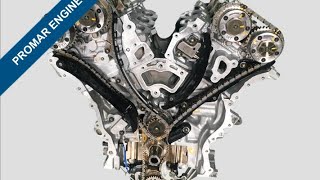
- Locate the Bank 1 exhaust camshaft position sensor. On the ProMaster 3.6L, it is on the rear cylinder head (near the firewall). Access will require 🎬 Watch: Locate the Bank 1 sensor on your ProMaster engine. removing the upper intake manifold.
- Once you have access, carefully inspect the sensor's wiring harness and connector for any visible damage, such as frayed wires, melting, or corrosion.
- If the wiring appears intact, test the circuit. A three-wire sensor should have a 5-volt reference, a ground, and a signal wire. Use a multimeter to check for correct voltage and ground at the connector with the key on, engine off.
- If the wiring and connector are good, the sensor itself is the most likely culprit. Replace the Bank 1 exhaust camshaft position sensor.
- Since removing the intake manifold is required, it is mandatory to replace the upper and lower intake manifold gaskets (Mopar Part # 68191356AA or equivalent) to prevent vacuum leaks.
- It is strongly recommended to use a high-quality OEM Mopar (05149141AF) or reputable aftermarket part (e.g., NTK, Delphi, Hitachi) to avoid repeat repairs due to the significant labor involved.
- After replacement, clear the codes and perform the Cam/Crank Variation Relearn procedure using a capable scan tool if required. Then, perform a test drive to ensure the issue is resolved.
- If the code returns, a more complex mechanical issue, such as with the timing chain, cam phasers, or rocker arms, should be investigated by a professional.
Parts You'll Likely Need

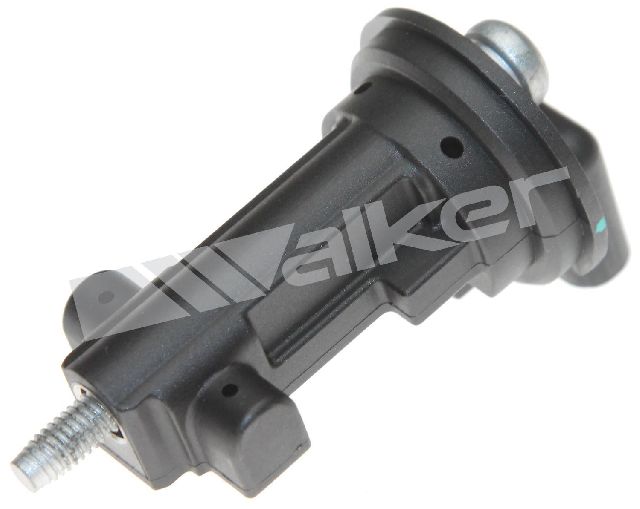
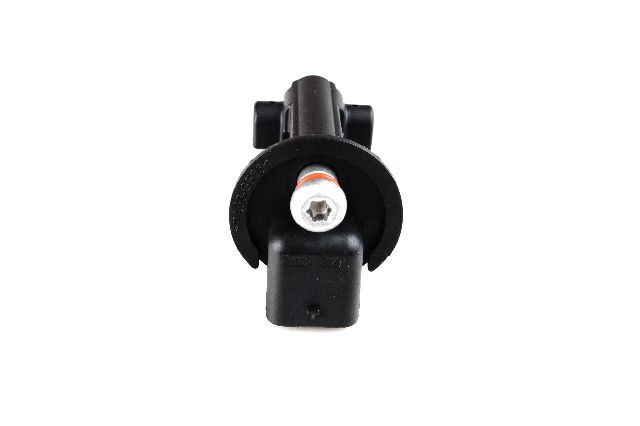
- Camshaft Position Sensor
(OEM #05149141AF)— This is the most common component to fail and trigger the P0365 code. The four sensors on the 3.6L Pentastar are identical.
Trusted brands: Mopar, NTK, Delphi, Hitachi
OEM price range: $45-$70
Aftermarket price range: $25-$50 - Upper & Lower Intake Manifold Gasket Set
(OEM #68191356AA)— These gaskets must be replaced when the upper intake manifold is removed to access the Bank 1 sensor. Reusing old gaskets will likely cause a vacuum leak.
Trusted brands: Mopar, Fel-Pro, Mahle
OEM price range: $20-$40
Aftermarket price range: $15-$30
Related Codes That Often Appear With This One
- P0340 — This code is for the Bank 1 Intake camshaft position sensor circuit. If there is a wiring issue common to both sensors on Bank 1 (like a power or ground problem), this code may appear with P0365.
- P0369 — This code indicates an intermittent signal from the same Bank 1 exhaust cam sensor, which often accompanies or precedes a hard P0365 fault.
- P0016 — This code indicates a Crankshaft/Camshaft timing correlation issue for Bank 1 Sensor 'A' (intake). If the engine's base timing is off due to a stretched chain or phaser issue, multiple cam-related codes can be set.
- P0390 — This is the equivalent code for the Bank 2 exhaust camshaft sensor. Seeing it with P0365 could point to a systemic issue like oil contamination or a problem with the shared power/ground circuit.
Technical Service Bulletins (TSBs) & Recalls
- Bulletin #05149141A: Advises technicians to contact engineering before replacing a camshaft position sensor for several codes, including P0365, to gather data on the issue.
- Bulletin #18-054-14: Details a procedure for 2014 models with intermittent long crank times, involving inspection and potential replacement of a specific batch of Bank 1 camshaft sensors.
Platform-Specific Known Issues
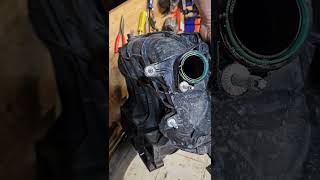
- Extreme Difficulty of Access: The defining issue for P0365 on a ProMaster is the location of the Bank 1 sensor. It is buried at the back of the engine against the firewall. A DIY video shows a mechanic having to remove the entire upper intake manifold to gain access, confirming the high labor cost and difficulty.
- TSB 18-054-14: Intermittent Extended Crank: This TSB from October 2014 applies to 2014 models built within a specific date range that exhibit long crank times without setting a trouble code. The procedure involves inspecting the serial number on the Bank 1 Camshaft Position Sensor and replacing it if it begins with the letter 'D'. This suggests a known bad batch of sensors was installed at the factory.
- TSB #05149141A: Data Collection Initiative: Issued in 2015, this bulletin instructs dealers to contact a specific Chrysler engineer before replacing a camshaft position sensor for several codes, including P0365. This suggests Chrysler was investigating a deeper root cause or a pattern of misdiagnosis beyond simple sensor failure.
Mechanic-Grade Diagnostic Values
- Camshaft Position Sensor 5V Supply — expected: 4.5 - 5.2 volts with key on, engine off.. Failure: Voltage below 4.5V or absent indicates a wiring or PCM issue.
- Camshaft Position Sensor Ground Circuit Resistance — expected: Less than 3.0 ohms between the ground pin at the connector and a known good chassis ground.. Failure: High resistance indicates a poor ground connection, which is a known issue on ProMasters.
- Camshaft Position Sensor Signal (Hall-Effect Test) — expected: The signal wire should read ~5V and drop to ~0V when a magnet is brought close to the sensor tip, then return to 5V when the magnet is removed.. Failure: No change in voltage indicates a faulty sensor.
Scan Tool Commands That Help
- wiTECH (Dealer Tool) or equivalent: Cam/Crank Relearn — This procedure is required after replacing a camshaft or crankshaft position sensor, or after performing timing chain service. It synchronizes the PCM with the new sensor's position relative to the crankshaft, preventing correlation codes and rough running.
- wiTECH (Dealer Tool): ECU Reset — According to service bulletins, this function should be performed before the Cam/Crank Relearn to clear adaptive values and ensure the relearn procedure stores correctly.
Wiring & Ground Locations

- Main Engine Ground Strap — A braided strap running from the transmission case to a bolt on the upper transmission mount, near the driver's side frame rail. It can be accessed by removing the driver's side headlight assembly.. ProMasters are known for poor grounding issues that can cause a host of intermittent electrical problems, including no-start conditions and erroneous sensor codes. A faulty ground can disrupt the sensor's reference, leading to a P0365 code even if the sensor and its dedicated wiring are good.
- K900 — This is the circuit identifier for the sensor ground wire in Chrysler wiring diagrams.. When testing continuity back to the PCM, this identifies the specific circuit to check for an open or high resistance.
- K441 — This is the circuit identifier for the Bank 1 Exhaust Camshaft Position Sensor signal wire in Chrysler wiring diagrams.. This is the specific wire to probe with a lab scope or multimeter to check for the correct signal pattern from the sensor.
Real Owner Repair Stories
- YouTube user video (2014 Ram ProMaster 1500 3.6L) — Engine running very poorly, multiple codes including P0365 and crankshaft/camshaft correlation codes.
❌ Tried (didn't work) Replaced the camshaft position sensor., Swapped sensors between banks., Cleaned cam phasers using a scan tool function.
✅ What actually fixed it The root cause was mechanical. The exhaust camshaft tone wheel (reluctor ring) on Bank 1 had physically shifted on the camshaft by approximately 120 degrees. The owner noted it was so loose it could be moved with a strap wrench. The final fix was to replace the entire Bank 1 exhaust camshaft assembly. A loose oil galley plug was also found and tightened during the diagnosis.
When the Usual Fixes Don't Work
- While replacing the camshaft position sensor is the most common fix, a significant number of cases are not resolved by this. In one documented instance involving a 2014 ProMaster with P0365, the owner replaced the sensor with no change. The ultimate cause was discovered to be a physically loose and rotated tone wheel on the Bank 1 exhaust camshaft. This required replacing the entire camshaft assembly to resolve the code, demonstrating that a persistent P0365 can point to a deeper mechanical failure within the engine's timing components rather than a simple sensor or wiring fault.
OEM Part Supersession History
05149141AE (and earlier revisions)→05149141AF— Standard part revision and improvement over time.
Heads up: While all four cam sensors on the 3.6L are physically identical, using the latest revision (AF) is recommended for reliability.4727654AA, 4727654AB→4727654AC— Revision of the main engine ground wire.
Heads up: This is the main engine ground wire. Given the known grounding issues on ProMasters, ensuring this strap is in good condition or replacing it with the latest revision during related repairs is a wise preventative measure.
Model Year Variations Within This Range
- 2014-2018: The core 3.6L Pentastar engine remained consistent in the ProMaster for this model year range. However, be aware that Chrysler introduced a majorly upgraded 3.6L engine in other platforms (like the Grand Cherokee) starting in 2016, so parts are not always interchangeable across the entire FCA lineup. Subtle running changes, like coolant sensor thread sizes on cylinder heads, have been noted between early and late Pentastar engines.
Helpful Videos


Used OEM Parts in Stock
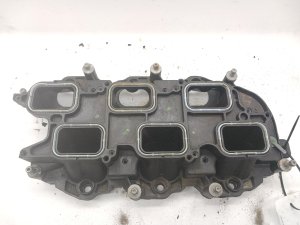


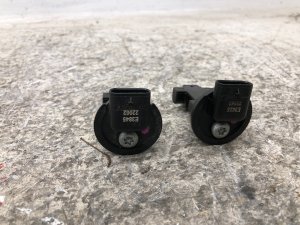
New Aftermarket Parts Available

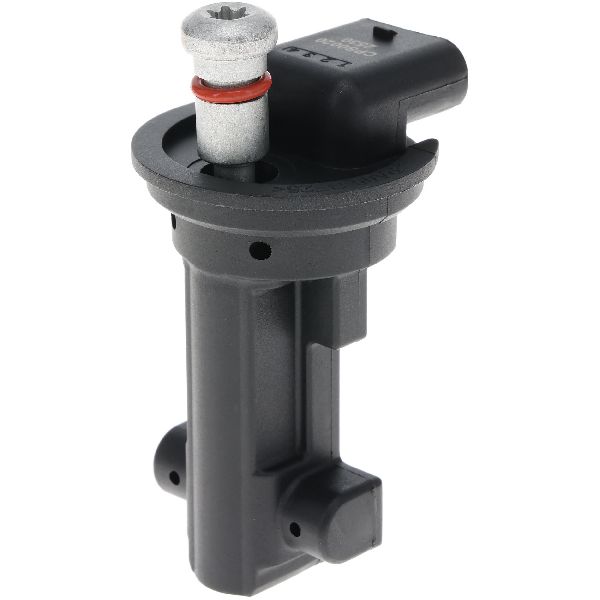
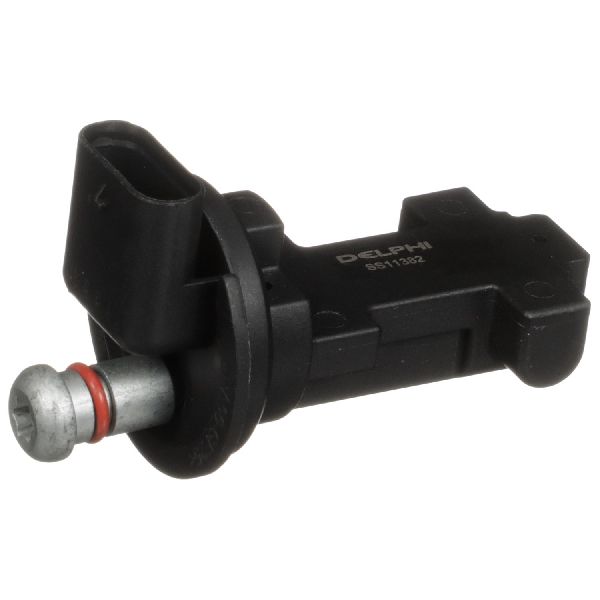

The information in this article is provided for general reference and educational purposes only. Vehicle specifications, procedures, and part compatibility can vary by production date, trim level, and region. Always consult your vehicle's factory service manual and verify part numbers before purchasing or performing repairs. Safety-critical components such as airbags, seat belts, and braking systems should be installed by a qualified professional.
- Ram PROMASTER:
- 🎬 Helpful Videos
- 🛍️ Shop This Part
- What's Unique About the 2014-2018 Ram PROMASTER
- Diagnostic Flowchart
- Symptoms You May Notice
- Most Likely Causes
- Rare But Worth Checking
- Diagnosis Steps
- Parts You'll Likely Need
- Related Codes That Often Appear With This One
- Technical Service Bulletins (TSBs) & Recalls
- Platform-Specific Known Issues
- Mechanic-Grade Diagnostic Values
- Scan Tool Commands That Help
- Wiring & Ground Locations
- Real Owner Repair Stories
- When the Usual Fixes Don't Work
- OEM Part Supersession History
- Model Year Variations Within This Range
- 🎟️ Get 5% Off