

P0365 on 2018 Jeep Wrangler: Camshaft Sensor Causes and Fixes
On a 2018 Jeep Wrangler with the 3.6L engine, code P0365 usually points to a failed Bank 1 (passenger side) exhaust camshaft position sensor. However, it can also be triggered by low oil pressure, often linked to a failed oil filter housing. Replacing the sensor is about $30-$80 for the part and is an easy DIY fix. Before replacing parts, check for TSB #18-103-20, which may resolve the issue with a PCM software update.
- P0365 on a 2018 Wrangler 3.6L refers to the exhaust camshaft sensor on the passenger side.
- Before replacing the sensor, check your engine oil level. Low oil can trigger this code.
- Look for other codes, especially P06DD, which points to a more serious oil pressure problem, likely caused by a leaking oil filter housing.
- A PCM software update (TSB #18-103-20) may be available to fix false codes, so check with a dealer.
- The easiest way to confirm a bad sensor is to swap it with the driver's side sensor and see if the code follows.
What's Unique About the 2018-2018 Jeep WRANGLER

The 2018 model year is unique as it was a transition period for the Wrangler, with both the older 'JK' and the new 'JL' generations being sold. Both were available with the 3.6L Pentastar V6 engine, which is where this code is most common. A crucial issue on this platform is the connection between camshaft sensor codes like P0365 and oil pressure problems. An owner complaint (NHTSA ODI #11727924) linked P0365 with code P06DD (oil pressure control failure) and internal oil loss, a known symptom of a cracked oil filter/cooler housing on the 3.6L engine. This link is widely discussed in owner forums.
Diagnostic Flowchart

Tap your situation to follow the diagnostic path that matches what you're seeing on this vehicle.
Generation note: The 2018 model year included both the last of the Wrangler JK generation and the first of the new JL generation. Both generations offered the 3.6L Pentastar V6 engine, and the causes and fixes for P0365 on this engine are consistent across both the JK and JL. The issue is also common on other vehicles using this engine.
Symptoms You May Notice

- Check Engine Light is on
- Difficulty starting the engine
- Rough idle or stalling
- Reduced engine power and poor acceleration
- Engine cranks but won't start
- Problems with automatic transmission shifting
- Service Start/Stop System warning light may appear on JL models.
- Replacing the PCM when the issue is a simple wiring fault or software update.
- Replacing the camshaft sensor without first checking the engine oil level and pressure.
- Replacing timing components when the root cause is low oil pressure from a leaking oil cooler.
Most Likely Causes

- Failed Camshaft Position Sensor (Bank 1, Exhaust) 🔴 High Probability Sensors can fail over time due to heat cycles and exposure to oil. It's the most direct cause of a circuit fault code. A diagnostic video on a 2017 Wrangler showed a defective sensor where the output signal wave was shorter than the intake sensor's, confirming internal failure.
How to confirm: Swap the Bank 1 sensor with the Bank 2 (driver's side) sensor. If the code changes to P0390 (Bank 2, Sensor 'B'), the sensor is bad. A lab scope can also be used to compare the square wave signal from the suspect sensor to a known good one.
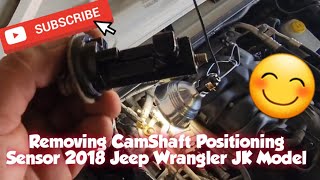
Typical fix: Replace the Bank 1 camshaft position sensor. This is a single unit on the passenger side valve cover held by one T30 Torx bolt. 🎬 Watch: How to remove the sensor on a JK model.
Est. part cost: $30-$80 - Low Engine Oil Level or Pressure 🟡 Medium Probability The VVT system uses oil pressure to adjust the camshafts. If pressure is low, the cam phaser may not respond correctly, causing the camshaft's actual position to differ from what the PCM expects, triggering a sensor code. This is highlighted by NHTSA complaint #11727924, which paired P0365 with oil pressure code P06DD.
How to confirm: Check the engine oil level and condition. Scan for other codes like P06DD. A mechanic can perform an oil pressure test.
Typical fix: Top off or change the engine oil and filter. If pressure is still low, further diagnosis is needed to find the cause (e.g., oil pump, clogged passages, leaking oil filter housing).
Est. part cost: $30-$70 - Damaged Wiring or Connector 🟡 Medium Probability The engine valley on the 3.6L can get very hot, and oil leaks from the nearby oil filter housing can degrade the wiring insulation and connector for the camshaft sensor over time. A forum user reported a dealership performed a wire overlay to fix a short.
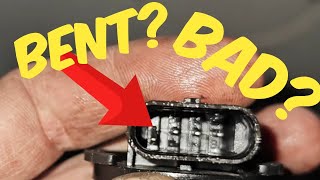
How to confirm: Visually inspect the wiring harness and connector for the Bank 1 camshaft sensor for signs of melting, corrosion, or oil contamination. Check for bent pins in the connector. A multimeter can be used to check for 5V supply, ground, and signal continuity back to the PCM.
Typical fix: Repair the damaged section of wiring or replace the connector pigtail. 🎬 See this walkthrough for fixing sensor circuit wiring issues.
Est. part cost: $20-$50 - Leaking Oil Filter / Cooler Housing ⚪ Low Probability This is a very common failure point on the 3.6L Pentastar. The plastic housing can crack or warp, leading to significant oil loss, often into the engine valley. This causes low oil pressure, which in turn can trigger VVT and camshaft sensor codes as a secondary fault.
How to confirm: Inspect the engine valley (under the intake manifold) for pooled oil. A persistent P06DD code alongside P0365 is a strong indicator.
Typical fix: Replace the entire oil filter housing and cooler assembly. It is highly recommended to use an OEM or a high-quality metal aftermarket replacement from brands like Dorman (p/n 926-959) or Mishimoto to prevent future failures.
Est. part cost: $150-$400
Rare But Worth Checking
- Faulty Powertrain Control Module (PCM) or Outdated Software: A Technical Service Bulletin (TSB #18-103-20) was issued for the 2018 Wrangler 3.6L, which involves reprogramming the PCM to address false or intermittent camshaft sensor codes, including P0365. The update changes the fault logic to be less sensitive to momentary glitches. Always check if this TSB applies before replacing hardware.
- Timing Chain or Cam Phaser Issue: While less common, a stretched timing chain or a failing cam phaser can cause the camshaft's position to be out of sync, triggering this code. This is usually accompanied by rattling noises from the front of the engine. Debris can also clog oil passages to the phaser, preventing it from operating correctly.
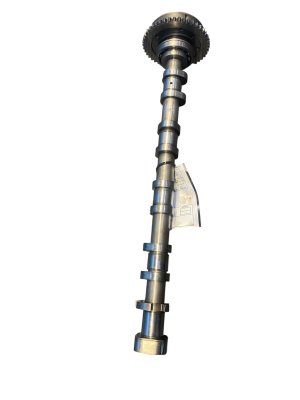
- Incorrect or Defective Aftermarket Camshaft: If the code appears immediately after major engine work like a camshaft replacement, the issue could be a defective aftermarket camshaft with an improperly manufactured reluctor wheel, preventing the sensor from getting a reading. 🎬 Watch: Why aftermarket camshafts can cause recurring P0365 codes.
- Aftermarket Tuner/Programmer Interference: In a forum discussion, a user with a 2021 JLUR traced a recurring P0365 code to their TAZER Mini programmer. The code would only appear when the device was plugged in and would disappear when it was 'unmarried' from the vehicle, suggesting a software communication conflict.
Diagnosis Steps
- Read all fault codes with an OBD-II scanner. Note any other codes present, especially P06DD or other cam sensor codes.
- Check the engine oil level and condition. If low, top it off, clear the codes, and test drive to see if P0365 returns.
- Inspect the wiring and connector for the Bank 1 (passenger side) camshaft position sensor. Look for oil contamination, loose connections, or damaged wires.
- If the wiring looks good, consider swapping the Bank 1 and Bank 2 camshaft sensors. They are interchangeable. Clear the codes and run the engine. If the code moves to the other bank (P0390), the sensor you moved is faulty and needs replacement.
- If the code does not move, the problem is likely in the wiring, oil pressure system, or PCM.
- Check for any applicable Technical Service Bulletins (TSBs), specifically TSB #18-103-20, which recommends a PCM software update for this code. A dealer or qualified shop must perform this.
- If P06DD is also present, investigate the oil pressure system. This may require a mechanical oil pressure test and inspection of the oil filter housing for leaks.
- If all else fails, the issue could be a more complex mechanical problem like timing chain stretch or a faulty cam phaser, which would require professional diagnosis.
Parts You'll Likely Need
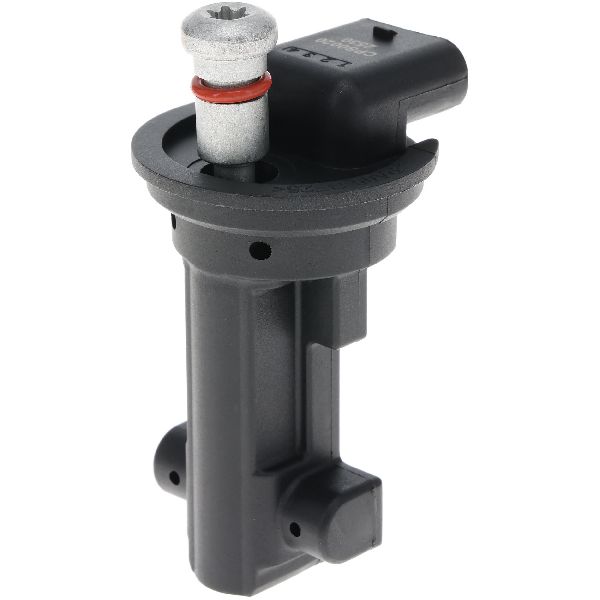
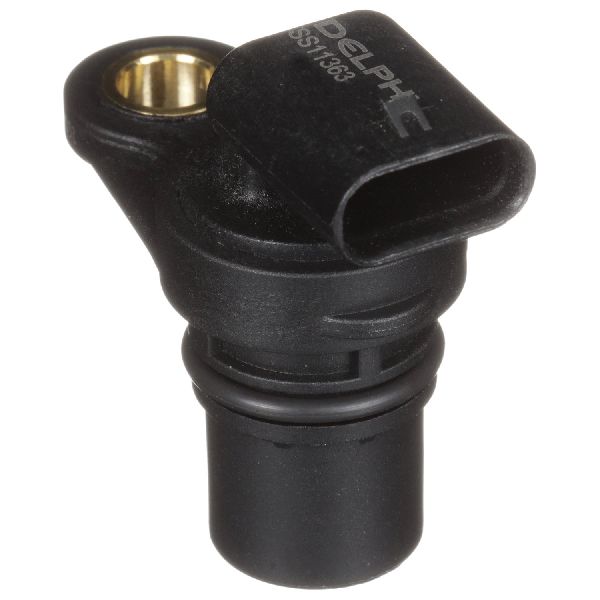
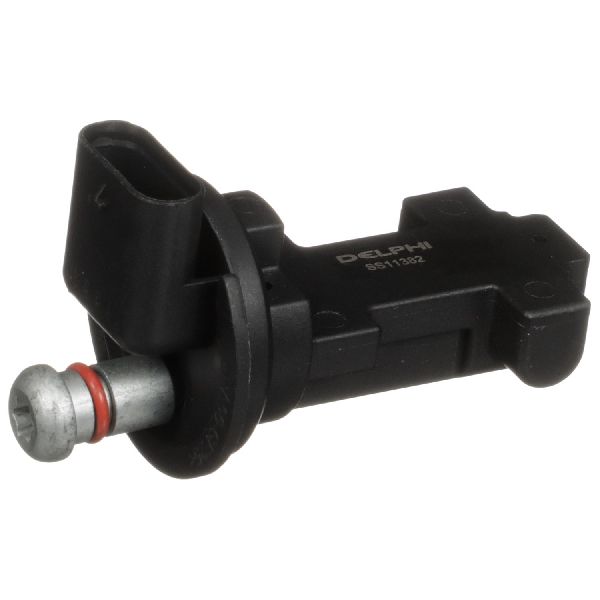
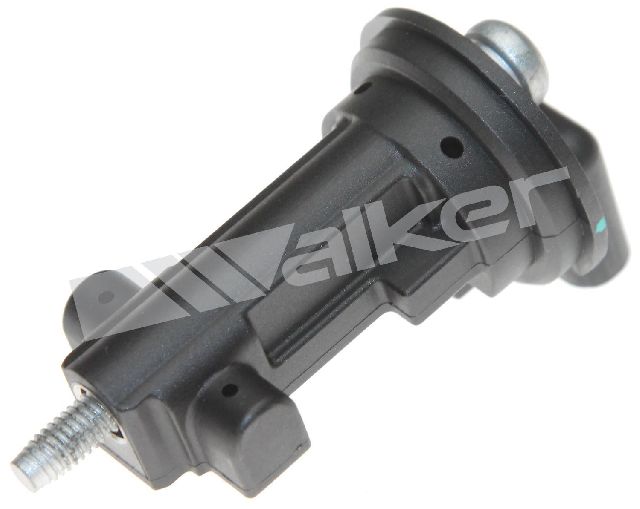
- Camshaft Position Sensor
(OEM #5149141AF)— This is the most common hardware failure for a P0365 circuit code. This part number is used across many Chrysler, Dodge, Jeep, and Ram vehicles with the 3.6L engine.
Trusted brands: Mopar, NTK/NGK, Delphi
OEM price range: $60-$90
Aftermarket price range: $30-$50 - Engine Oil Filter and Cooler Housing Assembly
(OEM #68105583AF)— This part is a known failure point on the 3.6L engine. Its failure causes oil leaks and low pressure, which can trigger P0365 as a secondary fault. Many owners opt for a more durable aluminum aftermarket version.
Trusted brands: Mopar (OEM Plastic)
Related Codes That Often Appear With This One
- P06DD — This code indicates 'Engine Oil Pressure Control Circuit Stuck Off'. Its presence with P0365 strongly suggests the camshaft sensor code is a symptom of a larger oil pressure problem, possibly a failing oil pump or a leaking oil cooler assembly, as noted in NHTSA ODI #11727924.
- P0369 — This code means 'Camshaft Position Sensor 'B' Circuit Intermittent (Bank 1)'. It often appears with P0365 and points to the same sensor, but indicates the signal is dropping out rather than being completely gone, suggesting a wiring issue or a failing sensor.
- P0340, P0345, P0390 — These are codes for the other camshaft position sensors on the engine. Seeing multiple cam sensor codes at once, as listed in TSB #18-103-20, could point to a systemic issue like a wiring harness problem, a widespread oil pressure issue, or the need for a PCM software update.
Technical Service Bulletins (TSBs) & Recalls
- 18-103-20: Flash: Powertrain Control Module (PCM) Updates for multiple camshaft position sensor DTCs.
Platform-Specific Known Issues
- Interference from Aftermarket Programmers: On the newer Wrangler JL platform, there are owner reports of the P0365 code being falsely triggered by aftermarket devices like the TAZER Mini. The code would appear only when the device was active and disappear upon removal, indicating a software conflict rather than a mechanical or sensor fault.
- Connection to Start/Stop System Faults: On 2018 and newer JL models equipped with Engine Start-Stop (ESS), the P0365 code is often accompanied by a 'Service Start/Stop System' message on the dashboard. The systems are interconnected, and a fault in the engine controls will disable the ESS as a precaution.
Mechanic-Grade Diagnostic Values
- Camshaft Position Sensor Supply Voltage — expected: 4.5 - 5.2 Volts DC (Key On, Engine Off). Failure: A reading of 0V indicates an open circuit or PCM fault. A reading of battery voltage indicates a short to power.
- Camshaft Position Sensor Ground Circuit Resistance — expected: Less than 5.0 Ohms to a known good ground.. Failure: High resistance (greater than 5.0 Ohms) indicates a poor or corroded ground connection.
- Camshaft Position Sensor Connector Pin Voltages (4-Pin Sensor) — expected: With the key on, you should find a 5V reference on three of the pins and one ground pin.. Failure: Absence of 5V on a supply pin points to a wiring or PCM issue.
Scan Tool Commands That Help
- wiTECH: PCM Self-Test / Module Communication Test — Use this function to actively request data from the sensor via the PCM. A failure to receive a valid response helps confirm a communication breakdown in the circuit (wiring, connector, or PCM), ruling out a simple sensor failure.
- High-End OBD-II Scanner: Cam Sensor Relearn Procedure — After replacing a camshaft position sensor, some vehicles require the PCM to relearn the new sensor's specific characteristics. This function, if available, initiates the relearn process to prevent codes from returning with a new, good part.
Wiring & Ground Locations
- PCM Connector C2 (Tan) — The Powertrain Control Module (PCM) is located in the engine bay. C2 is the tan-colored 96-cavity connector.. The sensor's 5V supply, ground, and signal wires all terminate at this PCM connector. Checking for continuity and shorts between the sensor connector and these pins is a key diagnostic step for finding wiring faults.
- G102 / G103 — G102 is located near the passenger side headlight assembly. G103 is on the right (passenger) side of the engine block.. These are primary grounding points for the engine wiring harness. A loose or corroded connection at these points can cause intermittent and difficult-to-diagnose sensor circuit faults, including P0365.
- Harness under Oil Cooler — In the engine valley, under the intake manifold, as part of the harness that includes the oil pressure sensor wiring.. This area is a known chafe point due to high heat. The 5V reference wire (often pink/yellow) for the cam and crank sensors can short to ground here, causing multiple sensor codes simultaneously.
Real Owner Repair Stories
- Jeep Wrangler JK Forum user (2018 Jeep Wrangler JKU 3.6L) — Limp mode, multiple sensor codes.
❌ Tried (didn't work) Initial diagnosis was unclear.
✅ What actually fixed it Traced a short-to-ground on the 5V reference wire (pink/yellow) to the wiring harness located under the oil cooler assembly. Bare copper on the oil pressure sensor connector wiring had chafed due to heat, causing the short. Repairing the wire resolved the issue. - YouTube channel 'Pine Hollow Auto Diagnostics' (2015 Jeep Wrangler 3.6L) — Crank-no-start with all four camshaft sensor codes active (P0340, P0345, P0365, P0390).
❌ Tried (didn't work) Initial scope readings showed no signal from the sensors.
✅ What actually fixed it During inspection, a bent pin was discovered inside the driver's side camshaft sensor connector. After straightening the pin and swapping sensors side-to-side, the codes moved, confirming the sensor that had been connected to the damaged pin was faulty. The bent pin likely damaged the original sensor.
"I Checked Everything" — The Actual Cause
- In a documented case on a 3.6L Pentastar, a P0365 code appeared immediately after a camshaft was replaced for a separate issue. Standard electrical checks (voltage, ground, continuity) would have passed, as the wiring and sensor were fine. The actual root cause was that the new aftermarket camshaft was manufactured without the magnetic reluctor ring, meaning there was nothing for the sensor to read.
OEM Part Supersession History
05149141AE→5149141AF— Standard part revision/update. No specific widespread issues are documented with the older part number.
Model Year Variations Within This Range
- 2018: The 2018 model year included both the outgoing Wrangler JK and the new Wrangler JL. While both used a 3.6L Pentastar V6, the version in the JL was redesigned to be ~6% more efficient and was paired with a new 8-speed automatic transmission and Engine Start-Stop (ESS) technology. While the P0365 fault is common to both, diagnostics on a JL must account for the ESS system.
Helpful Videos
Used OEM Parts in Stock


New Aftermarket Parts Available


The information in this article is provided for general reference and educational purposes only. Vehicle specifications, procedures, and part compatibility can vary by production date, trim level, and region. Always consult your vehicle's factory service manual and verify part numbers before purchasing or performing repairs. Safety-critical components such as airbags, seat belts, and braking systems should be installed by a qualified professional.
- Jeep WRANGLER:
- 🎬 Helpful Videos
- 🛍️ Shop This Part
- What's Unique About the 2018-2018 Jeep WRANGLER
- Diagnostic Flowchart
- Symptoms You May Notice
- Most Likely Causes
- Rare But Worth Checking
- Diagnosis Steps
- Parts You'll Likely Need
- Related Codes That Often Appear With This One
- Technical Service Bulletins (TSBs) & Recalls
- Platform-Specific Known Issues
- Mechanic-Grade Diagnostic Values
- Scan Tool Commands That Help
- Wiring & Ground Locations
- Real Owner Repair Stories
- "I Checked Everything" — The Actual Cause
- OEM Part Supersession History
- Model Year Variations Within This Range
- 🎟️ Get 5% Off