

OBD-II Code P0363: Misfire Detected – Fueling Disabled
The Ultimate Guide to What P0363 Means, Why It Triggers, and How to Fix It
- P0363 is a critical protective measure where the engine computer shuts off fuel to a misfiring cylinder to prevent catastrophic damage.
- Stop driving immediately; continuing to drive dumps raw fuel into the exhaust, destroying the catalytic converter and causing a $1,200 to $2,800 repair.
- Faulty ignition coils and worn spark plugs cause over 50% of P0363 codes, making them the first components to test.
- A flashing Check Engine Light accompanies this code, signaling an active, severe misfire that requires you to pull over and shut off the engine safely.
What Does P0363 Mean?

P0363 means the Engine Control Module (ECM) detected a severe engine misfire. To protect the engine and catalytic converter, the computer shut off the fuel supply to the misfiring cylinder. This is an active protective measure indicating a critical fault requiring immediate repair.
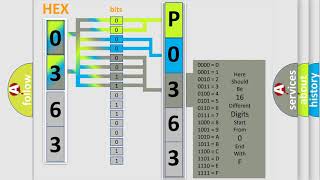
Technical definition: P0363 officially means "Misfire Detected – Fueling Disabled." The Powertrain Control Module (PCM) identifies a severe misfire by detecting significant fluctuations in the crankshaft's rotational speed. To prevent raw fuel from melting the catalyst, the PCM disables the fuel injector for the non-contributing cylinder.
Can I Drive With P0363?

No — Do Not Drive. You must not drive your vehicle. The engine's computer cut fuel to at least one cylinder due to a severe misfire, causing stalling, major power loss, and potential accidents. Continuing to drive destroys the catalytic converter, turning a minor repair into a $1,200 to $2,800 replacement.
Common Causes

- Faulty Ignition System Components (Very Common) — Accounts for 50% of cases. Worn spark plugs, bad ignition coils, or damaged spark plug wires prevent the air-fuel mixture from igniting properly.
- Fuel System Problems (Common) — Accounts for 30% of cases. Clogged fuel injectors, a weak fuel pump, or a bad fuel pressure regulator starve a cylinder of fuel, leading to a lean misfire.
- Engine Vacuum Leaks (Less Common) — Cracked vacuum hoses or leaking intake manifold gaskets allow unmeasured air into the engine. This disrupts the precise air-to-fuel ratio, causing a lean misfire.
- Serious Engine Mechanical Issues (Less Common) — Low cylinder compression from worn piston rings, burnt valves, jumped timing chains, or blown head gaskets prevent proper combustion.
- Corrupted or Out-of-Date ECU Software (Less Common) — Software glitches cause the ECM to misinterpret normal engine fluctuations as severe misfires. Manufacturers frequently issue software updates (TSBs) to fix this.
- Faulty Sensors (Rare) — Failing crankshaft or camshaft position sensors send incorrect data to the ECM, throwing off ignition timing and causing a misfire.
- Clogged Catalytic Converter (Rare) — Excessive exhaust backpressure from a clogged converter prevents cylinders from expelling exhaust gas efficiently, choking the engine and triggering P0363.
- Contaminated Fuel (Rare) — Water or debris in gasoline causes severe, random misfires across multiple cylinders, forcing the ECM to disable fueling.
- Faulty ECM Communication or Wiring (Rare) — Corroded connectors or broken harness wires block sensor data, forcing the ECM to incorrectly detect a misfire and cut fuel.
Symptoms
- Flashing Check Engine Light — Signals a severe, active misfire actively damaging the catalytic converter.
- Violent Engine Shaking or Rough Idle — The engine runs rough and vibrates noticeably at idle or during acceleration because a cylinder is dead.
- Sudden and Significant Loss of Power — The vehicle feels sluggish and struggles to accelerate due to the disabled fuel injector.
- Engine Stalling — The engine stalls unexpectedly at stoplights or when shifting gears, creating a dangerous driving situation.
- Strong Fuel Smell from Exhaust — A strong raw gasoline odor emits from the tailpipe from fuel dumped before the ECM initiated the cut-off.
Diagnostic Flowchart

Tap your situation to follow the diagnostic path that matches what you're seeing on this code.
Common Fixes & Costs
- Replace Ignition Coil(s)
— Parts: $50-$150 per coil, Labor: $70-$150, ~1 hr book time
(DIY)
: OEM - Replace Spark Plugs
— Parts: $20-$100, Labor: $100-$250, ~1.5 hr book time
(DIY)
: OEM - Replace Fuel Injector(s)
— Parts: $100-$300 per injector, Labor: $200-$600, ~3 hr book time
(Intermediate)
: OEM - Repair Vacuum Leak — Parts: $5-$50, Labor: $100-$300, ~1.5 hr book time (DIY)
- Update or Replace ECM — Parts: $0 (for update) - $1,200 (for replacement), Labor: $150-$250, ~1.5 hr book time (Professional)
- Engine Mechanical Repair (e.g., Head Gasket) — Parts: $200-$800, Labor: $1,500-$3,000+, ~12 hr book time (Professional)
Used vs. New Parts: Buying Guide
When a used part is worth it: Never buy used ignition coils or fuel injectors due to high failure rates. A remanufactured injector from a reputable supplier is a cost-effective alternative to new, provided it is flow-tested. Avoid parts labeled 'refurbished,' which are often only cleaned externally.
Donor-vehicle mileage cap: roughly under 50000 miles for the part to have meaningful remaining life.
Donor quality checklist:
- Verify remanufactured parts include flow-testing results and a warranty.
- Avoid used electronic parts from high-mileage vehicles or extreme weather regions.
- Match part numbers exactly to prevent performance issues.
Decision logic:
- If The part is a simple wear item like a spark plug → Always buy new; the cost savings are negligible and the risk is high.
- If The part is an ignition coil or fuel injector and budget is a primary concern → Choose a quality remanufactured part with a warranty over a used part from a junkyard.
- If The vehicle is newer or under warranty → Use new OEM parts to ensure compatibility and maintain warranty coverage.
Warranty tradeoff: Used parts offer a 30-90 day warranty. Aftermarket new parts offer a 1-year to limited lifetime warranty. New OEM parts carry a 12-month manufacturer's warranty.
Worst-case if a used part fails: 400-1500 if a used part fails, covering repeat labor, a new part, and diagnosing new issues caused by the faulty component.
What Happens If You Wait — Timeline
- Immediate (First Drive): Code P0363 sets. The Check Engine Light flashes during the severe misfire event, and the engine shakes violently. Power is cut dramatically as the ECM disables fuel. (MPG impact: 15-30%% · Added cost: $0)
- 0-50 miles of continued driving: The catalytic converter overheats due to raw fuel dumped into it before the fuel cut-off initiated. The internal ceramic substrate reaches temperatures that cause melting. (MPG impact: 20-40%% · Added cost: $1,200 - $2,800 (for new catalytic converter))
- 50-200 miles: Catastrophic catalyst failure. The substrate melts and breaks apart, creating a major exhaust blockage. Exhaust backpressure damages exhaust valves and piston rings. Unburned fuel contaminates engine oil. (MPG impact: 40-60%+% · Added cost: $2,500 - $4,000 (catalytic converter plus O2 sensor replacement and diagnostic labor))
- 200+ miles: Severe internal engine damage. Fuel-washed cylinder walls lead to scored cylinders and damaged piston rings, resulting in a loss of compression. The engine requires a complete rebuild or replacement. (MPG impact: N/A (Vehicle is likely undrivable)% · Added cost: $4,000 - $8,000+ (for major engine repair or replacement))
Cost of Not Fixing It
- Immediate (0-100 miles): Severe drivability issues, including stalling and major power loss, creating a safety hazard. Failed emissions test. (Added cost: 0)
- Short-Term (100-500 miles): Catastrophic failure of the catalytic converter due to overheating from raw fuel, leading to an expensive replacement. (Added cost: 1200-2800)
- Long-Term (500+ miles): Internal engine damage. Unburned fuel washes oil from cylinder walls, leading to scored cylinders, damaged piston rings, and engine failure. (Added cost: 3000-8000+)
Diagnosis Steps

- Read Trouble Codes & Freeze Frame Data
Use an OBD-II scanner to confirm P0363. Look for accompanying cylinder-specific codes (P0301-P0312) to identify the exact misfiring cylinder. Analyze freeze-frame data for RPM and load conditions when the fault occurred.
Tools: OBD-II Scan Tool (Beginner) - Isolate the Misfiring Cylinder (Swap Test)
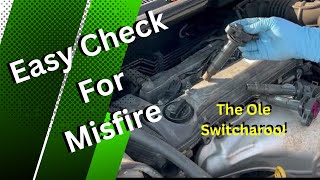
If you have a specific code (e.g., P0302), swap the ignition coil from cylinder 2 to cylinder 1. Clear codes and run the engine. If the code changes to P0301, the coil is bad. If it stays P0302, swap the spark plug. If it still doesn't move, suspect the injector or compression.
Tools: Socket Set, Spark Plug Socket, OBD-II Scan Tool (Intermediate) - Perform a Thorough Visual Inspection
Inspect the engine bay for disconnected vacuum hoses, cracked wires, loose electrical connectors near the coils and injectors, or oil leaks near the spark plugs.
Tools: Flashlight (Beginner) - Test Fuel Pressure
Connect a fuel pressure gauge to the fuel rail. Port-injected engines require 35-55 PSI. Low pressure indicates a weak pump, clogged filter, or faulty regulator. Direct injection (GDI) requires specialized high-pressure tools.
Tools: Fuel Pressure Gauge (Intermediate) - Check Fuel Injector Electrical Health
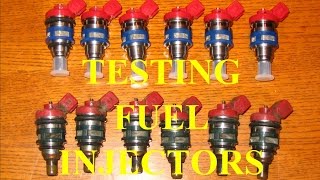
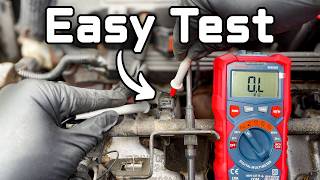
Measure the misfiring cylinder's fuel injector resistance with a multimeter. High-impedance injectors read 10-16 ohms. Compare readings across all injectors; they must be within 0.5 ohms of each other. Use a noid light to confirm the ECM sends a pulse signal.
Tools: Multimeter, Noid Light Set (Intermediate) - Test Ignition Coil Resistance
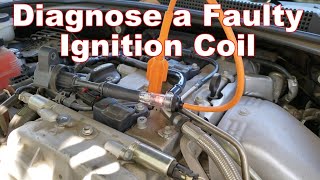
Measure primary (0.4-2 ohms) and secondary (6,000-10,000 ohms) resistance on the ignition coil. Values outside the service manual specs confirm a faulty coil.
Tools: Multimeter, Service Manual (Advanced) - Perform an Engine Vacuum Test
Connect a vacuum gauge to the intake manifold. A healthy engine shows a steady 18-22 in-Hg at idle. Lower readings indicate a vacuum leak or timing issue. Deduct 1 in-Hg for every 1,000 feet of elevation.
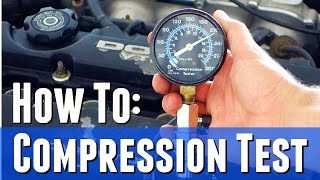
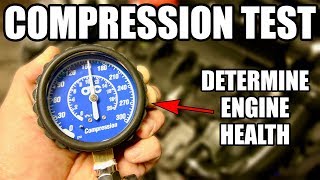
Tools: Vacuum Gauge (Advanced) - Perform an Engine Compression Test
Measure pressure in each cylinder. Readings below 100 PSI or a 15% variance between cylinders indicate serious internal damage requiring a professional engine rebuild.
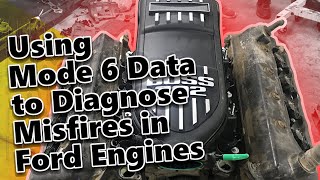
Tools: Compression Tester Kit (Advanced) - Pro Tip: Analyze Mode $06 Data
Access Mode $06 on a pro scanner to view raw misfire counts per cylinder. This pinpoints borderline components before they trigger a hard P030x code. A healthy cylinder shows a count near zero.
Tools: Professional OBD-II Scan Tool (Advanced) - Pro Tip: Use an Oscilloscope on the Crankshaft Sensor
Observe the crankshaft position sensor waveform. Missing teeth or erratic patterns coinciding with engine stumbles confirm a faulty sensor or reluctor wheel.
Tools: Oscilloscope, Back-probe Pins (Advanced)
When This Code Triggers (Freeze-Frame Conditions)
- Engine Coolant Temp: 180-210°F (Fully warmed up)
- RPM: 1500-3000 (Under moderate load or acceleration)
- Engine Load: 30-70% (During acceleration or climbing a grade)
- Vehicle Speed: 25-60 mph (City or highway driving)
Related Codes
- P0300 — P0300 means 'Random/Multiple Cylinder Misfire Detected.' P0363 is the direct escalation of this code, confirming the misfire is so severe the PCM shut off fuel to protect the engine.
- P0301-P0312 — These codes pinpoint the exact misfiring cylinder (e.g., P0301 for Cylinder 1). The P030x code tells you where the problem is, while P0363 tells you the computer disabled fuel to that cylinder.
- P0201-P0212 — These codes indicate an electrical fault in a specific fuel injector's circuit. Seeing a P020x code alongside P0363 strongly suggests the misfire stems from a wiring issue or failed injector, not spark or compression.
- P0171 — Means 'System Too Lean (Bank 1)'. A massive vacuum leak or restricted fuel supply causes this code alongside P0363. The lean condition is the root cause of the misfire.
Climate & Environmental Factors
- Cold & Humid Climates: On GM 1.5L turbocharged engines, moisture accumulates and freezes in the charge air cooler. During a cold start, the engine ingests this ice, causing a severe misfire and triggering P0363 (GM TSB #22-NA-065).
- High Altitude: Atmospheric pressure decreases with altitude, causing engine vacuum to read lower. A normal vacuum reading drops by 1 in-Hg for every 1,000 feet of elevation. A reading of 15 in-Hg is normal in Denver but indicates a fault at sea level.
How to Talk to a Mechanic About This Code
Say this: "I have a P0363 code, and the check engine light is flashing. I need a diagnostic. Please start by identifying the specific misfiring cylinder with the accompanying P030x code and perform swap tests on the ignition components before suggesting part replacements."
This signals you understand P0363 is a severe misfire and requires a logical diagnostic procedure (identify, isolate, test). It prevents the shop from immediately selling you a full set of spark plugs and coils if only one component is bad.
Avoid saying:
- 'Just fix whatever's wrong'
- 'My check engine light is on, can you look at it?' (too vague — invites upsell)
- 'Whatever you recommend'
Questions to ask before authorizing the repair:
- Which specific cylinder misfire code (P0301-P0312) did you find?
- What were the results of the ignition coil and spark plug swap test?
- If you suspect a fuel injector, what was its resistance reading compared to the others?
- If you recommend a major mechanical repair, what were the compression test results for all cylinders?
Where to Take It: Dealer vs Independent vs Chain
- Dealer:
Best for: Vehicles still under powertrain or emissions warranty., Known manufacturer-specific quirks requiring a software update (TSB), like on certain Hyundai or GM models., Complex electrical or module communication faults.
Downsides: Highest labor rates, typically 1.5-2x more than independent shops., Often recommends replacing an entire assembly when only a smaller component failed. (Typical cost: +50% vs. baseline) - Independent Shop:
Best fit for most P0363 repairs on out-of-warranty vehicles, provided you choose a well-regarded shop. They excel at common mechanical, fuel, and ignition-related causes.
Best for: Out-of-warranty vehicles where cost is a concern., Diagnosing and fixing common causes like spark plugs, coils, fuel injectors, and vacuum leaks.
Downsides: Shop quality and diagnostic skill vary greatly. Vet shops by checking for ASE certifications and online reviews., Lacks access to manufacturer-specific software for required updates. (Typical cost: +0% vs. baseline) - Chain Shop:
AVOID for initial diagnosis. The risk of misdiagnosis and being sold unnecessary parts is high. Only use if you are 100% certain of the failed part and just need it installed.
Best for: Simple, pre-diagnosed repairs like replacing a single bad ignition coil you already identified.
Downsides: High pressure on technicians to upsell leads to recommendations for unnecessary work (e.g., replacing all coils and plugs for a single injector fault)., Technician skill is inconsistent; complex diagnosis is not their strength. (Typical cost: -10% vs. baseline)
When to Walk Away From the Repair
If the estimated repair cost exceeds 40-50% of the car's private-party value (from a source like Kelley Blue Book), it is time to seriously consider not fixing it.
- Car worth $3000, fix is $800: Fix it. The repair is significant but well below the 50% threshold.
- Car worth $12000, fix is $2500: Fix it. While expensive, the repair cost is less than 25% of the car's value.
- Car worth $3000, fix is $2500: Walk away. The repair cost is over 80% of the vehicle's value. It is not economical.
What Scan Tool You Need for This Code
Minimum: A reader that displays P030x cylinder-specific codes, freeze-frame data, and accesses Mode $06 to view raw misfire counts per cylinder.
A basic $20 reader only tells you P0363 exists. It won't show which cylinder is the primary offender or show Mode $06 misfire counters, which are essential for identifying intermittent problems before they set a hard code.
Budget: BlueDriver Pro (~$100) — Connects to your smartphone and provides access to P030x codes, freeze-frame data, and Mode $06 misfire data, which is everything a skilled DIYer needs for initial diagnosis.
Mid-range: Foxwell NT510 Elite (~$180) — A handheld unit providing all the data of the budget pick, plus manufacturer-specific codes and limited bidirectional controls (like commanding an EVAP test) helpful for advanced diagnostics.
Professional: Autel MaxiCOM MK808 (~$500) — Offers full bidirectional control, allowing a technician to command individual injectors or coils to fire to test circuit integrity. Provides OEM-level diagnostics for deep, complex problems.
Rent vs buy: For a one-time fix, AutoZone's Loan-A-Tool program allows you to pay a deposit for a scanner, use it, and get a full refund upon return. Buy a scanner only if you plan to do your own diagnostics regularly.
How to Clear the Code After You Fix It
- Fix the underlying cause of the misfire
- Use an OBD-II scan tool to clear the P0363 code
- Perform a complete OBD-II drive cycle to reset readiness monitors
Drive cycle (~30 minutes): Start with a cold engine. Idle for 2-3 minutes with electrical loads on (like A/C). Accelerate to 55 mph and hold a steady speed for 3-5 minutes. Decelerate to 20 mph without using the brakes, then accelerate back to 55-60 mph. Hold steady for 5 minutes. Decelerate to a stop.
Readiness monitors affected: Catalyst Monitor, Misfire Monitor, Oxygen (O2) Sensor Monitor, Evaporative (EVAP) System Monitor
Before emissions retest: drive at least 100 miles to fully set monitors.
Watch out for:
- Clearing the code without fixing the root cause results in the code returning immediately.
- Disconnecting the battery clears the code but resets all readiness monitors, guaranteeing an emissions test failure.
- Failing to drive through varied conditions prevents monitors from setting to 'Ready'.
Will This Fail Emissions / State Inspection?
Yes — this code typically fails an OBD-II emissions inspection.
- California: A P0363 code is an automatic failure. All readiness monitors must be 'Ready' (except EVAP) before passing a test after repair.
- New York: An illuminated Check Engine Light causes an automatic failure. Readiness monitors must be set to 'Ready' for the test to proceed.
- Texas: An active P0363 code automatically fails the inspection. After repair, driving 50-100 miles is required to reset monitors.
Most Commonly Affected Vehicles
- Chevrolet/GMC Equinox, Terrain (1.5L Turbo) (2018-2024) — Prone to severe misfires caused by moisture or ice accumulating in the charge air cooler in humid or cold climates. GM TSB #22-NA-065 advises installing a grille cover to fix this.
- Hyundai Elantra (2.0L) (2017-2019) — Incorrectly sets misfire codes due to overly sensitive ECM logic. Hyundai TSB #20-FL-001H requires an ECM software update to improve misfire detection logic, resolving the issue without parts replacement.
- Volkswagen Jetta, Golf, Tiguan (TSI Engines) (2015-2021) — Direct-injection (TSI) engines suffer heavy carbon buildup on intake valves, disrupting airflow and causing cold-start misfires. Requires manual valve cleaning (walnut blasting) to resolve.
- BMW 3-Series, 5-Series (N54/N55 engines) (2007-2015) — Prone to ignition coil and high-pressure fuel pump (HPFP) failures. A failing HPFP causes long crank times and misfires under load. BMW issued extended warranties for the HPFP on many N54 vehicles.
- Mini Cooper S (R55, R56, R57) (2007-2016) — High-pressure fuel pump (HPFP) and ignition coil issues cause misfires and fuel cut codes. A failing HPFP presents with hard cold starting and power loss.
- Ford F-150 (2004-2018) — Ignition coil-on-plug failures frequently cause P0363. On Triton engines (5.4L 3V), spark plugs break in the cylinder head during removal if not handled carefully.
- Toyota Camry (2007-2017) — P0363 points to failing ignition coils on the 2.5L 2AR-FE engine. Carbon buildup on intake valves in direct-injection versions also triggers this code.
- Honda Accord (2003-2017) — Ignition coils, spark plugs, and clogged fuel injectors frequently cause this code. V6 models (J-series) suffer from oil leaking into spark plug tubes from valve cover gaskets, fouling plugs and coils.
Manufacturer-Specific Notes
- BMW/Mini: The High-Pressure Fuel Pump (HPFP) is a common failure point on direct-injection engines. BMW extended the HPFP warranty to 10 years/120,000 miles for many models (TSB SIB 13 03 09). Carbon buildup on intake valves also causes cold-start misfires.
- Subaru: Oil leaks from valve cover gaskets into spark plug tubes ruin ignition coil boots and coils, leading to misfires that escalate to P0363.
- General Motors (GM): Active Fuel Management (AFM) or Dynamic Fuel Management (DFM) lifters fail on V6 and V8 engines, causing severe misfires. On 1.5L Turbo engines, TSB #22-NA-065 addresses misfires caused by moisture in the charge air cooler.
- Hyundai/Kia: ECM logic for detecting misfires is too sensitive on some 2.0L engines. TSB #20-FL-001H updates the ECM software to correct this, solving phantom P030x and P0363 codes without replacing parts.
Real Owner Stories
2018 Chevy Equinox 1.5L with P0363 at 65,000 miles
Vehicle suddenly started shaking violently with a flashing check engine light during a cold, damp morning commute.
What they tried:
- Owner initially suspected bad gas.
- A local mechanic replaced spark plugs and the coil on the misfiring cylinder (P0302), but the code returned immediately.
Outcome: After finding GM TSB #22-NA-065, the mechanic inspected the charge air cooler and found significant water/ice buildup. After draining the system and installing the TSB-recommended grille cover, the P0363 code was resolved.
Lesson: On specific models known for environmental sensitivity, always check for relevant Technical Service Bulletins (TSBs) before replacing parts, as the fix is often procedural.
2017 Hyundai Elantra 2.0L with 80,000 miles
Check engine light came on with P0363 and P0303. The engine had a slight rough idle but was otherwise drivable with no flashing light.
What they tried:
- DIYer swapped the ignition coil and spark plug from cylinder 3 to cylinder 1.
- The misfire code did not move, remaining as P0303.
- They were about to order a new fuel injector.
Outcome: The owner discovered Hyundai TSB #20-FL-001H regarding overly sensitive misfire detection logic. A dealer performed the ECM software update for $150. The P0363 and P0303 codes cleared and did not return.
Lesson: A software bug is indistinguishable from a hardware failure. Before buying parts, search for "[Your Make Model Year] TSB misfire" to save hundreds of dollars.
2012 BMW 335i (N55 engine) with 110,000 miles
Car experienced long crank times on cold starts, followed by a severe loss of power and P0363 while accelerating onto the highway.
What they tried:
- The owner assumed it was a common ignition coil failure and replaced all six coils and plugs.
- The problem persisted, with misfires returning under heavy engine load.
Outcome: A BMW specialty shop diagnosed a failing High-Pressure Fuel Pump (HPFP). The pump was unable to supply required pressure under load, causing lean misfires. Replacement of the HPFP and fuel pressure sensor resolved the issue for $1,200.
Lesson: On direct-injection engines, misfires under load are often a symptom of a failing high-pressure fuel pump, not just ignition components.
2015 VW Jetta 1.8TSI with P0363 at 95,000 miles
Persistent P0363 and P0301, P0304 codes on cold starts. The engine stumbled for the first minute of operation and then smoothed out.
What they tried:
- Replaced all spark plugs and ignition coils, with no change.
- Replaced fuel injectors for cylinders 1 and 4, which did not solve the problem.
Outcome: A diagnostic shop used a borescope to inspect the intake valves and found severe carbon buildup. They performed a walnut shell blasting service to clean the valves. The cleaning restored proper airflow, permanently fixing the misfire codes for $750.
Lesson: On Gasoline Direct Injection (GDI) engines, cold-start misfires that disappear when the engine warms up are a classic symptom of carbon buildup requiring mechanical cleaning.
How to Prevent This Code From Triggering
- Use Top Tier certified gasoline at every fill-up. (Every fill-up) — Top Tier gas contains a higher concentration of detergents that prevent and clean deposits from fuel injectors and intake valves, preventing fuel-related misfires.
- Replace spark plugs at the manufacturer's recommended interval. (Every 60,000 to 100,000 miles, depending on the plug type.) — Worn spark plugs have a wider gap, requiring more voltage to fire. This strains the ignition coil and leads to incomplete combustion and misfires.
- For GDI engines, perform an intake valve cleaning service. (Every 60,000-80,000 miles.) — Gasoline Direct Injection (GDI) engines suffer carbon buildup on intake valves because fuel bypasses the valves. This restricts airflow, causing cold-start misfires. Walnut blasting is the only effective removal method.
- Use a quality Polyetheramine (PEA) based fuel system cleaner. (Every 5,000-10,000 miles.) — Products with PEA dissolve carbon deposits in fuel injectors that lower-quality additives cannot, restoring the injector's spray pattern and preventing lean misfires.
- Change engine oil using the correct specification and interval. (Every 5,000-7,500 miles, or as specified by the manufacturer.) — Clean oil is crucial for variable valve timing (VVT) systems and lifters. Sludge or incorrect oil viscosity causes these systems to malfunction, leading to timing-related misfires.
Frequently Asked Questions
I replaced the spark plugs and coils, but P0363 came back. What now?
If new ignition parts don't fix it, the root cause is elsewhere. Check the fuel system for clogged injectors or low fuel pressure, and inspect for vacuum leaks. If those pass, perform a compression test to rule out internal engine damage.
Can a clogged catalytic converter cause a P0363 code?
Yes, but it is usually a chicken-and-egg scenario. A misfire dumps unburned fuel that destroys the converter, but a pre-existing clogged converter creates exhaust backpressure. This backpressure chokes the engine, causing misfires that trigger P0363.
What's the difference between a P0301 and a P0363?
P0301 indicates cylinder 1 is misfiring. P0363 is a critical escalation indicating the misfire is so severe the computer shut off fuel to that cylinder to prevent catastrophic damage.
Can a bad tank of gas cause a P0363 code?
Yes. Water or contaminants in the fuel cause severe, random misfires across multiple cylinders. This forces the ECM to disable fueling as a protective measure.
Will P0363 clear itself?
No, P0363 will not clear on its own. It indicates a critical hardware or software fault requiring physical repair. The code only clears after fixing the root cause and resetting the ECM.
Why is the Check Engine Light flashing?
A flashing Check Engine Light indicates a severe, active misfire. Raw fuel is dumping into the hot exhaust, which destroys the catalytic converter in minutes. Pull over and shut off the engine immediately.
How much does it cost to fix code P0363?
Costs depend entirely on the root cause. Simple fixes like spark plugs and coils cost $150-$450, while a failed fuel injector runs $300-$900. Catastrophic failures like a blown head gasket exceed $2,000.
Can a bad O2 sensor cause P0363?
It is highly unlikely. A bad oxygen sensor causes rich or lean conditions and sets specific codes like P0171. It does not directly cause the severe, single-cylinder misfire required to trigger a P0363 fuel cut-off.
Key Takeaways
- P0363 is a critical protective measure where the engine computer shuts off fuel to a misfiring cylinder to prevent catastrophic damage.
- Stop driving immediately; continuing to drive dumps raw fuel into the exhaust, destroying the catalytic converter and causing a $1,200 to $2,800 repair.
- Faulty ignition coils and worn spark plugs cause over 50% of P0363 codes, making them the first components to test.
- A flashing Check Engine Light accompanies this code, signaling an active, severe misfire that requires you to pull over and shut off the engine safely.
Helpful Videos
![What is P0363 Engine Code [Quick Guide]](https://img.youtube.com/vi/cHkg7iVTRR4/mqdefault.jpg)

The information in this article is provided for general reference and educational purposes only. Vehicle specifications, procedures, and part compatibility can vary by production date, trim level, and region. Always consult your vehicle's factory service manual and verify part numbers before purchasing or performing repairs. Safety-critical components such as airbags, seat belts, and braking systems should be installed by a qualified professional.
- 🎬 Helpful Videos
- What Does P0363 Mean?
- Can I Drive With P0363?
- Common Causes
- Symptoms
- Diagnostic Flowchart
- Common Fixes & Costs
- Used vs. New Parts: Buying Guide
- What Happens If You Wait — Timeline
- Cost of Not Fixing It
- Diagnosis Steps
- When This Code Triggers (Freeze-Frame Conditions)
- Related Codes
- Climate & Environmental Factors
- How to Talk to a Mechanic About This Code
- Where to Take It: Dealer vs Independent vs Chain
- When to Walk Away From the Repair
- What Scan Tool You Need for This Code
- How to Clear the Code After You Fix It
- Will This Fail Emissions / State Inspection?
- Most Commonly Affected Vehicles
- Manufacturer-Specific Notes
- Real Owner Stories
- 2018 Chevy Equinox 1.5L with P0363 at 65,000 miles
- 2017 Hyundai Elantra 2.0L with 80,000 miles
- 2012 BMW 335i (N55 engine) with 110,000 miles
- 2015 VW Jetta 1.8TSI with P0363 at 95,000 miles
- How to Prevent This Code From Triggering
- Frequently Asked Questions
- I replaced the spark plugs and coils, but P0363 came back. What now?
- Can a clogged catalytic converter cause a P0363 code?
- What's the difference between a P0301 and a P0363?
- Can a bad tank of gas cause a P0363 code?
- Will P0363 clear itself?
- Why is the Check Engine Light flashing?
- How much does it cost to fix code P0363?
- Can a bad O2 sensor cause P0363?
- Key Takeaways
- 🎟️ Get 5% Off