

P0354 on 2004-2010 Toyota Sienna: Ignition Coil 'D' Circuit Fixes
P0354 on a 2004-2010 Toyota Sienna almost always means a failed ignition coil on cylinder 4. Since cylinder 4 is on the easily accessible front bank of the engine, this is a simple DIY fix. A new OEM-quality (Denso) coil costs between $40 and $90. Swapping the coil with a neighbor is the definitive test.
- P0354 points to an electrical fault in the ignition coil circuit for cylinder 4, not just a misfire.
- The most likely cause is a failed ignition coil, which is a straightforward and inexpensive DIY replacement on this vehicle.
- Use the 'coil swap' method to confirm the coil is bad before buying a new part. If the code moves to the cylinder you swapped with, the coil is faulty.
- Cylinder 4 is the middle cylinder on the front bank of the engine, closest to the radiator, making it easily accessible.
- While replacing the coil, it's a good idea to inspect and likely replace the spark plug for that cylinder as well.
- Stick to Denso (OEM) or genuine Toyota ignition coils for reliability; cheap aftermarket coils are known to fail quickly.
What's Unique About the 2004-2010 Toyota Sienna

The 2004-2010 Sienna uses a reliable coil-on-plug ignition system, but like any vehicle, the coils can fail with age and heat cycles. The key difference within this year range is the engine: 2004-2006 models use the 3.3L 3MZ-FE V6, while 2007-2010 models have the 3.5L 2GR-FE V6. Fortunately, on both V6 engines, cylinder 4 is located on the front bank (closest to the radiator), making it one of the easiest to access and replace without removing the intake manifold. For the 2GR-FE, Toyota later released revised ignition coils to improve longevity.
Generation note: This range covers the second generation (XL20) Toyota Sienna, but it includes two different V6 engines. The 2004-2006 models have the 3.3L 3MZ-FE engine, and the 2007-2010 models have the 3.5L 2GR-FE engine. While the diagnostic process is identical, the ignition coils and spark plugs are different parts. On both engines, cylinder 4 is the middle cylinder on the front bank (Bank 2), which is easily accessible.
Symptoms You May Notice
- Check Engine Light is on (may be flashing if the misfire is severe)
- Rough, uneven engine idle
- Engine hesitation or stumbling during acceleration
- Noticeable loss of power
- Engine may stall, especially at low speeds
- Decreased fuel economy
- Sputtering or popping sounds from the engine
- Smell of unburnt gasoline from the exhaust
- Replacing the spark plug without testing the ignition coil. While it's good practice to replace the plug, the coil is the more probable failure point for a P0354 code.
- Assuming an expensive ECM failure before properly diagnosing the coil and wiring.
- Replacing the wrong coil due to incorrect cylinder numbering. Cylinder 4 is the middle cylinder on the front bank.
Most Likely Causes

- Failed Ignition Coil 🔴 High Probability Ignition coils are wear items that operate in a high-heat environment. Over time, the internal windings can break down, leading to failure. This is the most common cause for a P035x code on these engines, and a well-documented issue across many Toyota and Lexus models with the 2GR-FE engine.
How to confirm: Perform the 'swap test'. Swap the ignition coil from cylinder 4 with the coil from another front cylinder (like cylinder 2 or 6). Clear the codes and run the engine. If the code changes to P0352 or P0356, the coil is bad.
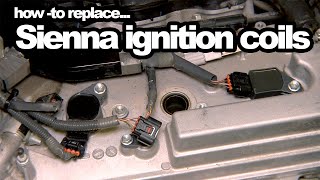
Typical fix: Replace the faulty ignition coil. It is held in by a single 10mm bolt. 🎬 See this walkthrough on replacing ignition coils. Owners and mechanics strongly recommend using the OEM supplier, Denso, for replacement coils to avoid premature failure.
Est. part cost: $40-$90 - Worn or Fouled Spark Plug 🟡 Medium Probability A spark plug with an excessive gap or heavy carbon/oil deposits can increase the electrical resistance, straining the ignition coil and causing it to fail or trigger a circuit fault. It's often recommended to replace the spark plug when replacing a coil.
How to confirm: After removing the ignition coil, remove the spark plug (requires a 5/8" spark plug socket). Inspect it for wear (rounded electrode), cracks in the ceramic, oil fouling, or heavy deposits.
Typical fix: Replace the spark plug. It is good practice to replace all plugs on the bank, or all six, if they are near the end of their service life (typically 100,000-120,000 miles for iridium plugs).
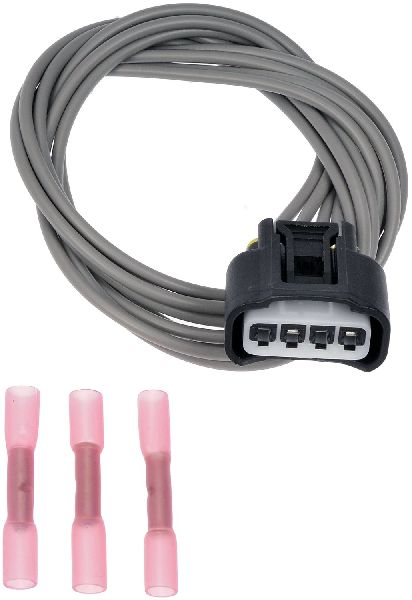
Est. part cost: $8-$20 per plug - Damaged Wiring or Connector ⚪ Low Probability The plastic connector tabs can become brittle with age and break, leading to a poor connection. More specifically, Toyota vehicles from this era used soy-based wire insulation, which has been known to attract rodents that chew through the wires, causing an open or short in the circuit.
How to confirm: If the 'swap test' does not move the code, the coil is likely good. Visually inspect the wiring harness and connector for cylinder 4's coil. Look for cracks, corrosion on the pins, loose wires, or signs of chewing. Use a multimeter to check for 12V power, ground, and the IGT signal from the ECM at the connector.
Typical fix: Repair the damaged section of wire or replace the connector pigtail. Honda makes a rodent-deterrent electrical tape (Part # 4019-2317) that is often used to wrap repaired wires.
Est. part cost: $10-$30 for a new connector
Rare But Worth Checking
- Faulty Engine Control Module (ECM): This is very rare. The internal driver circuit for a single coil can fail. This should only be considered after all other possibilities (coil, plug, wiring) have been definitively ruled out by thorough testing. A professional diagnosis is required to confirm a bad ECM.
Diagnosis Steps

- Read the code with an OBD-II scanner to confirm P0354 and check for any other codes like P0304. 🎬 Watch: How to use a code reader for self-diagnosis.
- Identify the engine (3.3L 3MZ-FE for 2004-2006, 3.5L 2GR-FE for 2007-2010).
- Locate cylinder 4. On both V6 engines, the front bank (near the radiator) has cylinders 2, 4, and 6, from passenger side to driver side. Cylinder 4 is the middle one.
- Remove the plastic engine cover (it pulls straight up).
- Perform the 'Coil Swap Test': Disconnect the electrical connector from coil #4 and coil #2 (front, passenger side). Unbolt both coils with a 10mm socket. Swap their positions. Re-bolt and reconnect them. Labeling the original coil #4 with a marker is helpful.
- Clear the trouble codes with the scanner.
- Start the engine and let it idle for a minute, or until the Check Engine Light returns. Some owners report the light returns almost instantly.
- Re-scan for codes. If the code is now P0352 ('Ignition Coil B'), the coil you moved from the #4 position is faulty and needs replacement. This confirms the diagnosis.
- If the code P0354 returns, the problem is not the coil. The issue lies in the wiring or, rarely, the ECM. Proceed to inspect the connector and harness for cylinder 4 for any visible damage, corrosion, or evidence of rodent activity.
- If the wiring appears intact, consider replacing the spark plug in cylinder 4 as a next, inexpensive step.
- If the problem persists, a professional diagnosis of the wiring harness continuity and ECM driver signal is recommended.
Parts You'll Likely Need

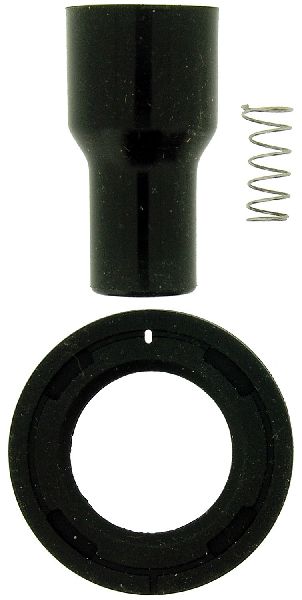
- Ignition Coil (Coil-on-Plug)
(OEM #3.3L 3MZ-FE: 90919-02244 (Supersedes 90919-02243). 3.5L 2GR-FE: 90919-A2007 (Supersedes 90919-A2002, 90919-A2004).)— This is the most common failure part for a P0354 code.
Trusted brands: Denso (OEM Supplier), NGK, Toyota (Genuine)
OEM price range: $90-$120
Aftermarket price range: $40-$90 - Spark Plug
(OEM #3.3L 3MZ-FE: Denso SK20R11 or NGK IFR6A11 (Iridium). 3.5L 2GR-FE: Denso FK20HR11 (Iridium). Always confirm with owner's manual.)— Often replaced as a preventative measure along with the coil, as a bad plug can cause a coil to fail.
Trusted brands: Denso (Iridium), NGK (Iridium)
OEM price range: $15-$25
Aftermarket price range: $8-$20
Related Codes That Often Appear With This One
- P0304 — P0304 means 'Cylinder 4 Misfire Detected'. A failing ignition coil circuit (P0354) will prevent the spark plug from firing, directly causing a misfire in that cylinder. The P0354 code is more specific as it identifies the circuit fault, whereas P0304 just notes the resulting misfire. 🎬 Watch: How to fix a Cylinder-4 misfire code.
- P0300 — P0300 means 'Random/Multiple Misfire Detected'. If the coil is failing intermittently or if there are widespread wiring or power supply issues, it can sometimes be accompanied by a general misfire code before a specific cylinder is isolated.
Platform-Specific Known Issues
- For the 2GR-FE engine (2007-2010), Toyota issued a revised ignition coil (part number 90919-A2004 and later superseded) to address higher than normal failure rates. It is recommended to use the updated part.
- Owners across multiple forums strongly advise against using cheap, unbranded aftermarket ignition coils, as they report very high rates of premature failure, sometimes within weeks or months. Sticking with Denso (the OEM) is the consensus recommendation.
- The use of soy-based wiring insulation in this generation of Toyota vehicles makes them a target for rodents, which can chew through the ignition coil harness and cause this code. This is more common for vehicles parked outdoors.
Documented NHTSA Reports
- NHTSA ODI #10969044: A report for a similar Toyota engine platform notes that ignition coils can fail repeatedly; the owner reported that after P0354 was thrown and the cylinder 4 coil was replaced, another coil (P0356) failed later at approximately 58,000 miles.
- NHTSA ODI #11052055: In a report involving a different Toyota model with the same code, a dealer diagnosed P0354 and determined the vehicle required a new engine wire harness at a significant cost, highlighting that the fault may lie in the wiring rather than the coil itself.
Mechanic-Grade Diagnostic Values
- Ignition Coil Primary Resistance (2GR-FE Engine) — expected: 0.5 Ω ± 0.1 Ω. Failure: A reading significantly outside this range, or an open circuit (infinite resistance), indicates a failed coil.
- Ignition Coil Secondary Resistance (2GR-FE Engine) — expected: ~12 kΩ. Failure: A reading significantly different from 12,000 ohms suggests an internal failure of the secondary windings.
- Voltage at Coil Connector Pin 1 (+B) — expected: Battery Voltage (approx. 12.6V with key on, engine off). Failure: No voltage indicates a problem with the power supply circuit, fuse, or relay.
- Voltage at Coil Connector Pin 4 (Ground) — expected: Near 0V (continuity to ground). Failure: Voltage above 0V or high resistance to ground indicates a bad ground connection, which is critical for coil operation.
- IGF Signal Voltage at Connector (Key on, engine off, connector disconnected) — expected: ~5V. Failure: Lack of 5V suggests an issue with the ECM's pull-up resistor circuit for the IGF line.
- IGT and IGF Waveform (Engine Idling) — expected: A square wave pulse for the IGT signal from the ECM, followed by a corresponding pulse on the IGF line from the coil. Typical oscilloscope settings are 2V/div and 20ms/div.. Failure: A clean IGT signal with a missing or malformed IGF signal confirms the coil or its internal igniter has failed to fire and report back.
Scan Tool Commands That Help
- Toyota Techstream: Active Test: Control the Spark — This bidirectional command allows a technician to individually fire each ignition coil with the engine off. It's used to confirm if the coil itself and the wiring (IGT signal path) are capable of producing a spark, isolating the problem from fuel or compression issues.
Wiring & Ground Locations

- Ignition Coil Connector Pinout (Both Engines) — The 4-pin connector on top of each ignition coil.. Knowing the pinout is essential for testing. Pin 1: +B (12V Power from IG2 relay). Pin 2: IGF (Ignition Confirmation signal to ECM). Pin 3: IGT (Ignition Trigger signal from ECM). Pin 4: GND (Ground). Testing for power, ground, and signal at this connector is a primary diagnostic step after a coil swap fails to identify the issue.
- Ignition Power Source — Power is supplied via the 'IG2' and 'EFI MAIN' relays in the under-hood fuse box.. While a failure here would likely affect all coils and produce multiple codes, a corroded or faulty relay could theoretically cause intermittent power issues. The ignition coils for the 2GR-FE are also tied into the EFI No. 1 and EFI No. 2 fuses.
- ECM Terminals (2GR-FE) — At the Engine Control Module.. For cylinder 4, the ECM sends the trigger signal via pin IGT4 and receives confirmation on the shared IGF1 pin. A wiring diagram is needed to trace these specific wires if a break is suspected between the coil and the ECM.
Real Owner Repair Stories
- Reddit user 717x (2019 Ford Mustang GT (Note: Different vehicle, but identical code and component behavior)) — P0354 code, rough running.
❌ Tried (didn't work) Replaced the ignition coil on cylinder 4., Replaced all spark plugs.
✅ What actually fixed it The problem returned after replacing the coil and plugs, leading the owner and commenters to conclude the fault was in the wiring harness leading to the coil or the connector itself, which is the next logical step when the code does not follow the coil in a swap test. - DodgeForum.com user (2003 Ram 2500 5.7L) — Intermittent P0354, engine vibration when light comes on.
❌ Tried (didn't work) Replacing the single ignition coil pack (multiple times, with both dealer and aftermarket parts)., Replacing all 8 coil packs and plug wires.
✅ What actually fixed it The initial fix two years prior was replacing a badly worn spark plug with a huge gap. The code's return despite new coils indicated the problem was not the coil itself, but likely a wiring issue on the primary (computer-to-coil) side or another worn-out spark plug. This highlights that a P035x code is a *circuit* code, and the coil is only one part of that circuit.
Diagnostic Flowchart
Used vs. New Parts: Buying Guide for This Vehicle
When a used part is the smart pick: For ignition coils, a used OEM (Denso) part from a reputable auto recycler can be a cost-effective diagnostic tool or replacement. If a used coil from a donor car resolves the issue, it confirms the diagnosis cheaply. Many owners successfully use salvaged OEM coils.
Donor-vehicle mileage cap: roughly under 120000 miles for the part to have meaningful remaining life.
What to inspect on the donor part:
- Inspect the plastic housing for any cracks, melting, or signs of extreme heat stress.
- Check the electrical connector pins for corrosion, discoloration, or damage.
- Ensure the rubber boot that seals against the spark plug tube is pliable and not cracked or hardened.
- Ask for the donor vehicle's mileage if possible; lower is always better.
OEM-only on this vehicle (don't cheap out):
- Ignition Coil
Aftermarket brands forum-validated for this vehicle:
- Denso (OEM supplier)
- NGK
Brands owners have reported issues with on this vehicle:
- Unbranded, low-cost coils sold on platforms like Amazon or eBay. Forum consensus is overwhelmingly negative, with widespread reports of premature failure, sometimes within days or weeks.
Real Owner Stories
Aggregated from forums and TSBs cited above. Mileages and costs reflect what owners reported in those sources.
Toyota Sienna (2004-2010)
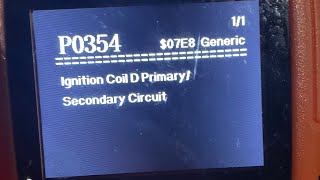
Symptoms: The owner got a check engine light and used an OBD-II scanner, which returned code P0354 for 'ignition coil D' on cylinder 4.
What fixed it: Replacing the ignition coil and spark plug for cylinder 4 resolved the code.
Source hint: YouTube video 'TheEtixzShow - 'P0354 IGNITION COIL D PRIMARY / SECONDARY CIRCUIT (FIXED) TOYOTA SIENNA''
2007 Lexus RX 350 (3.5L 2GR-FE)
Symptoms: The owner reported a P0354 trouble code.
What fixed it: Forum members recommended performing a coil swap test to confirm the failure and replacing the faulty ignition coil with an OEM Denso part.
Source hint: ClubLexus - 'P0354 - How To Replace Ignition Coil. '07 Rx350'
Related OBD-II Codes
Frequently Asked Questions
Where is cylinder #4 located on my 2004-2010 Sienna's V6 engine?
What is the best brand of ignition coil to use for my Sienna?
How can I be sure the ignition coil is bad before buying a new one?
I park my Sienna outside. Could rodents have caused the P0354 code?
Should I replace the spark plug at the same time as the ignition coil?
Is this ignition coil problem common on other Toyota or Lexus models?
Helpful Videos
Used OEM Parts in Stock


New Aftermarket Parts Available


The information in this article is provided for general reference and educational purposes only. Vehicle specifications, procedures, and part compatibility can vary by production date, trim level, and region. Always consult your vehicle's factory service manual and verify part numbers before purchasing or performing repairs. Safety-critical components such as airbags, seat belts, and braking systems should be installed by a qualified professional.
- Toyota Sienna:
- 🎬 Helpful Videos
- 🛍️ Shop This Part
- What's Unique About the 2004-2010 Toyota Sienna
- Symptoms You May Notice
- Most Likely Causes
- Rare But Worth Checking
- Diagnosis Steps
- Parts You'll Likely Need
- Related Codes That Often Appear With This One
- Platform-Specific Known Issues
- Documented NHTSA Reports
- Mechanic-Grade Diagnostic Values
- Scan Tool Commands That Help
- Wiring & Ground Locations
- Real Owner Repair Stories
- Diagnostic Flowchart
- Used vs. New Parts: Buying Guide for This Vehicle
- Real Owner Stories
- Toyota Sienna (2004-2010)
- 2007 Lexus RX 350 (3.5L 2GR-FE)
- Related OBD-II Codes
- Frequently Asked Questions
- 🎟️ Get 5% Off