

P0353 on 2008-2009 Cadillac STS: Ignition Coil 'C' Circuit Causes and Fixes
This code means the ignition coil for cylinder #3 has an electrical fault. On the 3.6L V6, this is often more than a bad coil; a GM Technical Service Bulletin points to a potential ECM issue that can destroy coils. The most common fix is replacing the ignition coil and spark plug for cylinder #3, but be prepared for a more complex repair involving all six coils and the ECM if heat damage is present.
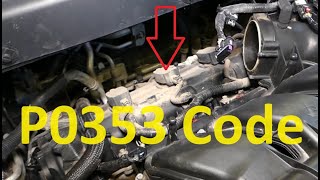
- P0353 points to an ignition coil circuit fault for cylinder #3, the middle cylinder on the passenger side.
- Before replacing parts, perform a 'swap test' by moving the coil to another cylinder to confirm it's the faulty component.
- **Critically**, inspect the old coil for signs of melting or heat damage. If found, you may have the specific ECM issue described in TSB PIP5038B, which requires a more extensive repair.
- Always inspect the spark plug when replacing an ignition coil; a worn plug can cause the new coil to fail prematurely.
- Driving for an extended period with this code can lead to costly damage to your catalytic converter.
What's Unique About the 2008-2009 Cadillac STS
While P0353 on many vehicles points to a simple coil failure, on the 3.6L V6 (RPO code LLT) in the STS, it can be a symptom of a more serious issue. A GM Technical Service Bulletin (PIP5038B) describes a condition where the Engine Control Module (ECM) can malfunction, holding an ignition coil's circuit 'on' for too long. This excessive 'dwell time' overheats and destroys the ignition coil, sometimes causing it to physically melt. Therefore, a failed coil on this engine isn't always the root cause, but rather the result of a potential ECM fault, making proper diagnosis critical to avoid repeat failures.
Diagnostic Flowchart
Tap your situation to follow the diagnostic path that matches what you're seeing on this vehicle.
Symptoms You May Notice
- Check Engine Light is on or flashing
- Engine misfire, which may feel like a shudder or vibration
- Rough idle
- Hesitation or stumbling during acceleration
- Noticeable loss of engine power
- Reduced fuel economy
- Replacing only the ignition coil without checking the spark plug. A bad spark plug can quickly damage a new coil.
- Replacing a single melted ignition coil without replacing the ECM and other coils. Per TSB PIP5038B, a melted coil is a strong indicator of ECM failure, and the new coil will likely fail again quickly.
- Replacing the ECM without first confirming a heat-damaged coil and ruling out wiring issues. ECM replacement is the last step and should only be done according to the TSB's diagnostic flow.
Most Likely Causes
- Failed Ignition Coil on Cylinder #3 🔴 High Probability As noted in TSB PIP5038B, coils on this engine can fail due to heat stress, potentially caused by an ECM fault that causes excessive dwell time. The coil itself can also fail from age or internal shorting.
How to confirm: Swap the ignition coil from cylinder #3 with another cylinder (e.g., cylinder #1). Clear the codes and drive. If the code changes to P0351, the coil is bad. Also, visually inspect the coil for signs of melting, cracking, or discoloration, which indicate heat damage as described in the TSB.
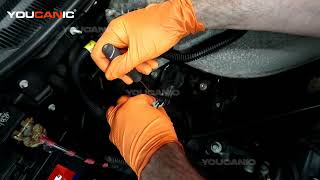
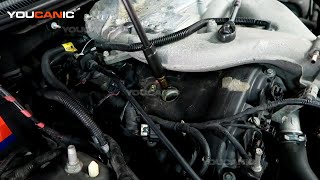
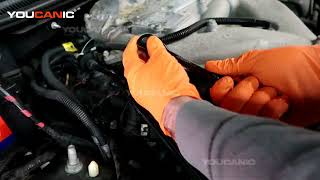
Typical fix: Replace the ignition coil for cylinder #3. Apply a small amount of dielectric grease to the inside of the boot before installation. 🎬 Watch: Step-by-step ignition coil replacement for the 3.6L V6. If signs of melting are present, see the ECM-related diagnosis steps.
Est. part cost: $30-$70 - Worn or Fouled Spark Plug in Cylinder #3 🟡 Medium Probability A worn spark plug with a wide gap or heavy fouling forces the ignition coil to work harder to create a spark. This increased load can lead to premature coil failure and can even reflect electrical noise back to the ECM, contributing to the TSB-related condition.
How to confirm: When the ignition coil is removed, remove the spark plug and inspect it. Look for a worn electrode, carbon or oil fouling, or a cracked porcelain insulator.
Typical fix: Replace the spark plug. It is best practice to replace all six spark plugs at the same time if they are near the end of their service life.
Est. part cost: $10-$25 - Damaged Wiring or Poor Connection ⚪ Low Probability
How to confirm: Visually inspect the wiring harness and connector for the cylinder #3 ignition coil. Look for any frayed or broken wires, melted plastic, or corrosion on the connector pins. Wiggle the connector while the engine is running to see if it induces a misfire.
Typical fix: Repair the damaged section of wiring or replace the pigtail connector. Ensure the connector clicks securely into place.
Est. part cost: $15-$40
Rare But Worth Checking
- Faulty Engine Control Module (ECM): This is rare on most cars, but more common on this specific vehicle due to the issue described in TSB PIP5038B. If an ignition coil shows physical signs of heat damage (melting, scorching), the TSB explicitly recommends replacing the ECM along with all six ignition coils and spark plugs to prevent a repeat failure. Do not start the engine with a new ECM until all coils are replaced, as the old coils can damage the new module.
- Poor Ground Connections: TSB PIP5038B specifically calls out checking for dirty or loose ignition coil grounds. For the Cadillac STS, these are grounds G109 and G112. A poor ground can cause intermittent and strange electrical behavior, including issues with the ignition system.
Diagnosis Steps
- Read the trouble codes with an OBD-II scanner to confirm P0353 is present and check for any other related codes (P0303, P0300, etc.).
- Identify Cylinder #3. On the 3.6L V6 in the longitudinally-mounted STS, Bank 1 is the passenger side and Bank 2 is the driver side. Cylinders are numbered 1-3-5 on the passenger side (front to back) and 2-4-6 on the driver side. Cylinder #3 is the middle cylinder on the passenger side.
- Disconnect the electrical connector and remove the 10mm bolt holding the ignition coil in place. Pull the coil straight out.
- Crucial Step: Visually inspect the ignition coil for signs of heat damage, such as a melted housing, cracking, or scorching. Compare it to a coil from another cylinder. Note that faint traces or lines under the epoxy are not considered damage.
- If heat damage is found: The root cause is likely the ECM per TSB PIP5038B. The official repair is to replace all six ignition coils, all six spark plugs, and the ECM as a set. Before installing new parts, inspect battery connections and engine grounds (specifically G109 and G112 on the STS) for corrosion and tightness. Torque ground bolts to 15 lb-ft (20 Nm).
- If no heat damage is found: The issue is likely an isolated component failure. Perform a 'swap test'. Move the coil from cylinder #3 to cylinder #1. Clear the codes and drive the vehicle until the Check Engine Light returns.
- Re-scan the codes. If the code is now P0351 ('Ignition Coil A'), the ignition coil you moved is faulty and must be replaced.
- If the code remains P0353, the problem is not the coil itself. The fault lies in the wiring harness, the connector, or the ECM's driver circuit for that cylinder. Inspect the wiring and connector for damage. If the wiring is good, the ECM driver for that specific cylinder may be at fault, though this is less common than the TSB scenario.
- While the coil is out, it is highly recommended to inspect and replace the spark plug for cylinder #3, especially if its service interval is near.
Parts You'll Likely Need
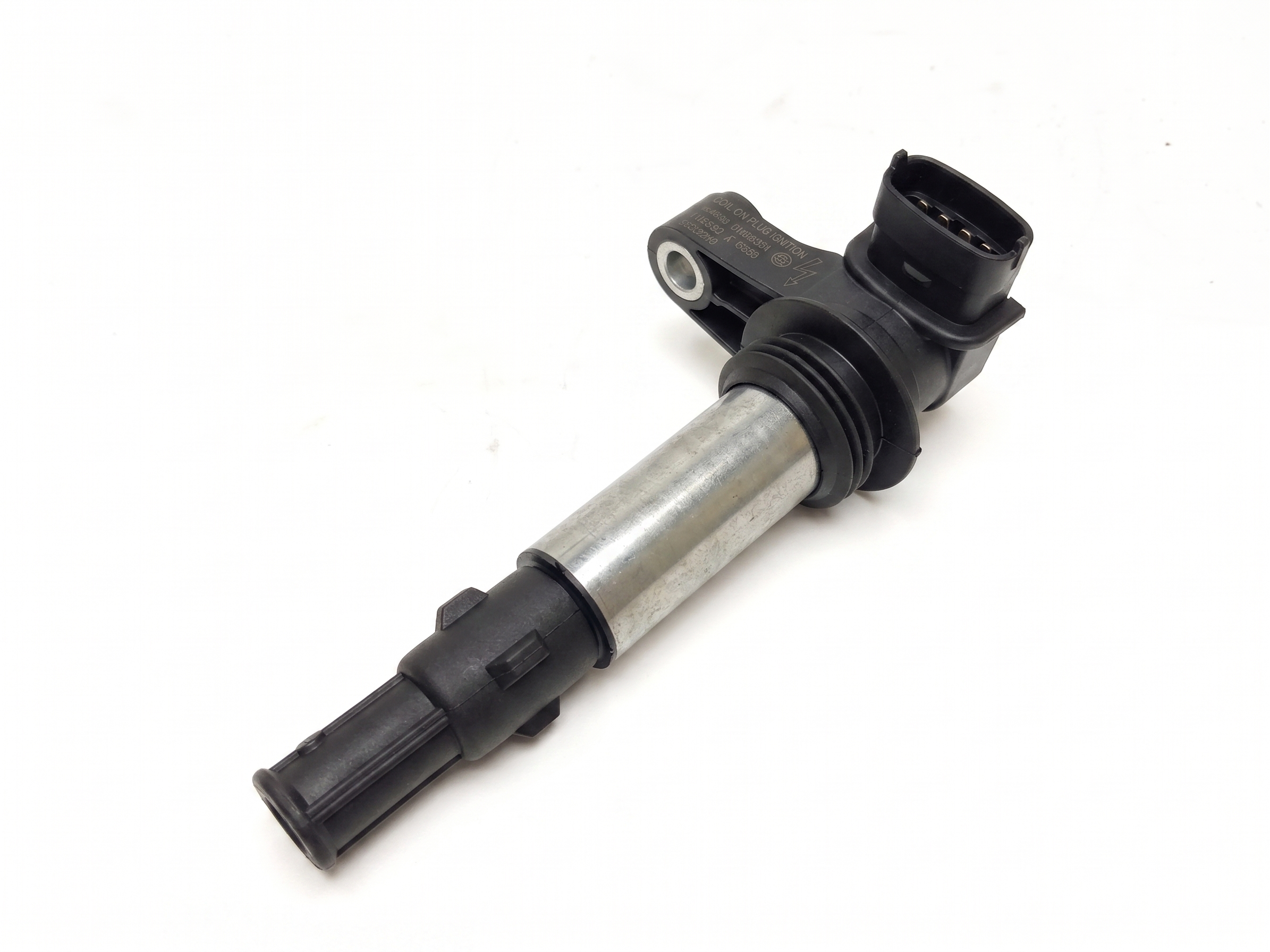
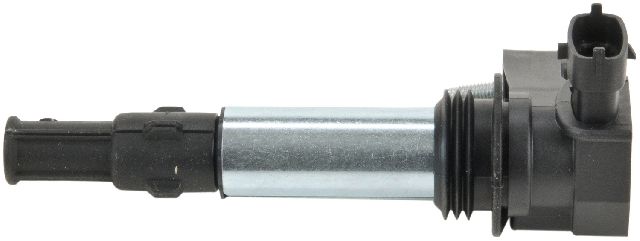
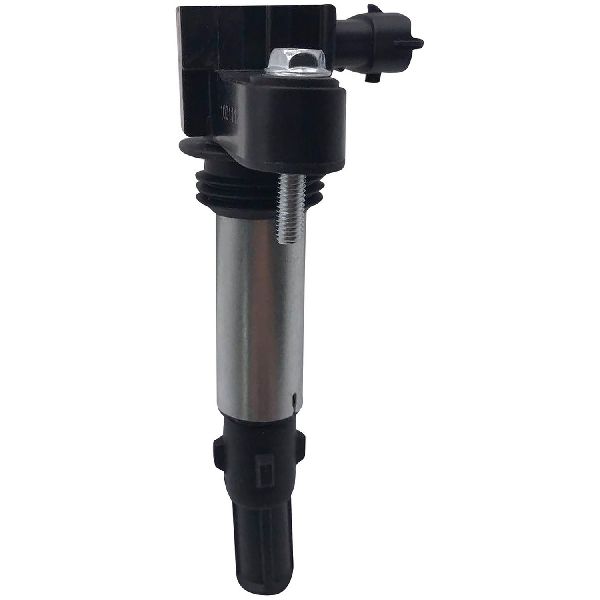
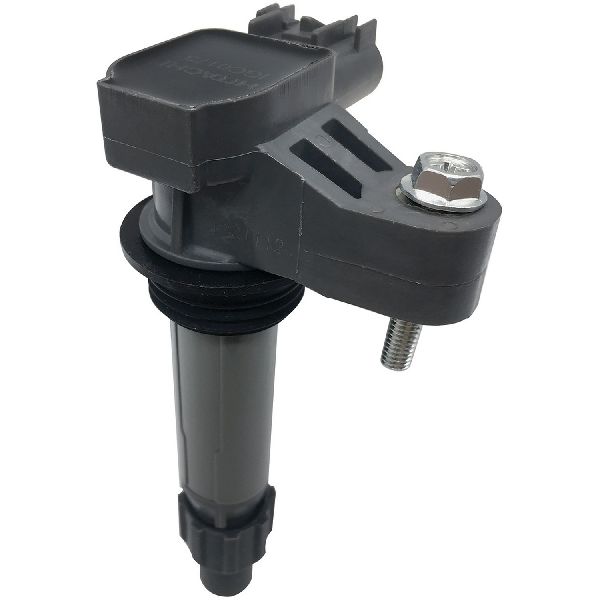
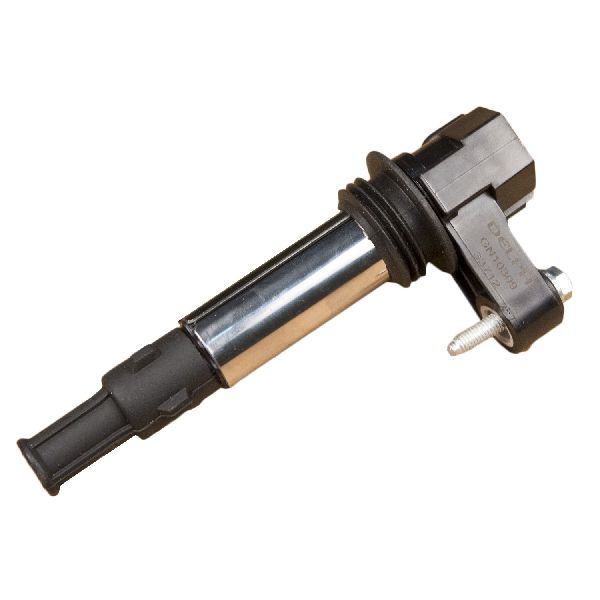
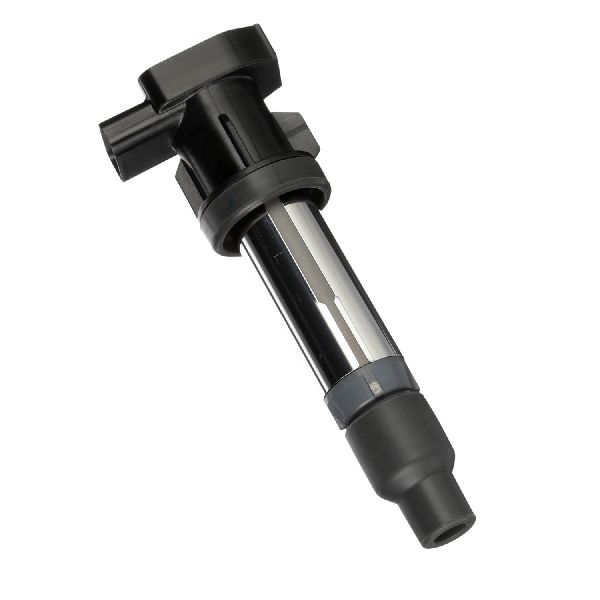
- Ignition Coil
(OEM #12632479 (supersedes 12590990, 12610626, 12618542))— This is the most common failure part for a P0353 code. The coil is responsible for generating the high voltage for the spark plug.
Trusted brands: ACDelco (D515C), Delphi, NGK
OEM price range: $50-$80
Aftermarket price range: $30-$60 - Spark Plug
(OEM #41-107)— A worn spark plug is a common contributing cause and should be replaced along with the coil to ensure a complete and lasting repair.
Trusted brands: ACDelco Iridium, NGK Laser Iridium
OEM price range: $12-$20
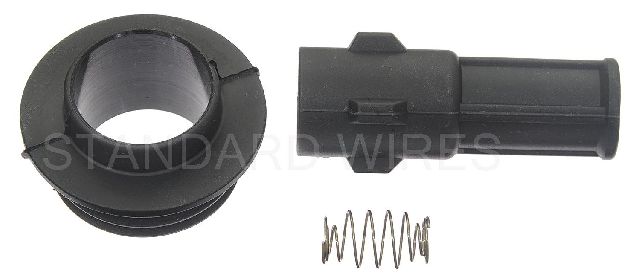
Aftermarket price range: $8-$15 - Ignition Coil Connector Pigtail — If the connector shows signs of melting, corrosion, or has a broken locking tab, it must be replaced to ensure a solid electrical connection to the new coil.
Trusted brands: ACDelco, Dorman
OEM price range: $20-$40
Aftermarket price range: $10-$25
Related Codes That Often Appear With This One
- P0303 — P0303 is the code for 'Cylinder 3 Misfire Detected'. Since P0353 indicates a fault with the ignition coil that fires cylinder 3, a misfire on that cylinder is the direct result.
- P0300 — This code for 'Random/Multiple Cylinder Misfire' can appear alongside P0353 if the issue is intermittent or beginning to affect other cylinders. It is also listed in TSB PIP5038B as a common related code.
- P0351, P0352, P0354, P0355, P0356 — TSB PIP5038B notes that it is common for multiple ignition coil codes to be stored together, indicating a wider problem, possibly related to the ECM or systemic electrical issues like bad grounds.
Technical Service Bulletins (TSBs) & Recalls
- PIP5038B: Addresses engine misfires and DTCs including P0353, pointing to heat-stressed ignition coils potentially caused by an ECM fault. It provides a specific diagnostic path if coil damage is found and recommends replacing the ECM and all coils if confirmed.
Platform-Specific Known Issues
- Per TSB #PIP5038B, these vehicles can have a faulty ECM that damages ignition coils by keeping them energized for too long, causing overheating and melting. If a coil shows physical signs of heat stress, the recommended repair is to replace all six coils, all six spark plugs, and the ECM to prevent a recurrence.
Mechanic-Grade Diagnostic Values
- Ignition Coil Primary Winding Resistance — expected: 0.4 - 2.0 Ohms. Failure: A reading of 0 Ohms indicates a short, while an infinite (OL) reading indicates an open circuit.
- Ignition Coil Secondary Winding Resistance — expected: 6,000 - 10,000 Ohms (6kΩ - 10kΩ). Failure: Readings significantly outside this range suggest an internal coil failure.
- Voltage at Coil Connector Power Pin (Key On, Engine Off) — expected: ~12 Volts (Battery Voltage). Failure: Low or no voltage indicates a problem in the power supply circuit, such as a blown fuse or broken wire.
- Ignition Coil Current Draw (using an amp clamp during operation) — expected: 5 - 8 Amps. Failure: Spikes above 10 Amps can indicate a shorted primary winding in the coil.
Scan Tool Commands That Help
- GDS2 / Tech2 or equivalent professional scanner: Ignition Tests > Coil C Activation (or similar wording) — This bidirectional control allows a technician to command the ECM to fire the specific coil on demand. With the spark plug removed and grounded, this test can visually confirm if the coil is producing a spark, helping to isolate the fault between the coil itself and a lack of a trigger signal from the ECM.
Wiring & Ground Locations
- G109 and G112 — Located on the engine block/cylinder heads. TSB PIP5038B specifically calls for checking these for the ignition system.. These are the primary ground points for the ignition coils. A loose or corroded connection here can cause intermittent misfires, weak spark, and place stress on the coils and ECM.
- G107 — On the rear side of the right (Bank 1) cylinder head.. This is another critical engine ground. Since Cylinder 3 is on Bank 1, the integrity of this ground is essential for stable operation of that cylinder's ignition coil.
- Main Engine Block to Chassis Ground — A heavy gauge strap connecting the engine block to the vehicle's frame/chassis.. A compromised main ground can create a 'floating ground' condition, where the engine block's electrical potential is unstable. This can cause voltage drops and surges throughout the ignition system, leading to misdiagnosed coil or ECM failures.
- Ignition Coil Connector Pins — The 4-pin connector at the ignition coil.. Testing requires identifying the key pins: Ignition Voltage Supply (12V+), Ground, Ignition Control (IC) signal from ECM, and sometimes a reference low signal. A wiring diagram is needed to test for voltage at the supply pin and continuity on the ground and signal wires back to the ECM.
"I Checked Everything" — The Actual Cause
- This pattern is not directly applicable as P0353 is an electrical circuit code, not a code related to air/fuel leaks that a smoke test would identify. The equivalent scenario for this code is when a standard 'coil swap' test does not resolve the issue (i.e., the code stays on cylinder 3). In this case, the fault is confirmed to be in the wiring between the ECM and the coil, or the ECM's internal driver for that circuit. Diagnosis would then require a multimeter to test for continuity and voltage at the coil connector and the ECM connector pins.
OEM Part Supersession History
12590990, 12610626, 12618542→12632479— Standard part evolution for improved durability, materials, or manufacturing process. The latest number is the recommended service replacement.
Heads up: The newest part number, 12632479 (also sold as ACDelco D515C), is the correct and compatible replacement for all previous versions on this engine.
Model Year Variations Within This Range
- 2008-2009: There are no significant variations within the 2008-2009 model years for the 3.6L V6 (LLT) engine's ignition system that would affect the diagnosis or repair of a P0353 code. The 2008 model year introduced this engine, and the 2009 model was primarily a carryover.
Helpful Videos
Used OEM Parts in Stock

New Aftermarket Parts Available

The information in this article is provided for general reference and educational purposes only. Vehicle specifications, procedures, and part compatibility can vary by production date, trim level, and region. Always consult your vehicle's factory service manual and verify part numbers before purchasing or performing repairs. Safety-critical components such as airbags, seat belts, and braking systems should be installed by a qualified professional.
- Cadillac STS:
- 🎬 Helpful Videos
- 🛍️ Shop This Part
- What's Unique About the 2008-2009 Cadillac STS
- Diagnostic Flowchart
- Symptoms You May Notice
- Most Likely Causes
- Rare But Worth Checking
- Diagnosis Steps
- Parts You'll Likely Need
- Related Codes That Often Appear With This One
- Technical Service Bulletins (TSBs) & Recalls
- Platform-Specific Known Issues
- Mechanic-Grade Diagnostic Values
- Scan Tool Commands That Help
- Wiring & Ground Locations
- "I Checked Everything" — The Actual Cause
- OEM Part Supersession History
- Model Year Variations Within This Range
- 🎟️ Get 5% Off