

P0352 on 2008-2009 Cadillac CTS: Ignition Coil 'B' Circuit Fixes
P0352 on a 2008-2009 Cadillac CTS indicates a fault with the ignition coil circuit for cylinder #2. The most common fix is replacing the cylinder #2 ignition coil, which is a straightforward DIY job. Expect to pay $40-$80 for a quality aftermarket coil and around $15 for a new spark plug. Always check the wiring connector for damage first and consider swapping the coil to another cylinder to confirm the failure before buying parts.
- P0352 means there's an electrical problem with the ignition coil circuit for cylinder #2 (front, driver's side).
- The most likely culprit is a bad ignition coil, which is a common wear item.
- A simple diagnostic test is to swap the coil from cylinder #2 with another cylinder (like #4) and see if the code follows the coil.
- Always replace the spark plug when you replace an ignition coil.
- Before replacing parts, check that the battery terminals and engine ground straps are clean and tight, as recommended by a GM service bulletin.
What's Unique About the 2008-2009 Cadillac CTS
The 3.6L LLT direct-injection V6 engine in the second-generation CTS is a widespread GM powerplant known for being maintenance-sensitive. While generally reliable, ignition coils are a very common failure item across the entire GM High Feature V6 family. A GM Technical Service Bulletin for this platform, #PIP5038B, notes that a variety of misfire and ignition coil circuit codes (including P0352) can appear due to heat-stressed or damaged coils. The bulletin also points to the importance of checking for clean, tight battery and ground connections, as poor grounds can cause intermittent electrical issues that mimic coil failure. For the CTS specifically, grounds G130 and G131 are called out for inspection.
Diagnostic Flowchart
Tap your situation to follow the diagnostic path that matches what you're seeing on this vehicle.
Symptoms You May Notice
- Check Engine Light is on or flashing
- Rough engine idle
- Engine hesitation or stumbling during acceleration
- Reduced engine power
- Shuddering or vibration from the engine
- Decreased fuel economy.
- Replacing only the spark plug without testing the coil. While a bad plug can cause a misfire (P0302), the P0352 code specifically points to a circuit fault, which is more often the coil itself or its wiring.
- Replacing the ignition coil without checking the electrical connector and wiring harness for damage. A broken wire or corroded pin will cause the new coil to also report a fault.
Most Likely Causes
- Failed Ignition Coil on Cylinder #2 🔴 High Probability Ignition coils are a common failure point on most modern vehicles due to constant exposure to high heat and vibration. The GM 3.6L V6 engine family is noted for this issue. TSB #PIP5038B specifically mentions heat-stressed coils as a cause for these codes on the 3.6L LLT engine.
How to confirm: The easiest method is to swap the ignition coil from cylinder #2 with another cylinder (e.g., cylinder #4, which is the middle cylinder on the same bank). Clear the codes and drive the vehicle. If the code changes to P0354, the ignition coil is faulty. Cylinder #2 is the front-most cylinder on the driver's side bank.
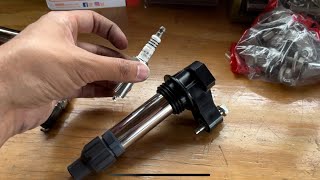
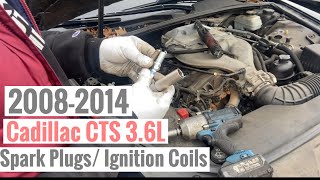
Typical fix: Replace the failed ignition coil. It is also highly recommended to replace the corresponding spark plug at the same time. Apply a small amount of dielectric grease to the inside of the new coil boot before installation. 🎬 See this walkthrough for replacing coils and spark plugs
Est. part cost: $40 - $90 - Worn or Fouled Spark Plug 🟡 Medium Probability A worn-out spark plug with a large gap, carbon fouling, or cracked ceramic increases the resistance in the secondary ignition circuit. This puts extra strain on the ignition coil and can cause it to fail or trigger a circuit code.
How to confirm: After removing the ignition coil, remove the spark plug from cylinder #2. Inspect it for a worn electrode, cracks in the ceramic, or heavy carbon/oil deposits. Compare it to a new plug. The correct gap for the OEM ACDelco 41-109 plug is pre-set at the factory and should not be adjusted.
Typical fix: Replace the spark plug. If one is worn, it's best practice to replace all six, especially if their service history is unknown.
Est. part cost: $10 - $20 per plug - Damaged Wiring or Loose Connector ⚪ Low Probability The plastic connector or wiring for the ignition coil can become brittle from engine heat cycles and break, or pins can corrode, leading to a poor connection. This is a known issue that can mimic a failed coil.
How to confirm: Visually inspect the electrical connector and the wiring leading to the cylinder #2 ignition coil. Check for cracks, melting, or corrosion on the pins. Wiggle the connector with the engine running to see if it affects the misfire. Use a multimeter to check for continuity and proper voltage at the connector.
Typical fix: Repair the damaged section of wire or replace the pigtail connector. Ensure the connector clicks securely into place on the coil.
Est. part cost: $15 - $30 for a new connector pigtail - Poor Ground or Battery Connection ⚪ Low Probability TSB #PIP5038B specifically calls out checking battery and ground connections. A loose or corroded ground strap can cause a host of intermittent electrical problems, including ignition system faults. The TSB specifically mentions checking grounds G130 and G131 on the CTS and ensuring they are torqued to 20 NM (15 lb-ft).
How to confirm: Inspect the main battery terminals, the battery-to-body ground, and the engine-to-chassis ground strap for cleanliness and tightness. On the CTS, locate and inspect grounds G130 and G131.
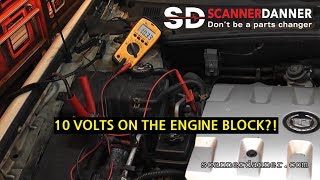
Typical fix: Clean the contact surfaces of the ground terminals and bolts with a wire brush and ensure they are tightened securely to the correct torque specification. 🎬 Watch: How a bad ground can cause electrical issues
Est. part cost: $0 - $5 for cleaning supplies
Rare But Worth Checking
- Faulty Engine Control Module (ECM): This is the least likely cause. The internal driver circuit for the coil can fail, but all other possibilities should be exhausted first. The TSB mentions that an ECM can latch a coil 'on', causing it to overheat and fail, which may require replacing both the coil and the ECM. This is especially noted for repeat coil failures on vehicles built before December 2008.
Diagnosis Steps
- Read all fault codes using an OBD-II scanner. Note if other codes like P0302 or P0300 are present.
- Turn off the engine and locate ignition coil #2. On the 3.6L V6, the cylinders are numbered 1-3-5 on the passenger side (Bank 1) and 2-4-6 on the driver's side (Bank 2), from front to back. Cylinder #2 is the front-most cylinder on the driver's side.
- Inspect the wiring and electrical connector for coil #2. Look for any signs of damage, melting, corrosion on the pins, or a loose fit.
- To definitively test the coil, swap it with the coil from cylinder #4 (the middle coil on the same driver's side bank).
- Clear all fault codes with the scanner.
- Start the engine and let it run. Drive the vehicle until the Check Engine Light comes back on.
- Re-scan for codes. If the code has changed to P0354 ("Ignition Coil 'D' Circuit"), the ignition coil you moved is faulty and must be replaced.
- If the code remains P0352, the problem is not the coil. The issue lies in the spark plug, wiring, or ECM circuit for cylinder #2.
- Remove and inspect the spark plug for cylinder #2. Look for wear, cracks, or fouling. Replace it if its condition is questionable or its age is unknown.
- If the problem persists, use a multimeter to test the wiring between the ECM and the coil connector for continuity, shorts to ground, and proper voltage signals.
- Check system grounds G130 and G131 for corrosion and tightness, as specified in TSB #PIP5038B.
- As a final step, if all wiring and components are good, the ECM may be at fault, which is rare but possible, especially in cases of repeated coil failure.
Parts You'll Likely Need
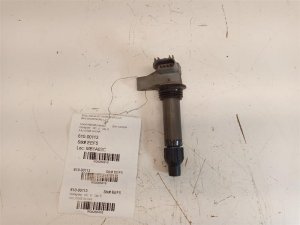
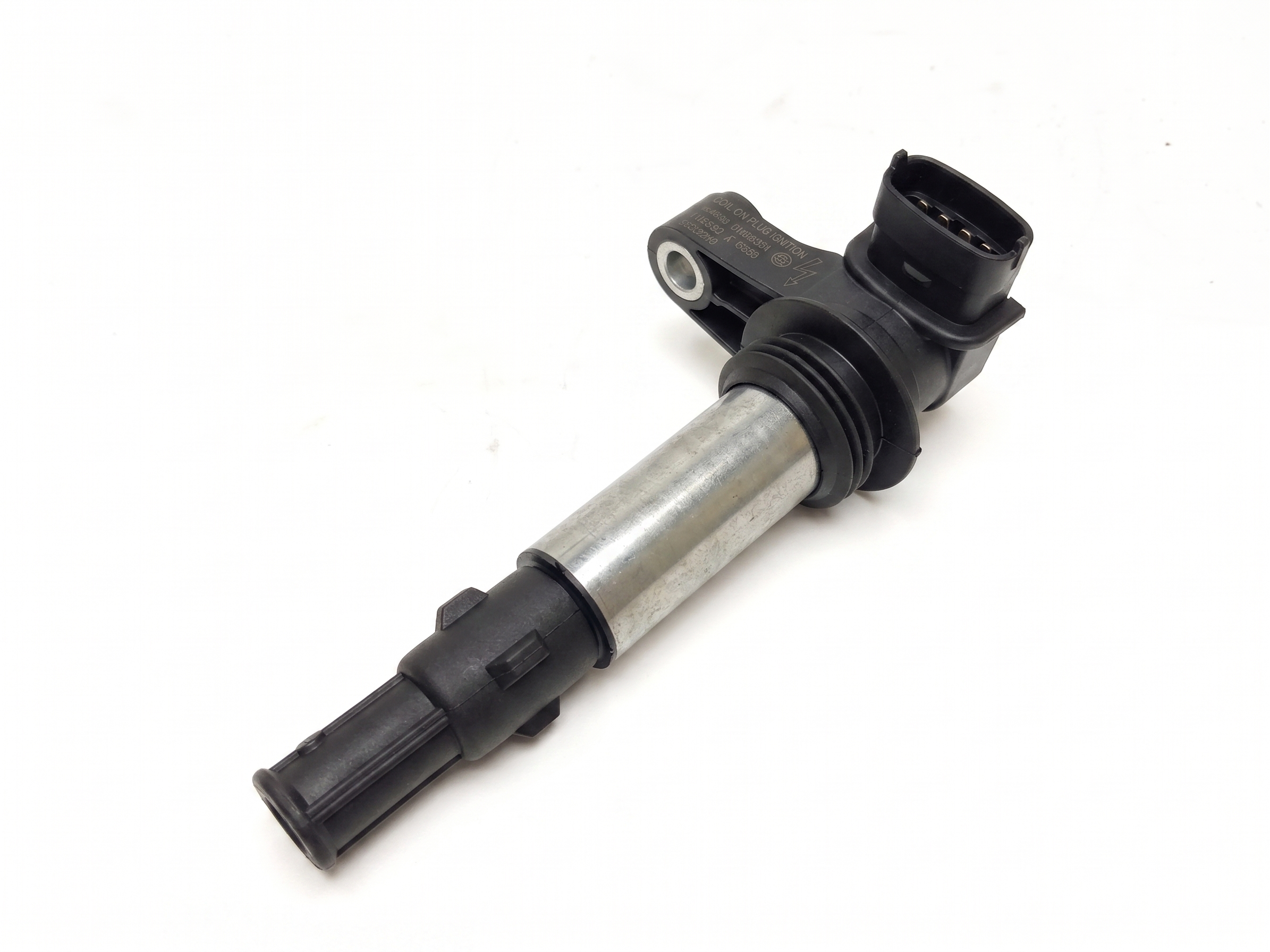
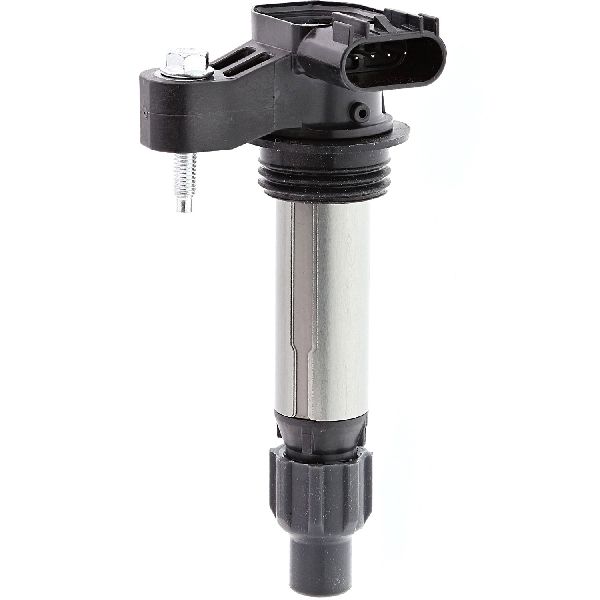
- Ignition Coil
(OEM #12632479)— This is the most common cause of a P0352 code due to heat and vibration causing internal failure.
Trusted brands: ACDelco (D515C), Delphi (GN10341), Denso, NGK
OEM price range: $70-$100
Aftermarket price range: $40-$80 - Iridium Spark Plug
(OEM #41-109)— A worn spark plug can cause the coil to work harder and fail. It's best practice to replace the plug when replacing a coil. The OEM plug is pre-gapped and should not be adjusted.
Trusted brands: ACDelco, NGK
OEM price range: $15-$20
Aftermarket price range: $10-$18
Related Codes That Often Appear With This One
- P0302 — P0302 means "Cylinder 2 Misfire Detected." Since P0352 indicates a fault in the ignition circuit for cylinder 2, the cylinder will not fire correctly, logging a P0302 code alongside it.
- P0300 — This indicates a "Random/Multiple Cylinder Misfire." If the underlying cause is a systemic issue like a bad ground, voltage problem, or a failing ECM, it may affect multiple coils intermittently, leading to P0300 along with one or more P035x codes.
Technical Service Bulletins (TSBs) & Recalls
- PIP5038B: Mentions that codes P0351-P0356 can be caused by a heat-stressed/damaged ignition coil, potentially due to the ECM latching the coil driver on. It advises checking grounds and, in cases of repeated failure or melted coils on pre-Dec 2008 models, replacing all coils, plugs, and the ECM.
Platform-Specific Known Issues
- TSB #PIP5038B addresses a condition where the ECM can latch a coil driver 'ON', causing the ignition coil to overheat and fail, sometimes melting the coil housing. In this specific scenario for vehicles built before Dec 2008, GM recommends replacing all 6 ignition coils, all 6 spark plugs, and the ECM together as a unit to prevent a repeat failure.
- The TSB also highlights the importance of checking all system grounds, particularly G130 and G131 on the CTS, for corrosion or looseness, as this can cause difficult-to-diagnose ignition faults. They should be torqued to 20 NM (15 lb-ft).
- The 3.6L LLT is a
Mechanic-Grade Diagnostic Values
- Ignition Coil Primary Winding Resistance — expected: 0.4 to 2.0 Ohms. Failure: A reading outside this range (e.g., open loop 'OL' or significantly higher/lower resistance) indicates a faulty coil.
- Ignition Coil Secondary Winding Resistance — expected: 6,000 to 10,000 Ohms (6kΩ - 10kΩ). Failure: A reading outside this range suggests the secondary coil winding has failed.
- Ignition Coil Connector - Power Supply Voltage — expected: 12 Volts (Battery Voltage) with Key On, Engine Off. Failure: Low or no voltage indicates a problem in the power supply circuit from the fuse block, not the coil itself.
- Ignition Coil Ground Bolt Torque — expected: 20 NM (15 lb-ft). Failure: Loose ground bolts can cause intermittent circuit faults that mimic coil failure.
Scan Tool Commands That Help
- GM Tech 2 / GDS2: Special Functions -> Output Control -> Ignition Control -> Spark Test — This bidirectional command allows the technician to command the ECM to fire a specific coil. It can be used to verify if the ECM driver and wiring are capable of firing the coil, helping to isolate the fault to the coil itself or the control circuit.
- GM Tech 2 / GDS2: Special Functions -> Output Control -> Fuel System -> Fuel Injector Test — When a P035x code is set, the ECM may disable the fuel injector to the corresponding cylinder to protect the catalytic converter. This command allows the technician to re-enable or test the injector after the ignition fault is resolved.
Wiring & Ground Locations
- G130 — Rear of the right (passenger side) cylinder head.. This is a primary ground for the ignition system on Bank 1, but poor grounding anywhere can introduce electrical noise and voltage issues affecting all coils. TSB #PIP5038B specifically calls for checking this ground for tightness and corrosion.
- G131 — Left rear of the engine block.. This is a primary ground for the ignition system on Bank 2 (which includes cylinder #2). A loose or corroded G131 is a direct and highly probable cause of intermittent P0352 faults. TSB #PIP5038B specifically calls for checking this ground.
- Ignition Coil #2 Connector — The 4-pin electrical connector on the ignition coil for the front-most cylinder on the driver's side.. This is the direct connection point for the coil. The pins are: Pin A (Ignition Voltage), Pin B (Ignition Control from ECM), Pin C (Low Reference/Ground), Pin D (Ignition Control Feedback). Testing for power, ground, and signal on these specific pins is critical for diagnosis.
- Engine Block to Chassis Ground — A large braided strap typically running from the engine block to the vehicle's frame or firewall.. A compromised main engine ground can cause the starter and ignition system to seek ground through other, smaller circuits, leading to widespread, difficult-to-diagnose electrical problems, including ignition coil circuit faults.
Model Year Variations Within This Range
- 2008 (built before December 2008): Vehicles built before this date are more susceptible to an ECM-induced repeat coil failure. If a coil shows signs of melting or heat stress, TSB #PIP5038B recommends replacing all six coils, all six spark plugs, and the ECM as a complete set to prevent recurrence. For vehicles built after this date, the recommendation is to replace only the single failed coil and plug.
Helpful Videos
Used OEM Parts in Stock

New Aftermarket Parts Available



The information in this article is provided for general reference and educational purposes only. Vehicle specifications, procedures, and part compatibility can vary by production date, trim level, and region. Always consult your vehicle's factory service manual and verify part numbers before purchasing or performing repairs. Safety-critical components such as airbags, seat belts, and braking systems should be installed by a qualified professional.
- Cadillac CTS:
- 🎬 Helpful Videos
- 🛍️ Shop This Part
- What's Unique About the 2008-2009 Cadillac CTS
- Diagnostic Flowchart
- Symptoms You May Notice
- Most Likely Causes
- Rare But Worth Checking
- Diagnosis Steps
- Parts You'll Likely Need
- Related Codes That Often Appear With This One
- Technical Service Bulletins (TSBs) & Recalls
- Platform-Specific Known Issues
- Mechanic-Grade Diagnostic Values
- Scan Tool Commands That Help
- Wiring & Ground Locations
- Model Year Variations Within This Range
- 🎟️ Get 5% Off