

OBD-II Code P0347: Camshaft Position Sensor 'B' Circuit Low (Bank 2)
The Ultimate 2026 Guide to Meaning, Diagnosis, and Repair
- P0347 triggers when the Powertrain Control Module (PCM) detects the Bank 2 exhaust camshaft sensor voltage dropping below 0.3 volts.
- Always test the battery and charging system before replacing parts, as a cranking voltage drop below 9.6V frequently causes this false sensor code.
- Expect immediate drivability issues, including extended cranking times, unexpected stalling at idle, and a forced 'limp mode' that caps engine power.
- Driving with an active P0347 code dumps unburnt fuel into the exhaust, risking a $1,500+ catalytic converter meltdown within weeks.
What Does P0347 Mean?
The Powertrain Control Module (PCM) detects the voltage signal from the Bank 2 'B' camshaft position sensor is below the 0.3-volt minimum threshold or completely absent. This sensor tells the computer the exact rotational position of the exhaust camshaft, which dictates fuel injection and ignition spark timing. Bank 2 is the engine side opposite cylinder #1.
Technical definition: The official SAE/OBD-II definition is "Camshaft Position Sensor 'A' Circuit Low (Bank 2)". The PCM has detected the voltage signal from the bank 2 exhaust camshaft sensor is below its minimum specified threshold (typically under 0.3V) for longer than 1-10 seconds. This indicates a hard electrical fault: a short to ground, an open circuit, or a dead sensor.
🎬 Watch: Quick 3-minute guide to fixing the P0347 codeCan I Drive With P0347?
yes_but_not_advised. Do not drive the vehicle for significant distances. The engine stalls unexpectedly in traffic, fails to start, or enters a low-power 'limp mode', creating a serious safety hazard. Ignoring the code causes engine misfires, which quickly destroy the catalytic converter—a repair costing upwards of $1,500.
Common Causes
- Wiring Harness or Connector Short (Very Common) — Engine heat, vibration, or oil leaks degrade the wiring harness and connector. Melted insulation causes the signal wire to short directly to ground, or oil contamination in the connector creates high resistance, dropping the voltage below the PCM's threshold.
- Faulty Camshaft Position Sensor (Very Common) — The internal Hall-effect sensor or coil winding degrades from extreme heat cycles and vibration. This internal failure prevents the sensor from generating the required 5V square wave signal. Low-quality aftermarket sensors also frequently fail to meet OEM voltage specs, triggering the code.
- System-Wide Voltage Drop (Battery/Alternator/Starter) (Common) — A weak battery, failing alternator, or a starter motor drawing excessive current causes system voltage to plummet during engine cranking. This starves the camshaft sensor circuit of its required 5V reference, triggering a false P0347 code before the engine even starts. 🎬 See how to properly test your battery for voltage drops
- Damaged Reluctor Wheel/Tone Ring (Less Common) — The sensor reads a toothed magnetic ring on the camshaft. If this ring breaks a tooth, shears its alignment key, or accumulates metallic sludge, the sensor cannot produce a clean voltage signal.
- Faulty Powertrain Control Module (PCM) (Rare) — The internal driver circuit within the PCM that processes the 5V sensor signal burns out. The PCM misreads a perfectly healthy sensor signal as low or absent.
Symptoms
- Check Engine Light is On — The PCM illuminates the MIL immediately upon detecting the low voltage condition.
- Extended Cranking or No-Start — The engine cranks for 5-10 seconds before starting, or fails to start entirely, because the PCM cannot determine the correct cylinder timing for fuel injection.
- Stalling and Rough Idle — The engine runs unevenly, shakes at stops, and stalls unexpectedly at low speeds due to mis-timed spark and fuel delivery.
- Limp Mode and Sluggish Acceleration — The PCM defaults to a safe, low-power timing map to prevent engine damage, resulting in severe hesitation and poor acceleration.
Diagnostic Flowchart
Tap your situation to follow the diagnostic path that matches what you're seeing on this code.
Common Fixes & Costs
- Repair Wiring Harness or Replace Connector Pigtail — Parts: $15-$50, Labor: $100-$250, ~1.5 hr book time (Intermediate)
- Replace Camshaft Position Sensor 🎬 Watch this step-by-step camshaft sensor replacement walkthrough — Parts: $50-$150, Labor: $100-$200, ~1.0 hr book time (DIY)
- Replace Battery — Parts: $150-$250, Labor: $50-$100, ~0.5 hr book time (DIY)
- Replace Powertrain Control Module (PCM) — Parts: $600-$1200, Labor: $150-$300, ~2.0 hr book time (Professional)
Used vs. New Parts: Buying Guide
When a used part is worth it: Never buy a used camshaft position sensor. It is a cheap, high-wear electronic component. The labor to replace it twice negates any $20 savings.
Donor quality checklist:
- Do not buy used sensors.
Decision logic:
- If The part is a camshaft position sensor → Buy a brand new OEM (Hitachi, Denso, Motorcraft) or premium aftermarket (Bosch) sensor.
- If The required part is a PCM → A professionally refurbished and pre-programmed PCM from a reputable supplier saves $500+ over a new dealer unit.
Warranty tradeoff: New OEM sensors carry a 12-month/12,000-mile warranty. Used sensors carry a 30-day warranty that does not cover your wasted labor.
Worst-case if a used part fails: $300 (Paying a shop to diagnose and replace the failed used part you provided).
What Happens If You Wait — Timeline
- 0-2 weeks: Check Engine Light illuminates. Engine requires 5+ seconds of cranking to start. Fuel economy drops slightly. (MPG impact: 5%% · Added cost: $20 in wasted fuel)
- 2 weeks - 2 months: Engine stalls frequently at stoplights. Acceleration is severely restricted as the PCM locks into limp mode. (MPG impact: 15%% · Added cost: $150 (wasted fuel and potential towing))
- 2-6 months: Chronic misfires dump raw fuel into the exhaust. The catalytic converter overheats, melts internally, and clogs the exhaust system. (MPG impact: 25%% · Added cost: $1500-$2500 (catalytic converter replacement))
Cost of Not Fixing It
- Immediate: Vehicle stalls in traffic or refuses to start, requiring a tow. (Added cost: $150 (Towing fee))
- 1-3 months: Unburnt fuel from misfires overheats and melts the catalytic converter substrate. (Added cost: $1500-$2500)
Diagnosis Steps
- Scan Codes & Review Freeze Frame Data
Use an OBD-II scanner to read all codes. If P0335 (Crank Sensor) or P0017/P0019 (Timing Correlation) are present, diagnose those first. Check freeze-frame data to see if the code triggered during cold cranking (points to battery) or while driving hot (points to sensor/wiring).
Tools: OBD-II Scanner (Beginner) - Test Battery & Cranking Voltage
Connect a multimeter across the battery terminals. Resting voltage must be 12.4V+. Have a helper crank the engine; if voltage drops below 9.6V, the battery or starter is causing a system-wide voltage drop triggering the P0347. Replace the battery before proceeding.
Tools: Multimeter (Beginner) - Visual Inspection of Wiring & Connector
Locate the Bank 2 exhaust cam sensor. Unplug the connector and check for oil contamination or green corrosion on the pins. Trace the wiring harness back toward the PCM, looking for melted insulation, chafing against metal brackets, or pinched wires.
Tools: Flashlight, Inspection Mirror (Beginner) - Test Sensor Circuit Voltage (Key On, Engine Off)
Disconnect the sensor. Turn the ignition ON. Set multimeter to DC Volts. Probe the harness connector: you must find a 5V reference wire, a ground wire (<0.1V), and a signal wire. If the 5V reference is missing or low, the wiring to the PCM is broken or shorted.
Tools: Multimeter, Vehicle-specific wiring diagram (Intermediate) - Perform a Harness 'Wiggle Test'
While monitoring the 5V reference wire with your multimeter, aggressively wiggle the wiring harness at the connector and along the valve cover. If the voltage drops out or fluctuates, you have located an intermittent break in the wire.
Tools: Multimeter (Intermediate) - Test Sensor Signal Output (Engine Running)
Back-probe the signal wire at the connected sensor. Start the engine. A healthy Hall-effect sensor produces a rapid 0V-to-5V square wave. If the scope shows a flat line at 0V, the sensor is dead and must be replaced.
Tools: Oscilloscope (Advanced) - Check Signal Wire for Short to Ground
Disconnect the battery, the sensor, and the PCM. Set multimeter to Ohms. Probe the signal wire at the sensor connector and touch the other lead to the engine block (ground). Any continuity (reading other than 'OL') confirms the signal wire is shorted to ground.
Tools: Multimeter (Advanced)
When This Code Triggers (Freeze-Frame Conditions)
- Engine Coolant Temp: Below 122°F (50°C) (During a cold start, highlighting battery voltage drop.)
- RPM: 200-300 RPM (During engine cranking.)
- System Voltage: Below 10.0V (Confirms a weak battery or excessive starter draw.)
Related Codes
- P0342 — Identical 'Circuit Low' fault for Bank 1. If both P0342 and P0347 appear together, the sensors are fine. You have a dead battery, a blown PCM fuse, or a severed main ground strap.
- P0348 — Circuit High for Bank 2. P0347 means the wire is shorted to ground (0V); P0348 means the wire is shorted to power (12V). Both require tracing the wiring harness for melted insulation.
- P0019 — Cam/Crank Correlation Bank 2. P0347 is strictly an electrical fault. P0019 is a mechanical fault (stretched timing chain). If both are present, diagnose the mechanical timing first.
- P0335 — Crankshaft Position Sensor Circuit. The PCM uses the crank sensor as the master timing reference. A failing crank sensor causes erratic engine behavior that triggers false cam sensor codes. Fix P0335 first.
Climate & Environmental Factors
- Sub-Freezing Temperatures: Cold weather slashes battery output. A marginal battery drops system voltage below 9.6V during a cold crank, starving the sensor circuit and triggering P0347 before the engine fires.
- Engine Bay Moisture: Pressure washing the engine bay forces water past the weather seals on the sensor connector, shorting the 5V reference wire to ground.
How to Talk to a Mechanic About This Code
Say this: "I have a P0347 code indicating a 'Circuit Low' on the Bank 2 exhaust cam sensor. Before replacing the sensor, I need the technician to verify the 5V reference and ground at the connector, and check the battery cranking voltage."
This prevents the shop from firing the 'parts cannon'. It forces them to diagnose the wiring and battery, which are the actual causes of a 'Circuit Low' code 50% of the time.
Avoid saying:
- 'My car is stalling, can you fix it?'
- 'I need a new camshaft sensor installed.'
Questions to ask before authorizing the repair:
- Did you test the 5V reference wire at the sensor connector?
- Did you put an oscilloscope on the signal wire to confirm the sensor is dead?
- Are you using an OEM replacement sensor?
Where to Take It: Dealer vs Independent vs Chain
- Dealer:
Only use if under warranty or if the PCM requires replacement and programming.
Best for: Vehicles under powertrain warranty., Complex German vehicles (BMW, Audi) requiring software updates or battery registration.
Downsides: Highest labor rates ($150-$250/hr)., Will replace entire wiring harnesses instead of splicing a $20 repair wire. (Typical cost: +40% vs. baseline) - Independent Shop:
The best choice. A skilled independent tech will find a wiring short and repair it for $150, whereas a dealer will quote $1,200 for a new harness.
Best for: Out-of-warranty vehicles., Shops with ASE-certified electrical diagnosticians.
Downsides: Diagnostic skill varies; ensure they own and use an oscilloscope. (Typical cost: +0% vs. baseline) - Chain Shop:
Avoid for P0347. They will replace the sensor, and if the code returns due to a wiring short, they will not know how to fix it.
Best for: Battery replacements.
Downsides: Technicians often lack advanced electrical diagnostic training., Will almost certainly just replace the sensor without testing the circuit. (Typical cost: -10% vs. baseline)
When to Walk Away From the Repair
If the repair cost exceeds 50% of the vehicle's private-party value, sell the vehicle as-is.
- Car worth $3000, fix is $1800: Walk away. If the code was ignored and the catalytic converter melted, the repair exceeds the car's viable lifespan value.
- Car worth $15000, fix is $250: Fix it. A sensor or wiring repair is a minor maintenance cost.
What Scan Tool You Need for This Code
Minimum: An OBD-II scanner with live data graphing capabilities.
A $20 code reader only shows 'P0347'. You need live data to watch the camshaft sensor PID. If the live data shows 0 RPM from that cam while the engine runs, you know the signal is dead.
Budget: BlueDriver Pro (~$99) — Connects to your phone and graphs live sensor data, allowing you to see if the cam sensor signal drops out when you wiggle the wiring harness.
Mid-range: Innova 5610 (~$350) — Provides faster live data refresh rates and bidirectional controls to test PCM outputs directly.
Professional: Autel MaxiSys MS906 Pro (~$1200) — Pairs with an oscilloscope module. The scope is the ultimate tool for P0347, allowing you to visually see the 5V square wave and instantly condemn a bad sensor or shorted wire.
Rent vs buy: Buy the BlueDriver. Auto parts stores loan basic readers that cannot display the live data required to diagnose a circuit code.
How to Clear the Code After You Fix It
- Ensure the sensor connector is fully seated and locked.
- Use an OBD-II scan tool to clear the P0347 code.
- Perform a complete OBD-II drive cycle to reset readiness monitors.
Drive cycle (~30 minutes): Start with a cold engine. Idle for 3 minutes with the A/C and defroster on. Drive for 15 minutes in stop-and-go city traffic. Merge onto the highway and maintain a steady 55-60 mph for 10 minutes. Coast to a stop without braking hard.
Readiness monitors affected: Comprehensive Component Monitor, Misfire Monitor, Catalyst Monitor
Before emissions retest: drive at least 50 miles to fully set monitors.
Watch out for:
- Disconnecting the battery clears the code but resets all monitors to 'Incomplete', guaranteeing an emissions test failure.
- The code returns immediately upon startup if the wiring short was not repaired.
Will This Fail Emissions / State Inspection?
Yes — this code typically fails an OBD-II emissions inspection.
- California: Automatic failure. The Check Engine Light must be off and all monitors 'Ready' to pass the smog check.
- New York: Automatic failure. NYS DMV OBD-II scans will reject the vehicle if P0347 is active or pending.
Most Commonly Affected Vehicles
- Nissan / Infiniti Altima, Maxima, Murano, G35 (VQ35DE V6) (2002-2018) — Notorious for heat-induced sensor failure causing sudden highway stalling. Always replace both cam sensors and the crank sensor simultaneously with OEM Hitachi parts.
- Ford F-150, Mustang, Explorer (5.4L / 4.6L V8) (2004-2014) — Wiring harness routing behind the cylinder head frequently sags onto the hot exhaust manifold, melting the insulation and shorting the sensor signal to ground.
- Chevrolet / GMC Silverado, Tahoe, Suburban (5.3L / 6.2L V8) (2007-2018) — Sensor failure is common. Replacement is straightforward, but check the connector pigtail for oil intrusion before installing the new part.
- BMW X5, 3-Series, 5-Series (N52 / N62 engines) (2004-2013) — Highly sensitive to voltage drops. A failing battery or alternator is the most common cause of P0347 on these chassis, not the sensor itself.
- Audi / Volkswagen A4, A6, Q5 (2.0T / 3.2L V6) (2005-2016) — TSB 2026573 addresses loose terminal pins inside the sensor connector housing. The fix requires cutting off the old connector and splicing in a new pigtail.
Manufacturer-Specific Notes
- Ford: A failing alternator diode leaks AC ripple voltage into the electrical system. This electrical noise scrambles the camshaft sensor's square wave signal, triggering P0347. Test for >0.5V AC at the battery with the engine running.
- Volkswagen / Audi: VAG scan tools define P0347 specifically as "Short to Ground." This directs technicians to immediately check the connector pins for looseness (per TSB 2026573) rather than replacing the sensor.
Real Owner Stories
2007 BMW X5 4.8i at 29K miles
Check Engine Light (P0347) appeared intermittently after the original battery began to fail, causing extended cranking followed by a stall.
What they tried:
- Ignored the weak battery, triggering a cascade of codes (P0335, P0343, P0347, P0348).
- Had the dealer replace and register a new OEM battery.
Outcome: The P0347 code cleared itself after 25 miles of driving with the new battery. The voltage drop during cranking was the sole cause of the sensor codes.
Lesson: A weak battery causes a cascade of false electrical fault codes, including P0347. Always test the battery's cranking voltage before replacing engine sensors.
Ford F-150 with 5.4L V8
P0347 code appeared alongside a rough idle. The owner almost bought a new sensor.
What they tried:
- Performed a visual inspection of the wiring harness behind the cylinder head.
- Found the harness resting against the hot exhaust manifold, melting the insulation.
Outcome: The owner repaired the melted signal wire, wrapped it in high-temp Tesa tape, and secured it away from the exhaust. The code permanently cleared.
Lesson: P0347 is a circuit code. A melted wire shorting to ground is a highly common cause on V8 trucks. Inspect the wiring visually before spending money on parts.
2005 Nissan Altima (VQ35DE engine)
Car stalled at highway speeds and refused to restart until cooled down. P0347 was the only code.
What they tried:
- Replaced only the Bank 2 camshaft sensor with a cheap aftermarket part. The car stalled again two days later.
Outcome: Replaced both camshaft sensors and the crankshaft sensor simultaneously using genuine Hitachi (OEM) metal-bodied sensors. The stalling stopped completely.
Lesson: On Nissan VQ engines, cam and crank sensors fail in sets due to heat. Always replace all three simultaneously using OEM parts to avoid repeat failures.
How to Prevent This Code From Triggering
- Fix Valve Cover Oil Leaks Immediately (As needed) — Hot engine oil degrades the plastic sensor housing and seeps into the electrical connector, causing the exact short-to-ground condition that triggers P0347.
- Test Battery Health Annually (Annually before winter) — Catching a degrading battery before it drops below 9.6V during cranking prevents a host of false electrical and sensor codes.
- Secure Wiring Harnesses Away from Exhaust (During any engine bay work) — Zip-tying harnesses away from exhaust manifolds and EGR tubes prevents the insulation from melting and shorting the 5V signal to ground.
Frequently Asked Questions
Can I fix P0347 myself?
Yes, replacing an accessible sensor is a straightforward DIY job requiring basic hand tools. However, diagnosing wiring shorts or replacing the PCM requires advanced electrical troubleshooting. Stop DIYing and consult a shop if the new sensor doesn't clear the code.
What is the most common mistake when diagnosing P0347?
The most common mistake is immediately replacing the sensor without testing the circuit. P0347 indicates a fault in the wiring, connector, or voltage supply, not just the part itself. Always test the battery and inspect the harness first.
Why did the code come back after I replaced the sensor?
A returning code means the sensor was not the root cause. The actual fault is likely a short to ground in the wiring harness, a corroded connector, or a weak battery. A full multimeter circuit diagnosis is required to pinpoint the break.
Can a low oil level cause a P0347 code?
Low oil primarily affects variable valve timing (VVT) phasers, triggering mechanical correlation codes like P0017. It does not directly cause a P0347 electrical circuit low code. However, oil leaking onto the sensor connector causes electrical shorts that trigger P0347.
Will a P0347 code clear itself?
No, P0347 is a hard electrical fault. The Check Engine Light stays on until the underlying short or sensor failure is repaired. You must manually clear the code with a scan tool after fixing the issue.
Where is the Bank 2 camshaft 'B' sensor located?
Bank 2 is the engine side that does not contain cylinder #1. Sensor 'B' designates the exhaust camshaft. It mounts on the valve cover or cylinder head, but check a vehicle-specific repair manual for the exact location.
What's the difference between P0347 and P0345?
Both codes relate to the Bank 2 sensor. P0347 specifically means the voltage signal is too low (short to ground). P0345 is a general malfunction code indicating the signal is erratic or missing entirely.
Key Takeaways
- P0347 triggers when the Powertrain Control Module (PCM) detects the Bank 2 exhaust camshaft sensor voltage dropping below 0.3 volts.
- Always test the battery and charging system before replacing parts, as a cranking voltage drop below 9.6V frequently causes this false sensor code.
- Expect immediate drivability issues, including extended cranking times, unexpected stalling at idle, and a forced 'limp mode' that caps engine power.
- Driving with an active P0347 code dumps unburnt fuel into the exhaust, risking a $1,500+ catalytic converter meltdown within weeks.
Helpful Videos
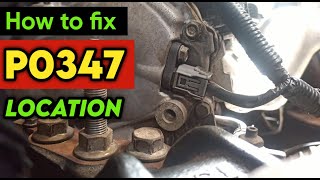
![How to Fix P0347 Engine Code in 3 Minutes [2 DIY Methods / Only $9.85]](https://img.youtube.com/vi/jTMQlnTk1kU/mqdefault.jpg)
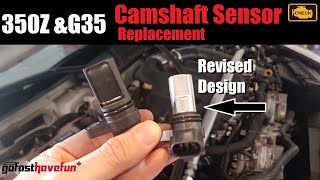


The information in this article is provided for general reference and educational purposes only. Vehicle specifications, procedures, and part compatibility can vary by production date, trim level, and region. Always consult your vehicle's factory service manual and verify part numbers before purchasing or performing repairs. Safety-critical components such as airbags, seat belts, and braking systems should be installed by a qualified professional.
- 🎬 Helpful Videos
- What Does P0347 Mean?
- Can I Drive With P0347?
- Common Causes
- Symptoms
- Diagnostic Flowchart
- Common Fixes & Costs
- Used vs. New Parts: Buying Guide
- What Happens If You Wait — Timeline
- Cost of Not Fixing It
- Diagnosis Steps
- When This Code Triggers (Freeze-Frame Conditions)
- Related Codes
- Climate & Environmental Factors
- How to Talk to a Mechanic About This Code
- Where to Take It: Dealer vs Independent vs Chain
- When to Walk Away From the Repair
- What Scan Tool You Need for This Code
- How to Clear the Code After You Fix It
- Will This Fail Emissions / State Inspection?
- Most Commonly Affected Vehicles
- Manufacturer-Specific Notes
- Real Owner Stories
- 2007 BMW X5 4.8i at 29K miles
- Ford F-150 with 5.4L V8
- 2005 Nissan Altima (VQ35DE engine)
- How to Prevent This Code From Triggering
- Frequently Asked Questions
- Can I fix P0347 myself?
- What is the most common mistake when diagnosing P0347?
- Why did the code come back after I replaced the sensor?
- Can a low oil level cause a P0347 code?
- Will a P0347 code clear itself?
- Where is the Bank 2 camshaft 'B' sensor located?
- What's the difference between P0347 and P0345?
- Key Takeaways
- 🎟️ Get 5% Off