

P0345 on 2014-2018 Ram 2500: Camshaft Sensor 'A' (Bank 2) Causes and Fixes
P0345 on a 2014-2018 Ram 2500 with a HEMI engine indicates a fault with the camshaft position sensor on the driver's side (Bank 2). The most common fixes are replacing the sensor itself or repairing its wiring harness. However, on HEMI engines, this code can be a serious warning of internal engine damage, specifically lifter and camshaft failure, and should be investigated immediately, especially if a ticking noise is present.
- P0345 on a HEMI-powered Ram 2500 refers to the camshaft position sensor on the driver's side.
- Always inspect the wiring harness for damage near the sensor connector before buying any parts.
- A faulty sensor is the most likely cause, but a bad crankshaft sensor can also trigger this code due to a shared electrical circuit.
- Use a quality OEM (Mopar) sensor for the replacement to avoid repeat failures.
- Be aware of TSB #05149141A, which indicates this code may require special diagnostic procedures beyond a simple part swap.
What's Unique About the 2014-2018 Ram 2500
For this generation of Ram 2500 with a HEMI engine, code P0345 is a major red flag that demands serious attention. It is notoriously linked to the 'HEMI tick,' a significant design issue where hydraulic lifters fail, seize, and destroy the camshaft lobes. A worn cam lobe produces an erratic signal, triggering P0345 as a symptom of this severe mechanical failure. Additionally, TSB #05149141A instructs technicians to collect specific engine data and contact a factory engineer before replacing the sensor, confirming that diagnosis is more complex than a simple part swap.
Diagnostic Flowchart
Tap your situation to follow the diagnostic path that matches what you're seeing on this vehicle.
Symptoms You May Notice
- Check Engine Light illuminated
- Engine is hard to start or cranks but won't start
- Engine stalls unexpectedly, especially at idle or when coming to a stop
- Rough idle
- Noticeable loss of engine power and acceleration
- Increased fuel consumption
- Engine ticking or knocking noise (potential sign of lifter/cam failure)
- Immediately replacing the camshaft position sensor without first inspecting the wiring harness for damage.
- Replacing the camshaft sensor when the true fault lies with the crankshaft position sensor, which shares a circuit.
- Replacing sensors and chasing electrical faults when the root cause is a mechanical failure, such as a worn camshaft lobe from a failed lifter.
Most Likely Causes
- Failed Camshaft Position Sensor (Bank 2) 🔴 High Probability Sensors can fail from heat cycles and oil contamination, which is common in the engine bay. Oil can seep into the sensor's electronics, causing failure.
How to confirm: After checking wiring, swap the Bank 1 and Bank 2 sensors. If the code changes to P0340 (Bank 1), the sensor is bad. The best method is to check the sensor's output with an oscilloscope for a clean square wave that switches between ~0V and 5V.
Typical fix: Replace the camshaft position sensor on the driver's side of the engine. Using a high-quality OEM Mopar part is strongly recommended to avoid premature failure of aftermarket parts.
Est. part cost: $25-$100 - Wiring Harness or Connector Damage 🟡 Medium Probability The engine wiring harness can chafe against other components, or the connector can be damaged by heat and oil, leading to a poor connection or a short/open circuit. A known chafe point on some Ram trucks is where the harness passes the transmission bell housing near a ground strap.
How to confirm: Visually inspect the entire wiring harness for the Bank 2 cam sensor. Look for melted insulation, frayed wires, or corrosion in the connector pins. Wiggle the connector with the engine running to see if it causes a stumble. Check for ~5V reference and good ground at the connector.
Typical fix: Repair the damaged section of wire or replace the sensor's pigtail connector. Use solder and heat shrink for a durable repair.
Est. part cost: $15-$50 - Fault in a Shared Electrical Circuit ⚪ Low Probability On the 5.7L HEMI, the cam sensor, crank sensor, and other components may share the same ground circuit within the PCM. A short or failure in another sensor (like the crankshaft position sensor) can cause the PCM to incorrectly report a cam sensor fault.
How to confirm: This is an advanced diagnosis. If a new cam sensor and wiring repair don't fix the issue, other related codes should be investigated. A diagnostic test of the crankshaft position sensor circuit may be necessary.
Typical fix: Diagnose and replace the actual faulty component, which may be the crankshaft position sensor or another part on the shared circuit.
Est. part cost: $30-$150
Rare But Worth Checking
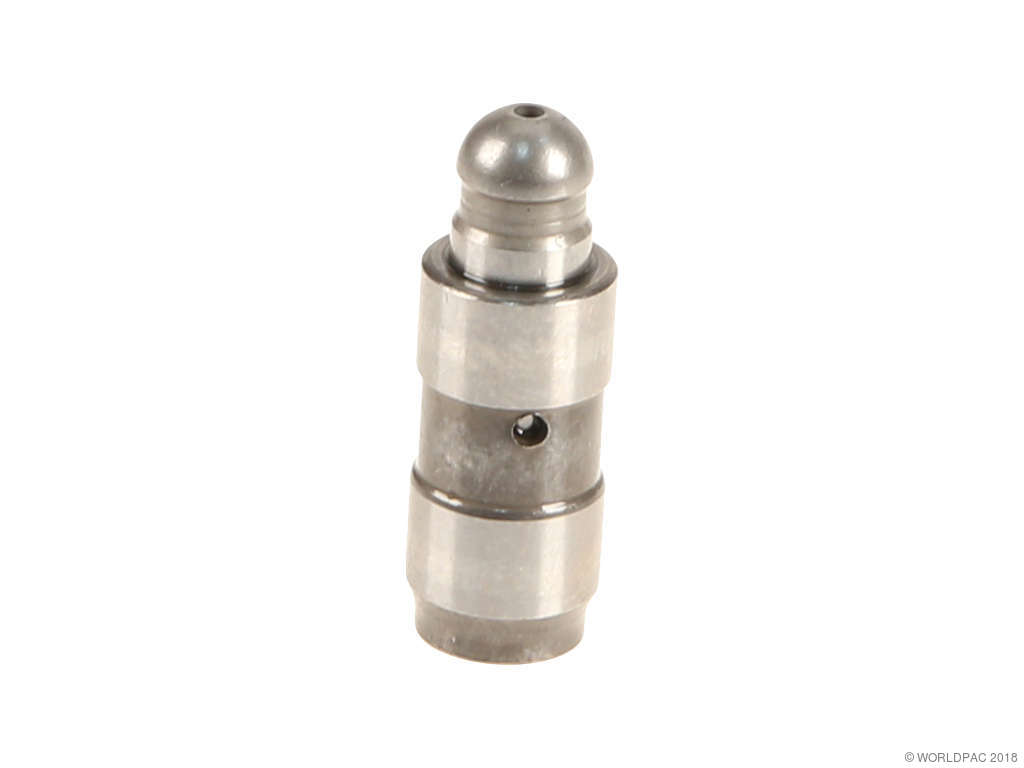
- Failed Camshaft Lobe / Lifter: The 5.7L and 6.4L HEMI engines from 2009 onwards are known for a 'fatal flaw' where the roller bearings in a lifter seize. This causes the lifter to grind against the camshaft lobe, wearing it down. A worn lobe provides an incorrect reading to the sensor, triggering P0345. This is a major mechanical failure often accompanied by a distinct ticking noise and can lead to misfire codes. This is a very expensive repair, often costing thousands.
- Stretched Timing Chain or Failed Cam Phaser: On higher mileage engines, a stretched timing chain or a failing VVT phaser can cause the camshaft and crankshaft to be out of sync, leading to this code. This is usually accompanied by other timing correlation codes like P0016 or P0022.
- Failed Powertrain Control Module (PCM): While rare, the internal driver circuit for the cam sensor in the PCM can fail. This should only be considered after all other possibilities, including mechanical faults, have been exhaustively ruled out.
Diagnosis Steps
- Read the code and any other stored codes with an OBD-II scanner. Pay close attention to freeze frame data and any misfire or correlation codes.
- Listen to the engine. With the engine warm, listen carefully for any ticking or metallic tapping sounds, which could indicate the serious 'HEMI tick' lifter failure. If heard, stop and seek professional diagnosis.
- Perform a thorough visual inspection of the Bank 2 (driver's side) camshaft position sensor, its connector, and its wiring harness. Look for any signs of melting, chafing (especially near the bell housing), or oil contamination.
- With the key on and engine off, use a multimeter to check for the correct reference voltage (typically 5V) and a good ground at the sensor's electrical connector.
- If power and ground are good, a simple diagnostic step is to swap the Bank 2 (driver's side) sensor with the Bank 1 (passenger's side) sensor. Clear the codes and run the engine. If the code changes to P0340, the sensor itself is faulty.
- If the code P0345 returns after the swap, the problem is in the wiring or the PCM circuit for Bank 2.
- The most definitive test is to use an oscilloscope to view the sensor's output signal while the engine is cranking. A good sensor will produce a clean, consistent square wave. A noisy or missing waveform points to a bad sensor or wiring.
- If all tests point to a good sensor and wiring, the possibility of a mechanical issue (worn camshaft lobe, stretched timing chain) becomes much higher. This requires more advanced diagnostics, potentially including removing the valve cover for inspection.
- Per TSB #05149141A, before replacing the sensor, a technician should pull Freeze Frame and Cam/Crank Sync Event Monitor data and send it to a specific FCA engineer for review, indicating a complex issue.
Parts You'll Likely Need
- Camshaft Position Sensor (Bank 2)
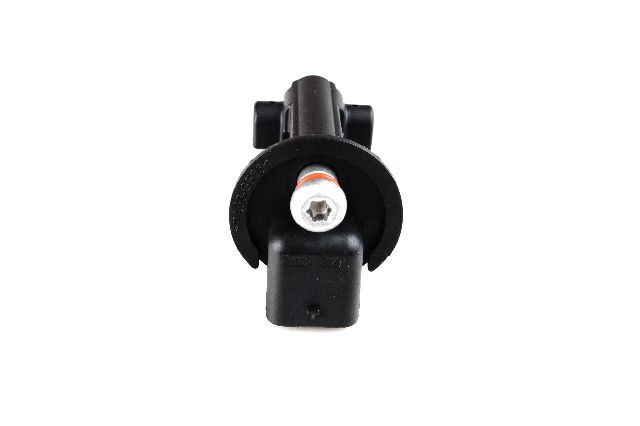
(OEM #5149054AC)— This sensor is the most common point of failure for code P0345 after wiring issues are ruled out. Using an OEM Mopar part is highly recommended.
Trusted brands: Mopar, NTK/NGK, Delphi
OEM price range: $50-$80
Aftermarket price range: $25-$60
Related Codes That Often Appear With This One
- P0340 — If you swap the Bank 1 and Bank 2 sensors for diagnosis, P0345 will become P0340, confirming a bad sensor.
- P0349 — This code indicates an intermittent signal from the same sensor (Camshaft Position Sensor 'A' Circuit Intermittent - Bank 2), strongly pointing to a wiring issue, a loose connection, or a failing sensor about to die completely.
- P0016 — Indicates a Crankshaft/Camshaft Correlation error. If seen with P0345, it points more strongly towards a mechanical timing issue like a stretched timing chain or worn cam lobe rather than just a sensor failure.
- P0300, P0302, P0304, P0306, P0308 — Misfire codes for cylinders on Bank 2 (2, 4, 6, 8). A bad cam signal can cause incorrect timing leading to misfires. If P0345 is present with a single-cylinder misfire on Bank 2, it could be an early sign of a specific lobe on the camshaft failing.
Technical Service Bulletins (TSBs) & Recalls
- 05149141A: Mentions P0345 and advises contacting a specific person at the manufacturer before replacing the camshaft position sensor, after collecting specific diagnostic data. This applies to 2014 models but indicates the complexity of the issue for the platform.
Platform-Specific Known Issues
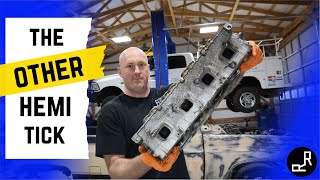
- HEMI Lifter and Camshaft Failure: On 5.7L and 6.4L HEMI engines, this code is a well-documented early symptom of the 'HEMI tick' caused by a failing lifter. The lifter's roller seizes and grinds down the camshaft lobe, creating an erratic signal for the sensor. This is a severe mechanical failure requiring engine teardown to fix. Owners on forums report this failure at mileages as low as 90k.
- TSB #05149141A - Special Handling: Manufacturer TSB #05149141A specifically instructs technicians dealing with P0345 (and related codes) to contact a factory engineer with collected data *before* replacing the sensor. This indicates a known pattern of complex failures or misdiagnoses that FCA is actively tracking, underscoring that it's often not a simple sensor swap.
Mechanic-Grade Diagnostic Values
- Camshaft Position Sensor 5V Supply Circuit Voltage — expected: 4.5 - 5.2 Volts with key on, engine off.. Failure: Voltage below 4.5V or absent suggests an open, short to ground, or PCM fault.
- Camshaft Position Sensor Signal Voltage — expected: Switches between approximately 0V and 5V as the engine is cranked.. Failure: No voltage switch, or a signal that is noisy or stuck high/low, indicates a failed sensor or wiring issue.
- Sensor Circuit Resistance (Signal, Supply, or Ground) — expected: Below 5.0 Ohms between the sensor connector pin and the corresponding PCM connector pin.. Failure: Resistance above 5.0 Ohms indicates an open or high resistance in the wire.
- Sensor Signal Circuit Short to Ground Test — expected: Above 100 Ohms between the signal circuit pin at the sensor connector and chassis ground.. Failure: Resistance below 100 Ohms indicates a short to ground in the signal wire.
Scan Tool Commands That Help
- wiTECH: View Freeze Frame and Cam/Crank Sync Event Monitor Data — Per TSB #05149141A, this data must be captured and reviewed before replacing the camshaft position sensor to aid in diagnosing complex or mechanical root causes.
- wiTECH: View Live Data / ECU View — To monitor the camshaft position sensor signal in real-time while the engine is running or cranking to check for dropouts or an inconsistent waveform, which can be graphed.
- wiTECH or high-end scan tool: Cam/Crank Relearn Procedure — Some vehicles may require a relearn procedure after replacing a cam or crank sensor to synchronize the new sensor's signal with the PCM's learned values.
Wiring & Ground Locations
- G100 / G101 — Located at the left front of the engine block.. These are primary engine ground points. A poor connection here can cause erratic behavior in multiple engine sensors, including the camshaft position sensor.
- G102 — Located on the left front of the chassis/frame.. This is a main chassis ground. The engine block ground strap often connects to a point like this, and corrosion here can disrupt the entire engine's electrical system.
- (K444) CMP Signal Circuit — Wire running from the Bank 2 camshaft position sensor connector to the PCM.. This is the specific wire carrying the sensor's signal. A short or open on this wire is a direct cause of P0345. Technicians use this identifier from wiring diagrams to trace the correct wire.
- (K900) Sensor Ground Circuit — Wire providing the ground reference to the sensor from the PCM.. A high-resistance or open ground circuit will prevent the sensor from operating correctly, leading to a fault code.
Real Owner Repair Stories
- YouTube user 'Fonze Performance' (2014 Ram 1500 5.7L HEMI) — Check engine light, ticking noise, and a misfire on cylinder 4. The light would trigger above 4,500 RPM.
❌ Tried (didn't work) Dealership suggested it was only spark plugs., Owner swapped spark plugs, coils, and injectors with no change in the misfire.
✅ What actually fixed it The root cause was a failed lifter which had destroyed the corresponding camshaft lobe. The final repair required a complete engine teardown to replace the camshaft and all lifters with a new kit. - Ford F150 Forum user 'F150Torqued' (Ford F-150 (Note: Not a Ram, but illustrates a universal installation error for this code)) — P0345 and P0349 codes, rough running when put into Drive.
❌ Tried (didn't work) Previous owner had already replaced the sensor.
✅ What actually fixed it The user noticed the previously installed camshaft position sensor was not sitting flat against the cylinder head, but was at a slight angle. This increased the air gap to the phaser, causing a weak signal. Replacing the sensor and ensuring it was installed perfectly flush resolved the codes.
"I Checked Everything" — The Actual Cause
- In a similar diagnostic situation for P0345/P0349, a technician found that all components (sensor, alternator) tested good and wiring had continuity. The actual cause, discovered after extensive troubleshooting, was that the signal and ground wires in the sensor's pigtail connector had been swapped during a previous repair attempt. The wiring looked fine visually but was functionally incorrect, a problem a smoke test or basic continuity check would miss.
When the Usual Fixes Don't Work
- While P0345 is commonly caused by a simple sensor or wiring fault, a significant number of cases on the 5.7L and 6.4L HEMI engines are not resolved by these fixes. As documented in owner forums and repair videos, the code is often the first electrical symptom of a severe mechanical failure. In one documented case, a 2014 Ram 1500 owner was told the issue was spark plugs, then personally replaced coils and injectors, but the true cause was a failed lifter that had destroyed the camshaft. The final fix was not a $50 sensor, but a multi-thousand dollar engine repair involving a new camshaft and lifter kit, directly countering the most common and simple diagnostic outcome.
OEM Part Supersession History
5149054AB→5149054AC— Standard part revision by the manufacturer, likely for improved reliability or material changes.
Heads up: The parts are interchangeable; 5149054AC is the correct current service part.
Helpful Videos

We Have This Part in Stock



The information in this article is provided for general reference and educational purposes only. Vehicle specifications, procedures, and part compatibility can vary by production date, trim level, and region. Always consult your vehicle's factory service manual and verify part numbers before purchasing or performing repairs. Safety-critical components such as airbags, seat belts, and braking systems should be installed by a qualified professional.
- Ram 2500:
- 🎬 Helpful Videos
- 🛍️ Shop This Part
- What's Unique About the 2014-2018 Ram 2500
- Diagnostic Flowchart
- Symptoms You May Notice
- Most Likely Causes
- Rare But Worth Checking
- Diagnosis Steps
- Parts You'll Likely Need
- Related Codes That Often Appear With This One
- Technical Service Bulletins (TSBs) & Recalls
- Platform-Specific Known Issues
- Mechanic-Grade Diagnostic Values
- Scan Tool Commands That Help
- Wiring & Ground Locations
- Real Owner Repair Stories
- "I Checked Everything" — The Actual Cause
- When the Usual Fixes Don't Work
- OEM Part Supersession History
- 🎟️ Get 5% Off