

P0345 on 2011-2017 Jeep Grand Cherokee: Camshaft Sensor Circuit Causes and Fixes
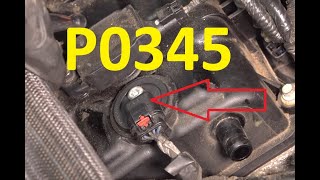
P0345 on a Jeep Grand Cherokee indicates a fault with the Bank 2 (driver's side) intake camshaft position sensor circuit. The most common fix is replacing the sensor itself with a quality Mopar part ($45-$70). However, be aware of underlying issues like faulty wiring, low oil pressure from a missing oil gallery plug, or failing camshaft phasers, which are known issues on these engines.
- P0345 refers to the intake camshaft position sensor circuit on the driver's side (Bank 2).
- Always check your oil level and condition first, as low or dirty oil can cause this code.
- The most common fix is a new camshaft position sensor, but test it by swapping with the other bank before buying a new one.
- Be aware that Jeep issued a TSB (#05048043A$) suggesting the camshaft phaser and related components may be the true cause, which is a more involved repair.
- Thoroughly inspect the wiring and connector for damage before replacing any parts.
What's Unique About the 2011-2017 Jeep GRAND CHEROKEE

While a faulty sensor is a common cause for P0345 on any vehicle, Jeep's 3.6L Pentastar and 5.7L Hemi engines have specific, well-documented failure patterns. For the 3.6L, a missing oil gallery plug under the valve cover is a known cause of oil pressure loss to the head, triggering this code. For both engines, Chrysler has issued Technical Service Bulletins (TSBs) like #05048043A$, which recommend replacing the camshaft phaser, actuator, and oil control valve (OCV) as a set if P0345 appears, suggesting a simple sensor replacement may not be the complete fix. Furthermore, TSB #18-024-17 REV. C involves a PCM software update that changes the sensitivity for this code, making it a two-trip fault to avoid flagging intermittent, non-critical glitches.
Diagnostic Flowchart

Tap your situation to follow the diagnostic path that matches what you're seeing on this vehicle.
Symptoms You May Notice
- Check Engine Light is on
- Engine is hard to start or has long crank times
- Engine stalls, especially at low speeds or idle.
- Rough running or idling
- Lack of acceleration and reduced engine power
- Noticeably worse fuel economy
- Traction control light is on and cruise control is disabled.
- Replacing the camshaft position sensor without first checking the wiring, connector, and oil level.
- Using a cheap aftermarket sensor, which may be faulty out of the box or fail quickly.
- Replacing only the sensor when the underlying issue is a failing camshaft phaser or a related component, as suggested by TSB #05048043A$.
- Replacing camshaft phasers or the PCM before checking for the simpler, but less obvious, missing oil gallery plug on 3.6L engines.
Most Likely Causes

- Faulty Camshaft Position Sensor (Bank 2, Intake) 🔴 High Probability Sensors can fail over time due to heat and vibration. Aftermarket sensors are widely reported to have a high failure rate in these vehicles, often working for only a short time or not at all. Using a quality OEM Mopar part is strongly recommended by owners.
How to confirm: Swap the suspected faulty sensor with the corresponding sensor from Bank 1 (passenger's side). Clear the codes and drive. If the code changes to P0340 (the Bank 1 equivalent), the sensor is bad.
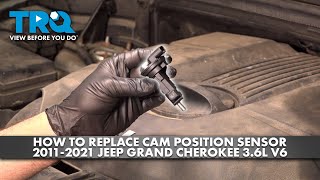
Typical fix: Replace the Camshaft Position Sensor on Bank 2 (driver's side). On the 5.7L Hemi, this is an easy-to-access sensor on the front of the engine. On the 3.6L Pentastar, the intake sensors are under the upper intake manifold, making replacement more involved.
Est. part cost: $25-$60 - Damaged Wiring or Loose Connector 🟡 Medium Probability The engine harness wiring, particularly the connector pins for the sensor, can become brittle, corroded, or loose from heat cycles and vibration. In some cases, previous repair work can lead to chafed or damaged wires.
How to confirm: Visually inspect the wiring harness and connector for the Bank 2 camshaft sensor for any signs of damage, corrosion, or loose pins. Use a multimeter to check for a steady 5V reference signal at the connector with the key on. A loss of this voltage points to a wiring or PCM issue.
Typical fix: Repair the damaged section of the harness or clean/replace the connector. Ensure pins are fully seated.
Est. part cost: $5-$50 - Low or Dirty Engine Oil 🟡 Medium Probability The camshaft phasers, which adjust timing, are hydraulically operated by engine oil pressure. If the oil level is low or the oil is dirty/sludgy, it can clog the screens on the Oil Control Valves (OCVs) and affect phaser operation, triggering timing-related codes.
How to confirm: Check the engine oil level and condition. If it is low or appears very dirty/sludgy, this is a likely contributor. Pulling the OCVs to inspect their screens for debris is also a good diagnostic step.
Typical fix: Perform an oil and filter change using the manufacturer-specified oil grade (e.g., 5W-20 for the 5.7L, 5W-30 for the 3.6L).
Est. part cost: $40-$80 - Failing Camshaft Phaser, Actuator, or Oil Control Valve (OCV) ⚪ Low Probability As noted in TSB #05048043A$, Chrysler Engineering recommends replacing all three components (Phaser, Actuator, OCV) if this code appears, indicating a known weakness in the valve timing system. A failing phaser can get stuck, causing a misalignment that the sensor correctly reports.
How to confirm: This is difficult to confirm without advanced diagnostics or after other causes are ruled out. A rattling noise from the engine on startup can be a sign of a bad phaser. This is often diagnosed after replacing the sensor and checking wiring does not solve the problem.
Typical fix: Replace the camshaft phaser, actuator, and oil control valve on Bank 2. This is a labor-intensive job.
Est. part cost: $200-$500
Rare But Worth Checking
- Loose or Missing Oil Gallery Plug (3.6L Pentastar): A well-documented real-world case on a Jeep 3.6L engine showed that a missing oil gallery plug under the driver's side valve cover caused a massive loss of oil pressure to the head. This starved the phasers and actuators, leading to P0345, P0349, P0390, and P0394. The fix was simply installing a new bolt/plug. This should be investigated before replacing expensive phasers.
- Damaged Camshaft Reluctor Wheel: The sensor reads a tone ring (or reluctor wheel) on the camshaft. If this wheel is damaged, cracked, or has come loose, it will cause a P0345 code. A Reddit user with a 2012 Grand Cherokee found the tone ring on the exhaust camshaft had fallen off completely after replacing the cams and lifters.
- Failing Powertrain Control Module (PCM): PCM failure is very rare but possible. TSB #18-024-17 REV. C involves a software update for the PCM that changes the sensitivity for this and other codes, suggesting software can be a factor. This should be the last resort after all other possibilities are exhausted. One owner reported a dealer replaced the PCM to no effect before finding the true cause.
Diagnosis Steps
- Verify the engine oil level and condition. Top off or change the oil if necessary, using the correct viscosity.
- Scan for any other accompanying trouble codes. Codes for multiple sensors on the same bank (e.g., P0390) point toward a wiring or oil pressure issue.
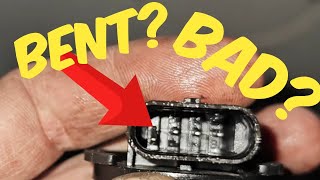
- Inspect the wiring harness and connector for the Bank 2 (driver's side) intake camshaft sensor. Look for frayed wires, corrosion, or bent/backed-out pins.
- A common DIY diagnostic step is to swap the Bank 2 intake sensor with the Bank 1 (passenger side) intake sensor. Clear the codes and drive the vehicle. If the code returns as P0340, the sensor you moved is faulty.
- If the code remains P0345 after swapping sensors, the problem lies in the circuit or a mechanical component on Bank 2.
- Use a multimeter to test for a 5-volt reference and a good ground at the sensor connector. An absence of voltage points to a wiring or PCM issue.
- For 3.6L engines, if multiple cam codes for Bank 2 are present, remove the driver's side valve cover and inspect the oil gallery plugs to ensure they are present and tight before considering phaser replacement.
- If wiring and the sensor are confirmed to be good, the issue may be mechanical, such as a faulty camshaft phaser, OCV, or a problem with the reluctor ring, and may require professional diagnosis. Some vehicles may also require a 'relearn' procedure with a scan tool after sensor replacement.
Parts You'll Likely Need
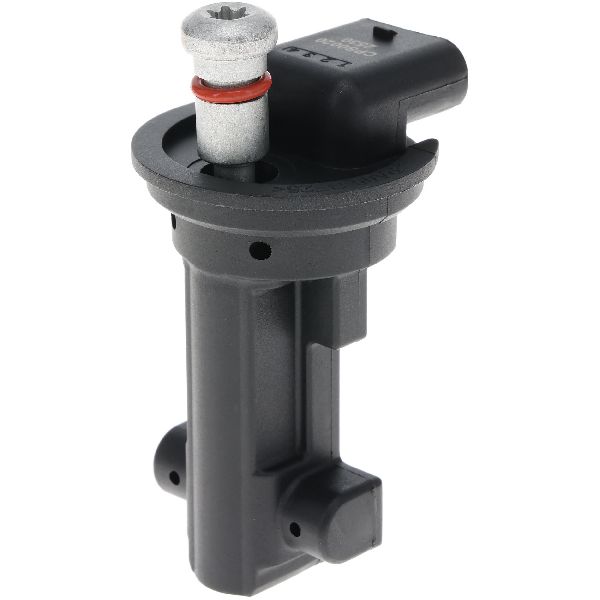
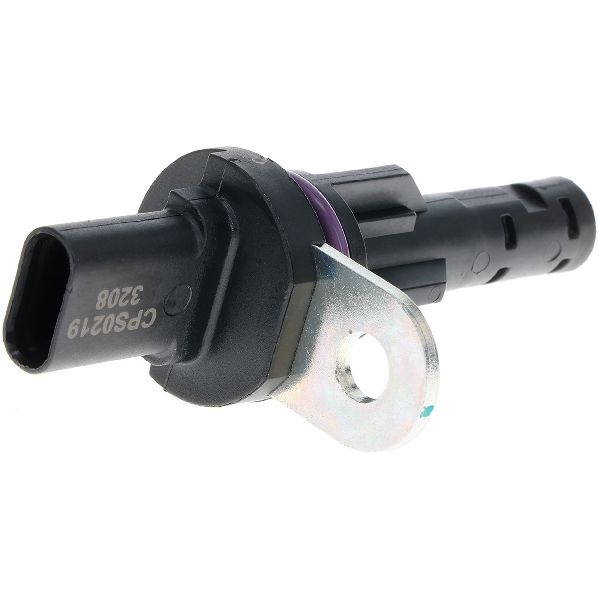
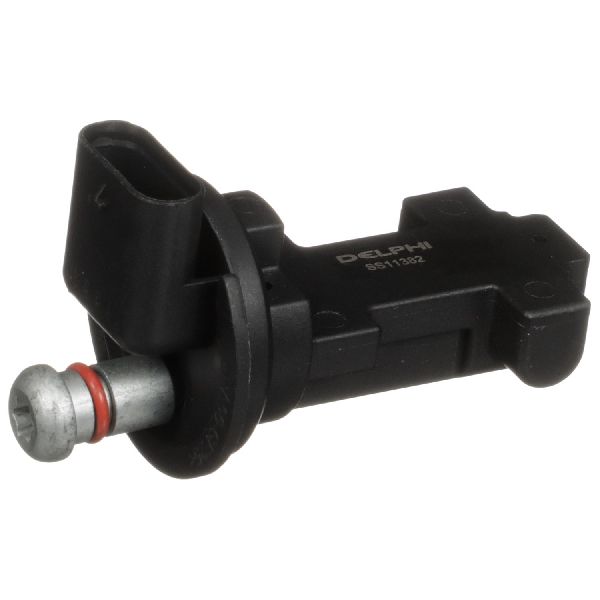
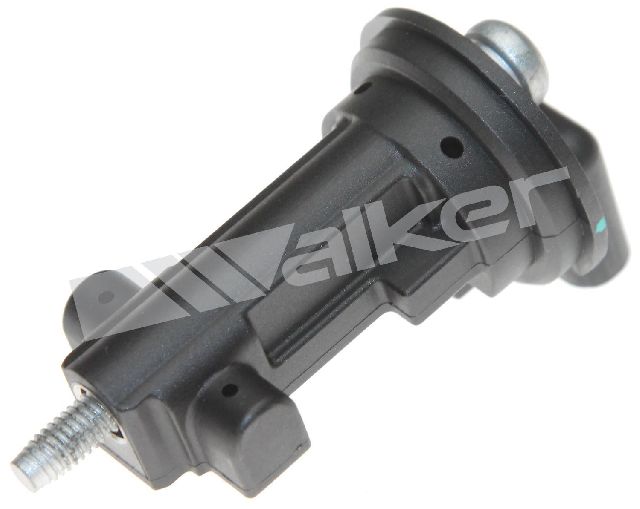
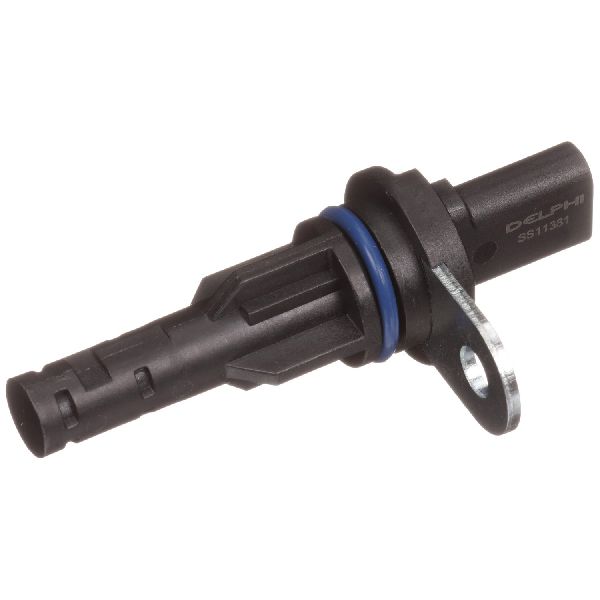
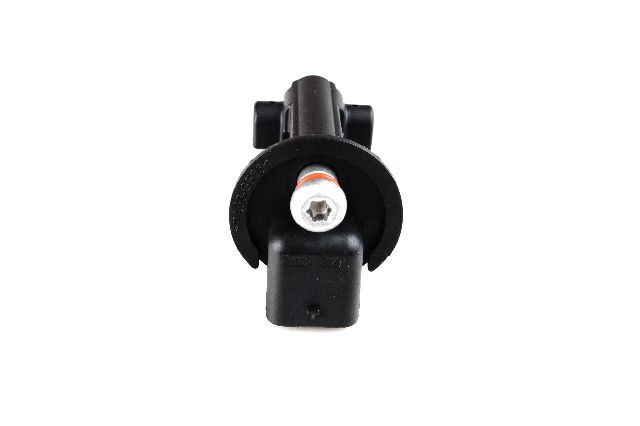
- Camshaft Position Sensor
(OEM #5149141AF)— This is the most frequent failure point for the P0345 code. OEM is highly recommended.
Trusted brands: Mopar, NTK/NGK, Delphi
OEM price range: $45-$70
Aftermarket price range: $25-$60 - Camshaft Phaser (Intake, Bank 2)
(OEM #5184377AG (for 3.6L))— A known issue o
Related Codes That Often Appear With This One
- P0349 — This is the 'intermittent' version of the P0345 code for the same sensor, indicating the signal is dropping out rather than being completely gone. They often appear together.
- P0390 / P0394 — These codes relate to the 'Sensor 2' (exhaust) camshaft sensor on the same bank (Bank 2). When they appear together with P0345/P0349, it strongly points to a common issue affecting the entire cylinder head, such as a wiring harness problem or a significant oil pressure problem (like a missing gallery plug).
- P0340 / P0365 — These are the equivalent codes for Bank 1. If codes for both banks appear simultaneously, it's less likely that multiple sensors failed at once and more likely a systemic issue like severe low oil pressure, a base timing problem (e.g., stretched timing chain), or a faulty PCM.
Technical Service Bulletins (TSBs) & Recalls

- 18-049-20: Lists P0345 as 'Camshaft Position Sensor Circuit - Bank 2 Sensor 1'.
- 05048043A$: Recommends replacing the Phaser, Actuator, and OCV together when fixing a P0345 code.
- 18-024-17 REV. C: Includes a PCM software update that changes the fault logic for P0345 from a one-trip to a two-trip fault.
Platform-Specific Known Issues
- TSB #05048043A$ recommends that for code P0345, the Camshaft Phaser, Actuator, and Oil Control Valve (OCV) should all be replaced together, pointing to a known weakness in the valve timing system.
- TSB #18-024-17 REV. C is a PCM software flash that changes P0345 from a one-trip to a two-trip fault, making it less likely to trigger the CEL from a momentary glitch.
- On 3.6L Pentastar engines, a missing or loose oil gallery plug under the driver's side valve cover is a known, though rare, cause that leads to oil starvation for the VVT components and throws multiple Bank 2 cam codes.
Mechanic-Grade Diagnostic Values
- Sensor 5V Reference Supply — expected: 4.9V to 5.0V. Failure: No voltage or significantly lower voltage points to a wiring or PCM issue.
- Sensor Ground Circuit Resistance — expected: Less than 5.0 Ohms. Failure: High resistance indicates a poor or corroded ground connection, which can cause erratic signals.
- Sensor Signal Waveform (Engine Running) — expected: A clean, repeating 0V to 5V square wave pattern when viewed on a labscope.. Failure: A distorted, erratic, or missing waveform indicates a faulty sensor, reluctor wheel issue, or electrical interference.
- Sensor Bench Test (Key On, Sensor Removed) — expected: Signal wire should read ~5V, then drop to 0V when the tip of the sensor is brought near a magnet.. Failure: If the voltage does not switch from 5V to 0V, the sensor is faulty.
Scan Tool Commands That Help
- Appcar DiagFCA / wiTECH or equivalent: Cam Crank Relearn — Required after replacing a camshaft or crankshaft sensor, or after any timing component service, to synchronize the PCM with the new/repositioned components.
- Professional Scan Tool: VVT System Test — To command the camshaft phasers and solenoids to move, verifying their mechanical operation independently of the sensor. This helps differentiate a sensor/wiring fault from a mechanical phaser/solenoid fault.
- Advanced Scan Tool: Sensor Test Mode — If the sensor and wiring are confirmed good, this function forces a simulated signal to the PCM. If the PCM fails to register the simulated signal, it confirms an internal fault in the module's input circuit.
Wiring & Ground Locations

- G901 — Left rear of the engine compartment.. This is a primary ground point in the engine bay on the same side as Bank 2 (driver's side). A poor connection here can affect multiple components, including sensor grounds.
- G906 — Right front of the engine compartment.. While on the opposite bank, checking all major engine bay grounds is crucial for eliminating hard-to-find electrical issues.
- Engine Dipstick Tube Stud — The stud that secures the engine oil dipstick tube to the engine block.. This is cited as a 'SUPER IMPORTANT' ground point for the engine harness and can be a source of various sensor issues if loose or corroded.
- CMP Sensor Connector (3.6L) — On the front of each cylinder head, below the intake manifold.. The wires are identified as Violet/Green (Voltage), Green/White (Ground), and Yellow/Blue (Signal). Knowing the wire colors is critical for accurate testing at the connector.
OEM Part Supersession History
5047788AB, 5047788AC→5047788AD— Part update for the revised 3.6L Pentastar engine.
Heads up: This is the Cam Phaser Actuator for the updated 3.6L V6 engine (Upg I w/ESS) found in 2016+ models. It may not be compatible with earlier 2011-2015 engines.
Model Year Variations Within This Range
- 2016-2017: The 3.6L Pentastar engine was significantly updated ('Upg I'). Changes include a new two-stage variable valve lift (VVL) system and a revised VVT system with torque-activated cam phasers that have a wider range of authority (70 degrees vs. 50 degrees). These changes can affect diagnosis, as the phasers and actuators are different from earlier models.
- 2011-2015: These models use the first generation of the 3.6L Pentastar engine. While many causes of P0345 are the same, the specific part numbers for VVT components like the phaser actuator may differ from the 2016+ updated engine.
Helpful Videos
We Have This Part in Stock

The information in this article is provided for general reference and educational purposes only. Vehicle specifications, procedures, and part compatibility can vary by production date, trim level, and region. Always consult your vehicle's factory service manual and verify part numbers before purchasing or performing repairs. Safety-critical components such as airbags, seat belts, and braking systems should be installed by a qualified professional.
- Jeep GRAND CHEROKEE:
- 🎬 Helpful Videos
- 🛍️ Shop This Part
- What's Unique About the 2011-2017 Jeep GRAND CHEROKEE
- Diagnostic Flowchart
- Symptoms You May Notice
- Most Likely Causes
- Rare But Worth Checking
- Diagnosis Steps
- Parts You'll Likely Need
- Related Codes That Often Appear With This One
- Technical Service Bulletins (TSBs) & Recalls
- Platform-Specific Known Issues
- Mechanic-Grade Diagnostic Values
- Scan Tool Commands That Help
- Wiring & Ground Locations
- OEM Part Supersession History
- Model Year Variations Within This Range
- 🎟️ Get 5% Off