

P0345 on 2011-2017 Dodge Durango: Camshaft Sensor Circuit Causes and Fixes
P0345 on a 2011-2017 Dodge Durango indicates a fault with the Camshaft Position Sensor circuit on Bank 2 (driver's side). The most common fix is replacing the sensor itself, but owners should be aware of deeper issues like faulty wiring, loose oil gallery plugs, or failing camshaft phasers, especially on the 3.6L Pentastar engine.
- P0345 on a Durango means there's a problem with the camshaft position sensor circuit on Bank 2 (driver's side).
- While a bad sensor is a common cause, do not overlook wiring issues or low/dirty engine oil.
- A Dodge Technical Service Bulletin (TSB) strongly suggests that this code can be caused by a failing camshaft phaser, and recommends replacing the phaser, actuator, and oil control valve as a set.
- Symptoms are serious and include hard starting, stalling, and poor performance; the vehicle should be repaired promptly.
What's Unique About the 2011-2017 Dodge DURANGO

For the 3.6L Pentastar and 5.7L HEMI engines in this generation of Durango, the P0345 code can be more than just a bad sensor. Dodge has issued Technical Service Bulletins (TSBs) that point towards deeper mechanical issues. Specifically, TSB #05048043AB notes that when P0345 appears, engineering recommends replacing the exhaust camshaft phaser, actuator, and oil control valve (OCV) together, indicating a known issue with the Variable Valve Timing (VVT) system components. Furthermore, owner forums and mechanic videos reveal a common issue on the 3.6L Pentastar where loose oil gallery plugs under the valve cover can cause a drop in oil pressure to the phasers, triggering this code. This suggests that owners should investigate beyond the sensor itself to avoid a repeat failure. A particularly unique issue is the magnetic reluctor wheel on the camshaft being sensitive to damage from magnetic tools during other repairs, such as rocker arm replacement, which can corrupt the signal and cause persistent codes even with a new sensor.
Diagnostic Flowchart

Tap your situation to follow the diagnostic path that matches what you're seeing on this vehicle.
Symptoms You May Notice
- Check Engine Light is on
- Engine is hard to start, cranks for a long time, or has a no-start condition.
- Rough idle and stalling, sometimes specifically when coming to a stop.
- Noticeable loss of engine power and poor acceleration.
- Reduced fuel economy.
- Engine misfires or runs roughly.
- Vehicle may go into 'limp mode', refusing to shift out of a low gear.
- Replacing the camshaft position sensor without checking the wiring or mechanical timing components first. If the code returns, the underlying cause was missed.
- On 3.6L engines, replacing VVT components without first checking for loose oil gallery plugs under the valve cover, which is a less expensive and common root cause of the oil pressure drop.
Most Likely Causes

- Failed Camshaft Position Sensor (Bank 2) 🔴 High Probability Sensors can fail over time due to heat cycles and oil contamination. On the 3.6L V6, the Bank 2 (driver's side) sensor is located on the rear of the cylinder head, which can be a high-heat area. Oil leaks from valve cover gaskets can drip onto the sensor and its connector, causing premature failure. Some owners report that non-OEM sensors can be unreliable and cause the code to return.
How to confirm: Swap the Bank 2 sensor with the Bank 1 sensor. On the 3.6L V6, the Bank 1 sensor is on the passenger side rear of the head and is much harder to access, often requiring removal of the upper intake manifold. If the code changes to P0340 (Bank 1), the sensor is bad. If the code remains P0345, the issue is in the wiring or a mechanical component.
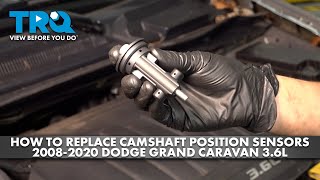
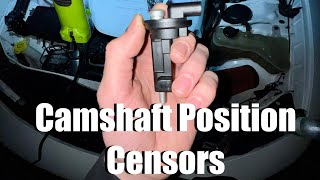
Typical fix: Replace the Bank 2 camshaft position sensor with a quality OEM (Mopar) or premium aftermarket part. 🎬 Watch: How to replace the camshaft sensors on a 3.6L V6.
Est. part cost: $25-$70 - Wiring or Connector Issue 🟡 Medium Probability The engine bay environment can cause wiring to become brittle, and connectors can corrode or loosen. Mechanics have noted that wiring can chafe or break inside the insulation, causing an intermittent open or short in the circuit.
How to confirm: Visually inspect the wiring harness and connector for the Bank 2 cam sensor for any signs of damage, corrosion, or loose pins. Use a multimeter to test for proper voltage (typically 5V reference), a good ground, and signal continuity back to the PCM.
Typical fix: Repair the damaged section of the wiring harness or clean/replace the connector pigtail.
Est. part cost: $5-$50 - Faulty Camshaft Phaser, Actuator, or Oil Control Valve (OCV) 🟡 Medium Probability As cited in TSB #05048043AB, there is a known issue with these VVT components. A more specific underlying cause, particularly on the 3.6L Pentastar, is loose oil gallery plugs located under the valve covers. These plugs can back out, causing a loss of oil pressure to the phasers and OCV, leading to incorrect cam timing and triggering P0345.
How to confirm: This is an advanced diagnosis. A scan tool that can command the VVT solenoids is helpful. Checking the oil galley plugs for tightness requires removing the valve cover. If a plug is loose, it is a likely culprit.
Typical fix: Per TSB #05048043AB, replace the exhaust phaser, actuator, and OCV together. If found, tighten the oil gallery plugs (some mechanics recommend applying Loctite).
Est. part cost: $150-$400 - Stretched Timing Chain or Failed Tensioner ⚪ Low Probability While the Pentastar is also known for rocker arm/lifter failure which can be misdiagnosed as a timing issue, the chains themselves can stretch at very high mileage. This creates a timing mismatch between the camshaft and crankshaft that the PCM detects via the sensors.
How to confirm: Use an oscilloscope to check cam/crank correlation against a known-good pattern. A physical inspection for chain slack is required for definitive diagnosis, which involves significant engine disassembly. 🎬 Watch: A complete walkthrough of camshaft and timing chain replacement.
Typical fix: Replace the timing chain, guides, and tensioners.
Est. part cost: $200-$500
Rare But Worth Checking
- Failed Powertrain Control Module (PCM): This is rare, but if the sensor, wiring, and all mechanical timing components are confirmed to be good, the PCM's internal driver circuit for the sensor may have failed.
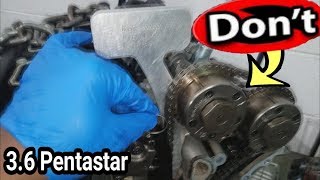
- Damaged Reluctor Wheel on Camshaft: The magnetic tone ring that the sensor reads can be damaged or demagnetized, especially during other engine repairs like rocker arm replacement. Using magnetic tools near the tone wheel can corrupt its signal, leading to persistent cam sensor codes even with a new sensor.
Diagnosis Steps
- Read the freeze frame data to understand the conditions when the code was set.
- Check the engine oil level and condition. Low or dirty oil can affect the VVT system and trigger cam codes.
- Locate the Bank 2 Camshaft Position Sensor. On the 3.6L V6, it's on the driver's side rear of the cylinder head. On the 5.7L V8, the single cam sensor is on the front timing cover.
- Visually inspect the wiring harness and connector for the Bank 2 camshaft position sensor. Look for frayed wires, corrosion, or loose pins.
- If accessible, swap the Bank 2 and Bank 1 camshaft position sensors. Clear the codes and run the engine. If the code changes to P0340, the sensor is faulty. (Note: This is difficult on the 3.6L due to the Bank 1 sensor location).
- If the code remains P0345, use a multimeter to test the sensor's circuit. Check for the correct reference voltage (usually 5V), a good ground, and test the signal wire for shorts or opens.
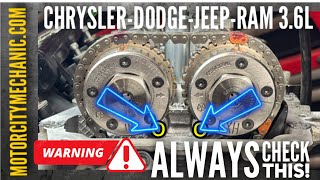
- If the sensor and wiring are good, the issue is likely mechanical. On a 3.6L, the next step is to remove the driver's side valve cover and inspect the oil gallery plugs to ensure they are tight. 🎬 See this warning about loose oil gallery bolts on Pentastar engines.
- If the gallery plugs are tight, the issue points toward the camshaft phaser, OCV, or timing chain, as noted in Dodge TSBs.
- For a definitive mechanical diagnosis, an oscilloscope can be used to compare the camshaft and crankshaft sensor patterns to a known-good waveform. A clean, repeating square-wave pattern from approximately 0.5V to 4.5V indicates a healthy sensor.
Parts You'll Likely Need
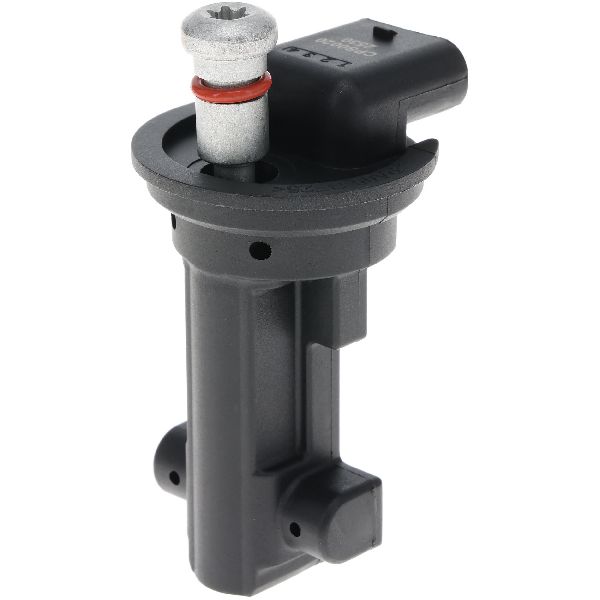
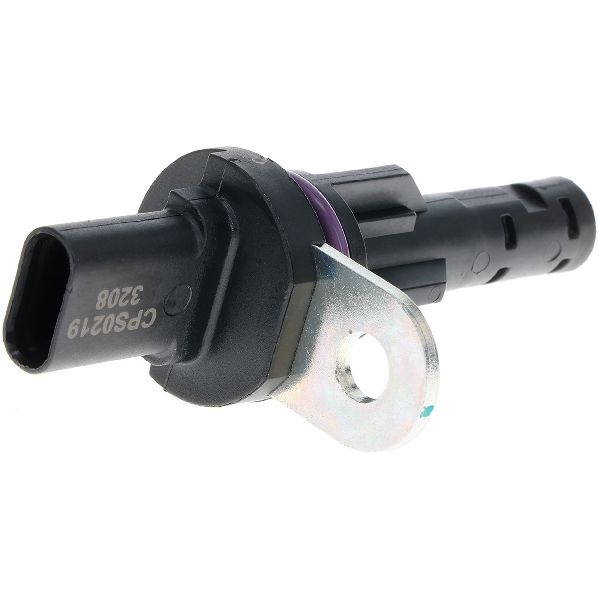
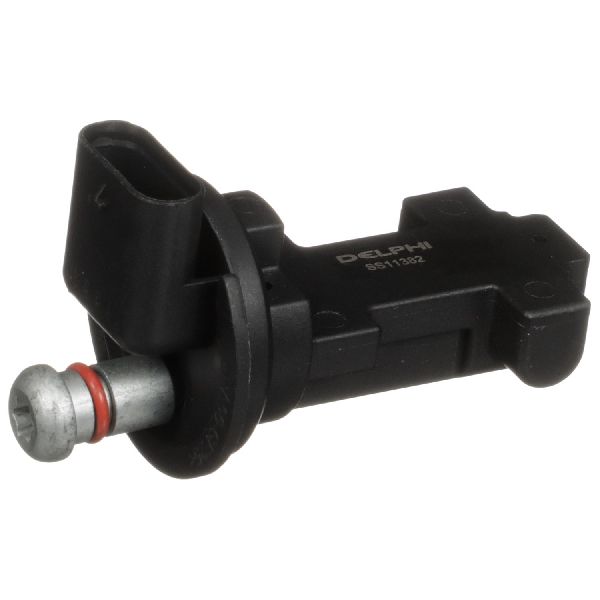
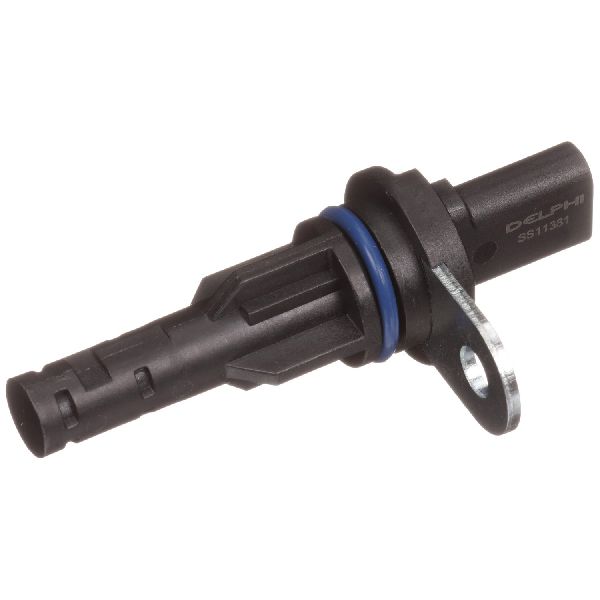
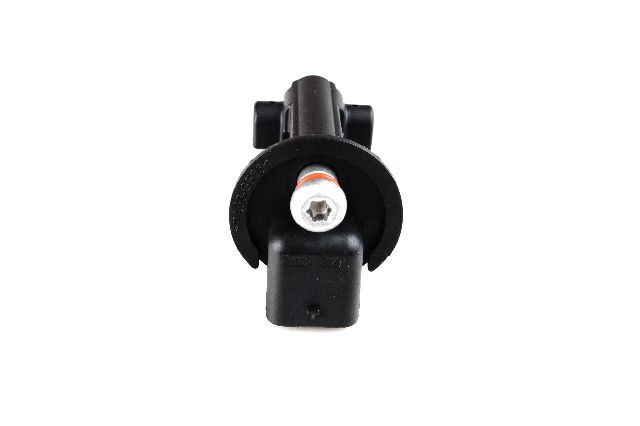
- Camshaft Position Sensor (Bank 2)
(OEM #5149141AF)— This is the most frequent failure point for a P0345 code. It is recommended to use an OEM Mopar part.
Trusted brands: Mopar, Delphi, NGK, Standard Motor Products (PC950)
OEM price range: $40-$80
Aftermarket price range: $25-$60 - Camshaft Phaser (Exhaust, Bank 2)
(OEM #05048043AB)— Specifically cited by Dodge TSB #05048043AB as a required replacement part when diagnosing P0345, along with its related components.
Trusted brands: Mopar
OEM price range: $100-$200
Aftermarket price range: $70-$150 - VVT Solenoid / Oil Control Valve (OCV)
(OEM #5184150AF)— Works with the phaser and is recommended for replacement at the same time per TSB #05048043AB. It can get clogged with sludge and fail to operate the phaser correctly.
Trusted brands: Mopar, Dorman
OEM price range: $30-$60
Aftermarket price range: $20-$50
Related Codes That Often Appear With This One
- P0349 — This code indicates an intermittent signal from the same sensor (Bank 2), which often appears alongside the circuit fault code P0345. [Bulletin #18-024-17 REV. C, 15]
- P0340 — This is the equivalent code for Bank 1. Seeing both P0340 and P0345 simultaneously could point to a systemic issue like low oil pressure (check oil galley plugs), a wiring problem common to both sensors, or a timing chain issue.
- P0017 / P0018 — These codes indicate a Camshaft/Crankshaft correlation error. If the timing chain has stretched or a phaser is not working correctly due to low oil pressure, it can trigger both the correlation code and the sensor circuit code.
- P06DD — This code indicates Engine Oil Pressure Control Circuit Stuck Off. It frequently appears with cam codes on the 3.6L Pentastar and strongly points to an oil pressure problem, such as a bad oil pump or loose oil gallery plugs, which then starves the VVT system and triggers P0345.
- P0390 — This is the code for the Bank 2 Sensor 2 (Exhaust) circuit. On a 3.6L Pentastar, since one physical sensor reads both cams, seeing P0345 and P0390 together often points to a bad sensor assembly, its connector, or a shared power/ground issue. [24, 28, Bulletin #18-024-17 REV. C]
Technical Service Bulletins (TSBs) & Recalls

- 18-024-17 REV. C: Lists P0345 as 'Camshaft Position Sensor Circuit - Bank 2 Sensor 1' among other related codes and changes it to a two-trip fault to reduce nuisance MILs.
- 18-049-20: Mentions P0345 in a list of codes that may be addressed by a PCM software update.
- 05048043AB: Recommends replacing the Exhaust Phaser, Actuator, and OCV together when diagnosing P0345.
Platform-Specific Known Issues
- TSB #05048043AB explicitly states that for code P0345, engineering requests the replacement of all three main valve timing components on the affected side: the Phaser, Actuator, and Oil Control Valve (OCV).
- TSB #18-049-20 mentions a potential PCM software update to change how intermittent sensor faults are reported for codes including P0345, which may prevent the check engine light from staying on for a temporary glitch.
- A widely reported issue on the 3.6L Pentastar engine is loose oil gallery plugs under the valve covers. These can back out, causing an oil pressure drop to the VVT system and triggering P0345, P0349, and other codes. This should be checked before replacing expensive phasers.
- Owners and mechanics in forums report that using cheap, non-OEM camshaft position sensors can sometimes fail to fix the code or may fail quickly. Sticking to Mopar or premium aftermarket brands is recommended.
Mechanic-Grade Diagnostic Values
- 5V Reference Supply Voltage at Sensor Connector — expected: 4.5 to 5.2 Volts with key on, engine off.. Failure: No voltage or voltage outside this range indicates a wiring or PCM issue.
- CMP Signal Circuit Voltage at Sensor Connector — expected: Should toggle between ~0.5V and ~4.5V (or 0V and 5V) when the engine is running or cranked, producing a square wave on an oscilloscope.. Failure: Voltage that is stuck high, low, or shows a distorted pattern indicates a failed sensor or wiring short/open.
- Continuity of Sensor Wiring to PCM — expected: Less than 5.0 Ohms of resistance.. Failure: Resistance greater than 5.0 Ohms indicates an open or excessive resistance in the wire.
- Signal Wire Short to Ground — expected: Resistance should be greater than 100 Ohms.. Failure: Resistance less than 100 Ohms indicates a short to ground in the signal wire.
Scan Tool Commands That Help
- wiTECH: Reprogram PCM — If a Technical Service Bulletin (TSB) indicates that a software update is available to address false codes or improve engine operation related to timing. A battery charger must be connected to ensure voltage does not drop below 13.2 volts during the flash.
- wiTECH: Clear All DTCs — This function is automatically presented after a module flash and should be used to clear any codes set during the reprogramming process.
- High-end aftermarket scanners: Cam/Crank Relearn Procedure — After replacing a camshaft position sensor, crankshaft position sensor, or timing components, a relearn procedure may be required for the PCM to recognize the new sensor's position. Failure to do so can result in rough running or a no-start condition.
Wiring & Ground Locations
- Bank 2 Cam Sensor Connector (3.6L) — Rear of the driver's side cylinder head.. This is the direct connection point for the sensor. The terminals and wiring here are the first place to check for corrosion, damage, or poor pin tension.
- Engine To Body Ground — A ground strap connecting the engine block to the chassis/frame rail.. A poor engine ground can cause floating voltages and erratic behavior from various sensors, including the camshaft position sensor, as it can disrupt the sensor's ground reference.
- PCM Ground — The Powertrain Control Module itself is grounded to the chassis, often near its mounting bracket.. The PCM provides the ground reference for the camshaft sensor circuit. If the PCM's own ground is compromised, it can cause incorrect readings and trigger fault codes.
Real Owner Repair Stories
- DodgeForum.com user Tpike88 (2013 Dodge Durango 3.6L V6) — Codes P0345 and P0390 for Bank 2 cam sensors.
❌ Tried (didn't work) Replaced both Bank 2 camshaft position sensors., Replaced the crankshaft position sensor., Performed a hard reset at a shop.
✅ What actually fixed it The user reported the timing was checked and was good, but the thread ended without a final confirmed fix, highlighting the difficulty of this diagnosis when common parts are replaced without success. - YouTube channel 'Fix it Angel' (2015 Jeep Wrangler 3.6L Pentastar (same engine)) — Cylinder 3 misfire, ticking noise. Another shop misdiagnosed it as a burnt valve.
❌ Tried (didn't work) Prior shop could not diagnose the misfire's root cause.
✅ What actually fixed it The root cause was a failed rocker arm on cylinder #3. The needle bearings in the roller collapsed, causing excessive play, damaging the camshaft lobe, and leading to timing-related issues that can trigger cam sensor codes. The fix was to replace the failed rocker arms and the damaged camshaft.
OEM Part Supersession History
5184380AD, 5184380AE, 5184380AF→5184380AG— Standard part revision and improvement by the manufacturer.
Heads up: These part numbers refer to the right-side intake camshaft for the 3.6L engine, not the sensor itself. This is relevant because camshaft damage from rocker arm failure is a possible root cause of P0345.N/A→5149141AF— This is the current, widely used part number for the camshaft position sensor for the 3.6L engine across many Chrysler/Dodge/Jeep vehicles.
Model Year Variations Within This Range
- 2016-2017: The 3.6L Pentastar engine received an update (Pentastar Upgrade or PUG) starting in some 2016 models. This included changes to the variable valve timing (VVT) system, a new two-step valve lift system, and other enhancements. While the P0345 code's meaning is the same, diagnostic paths could differ slightly due to the different VVT hardware. TSB #18-020-16 mentions software updates for 2016 6.4L engines, indicating that model year software changes are common.
Helpful Videos
Used OEM Parts in Stock
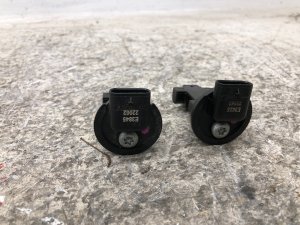
New Aftermarket Parts Available

The information in this article is provided for general reference and educational purposes only. Vehicle specifications, procedures, and part compatibility can vary by production date, trim level, and region. Always consult your vehicle's factory service manual and verify part numbers before purchasing or performing repairs. Safety-critical components such as airbags, seat belts, and braking systems should be installed by a qualified professional.
- Dodge DURANGO:
- 🎬 Helpful Videos
- 🛍️ Shop This Part
- What's Unique About the 2011-2017 Dodge DURANGO
- Diagnostic Flowchart
- Symptoms You May Notice
- Most Likely Causes
- Rare But Worth Checking
- Diagnosis Steps
- Parts You'll Likely Need
- Related Codes That Often Appear With This One
- Technical Service Bulletins (TSBs) & Recalls
- Platform-Specific Known Issues
- Mechanic-Grade Diagnostic Values
- Scan Tool Commands That Help
- Wiring & Ground Locations
- Real Owner Repair Stories
- OEM Part Supersession History
- Model Year Variations Within This Range
- 🎟️ Get 5% Off