

P0344 on 2016-2017 Dodge Durango: Camshaft Sensor Intermittent Causes and Fixes
This code indicates an intermittent signal from the camshaft position sensor on Bank 1. The most common fix is replacing the sensor itself, which costs about $30-$60 for an aftermarket part. On 5.7L HEMI engines, low engine oil is a frequent trigger for this code and should be checked first. Wiring issues are the next most likely cause.
- P0344 means the camshaft position sensor signal for Bank 1 is cutting out intermittently.
- The most likely cause is a faulty sensor, which is a relatively inexpensive and straightforward DIY replacement.
- Before replacing the sensor, inspect its wiring connector for oil contamination and the harness for any visible damage.
- On a 3.6L V6, the Bank 1 sensor is on the passenger side and can be difficult to access; on a 5.7L V8, the single sensor is on the front and is easier to reach.
- If a new sensor doesn't fix the problem, investigate the wiring more closely or check if your vehicle needs a PCM software update from a dealer.
What's Unique About the 2016-2017 Dodge DURANGO
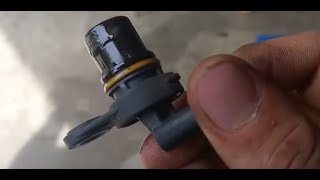
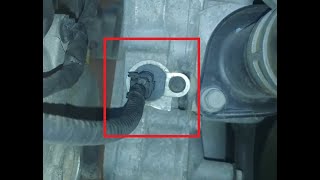
For the 2016-2017 Dodge Durango, this code can apply to both the 3.6L Pentastar V6 and the 5.7L HEMI V8. On the 3.6L V6, Bank 1 is on the passenger side, and the sensor is located on the rear of the cylinder head, often requiring removal of the upper intake manifold for access. 🎬 Watch: Step-by-step Bank 1 sensor replacement on the 3.6L V6. The 5.7L HEMI has only one camshaft sensor, located on the front timing cover near the thermostat housing, 🎬 See how to locate and swap the 5.7L HEMI sensor. which is generally easier to access. A unique issue for the HEMI is that low or degraded engine oil can cause the Variable Valve Timing (VVT) system to act up, triggering a P0344 code even if the sensor is good. Additionally, Dodge issued TSB #18-049-20, which supersedes a previous TSB and applies to both the Durango and Jeep Grand Cherokee, to update PCM software to make the computer less sensitive to minor, temporary glitches.
Diagnostic Flowchart
Tap your situation to follow the diagnostic path that matches what you're seeing on this vehicle.
🎬 Watch: Common symptoms of a failing camshaft position sensor.Symptoms You May Notice
- Check Engine Light is on
- Engine is hard to start or has a long crank time
- Engine stalls intermittently, especially when coming to a stop or at low speeds
- Rough idling
- Hesitation or lack of acceleration
- Engine misfires
- Engine may not rev above 2500 RPM (limp mode)
- Replacing the camshaft position sensor multiple times without checking the wiring harness for damage or oil contamination.
- Using low-quality aftermarket sensors that may be dead-on-arrival or fail quickly.
- On a 5.7L HEMI, replacing the cam sensor without first checking if the engine oil level is low or the oil is degraded.
- Replacing the crankshaft position sensor when the code specifically points to the camshaft sensor (unless codes for both are present).
Most Likely Causes
- Failed Camshaft Position Sensor (Bank 1) 🔴 High Probability Sensors are exposed to high engine temperatures and can fail with age. A very common issue is oil from a leaking valve cover gasket dripping directly onto the sensor or its connector, causing contamination and failure.
How to confirm: After checking wiring, replacing the sensor is the most direct way to confirm. A mechanic can use an oscilloscope to view the sensor's signal pattern to check for dropouts, which is the definitive diagnostic method. Many owners report that using OEM Mopar sensors is more reliable than aftermarket alternatives, which can sometimes be faulty out of the box or fail prematurely.
Typical fix: Replace the Bank 1 camshaft position sensor. Ensure the new sensor's O-ring is properly seated and lubricated to prevent oil leaks. Clear the codes after installation.
Est. part cost: $25-$75 - Wiring Harness or Connector Issue 🟡 Medium Probability The wiring harness is subjected to intense engine heat and vibration, which can cause wires to become brittle, frayed, or chafe against other components. The connector pins can also become loose, corroded, or contaminated with oil.
How to confirm: Visually inspect the wiring harness leading to the sensor for any signs of damage, chafing, or melting. Check the connector for a secure fit, corrosion, or oil intrusion. Wiggle the harness while the engine is running to see if it causes a stall or stumble. A multimeter can be used to test for the 5-volt reference, ground, and signal integrity back to the PCM.
Typical fix: Repair the damaged section of the wire or replace the pigtail connector. Clean any oil out of the connector with electrical contact cleaner and ensure a snug fit.
Est. part cost: $15-$40 for a new pigtail - PCM Software Update Needed ⚪ Low Probability Dodge released TSB #18-049-20 to make the PCM less sensitive to brief, intermittent signal losses from the cam and crank sensors. The update changes the code from a one-trip to a two-trip fault, preventing the check engine light from illuminating for minor, non-critical signal drops.
How to confirm: A dealership or qualified shop with a wiTECH scan tool can check your vehicle's current software calibration level against the latest version specified in the TSB.
Typical fix: Reprogram the Powertrain Control Module (PCM) with the latest software. This must be done by a dealer or a shop with the appropriate tools.
Est. part cost: $0 if covered by warranty, otherwise typically $100-$200 for labor.
Rare But Worth Checking
- Low or Degraded Engine Oil (5.7L HEMI): On the 5.7L HEMI engine, a low or dirty engine oil level can cause the Variable Valve Timing (VVT) system to malfunction, which in turn can trigger a P0344 code. This is a well-documented issue. Always check the engine oil level and condition before replacing any parts on a HEMI with this code.
- Failing Crankshaft Position Sensor: An intermittent signal from the crankshaft position sensor can sometimes cause the computer to incorrectly flag the camshaft sensor. If P0339 (Crankshaft Position Sensor Intermittent) is also present, suspect the crank sensor or the relationship between the two.
- Damaged Tone Ring: The tone ring on the camshaft, which the sensor reads, can be damaged or have debris on it, causing an erratic signal. This is uncommon but possible, and typically requires more significant engine disassembly to inspect.
- Weak Battery or Charging System Issue: Low system voltage during cranking or operation can cause various electronic modules to behave erratically, including setting false sensor codes. TSB 18-049-20 also notes an enhancement to address shorter auxiliary battery life, suggesting a link between voltage stability and sensor codes.
- Failing Powertrain Control Module (PCM): In very rare cases, the PCM itself may be faulty. This should only be considered after all other possibilities, including extensive wiring checks, have been exhausted.
Diagnosis Steps
- Scan for any other trouble codes. Codes for the crankshaft sensor (P0335, P0339) or other cam sensors can provide important clues.
- If you have a 5.7L HEMI, check the engine oil level and condition immediately. Top off or change if necessary, clear the code, and drive to see if it returns.
- Visually inspect the camshaft position sensor on Bank 1 and its electrical connector. Look for obvious damage, loose connections, or oil contamination from a leaking valve cover gasket.
- Inspect the wiring harness leading to the sensor. Check for any frayed, pinched, or melted sections. Wiggle the harness with the engine running to see if the fault can be triggered.
- If the wiring looks good and oil level is correct, the most common repair is to replace the camshaft position sensor. Using an OEM Mopar part is highly recommended.
- After replacement, clear the codes and test drive the vehicle to see if the code returns.
- If the code persists, perform a more in-depth wiring check with a multimeter to test for 5-volt reference, ground, and signal integrity back to the PCM. An oscilloscope is the best tool for this.
- Check if the vehicle is eligible for a PCM software update as described in TSB #18-049-20.
Parts You'll Likely Need
- Camshaft Position Sensor (3.6L V6)
(OEM #5149141AF)— This is the sensor for the 3.6L V6 engine and is the most frequent point of failure for the P0344 code on that powertrain.
Trusted brands: Mopar, NTK, Delphi, Standard Motor Products (PC950)
OEM price range: $50-$75
Aftermarket price range: $25-$50 - Camshaft Position Sensor (5.7L V8)
(OEM #5149054AC)— This is the sensor for the 5.7L HEMI V8. While durable, it can fail due to heat or be flagged due to VVT issues caused by low oil.
Trusted brands: Mopar, NTK, Delphi, Duralast
OEM price range: $40-$60
Aftermarket price range: $20-$40
Related Codes That Often Appear With This One
- P0340 — This is the general circuit fault code for the same sensor. P0344 indicates the problem is intermittent, while P0340 indicates a more constant failure.
- P0339 — This is an intermittent fault for the Crankshaft Position Sensor. Since the cam and crank sensors work together for timing, a fault in one can sometimes be related to a fault in the other. TSB 18-049-20 addresses both codes.
- U1424 — This code for 'Implausible Engine Torque Signal' can be triggered by bad data from the cam or crank sensors, as the PCM can't trust the engine's reported state. This specific code is mentioned as being addressed by the software update in TSB 18-049-20 for the 2017 model year.
- P0369, P0349, P0394 — These are intermittent codes for the other camshaft position sensors on the 3.6L V6 engine (Bank 1 Sensor 2, Bank 2 Sensor 1, Bank 2 Sensor 2). The same TSB addresses all of them, indicating a common sensitivity issue fixed by the software update.
Technical Service Bulletins (TSBs) & Recalls
- 18-049-20: Supersedes 18-024-17 REV. C. Involves a PCM software update that changes P0344 (and other cam/crank codes) from a one-trip to a two-trip fault to reduce unnecessary Check Engine Lights for minor intermittent issues on both 3.6L and 5.7L engines. Also applies to the Jeep Grand Cherokee.
- 18-024-17 REV. C: A similar, but now superseded, PCM software update to address intermittent cam and crank sensor codes.
Platform-Specific Known Issues
- On the 3.6L V6 engine, the Bank 1 (passenger side) sensor is located on the rear of the cylinder head and may require removing the upper intake manifold for access, increasing labor time and difficulty.
- On the 5.7L V8 engine, low engine oil level is a common cause of P0344, as it can affect the VVT phaser's operation, leading to a cam/crank timing mismatch that the PCM interprets as a sensor fault.
- Oil from a leaking valve cover gasket can seep into the sensor's electrical connector, causing an intermittent short and triggering the P0344 code.
- TSB #18-049-20 was issued to update PCM software to prevent false positives for this code due to temporary signal glitches, changing it to a two-trip fault.
Mechanic-Grade Diagnostic Values
- 3.6L V6 & 5.7L V8: Sensor Supply Voltage — expected: 4.5 - 5.2 Volts DC with key on, engine off.. Failure: Voltage below 4.5V or above 5.2V points to a wiring issue or a problem with the PCM's 5V reference circuit.
- 3.6L V6 & 5.7L V8: Sensor Ground Circuit Resistance — expected: Less than 5.0 Ohms between the ground pin at the connector and a known good chassis ground.. Failure: Higher resistance indicates a poor ground connection, which can cause erratic signals.
- 3.6L V6 & 5.7L V8: Sensor Signal Wire (Dynamic Test) — expected: A digital square wave, toggling between approximately 0V and 5V when viewed on an oscilloscope while the engine is cranking or running.. Failure: A signal that is stuck high (at 5V), stuck low (at 0V), or shows dropouts or a distorted pattern indicates a failed sensor or a wiring short/open.
- 5.7L V8: Signal Wire Bias Voltage (Static Test) — expected: Approximately 5 Volts on the signal wire with the sensor connected, key on, and engine off.. Failure: This is a normal reading for a Chrysler 'pull down' circuit design. The absence of this bias voltage could indicate an open in the signal wire, but it should not be mistaken for a short to power.
Scan Tool Commands That Help
- wiTECH or high-end aftermarket scanner: Cam/Crank Relearn (or Camshaft Position Sensor Relearn) — After replacing a camshaft or crankshaft position sensor. Some vehicles require this procedure for the PCM to learn the new sensor's signal characteristics. Failure to perform the relearn can cause the P0344 code to return even with a good part.
Wiring & Ground Locations
- 5.7L V8 CMP Sensor Connector — 3-pin connector at the camshaft position sensor, located on the front timing cover.. Knowing the pinout is essential for testing. Typically: Pin 1 is the 5V supply from the PCM, Pin 2 is the signal wire back to the PCM, and Pin 3 is the sensor ground.
- 3.6L V6 CMP Sensor Connector — 4-pin connector at the camshaft position sensor, located on the rear of the passenger-side cylinder head.. This sensor is a dual-read unit. The 4 pins consist of a shared 5V supply, a shared ground, and two separate signal wires (one for intake cam, one for exhaust). P0344 (Bank 1, Sensor 1) refers to the intake cam signal. Testing the correct signal wire is critical.
- Engine Ground Strap — A common ground point is a small braided strap that connects the engine block to the chassis, often located near the alternator on the 3.6L V6.. A poor engine ground can cause a floating reference for all engine sensors, leading to erratic signals and intermittent codes like P0344. A visual inspection for corrosion or looseness is a crucial, often-missed basic step.
Real Owner Repair Stories
- YouTube channel 'P0344 FIXED! DODGE 5.7 DONT CHANGE THE CAM SESNOR JUST YET' (2011 Dodge Durango Citadel 5.7L V8) — Intermittent P0344 code, check engine light would come on frequently. After clearing, it would return some miles later.
❌ Tried (didn't work) Replaced the camshaft position sensor (fault became less frequent but still returned after 20 miles)., Extensive wiring checks (wiggle tests, resistance checks from PCM)., Considered replacing the crankshaft position sensor based on repair database suggestions.
✅ What actually fixed it An engine oil change. The mechanic concluded that after driving 30 miles with no codes returning, the degraded engine oil was causing the VVT system to respond incorrectly, which the PCM interpreted as a cam/crank timing error, setting the P0344 code.
When the Usual Fixes Don't Work
- In one documented case involving a 5.7L HEMI with a persistent P0344, the issue was not resolved by replacing the camshaft position sensor. Despite extensive electrical testing and parts replacement, the root cause was ultimately found to be degraded engine oil. An oil change restored proper VVT system function and permanently cleared the code, highlighting that on HEMI engines, this 'electrical' fault can have a purely mechanical/hydraulic cause.
OEM Part Supersession History
5149054AB→5149054AC— Standard part revision by the manufacturer.
Heads up: The new part number (5149054AC) is the correct replacement for the 5.7L V8 Camshaft Position Sensor.
Helpful Videos
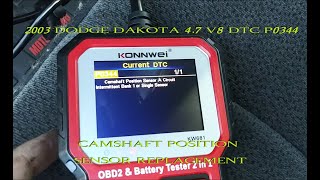
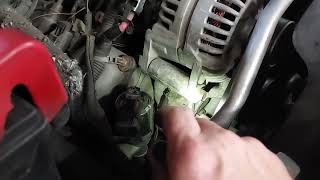
Used OEM Parts in Stock
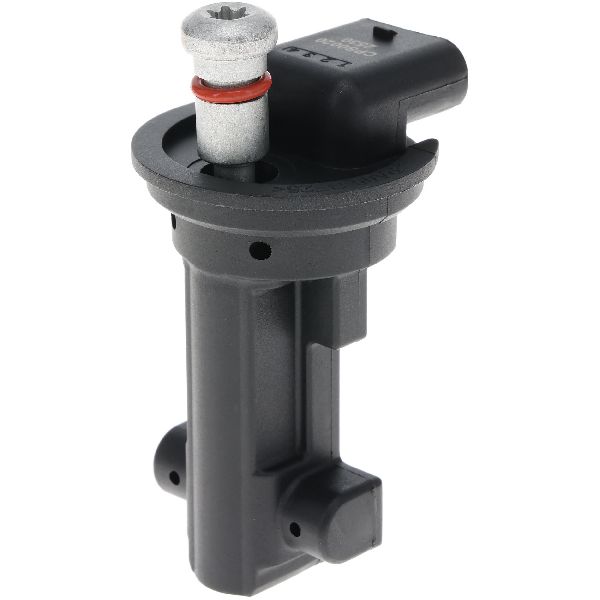
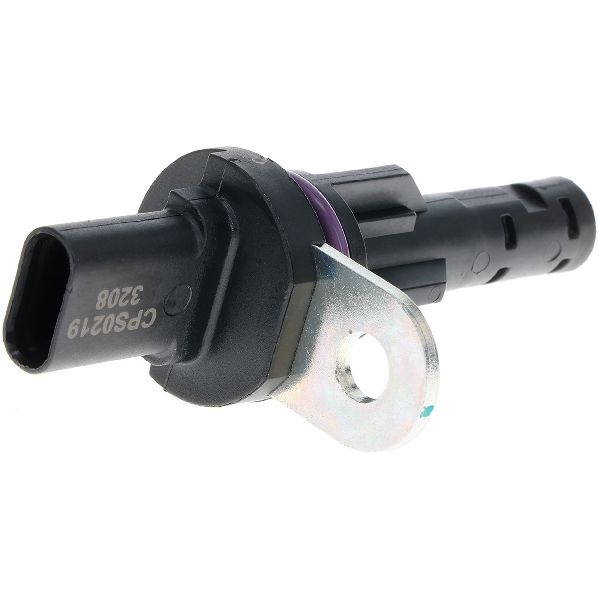
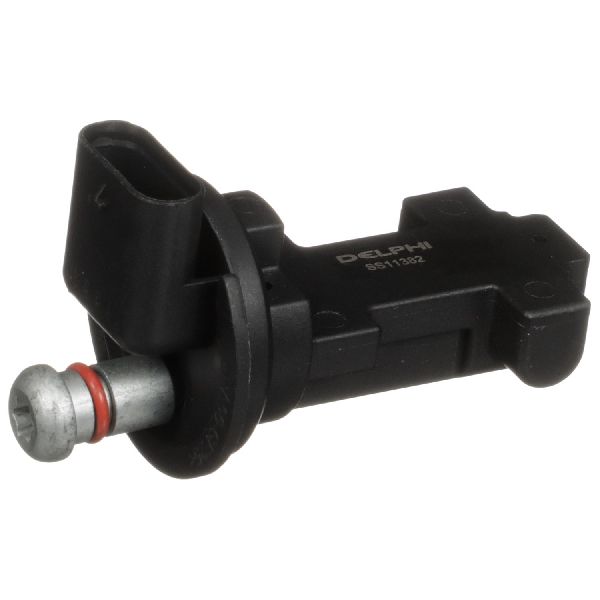
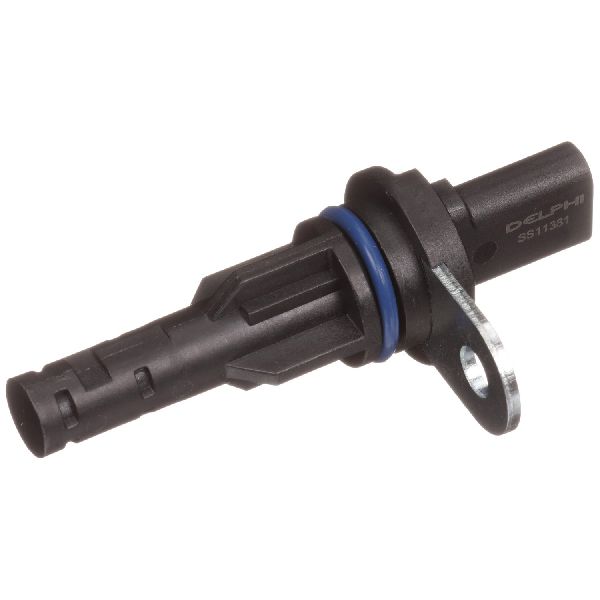
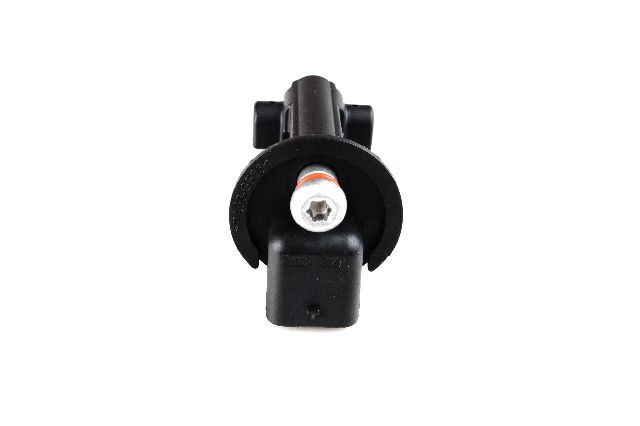
New Aftermarket Parts Available

The information in this article is provided for general reference and educational purposes only. Vehicle specifications, procedures, and part compatibility can vary by production date, trim level, and region. Always consult your vehicle's factory service manual and verify part numbers before purchasing or performing repairs. Safety-critical components such as airbags, seat belts, and braking systems should be installed by a qualified professional.
- Dodge DURANGO:
- 🎬 Helpful Videos
- 🛍️ Shop This Part
- What's Unique About the 2016-2017 Dodge DURANGO
- Diagnostic Flowchart
- Symptoms You May Notice
- Most Likely Causes
- Rare But Worth Checking
- Diagnosis Steps
- Parts You'll Likely Need
- Related Codes That Often Appear With This One
- Technical Service Bulletins (TSBs) & Recalls
- Platform-Specific Known Issues
- Mechanic-Grade Diagnostic Values
- Scan Tool Commands That Help
- Wiring & Ground Locations
- Real Owner Repair Stories
- When the Usual Fixes Don't Work
- OEM Part Supersession History
- 🎟️ Get 5% Off