

P0341 on 2012-2019 Land Rover Range Rover Evoque: Causes and Fixes
On the 2012-2019 Range Rover Evoque, code P0341 often points to a mechanical timing issue rather than a simple sensor failure. The most common causes are a stretched timing chain or a faulty Variable Camshaft Timing (VCT) solenoid. Expect a professional repair costing between $800 and $2,500+, depending on the root cause.
- P0341 on a Range Rover Evoque is more likely a mechanical issue than a sensor failure.
- The primary suspects are a stretched timing chain (especially on 2018-2019 models) or a faulty VCT solenoid.
- Do not simply replace the camshaft position sensor without further diagnosis.
- Check engine oil level and condition, as low or dirty oil can trigger VCT-related faults.
- Due to the complexity of timing system repairs, professional service from a qualified technician is highly recommended.
What's Unique About the 2012-2019 Land Rover RANGE ROVER EVOQUE

This generation of Evoque used two different 2.0L engines: a Ford-derived unit (Si4, 2012-2017) and JLR's own Ingenium engine (2018-2019). Both are known to set the P0341 code not just for a bad sensor, but more frequently due to underlying mechanical issues. The Ingenium engines, in particular, are known for premature timing chain stretch, which directly causes this code. Land Rover Technical Service Bulletins (TSBs) confirm that P0341 often appears with other VVT and timing-related codes, pointing technicians toward mechanical faults rather than simple sensor swaps. [SSM74161, LTB00916NAS5]
Diagnostic Flowchart

Tap your situation to follow the diagnostic path that matches what you're seeing on this vehicle.
Symptoms You May Notice
- Check Engine Light (MIL) illuminated.
- Engine is hard to start or cranks but won't start.
- Engine stalls, especially at idle.
- Rough idling.
- Reduced engine power and hesitation during acceleration.
- Rattling noise from the engine, particularly on the Ingenium models.
- Replacing the camshaft position sensor without first investigating the timing system (chain stretch) or VCT system (solenoids). The sensor is often just reporting the symptom of a deeper mechanical problem.
Most Likely Causes

- Stretched Timing Chain or Worn Timing Components 🔴 High Probability The JLR 2.0L Ingenium engine (2018-2019) is particularly known for premature timing chain stretching. The earlier Ford-based engine can also experience this with age and mileage. A stretched chain causes the camshaft and crankshaft signals to go out of sync.
How to confirm: A technician can use a scan tool to check cam/crank correlation data. A physical inspection is the definitive confirmation, but this is labor-intensive as the chain is on the rear of the Ingenium engine.
Typical fix: Replacement of the timing chain, guides, and tensioners. On Ingenium engines, it is recommended to use the updated post-2019 parts.
Est. part cost: $400-$800 - Faulty Variable Camshaft Timing (VCT) Solenoid 🔴 High Probability TSBs for this platform frequently group P0341 with VCT actuator codes (like P0014, P000B), indicating the VCT system is a common point of failure. [SSM74161] The solenoids can get clogged with dirty oil or fail electrically.
How to confirm: Check for low or dirty engine oil first. A technician can command the solenoid with a scan tool and monitor the camshaft angle response. Swapping the intake and exhaust solenoids (if identical) to see if the code changes is another effective diagnostic step.
Typical fix: Replacement of the faulty VCT solenoid.
Est. part cost: $50-$150 - Faulty Camshaft Position Sensor 🟡 Medium Probability Like any electronic component, the sensor can fail over time due to heat and vibration. However, it's often replaced unnecessarily when the root cause is mechanical.
How to confirm: Inspect the sensor and its connector for damage or oil contamination. A technician can use an oscilloscope to check for a clean, consistent signal from the sensor.
Typical fix: Replacement of the camshaft position sensor.
Est. part cost: $60-$120 - Damaged Wiring or Loose Connector ⚪ Low Probability
How to confirm: Visually inspect the wiring harness leading to the camshaft position sensor for any signs of fraying, melting, or corrosion. Check that the connector is securely plugged in.
Typical fix: Repair the damaged section of the wiring harness or clean/replace the connector.
Est. part cost: $10-$50
Rare But Worth Checking
- Damaged Camshaft Reluctor Wheel: The reluctor wheel on the camshaft, which the sensor reads, can be damaged or slip, causing erratic signals. This is uncommon but can happen, especially if other engine work has been performed.
- Powertrain Control Module (PCM) Fault: In very rare cases, the PCM itself may be unable to correctly process the signal from the sensor. This should only be considered after all other possibilities have been exhaustively ruled out.
Diagnosis Steps
- Read all stored fault codes with an OBD-II scanner to check for related timing or VCT codes.
- Check the engine oil level and condition. Low or dirty oil can cause VCT system problems.
- Inspect the camshaft position sensor's wiring and connector for any visible damage, corrosion, or looseness.
- Using a scan tool with live data, monitor the signal from the camshaft position sensor. Look for dropouts or erratic readings while the engine is running.
- If possible, command the intake VCT solenoid with the scan tool and observe the change in camshaft timing. A lack of response points to a solenoid or phaser issue.
- If timing is suspected, perform a cam/crank correlation test with an oscilloscope or advanced scan tool to verify the mechanical timing is correct.
- If all other tests pass, test the sensor itself for proper resistance and voltage output according to the service manual.
Parts You'll Likely Need
- Timing Chain Kit — A stretched timing chain is a very common root cause for P0341 on these engines, especially the 2.0L Ingenium.
Trusted brands: Land Rover (OEM)
OEM price range: $400-$800
Aftermarket price range: $250-$500 - Variable Camshaft Timing (VCT) Solenoid — Often fails due to oil contamination or electrical issues, and is cited in TSBs as a related failure part. [SSM74161]
Trusted brands: Bosch, Land Rover (OEM)
OEM price range: $100-$180
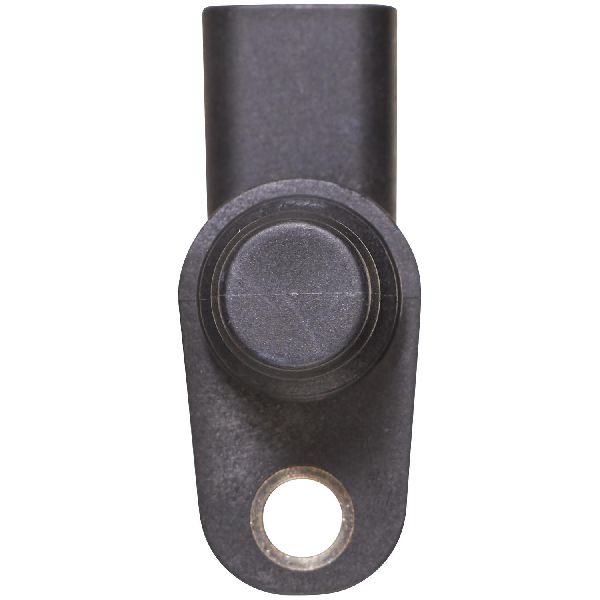
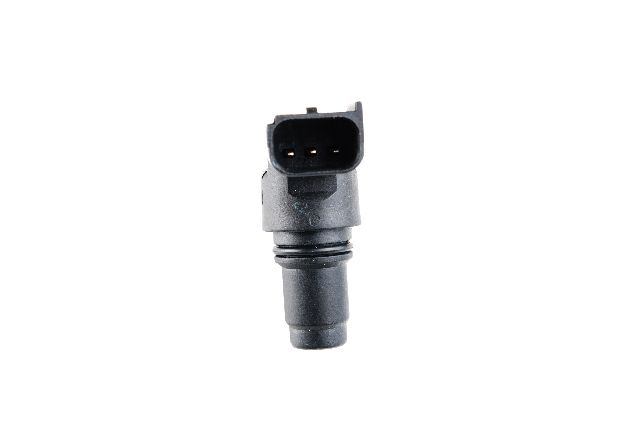
Aftermarket price range: $50-$120 - Camshaft Position Sensor — While often not the root cause, the sensor can fail. It is a common replacement part for this code.
Trusted brands: Bosch, Delphi, Land Rover (OEM)
OEM price range: $90-$150
Aftermarket price range: $40-$80
Related Codes That Often Appear With This One
- P0016 — Indicates a crankshaft/camshaft correlation error, strongly suggesting a base timing issue like a stretched chain.
- P0017 — Another crankshaft/camshaft correlation code, often related to the exhaust cam, pointing to a timing system problem. [LTB00916NAS5]
- P054A, P0014, P000B — These codes are directly related to the Variable Camshaft Timing (VCT) system and often appear with P0341, as noted in TSB SSM74161, pointing to a faulty VCT solenoid or phaser.
- P0366 — This is the equivalent range/performance code for the exhaust camshaft position sensor (Sensor 'B'). Seeing both codes together points to a problem affecting the entire bank, such as a timing chain or wiring issue.
Technical Service Bulletins (TSBs) & Recalls
- SSM74161: Mentions P0341 appearing with multiple VCT-related DTCs.
- LTB00916NAS5: Associates P0341 with engine noises and other timing correlation codes.
- LTB00916NAS2: Similar to LTB00916NAS5, links P0341 to engine noise and potential timing issues.
Platform-Specific Known Issues
- TSB #SSM74161 notes that P0341-00 can be stored along with VCT codes like P054A-00, P0014-71, and P000B-00, indicating a likely issue with the variable valve timing system.
- TSB #LTB00916NAS5 and #LTB00916NAS2 mention that P0341 may be stored when a rattling noise is present from the engine, which often points to a problem with the timing chain or related components.
- On 2.0L Ingenium diesel engines (2018-2019), premature timing chain stretch is a widely documented problem that directly causes P0341 and P0016 codes, sometimes with as few as 40,000-60,000 miles.
Mechanic-Grade Diagnostic Values
- Camshaft Position Sensor Power Supply Voltage — expected: ~5V (with ignition on, engine off). Failure: Voltage significantly lower than 5V or 0V indicates a wiring or PCM issue.
- Camshaft Position Sensor Ground Circuit — expected: Near 0V on the ground wire. Should show battery voltage (~12.6V) when testing between the battery positive terminal and the sensor's ground pin.. Failure: Voltage above 0V on the ground pin (voltage drop) or failure to show battery voltage when tested against the positive terminal indicates a bad ground.
- Camshaft Position Sensor Signal Wire (Static Test) — expected: ~5V (with sensor connected, ignition on, engine off). Failure: 0V or a voltage significantly different from the power supply voltage suggests a faulty sensor or a short in the signal wire.
- Camshaft Position Sensor Signal (Dynamic Test with Oscilloscope) — expected: A clean square wave that switches between approximately 0V and 5V as the engine is running.. Failure: A missing waveform, a noisy signal, or a waveform that does not consistently switch indicates a faulty sensor, a damaged reluctor wheel, or a wiring issue.
Scan Tool Commands That Help
- Land Rover SDD/Pathfinder or equivalent advanced scan tool: VVT Solenoid Actuator Test — This bidirectional control commands the VVT solenoid to change the camshaft angle. It is used to verify if the solenoid is mechanically functioning and if the camshaft phaser responds. A lack of change in camshaft angle during this test points to a faulty solenoid, clogged oil passages, or a bad phaser.
- Land Rover SDD/Pathfinder or equivalent advanced scan tool: Camshaft/Crankshaft Correlation Live Data — This data PID should be monitored to see the relationship between the camshaft and crankshaft. On a healthy engine, the values should be stable. If the values are erratic or exceed a certain threshold (often just a few degrees), it strongly indicates a stretched timing chain or other base timing issue.
Wiring & Ground Locations
- Camshaft Position Sensor Connector (C1E105A) — On the 2.0L Turbo Si4 engine, the intake camshaft position sensor is located on the top of the engine, near the rear. Wiring diagrams show it connecting to the Engine Control Module (ECM).. This is the primary connection point for the sensor. Damage, corrosion, or oil contamination in this connector will directly cause signal range/performance issues, triggering P0341.
- Engine Control Module (ECM) — On the 2014 Evoque, the ECM is located at the center rear of the engine compartment.. The ECM provides the 5V power and ground to the sensor and interprets the return signal. A poor connection at the ECM pins for the camshaft sensor can mimic a sensor or wiring fault.
- Engine Ground Points (e.g., G1D129B) — A key ground point (G1D129B) is located on the lower left front of the engine compartment.. While the sensor itself is grounded through the PCM, poor engine or chassis grounds can introduce electrical noise into the system, potentially interfering with the sensitive camshaft position signal and causing intermittent faults.
Real Owner Repair Stories
- YouTube channel 'On The Spanners' (2016 Range Rover Evoque 2.0L Diesel (Ingenium)) — Check Engine Light with code P0341. A horrible rattling noise from the engine that would come and go, especially when the VVT system was active.
❌ Tried (didn't work) Clearing the code would result in it returning immediately upon hearing the engine rattle.
✅ What actually fixed it The engine was found to be extremely low on oil (4 liters were added). Topping up the engine oil to the correct level resolved the rattling noise and the P0341 code did not return. The low oil level was starving the VVT system, causing the noise and the timing correlation error. - ScannerDanner Forum (2012 Range Rover (engine not specified, but likely 2.0L Si4 based on year)) — Check Engine Light with codes P0341 (Intake Cam Sensor Bank 1) and P0366 (Exhaust Cam Sensor Bank 1). The vehicle ran perfectly with no noticeable performance issues.
❌ Tried (didn't work) The user checked sensor signals with a lab scope and they appeared to match the good bank (Bank 2)., Resistance of the wiring to the ECU was also checked and found to be good.
✅ What actually fixed it The forum discussion concluded the most likely cause, given that both sensors on one bank were dropping out simultaneously despite good wiring, was a mechanical timing synchronization issue (e.g., stretched chain) or a common power/ground problem in the sub-harness for that bank. The intermittent signal dropouts on both sensors pointed away from individual sensor failure and toward a systemic problem. - JustAnswer (2015 Land Rover Discovery Sport (shares platform/engine with Evoque)) — Check Engine Light with P0341, no power loss or stalling.
❌ Tried (didn't work) Replacing the camshaft position sensor did not fix the issue; the code and light returned.
✅ What actually fixed it The expert advice, after sensor replacement failed, was to perform a detailed inspection of the wiring harness for damage, check the camshaft reluctor ring for damage or misalignment, and verify the base engine timing had not jumped. This highlights that the sensor is often not the root cause.
OEM Part Supersession History
lr073778→LR126832— Part has been updated by the manufacturer for the VVT Solenoid.Multiple (part of a kit)→DA3412 (FAI Kit), AJ2.0KIT (Genuine Kit)— The timing chain kit for the 2.0L Ingenium diesel engine has been updated. Using the latest revision is critical for longevity.
Heads up: It is highly recommended to use the latest available part numbers for Ingenium timing chain jobs to prevent premature failure, which was an issue on earlier versions. Kits include updated chains, guides, and tensioners.
Model Year Variations Within This Range
- 2012-2017: These models use the Ford-based 2.0L Si4 engine. While still prone to timing and VVT issues, they do not have the same widespread, premature timing chain failure reputation as the later Ingenium engine.
- 2018-2019: These models use the JLR 2.0L Ingenium engine (both petrol and diesel). The Ingenium engines are widely documented to have issues with premature timing chain stretching, which is a very common root cause for P0341 on these specific years. The repair is also more labor-intensive as the timing chain is located at the rear of the engine.
Helpful Videos





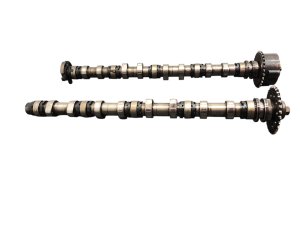
Used OEM Parts in Stock
New Aftermarket Parts Available

The information in this article is provided for general reference and educational purposes only. Vehicle specifications, procedures, and part compatibility can vary by production date, trim level, and region. Always consult your vehicle's factory service manual and verify part numbers before purchasing or performing repairs. Safety-critical components such as airbags, seat belts, and braking systems should be installed by a qualified professional.
- Land Rover RANGE ROVER EVOQUE:
- 🎬 Helpful Videos
- 🛍️ Shop This Part
- What's Unique About the 2012-2019 Land Rover RANGE ROVER EVOQUE
- Diagnostic Flowchart
- Symptoms You May Notice
- Most Likely Causes
- Rare But Worth Checking
- Diagnosis Steps
- Parts You'll Likely Need
- Related Codes That Often Appear With This One
- Technical Service Bulletins (TSBs) & Recalls
- Platform-Specific Known Issues
- Mechanic-Grade Diagnostic Values
- Scan Tool Commands That Help
- Wiring & Ground Locations
- Real Owner Repair Stories
- OEM Part Supersession History
- Model Year Variations Within This Range
- 🎟️ Get 5% Off