

P0340 on 2012-2015 Toyota RAV4: Camshaft Sensor Causes and Fixes
On a 2012-2015 RAV4, P0340 is most often a failed camshaft position sensor, but a weak battery is also a known cause per a Toyota TSB. Always test the battery first. If the battery is good, a new OEM-quality sensor (Denso) costs between $90-$150, while aftermarket options are cheaper but less reliable.
- Always test the battery and charging system before buying any parts. A weak battery is a known cause of P0340 on this RAV4 per a Toyota TSB.
- If the battery is healthy, the most likely cause is a failed camshaft position sensor.
- The repair is DIY-friendly and typically involves replacing a single sensor held by one bolt.
- The 2012 model year is different from 2013-2015, as it was the last year of the 3rd generation and offered an optional V6 engine.
What's Unique About the 2012-2015 Toyota RAV4
For this generation of RAV4, a key issue documented by Toyota itself is the potential for a low battery to trigger a P0340 code. A Technical Service Bulletin (T-TT-0010-10 Rev) confirms that low battery voltage can cause inconsistent engine cranking speed, leading the ECM to incorrectly flag the camshaft sensor. This makes checking the battery and charging system a critical first step before replacing any parts. The 2012 model year was also the last to offer the powerful 3.5L 2GR-FE V6 engine, while 2013-2015 models exclusively used the 2.5L 2AR-FE 4-cylinder. The diagnostic and replacement procedure differs slightly between these two engines.
Diagnostic Flowchart
Tap your situation to follow the diagnostic path that matches what you're seeing on this vehicle.
Generation note: The 2012-2015 period covers two RAV4 generations. The 2012 model is the final year of the third generation (XA30) and offered both a 2.5L I4 and a 3.5L V6 engine. The 2013-2015 models are the beginning of the fourth generation (XA40) and were only available with the 2.5L 2AR-FE I4 engine in North America.
Symptoms You May Notice
- Check Engine Light is on
- Engine is difficult to start or requires extended cranking
- Engine stalls unexpectedly, sometimes while driving
- Rough or unstable idle
- Noticeable loss of power and poor acceleration
- Reduced fuel economy
- Engine misfires or hesitates
- Replacing the camshaft position sensor without first checking the battery voltage and charging system health. The TSB for this vehicle makes the battery check a critical first step.
- Confusing the camshaft position sensor with the crankshaft position sensor. They are different sensors with different locations and functions.
Most Likely Causes
- Low Battery Voltage 🔴 High Probability A specific Toyota Technical Service Bulletin (T-TT-0010-10 Rev) was issued stating that low battery voltage can cause a P0340 code due to inconsistent engine rotational speed during cranking. This is a well-documented issue across many Toyota models of this era.
How to confirm: Test the battery with a multimeter or a battery tester. A healthy battery should read approximately 12.6 volts with the engine off and 13.7-14.7 volts with the engine running. A load test is the most definitive way to confirm battery health.
Typical fix: Recharge or replace the car battery.
Est. part cost: $120-$250 - Failed Camshaft Position Sensor 🔴 High Probability This is a common failure point for this code on most vehicles due to constant heat cycles and potential oil contamination from the engine.
How to confirm: After confirming battery and wiring are good, the sensor is the most likely culprit. It can be tested with a multimeter for resistance or by observing its signal with an oscilloscope during cranking. However, given its accessibility and moderate cost, replacement is often the most straightforward diagnostic step.
Typical fix: Replace the camshaft position sensor. On the 2.5L 2AR-FE, the intake sensor is on the top of the valve cover. 🎬 Watch: Step-by-step camshaft sensor replacement for the 2.5L engine. On the 3.5L 2GR-FE, it is on the rear cylinder head (Bank 1) near the throttle body. 🎬 See this walkthrough for replacing sensors on the V6 model. It is typically held in by a single 10mm bolt.
Est. part cost: $40-$150 - Wiring or Connector Issue 🟡 Medium Probability The engine bay's heat can make wiring insulation brittle over time. Rodents are also known to chew on Toyota's soy-based wire insulation, causing shorts or open circuits.
How to confirm: Visually inspect the wiring harness leading to the sensor for any signs of melting, chafing, corrosion, or breaks. Check that the connector is securely plugged in 🎬 Watch: A quick guide to the most common P0340 causes. and the pins are clean. Wiggle the harness with the engine running to see if it affects engine behavior.
Typical fix: Repair the damaged section of wiring or replace the connector pigtail.
Est. part cost: $15-$50
Rare But Worth Checking
- Stretched Timing Chain: On higher mileage engines (typically over 150,000 miles), a stretched timing chain can cause the camshaft and crankshaft to lose synchronization, triggering P0340, often along with correlation codes like P0016. This is a major mechanical repair.
- Faulty Engine Control Module (ECM): This is the least likely cause. The ECM should only be considered after all other possibilities, including sensors, wiring, and mechanical timing, have been thoroughly ruled out. A forum user on 2CarPros detailed a lengthy diagnostic process that eventually pointed to a heat-sensitive ECM, but this is an outlier case.
- Bad Alternator: A failing alternator can cause inconsistent voltage throughout the vehicle's electrical system, which can lead to a low battery condition and trigger the P0340 code, as described in the TSB. If the battery tests weak, always test the alternator's output as well.
Diagnosis Steps
- Read the code with an OBD-II scanner to confirm P0340 is present. Note any other codes, especially P0335.
- CRITICAL: Test the battery. Use a multimeter to check for at least 12.6V with the engine off. Start the engine and ensure the alternator is charging between 13.7V and 14.7V. Address any low voltage issues before proceeding, per TSB T-TT-0010-10 Rev.
- Inspect the wiring and connector for the Bank 1 intake camshaft position sensor ('Sensor A'). Look for any visible damage, corrosion, rodent chew marks, or loose connections.
- If wiring looks good, consider replacing the camshaft position sensor. It is the most common fix after a healthy battery is confirmed. For the 2.5L I4, the sensor is on top of the valve cover. For the 3.5L V6, it is on the rear cylinder head.
- Clear the code and test drive the vehicle. If the code returns, a more advanced diagnosis is needed.
- Using a multimeter, check the sensor circuit for 5V reference voltage, ground, and signal at the connector.
- If available, use an oscilloscope to view the sensor's waveform while cranking the engine. An erratic or missing square wave signal confirms a bad sensor or wiring issue.
- If the circuit and sensor are confirmed good, the issue may be mechanical, such as a stretched timing chain or a problem with the camshaft's reluctor ring. This may require professional diagnosis.
Parts You'll Likely Need
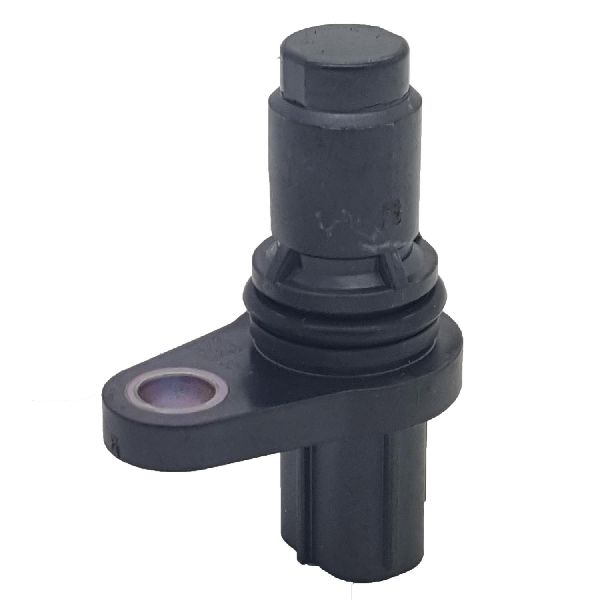
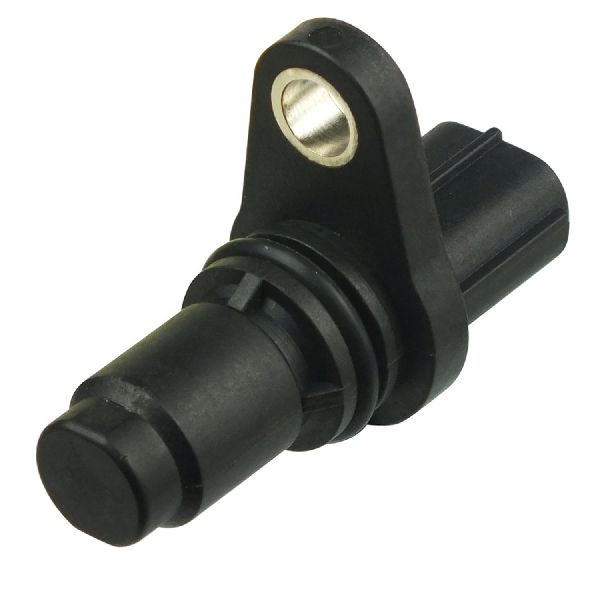
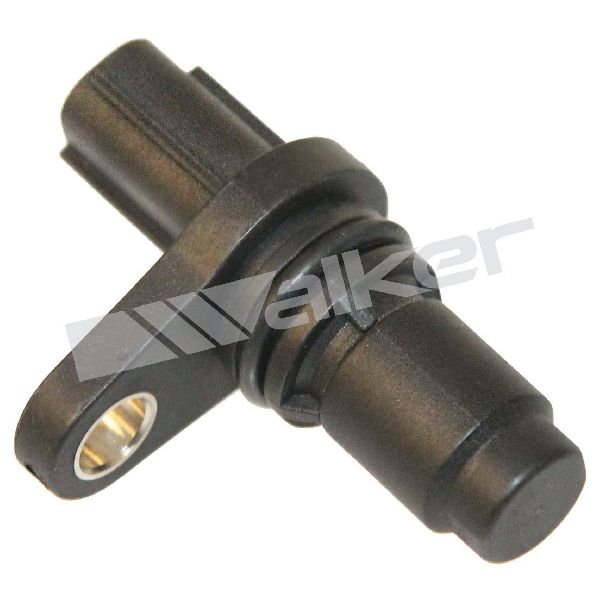
- Camshaft Position Sensor
(OEM #90919-05060 (superseded by 90919-T5005))— This sensor is the most common component to fail and cause a P0340 code, after ruling out battery issues. The original part number for this generation is 90919-05060, which has been updated by Toyota to 90919-T5005.
Trusted brands: Denso (OEM Manufacturer), NTK, Hitachi
OEM price range: $90-$150
Aftermarket price range: $40-$90 - Car Battery — A weak or failing battery is a documented cause of P0340 on this specific vehicle platform, as noted in Toyota TSB T-TT-0010-10 Rev.
Trusted brands: Interstate, DieHard, Duralast
OEM price range: $150-$250
Aftermarket price range: $120-$200
Related Codes That Often Appear With This One
- P0335 — The TSB T-TT-0010-10 Rev explicitly mentions that low battery voltage can cause both P0340 (Camshaft Sensor) and P0335 (Crankshaft Sensor) codes simultaneously.
- P0342, P0343 — These codes indicate specific circuit faults for the same sensor (Low Input and High Input, respectively) and point to electrical issues like a short or open in the wiring, rather than a timing correlation problem.
- C1201 — On some Toyota models, a critical engine fault like P0340 or P0335 can disable the Vehicle Stability Control (VSC) system, triggering a C1201 (Engine Control System Malfunction) code in the ABS/VSC module.
Technical Service Bulletins (TSBs) & Recalls
- T-TT-0010-10 Rev: Notes that low battery voltage can contribute to a MIL "ON" condition for P0335 (Crankshaft Position Sensor Circuit) and/or P0340 (Camshaft Position Sensor Circuit).
Platform-Specific Known Issues
- A Technical Service Bulletin (T-TT-0010-10 Rev) was issued by Toyota, stating that low battery voltage can contribute to a MIL 'ON' condition for P0340 due to inconsistent rotational speed of the engine's crankshaft during startup.
- On the 3.5L 2GR-FE V6, the Bank 1 (rear) camshaft sensor is more difficult to access than the sensor on the 2.5L 2AR-FE I4, which is easily accessible on top of the engine.
Mechanic-Grade Diagnostic Values
- Sensor Reference Voltage (3-wire Hall Effect sensor) — expected: 4.5 to 5.0 Volts DC. Failure: Voltage below 4.5V or at 0V indicates a problem with the ECM's 5V reference circuit or a short in the harness. No voltage could also indicate a blown fuse.
- Sensor Signal Voltage (bench test or back-probed) — expected: Switches between ~0V and ~5V as a piece of metal is passed in front of the sensor tip.. Failure: Voltage does not change or is stuck high or low, indicating a faulty sensor.
- Sensor Resistance (2-wire inductive sensor - less common) — expected: Approximately 1,600 to 3,200 Ω (Ohms), depending on temperature.. Failure: Resistance is infinite (open circuit) or near zero (short circuit).
Hidden / Shadow Codes Worth Checking
- Freeze Frame Data: This is not a separate code but a snapshot of engine parameters (RPM, vehicle speed, engine temp, etc.) at the exact moment the P0340 code was triggered. It is invaluable for diagnosis. (see via Accessible with most OBD-II scanners. Look for the 'Freeze Frame' or 'FF' menu. Analyzing this data can reveal if the fault occurred during cranking, at idle, or while driving, which helps narrow down the cause.)
- Live Data Graphing: Watching the camshaft position sensor signal as a live graph can reveal intermittent dropouts or erratic signals that won't be caught by a simple code read. (see via Use a scan tool with live data or graphing capabilities (like Toyota Techstream or a high-end handheld). A good signal is a clean square wave; a bad signal will be noisy, have missing sections, or be flatlined.)
Scan Tool Commands That Help
- Techstream / Advanced OBD-II Scanner: Live Data Monitoring (Graphing) — This is the primary advanced diagnostic step for P0340. Use it after checking the battery and basic wiring. Monitor the Camshaft Position Sensor signal while cranking and running the engine to look for signal dropouts or erratic waveforms, which confirms a sensor or intermittent wiring fault.
- OBD-II Scanner: Clear/Erase Codes — After replacing a part (like the sensor or battery) or repairing a wire, this function must be used to turn off the Check Engine Light. The car must then be driven through a complete drive cycle to confirm the fix is permanent and the code does not return.
Wiring & Ground Locations
- 2GR-FE (V6) ECM Terminals — At the Engine Control Module (ECM).. For diagnosing a wiring issue, you must test continuity from the sensor connector to the ECM. For Bank 1 Intake ('Sensor A'), the signal wires are VV1+ and VV1-. The reference voltage can be checked at the ECM as well.
- 2AR-FE (I4) ECM Terminals — At the Engine Control Module (ECM).. The intake camshaft position sensor ('Sensor A', connector C58) wires connect to specific ECM pins. These are typically VCE1 (5V Power), OE1+ (Signal), and OE1- (Ground). Checking for voltage and continuity at these pins is the definitive way to rule out a wiring problem.
- Sensor Connector — Directly on the camshaft position sensor.. This is the most common point of failure for wiring due to heat, vibration, and oil contamination. Check for 5V reference and ground here with the key on, engine off. Wiggling the connector while monitoring live data can expose an intermittent connection.
Real Owner Repair Stories
- YouTube Short by 'No Name' (Toyota RAV4 with 2.5L engine) — Check Engine Light with codes P0011 and P0340.
❌ Tried (didn't work) Not specified, but the diagnosis went beyond simple sensor replacement.
✅ What actually fixed it The timing chain had jumped a tooth. The video shows the camshaft timing marks clearly misaligned with the colored links on the chain, requiring a full timing chain service to correct. - 2CarPros Forum (2002 Toyota RAV4 (older model, but illustrates a valuable diagnostic path)) — Sputtering, stalling while driving (but would restart), poor acceleration, intermittent Check Engine Light for P0340.
❌ Tried (didn't work) Replacing the camshaft position sensor (twice)., Checking the wiring harness (it tested good when cold)., Replacing the ECM.
✅ What actually fixed it The issue was extremely intermittent and heat-sensitive. A mechanic found that cooling the ECM made the car run fine, but even after replacing the ECM, the code returned after 30-60 minutes of driving. The final diagnosis pointed to a difficult-to-find intermittent short or open in the wiring harness that only manifested when the engine bay was hot. - YouTube video by 'TweekerDan1984' (Toyota Tundra (different model, but demonstrates a common RAV4 issue)) — Check Engine Light with code P0348 (Bank 2 Cam Sensor, same principle as P0340).
❌ Tried (didn't work) Initial thought was a simple sensor failure.
✅ What actually fixed it Rodent damage. A rodent had built a nest near the intake manifold and completely chewed through the wiring for the camshaft position sensor. The fix was to repair the damaged wiring harness connector/pigtail.
"I Checked Everything" — The Actual Cause
- A smoke test is not applicable for this code. The equivalent scenario is when electrical tests on the sensor and wiring all pass. In these cases, the root cause is often mechanical. A prime example is a stretched or jumped timing chain. The sensor and wiring are functioning perfectly, but the chain's incorrect position causes the camshaft's rotation to be out of sync with the crankshaft. The ECM sees a valid signal at the wrong time and flags it as a circuit fault (P0340) or a correlation fault (P0016).
When the Usual Fixes Don't Work
- While the most common fixes are the battery or the sensor itself, numerous owner accounts show these fixes failing to resolve the issue. In a significant number of these cases, the ultimate cause was found to be either a mechanical timing issue (a jumped tooth on the timing chain) or an elusive, heat-sensitive wiring problem. One owner on a forum chased the problem by replacing the sensor and even the ECM, only for the code to return when the engine bay got hot, indicating a wiring short that only appeared under specific thermal conditions. This highlights that if the battery and a new OEM sensor don't fix the code, the next steps should be a deep dive into live data graphing and a thorough inspection of mechanical timing, not just swapping more parts.
OEM Part Supersession History
90919-05060→90919-T5005— Standard part update by the manufacturer for improved reliability or material changes.
Heads up: CRITICAL: The part number 90919-05060 is widely used across Toyota/Lexus models for both CAMSHAFT and CRANKSHAFT position sensors. While they may be physically identical and plug in, their internal electronics or magnetic polarity can differ. Using the wrong sensor type can cause no-start issues or persistent codes. Always verify the correct part number for the specific location (cam vs. crank) using the vehicle's VIN.
Model Year Variations Within This Range
- 2012 only: The 2012 model was the last of the XA30 generation and was available with the 3.5L 2GR-FE V6 engine. P0340 diagnosis on this engine involves the Bank 1 (rear, firewall side) intake camshaft sensor, which has significantly more difficult access than the sensor on the 4-cylinder.
- 2013-2015: These models are the start of the XA40 generation and came standard with the 2.5L 2AR-FE I4 engine in North America. For P0340, 'Sensor A' is the intake camshaft sensor, which is easily accessible on the top/rear of the valve cover.
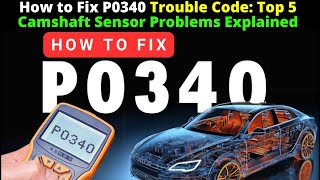
Helpful Videos
We Have This Part in Stock


The information in this article is provided for general reference and educational purposes only. Vehicle specifications, procedures, and part compatibility can vary by production date, trim level, and region. Always consult your vehicle's factory service manual and verify part numbers before purchasing or performing repairs. Safety-critical components such as airbags, seat belts, and braking systems should be installed by a qualified professional.
- Toyota RAV4:
- 🎬 Helpful Videos
- 🛍️ Shop This Part
- What's Unique About the 2012-2015 Toyota RAV4
- Diagnostic Flowchart
- Symptoms You May Notice
- Most Likely Causes
- Rare But Worth Checking
- Diagnosis Steps
- Parts You'll Likely Need
- Related Codes That Often Appear With This One
- Technical Service Bulletins (TSBs) & Recalls
- Platform-Specific Known Issues
- Mechanic-Grade Diagnostic Values
- Hidden / Shadow Codes Worth Checking
- Scan Tool Commands That Help
- Wiring & Ground Locations
- Real Owner Repair Stories
- "I Checked Everything" — The Actual Cause
- When the Usual Fixes Don't Work
- OEM Part Supersession History
- Model Year Variations Within This Range
- 🎟️ Get 5% Off