

P0340 on 2004-2011 Toyota RAV4: Camshaft Sensor Causes and Fixes
On a 2004-2011 Toyota RAV4, code P0340 most often means the camshaft position sensor has failed or its wiring is damaged. Before replacing the sensor, check for low battery voltage, as a Toyota TSB confirms this can also trigger the code. A new sensor is typically $40-$100.
- P0340 on a 2004-2011 RAV4 indicates a fault in the camshaft position sensor circuit.
- **Always check the battery first!** A Toyota TSB confirms a weak battery can cause this specific code.
- The most common fixes are replacing the camshaft position sensor or repairing its wiring.
- Symptoms can be severe, including a no-start condition or stalling, so it's best to address the issue promptly.
- The job is DIY-friendly for those comfortable with basic tools and diagnostics, with the sensor being relatively accessible on both 4-cylinder and V6 engines.
What's Unique About the 2004-2011 Toyota RAV4

For the 2004-2011 RAV4, which spans two generations (XA20 and XA30), a key issue highlighted by Toyota itself is the potential for a low battery to cause this code. A Technical Service Bulletin (TSB T-TT-0010-10 Rev) was issued stating that low voltage (specifically below 11V) can lead to a P0340, tricking owners into replacing a perfectly good sensor. While the sensor or wiring can fail, checking the battery and charging system first is a crucial, money-saving step specific to this platform's known issues.
Diagnostic Flowchart
Tap your situation to follow the diagnostic path that matches what you're seeing on this vehicle.
Generation note: This range covers the end of the second generation (XA20, 2004-2005) and the majority of the third generation (XA30, 2006-2011). The XA20 models primarily used the 2.4L 4-cylinder (2AZ-FE) engine. 🎬 Watch: How to locate and check the sensor on XA20 models. The XA30 introduced the optional 3.5L V6 (2GR-FE) engine alongside the 4-cylinder. P0340 refers to Bank 1. On the 2AZ-FE, there is only one bank. On the transverse-mounted 2GR-FE V6, Bank 1 is the cylinder bank closer to the firewall (the rear bank).
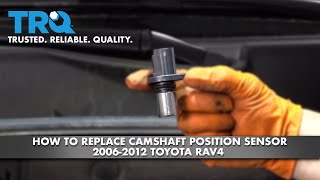
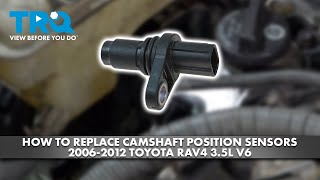
🎬 See this walkthrough for replacing sensors on the 3.5L V6 engine.Symptoms You May Notice
- Check Engine Light is on
- Engine is hard to start or cranks but won't start
- Engine stalls unexpectedly, sometimes while driving
- Engine dies while driving and may not restart
- Rough idling
- Noticeable loss of engine power and poor acceleration
- Reduced fuel mileage
- Replacing the camshaft position sensor when the actual problem is a weak battery or a bad connection.
- Replacing the crankshaft position sensor, although a fault there can sometimes cause related codes.
Most Likely Causes

- Faulty Camshaft Position Sensor 🔴 High Probability Sensors can fail over time due to heat cycles and oil contamination. It's a common failure point on many engines of this era.
How to confirm: After confirming wiring is intact, test the sensor's resistance with a multimeter or check for a proper signal with an oscilloscope during cranking. The simplest confirmation is often replacing it, as it's relatively inexpensive.
Typical fix: Replace the camshaft position sensor for Bank 1.
Est. part cost: $40-$100 - Wiring Harness or Connector Damage 🟡 Medium Probability The engine bay environment can make wires brittle over time, leading to intermittent, heat-related faults. Rodents are also known to chew on Toyota's soy-based wire insulation.
How to confirm: Visually inspect the wiring leading to the camshaft sensor for breaks, corrosion, melting, or rodent damage. Check that the connector is securely plugged in and the pins are clean. Wiggle the harness with the engine running to see if it causes a stall.
Typical fix: Repair the damaged section of the wire harness or replace the connector pigtail.
Est. part cost: $10-$30 - Low Battery Voltage or Weak Charging System 🟡 Medium Probability A specific Toyota Technical Service Bulletin (T-TT-0010-10 Rev) directly links low battery voltage to the P0340 code on these vehicles due to inconsistent engine cranking speed.
How to confirm: Test the battery voltage with a multimeter; a healthy resting battery should be ~12.6V. Test alternator output while running; it should be ~13.7V to 14.7V. Crucially, check the freeze-frame data to see if battery voltage was below 11V when the code was set.
Typical fix: Recharge or replace the weak battery. If the charging system is faulty, replace the alternator.
Est. part cost: $100-$250 - Dirty or Oil-Contaminated Sensor Tip ⚪ Low Probability Minor oil leaks from the valve cover gasket can allow oil and grime to build up on the sensor's magnetic tip, disrupting its ability to read the camshaft teeth.
How to confirm: Remove the sensor (typically a single 10mm bolt) and inspect the tip. If it is covered in thick, wet oil or grease, this could be the cause.
Typical fix: Clean the sensor tip and the sensor port with a clean rag and brake cleaner. Reinstall and check if the code clears. If the leak is significant, replace the valve cover gasket.
Est. part cost: $0-$5 (for cleaner)
Rare But Worth Checking
- Stretched or Jumped Timing Chain: This is a serious mechanical issue. If this is the cause, you will likely have other timing-related codes (like P0011, P0012, P0016) and hear rattling noises from the engine.
- Faulty Engine Control Module (ECM): This is very rare and should only be considered after all other possibilities have been ruled out. One owner reported the code returning even after an ECM replacement, highlighting the difficulty in diagnosing intermittent electrical faults.
Diagnosis Steps
- Read the trouble codes with an OBD-II scanner. Record and check freeze-frame data, paying close attention to the battery voltage value at the time the code was set.
- Check Battery Health: Per TSB T-TT-0010-10 Rev, this is a critical first step. If freeze-frame data shows voltage was below 11V, investigate the battery and charging system. Independently, verify the battery has at least 12.4V with the engine off and that the alternator is charging between 13.7V and 14.7V while running.
- Inspect Wiring: Carefully inspect the wiring harness and connector for the Bank 1 camshaft sensor. Look for any signs of damage, corrosion, or loose connections. Pay attention to areas near high heat.
- Inspect and Clean the Sensor: Remove the single 10mm bolt holding the sensor. Inspect the tip for heavy oil and grime buildup. Clean the sensor and its mounting hole with a rag and electrical cleaner. Reinstall, clear codes, and test drive to see if this simple fix works.
- Test the Sensor Circuit: If the code returns, use a multimeter to check for the correct reference voltage (usually 5V) and ground at the sensor connector with the key on.
- Replace the Sensor: If the circuit tests good and the sensor itself is the prime suspect, replace it. Be sure to apply a light coat of clean engine oil to the new sensor's O-ring before installation.
- Clear Codes and Test Drive: After any repair, clear the trouble codes and perform a test drive to ensure the code does not return. Note that some vehicles may require a 'relearn procedure,' though many will self-learn after a drive cycle.
- Advanced Diagnosis: If the code persists, the issue may be a more complex mechanical problem like a slipped timing chain or a faulty ECM, which may require professional diagnosis with an oscilloscope.
Parts You'll Likely Need
- Camshaft Position Sensor
(OEM #2.4L (2AZ-FE): 90080-19014 (supersedes 90919-05026). 3.5L V6 (2GR-FE): 90919-T5005 (supersedes 90919-05060).)— This is the most common component to fail, triggering the P0340 code.
Trusted brands: Denso (OEM), Hitachi, NTK, SKP
OEM price range: $80-$150
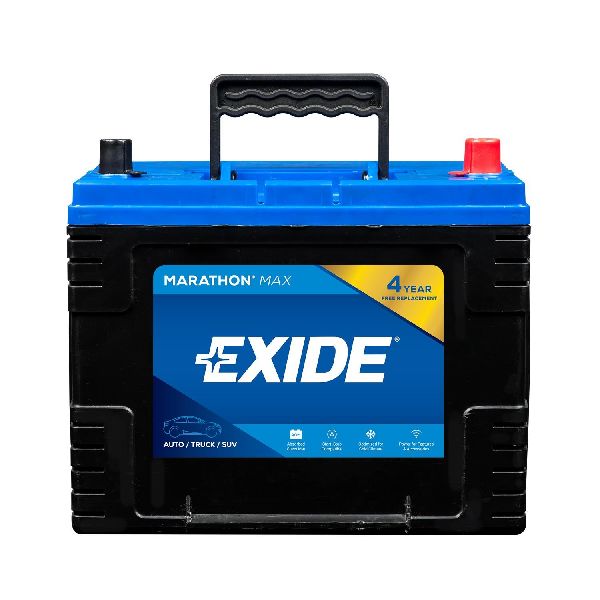
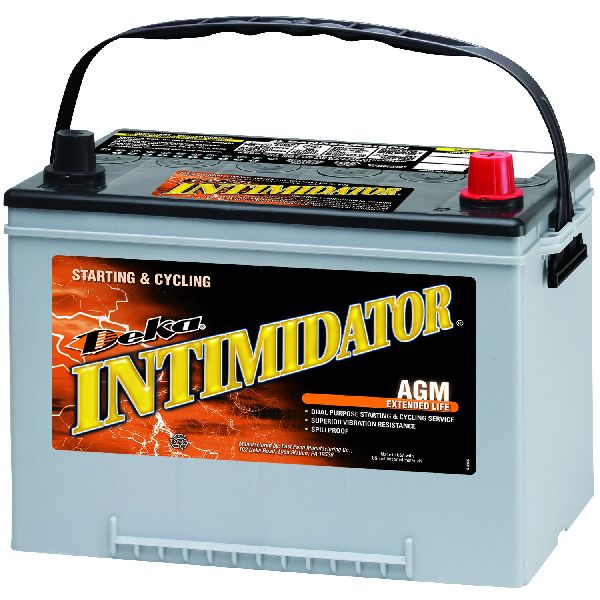
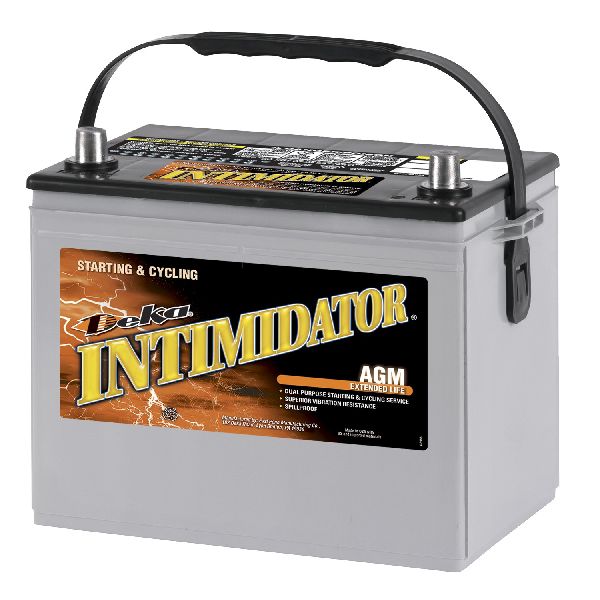
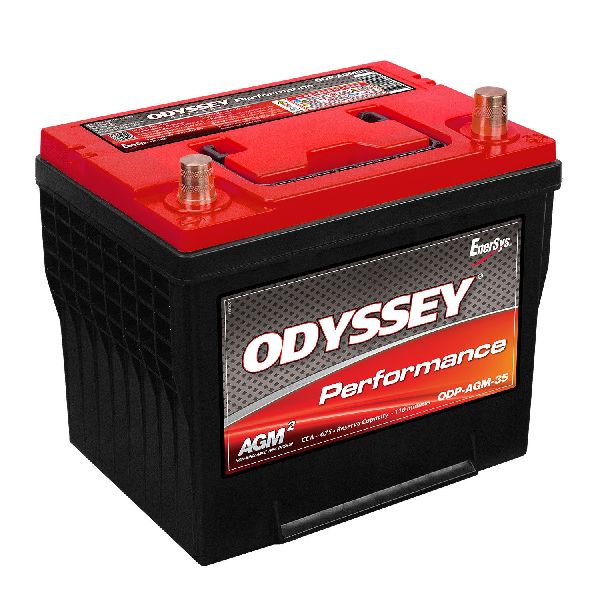
Aftermarket price range: $40-$90 - Car Battery — A weak or failing battery is a known cause of P0340 on this vehicle, as documented in a Toyota TSB.
Trusted brands: Interstate, DieHard, Duralast
OEM price range: $150-$250
Aftermarket price range: $100-$200
Related Codes That Often Appear With This One
- P0335 — Crankshaft Position Sensor Circuit Malfunction. The ECM compares cam and crank signals. A problem with one can sometimes flag the other. The TSB T-TT-0010-10 Rev also mentions that low battery voltage can cause both P0340 and P0335.
- P0341-P0349 — These are all related to the camshaft position sensor circuits. For example, P0342/P0343 indicate low or high circuit voltage, pointing more specifically to an electrical fault.
- P0365 — Camshaft Position Sensor 'B' Circuit (Bank 1). On engines with separate intake and exhaust cam sensors, a problem in the harness or a timing issue could potentially trigger codes for both sensors on the same bank. One owner reported receiving P0340 and P0365 together.
Technical Service Bulletins (TSBs) & Recalls

- T-TT-0010-10 Rev: Notes that low battery voltage (below 11
Platform-Specific Known Issues
- TSB Confirmed Low-Voltage Fault: A Technical Service Bulletin (T-TT-0010-10 Rev) was issued by Toyota, explicitly stating that low battery voltage (below 11 volts) can cause a P0340 code due to inconsistent engine rotational speed during cranking. The official recommendation is to check the freeze-frame data before replacing parts.
- Sensor Location Varies by Engine: On the 2.4L 2AZ-FE engine, the sensor is relatively easy to access on the driver's side of the cylinder head, near the back above the transmission. On the 3.5L 2GR-FE V6, the Bank 1 sensor is on the rear cylinder bank (near the firewall), which can be more difficult to reach.
- Intermittent Heat-Related Failures: Owners have reported P0340 being an intermittent fault that only appears when the engine is hot. This can make diagnosis difficult and may point towards a failing sensor that is sensitive to temperature, or a wiring issue where a connection separates as components expand with heat.
Mechanic-Grade Diagnostic Values
- Camshaft Position Sensor (2AZ-FE) Resistance — expected: Cold: 835 - 1,400 Ohms. Hot: 1,060 - 1,645 Ohms.. Failure: Resistance is outside the specified range for the sensor's temperature.
- Sensor Power Supply Voltage (Both Engines) — expected: 4.5V - 5.0V. Failure: Voltage is below 4.5V with the ignition ON and sensor disconnected.
- Wiring Harness to ECM Resistance (2GR-FE, Bank 1) — expected: Below 1 Ω. Failure: Resistance is 1 Ω or higher, indicating an open or high resistance in the harness.
- Wiring Harness to Ground Resistance (2GR-FE, Bank 1) — expected: 10 kΩ or higher. Failure: Resistance is below 10 kΩ, indicating a short to ground in the harness.
- Alternator AC Voltage Ripple — expected: Effectively 0V AC. Failure: Any significant AC voltage reading at the battery terminals while the engine is running.
Hidden / Shadow Codes Worth Checking
- Pending Code: If a malfunction is detected, the ECM may store it as a 'pending code' before illuminating the Check Engine Light on a subsequent drive cycle. Checking for pending codes can reveal intermittent issues. (see via Use a scan tool like Toyota Techstream and navigate to the 'Pending' trouble code menu.)
Scan Tool Commands That Help
- Toyota Techstream: Read Freeze Frame Data — This is critical for P0340. Use it to check the battery voltage recorded at the exact moment the fault occurred. Per TSB T-TT-0010-10 Rev, if voltage was below 11V, the battery/charging system is the likely cause, not the sensor.
- Toyota Techstream: Active Test — While there isn't a direct active test to command the camshaft sensor itself, Techstream's Active Test menu allows technicians to operate other components to see how the system reacts, helping to isolate electrical issues.
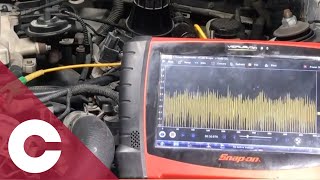
- Oscilloscope / Graphing Scanner: Live Data Graphing (Cam vs. Crank) — To diagnose intermittent signal loss, especially when the engine is hot. Graphing the camshaft (G2 or VV1+) and crankshaft (NE+) signals together will visually show dropouts or misalignment that a simple code reader would miss.
Wiring & Ground Locations

- Engine Ground (2GR-FE) — There are two primary engine-to-chassis grounds on the 2GR-FE. One on the front valve cover and one on the rear, both connecting to the frame near the strut towers.. Improper or corroded grounds can cause spurious sensor readings and false trouble codes. These are often overlooked during diagnosis.
- ECM Connector (2GR-FE) — On the V6 RAV4, the Engine Control Module (ECM) is located in the engine bay, near the front by the battery.. This is the termination point for the sensor wiring. For example, connector B30 is a key ECM connector for testing continuity from the sensor.
- Camshaft Sensor Connector (2AZ-FE) — Connector B6 for the Camshaft Position Sensor on the 2.4L engine.. This is the connector that must be disconnected to perform resistance and voltage tests directly at the sensor and harness.
- Camshaft Sensor Connector (2GR-FE, Bank 1) — Connector B59 for the intake camshaft position sensor on the rear bank (Bank 1).. This is the specific connector for the sensor that triggers P0340 on the V6 engine. It must be accessed for circuit testing.
Real Owner Repair Stories
- 2CarPros Forum User (Vehicle unspecified, but symptoms and diagnosis are relevant.) — Car stalls only when it reaches normal operating temperature, throwing code P0340. A squealing noise is heard from the belt area when the code appears.
❌ Tried (didn't work) Replaced both camshaft position sensors., Replaced the crankshaft position sensor., Replaced the MAF sensor., Replaced the battery.
✅ What actually fixed it The final diagnosis pointed to a failing alternator. A technician suggested that a bad diode in the alternator was creating AC ripple voltage (electrical noise) when hot, which interfered with the camshaft sensor signal. The fix was to replace the alternator. - 2CarPros Forum User (2002 Toyota RAV4 (XA20 generation, similar issue)) — Intermittent sputtering and stalling, especially when the engine gets hot. Code P0340 would appear.
❌ Tried (didn't work) Replacing the camshaft position sensor twice., Testing the wiring harness (which tested good when cold)., Replacing the ECM.
✅ What actually fixed it The issue persisted even after an ECM replacement. The final advice from a master tech was that the intermittent nature points to a wiring fault that only manifests when hot, or a defective aftermarket sensor. The resolution required using a graphing scanner to watch the live sensor signal for dropouts during the failure event to pinpoint the signal loss.
When the Usual Fixes Don't Work
- In one documented case, an owner experienced intermittent stalling and a P0340 code only when the engine was hot. After replacing the camshaft and crankshaft sensors, the wiring pigtail, and even having the ECM rebuilt, the problem persisted. This highlights that for heat-related, intermittent electrical faults, simply replacing the most common parts may not be the solution. The root cause is often a subtle wiring failure or a less common component like a failing alternator creating electrical noise, which requires more advanced diagnostics like live data graphing or checking for AC ripple voltage to find.
Model Year Variations Within This Range
- 2004-2005 vs 2006-2011: The primary difference is the available engines. The 2004-2005 (XA20) models primarily used the 2.4L 2AZ-FE engine. The 2006-2011 (XA30) models continued with the 2AZ-FE but introduced the 3.5L 2GR-FE V6. The sensor location, part numbers, and diagnostic connector identifiers (e.g., B6 vs B59) are different between these two engines.
Helpful Videos
We Have This Part in Stock


The information in this article is provided for general reference and educational purposes only. Vehicle specifications, procedures, and part compatibility can vary by production date, trim level, and region. Always consult your vehicle's factory service manual and verify part numbers before purchasing or performing repairs. Safety-critical components such as airbags, seat belts, and braking systems should be installed by a qualified professional.
- Toyota RAV4:
- 🎬 Helpful Videos
- 🛍️ Shop This Part
- What's Unique About the 2004-2011 Toyota RAV4
- Diagnostic Flowchart
- Symptoms You May Notice
- Most Likely Causes
- Rare But Worth Checking
- Diagnosis Steps
- Parts You'll Likely Need
- Related Codes That Often Appear With This One
- Technical Service Bulletins (TSBs) & Recalls
- Platform-Specific Known Issues
- Mechanic-Grade Diagnostic Values
- Hidden / Shadow Codes Worth Checking
- Scan Tool Commands That Help
- Wiring & Ground Locations
- Real Owner Repair Stories
- When the Usual Fixes Don't Work
- Model Year Variations Within This Range
- 🎟️ Get 5% Off