

P0340 on 2000-2004 Toyota ECHO: Camshaft Sensor Causes and Fixes
P0340 on a Toyota ECHO typically indicates a faulty camshaft position sensor. However, before replacing it, check your battery. A Toyota Technical Service Bulletin (TSB) confirms that low battery voltage during cranking is a known cause for this code on this specific vehicle. A new sensor is inexpensive, but checking the battery and charging system first can save you from a misdiagnosis and unnecessary parts replacement.
- P0340 on a 2000-2004 Echo means there's a problem with the camshaft position sensor's signal.
- **Crucially, test your battery and alternator before buying any parts.** A weak battery is a known cause for this code on this car.
- If the battery is healthy, the most likely fix is replacing the camshaft position sensor, which is an accessible and affordable DIY repair.
- The correct sensor is held in by a single 10mm bolt on the top of the engine.
- If P0335 appears with P0340, it further strengthens the possibility of a battery/voltage issue as the root cause.
What's Unique About the 2000-2004 Toyota ECHO
For the Toyota ECHO and its platform mates with the 1NZ-FE engine, a unique and well-documented cause for the P0340 code is low battery voltage. A Technical Service Bulletin (TSB #T-TT-0010-10 Rev) issued by Toyota explicitly states that a weak battery can lead to this code, sometimes appearing with the crankshaft sensor code P0335. This is because inconsistent cranking speed can confuse the ECU, which misinterprets the erratic signal as a sensor fault. This makes checking the battery and charging system a critical first step, distinguishing it from other vehicles where the sensor itself is almost always the primary culprit.
Diagnostic Flowchart
Tap your situation to follow the diagnostic path that matches what you're seeing on this vehicle.
Symptoms You May Notice
- Check Engine Light is on
- Engine is hard to start, has a long crank time, or won't start at all
- Engine stalls or idles roughly, sometimes dying at stops
- Noticeable loss of engine power and acceleration
- Increased fuel consumption due to the engine running in a default 'limp' mode
- Engine hesitates or stumbles during operation
- Immediately replacing the camshaft position sensor without first checking the battery voltage and charging system health. The TSB for this vehicle makes it clear that a weak battery is a likely culprit.
- Using a cheap, low-quality aftermarket sensor that is faulty out of the box, leading the owner to believe the sensor was not the problem.
Most Likely Causes
- Faulty Camshaft Position Sensor 🔴 High Probability Like any electronic sensor, it can fail over time due to heat cycles and age. The sensor is an inductive type, consisting of a magnet and a wire-wrapped iron core, which can degrade. Owners on forums strongly recommend using the OEM Denso part over cheaper aftermarket alternatives, which have been reported to fail quickly or be dead-on-arrival.
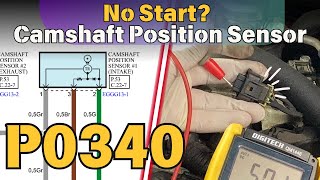
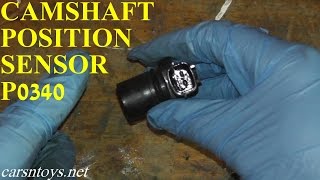
How to confirm: After confirming battery voltage and wiring are good, the most straightforward test is to replace the sensor. 🎬 Watch: How to test and fix the P0340 circuit fault. It can also be tested with a multimeter for resistance; specs for the 1NZ-FE sensor are 1,630 to 2,740 Ω when cold and 2,065 to 3,225 Ω when hot. A definitive test involves using an oscilloscope to check for a proper waveform signal while the engine is cranking.
Typical fix: Replace the camshaft position sensor with a new, high-quality part, preferably from an OEM supplier like Denso.
Est. part cost: $25-$90 - Low Battery Voltage or Failing Alternator 🟡 Medium Probability A specific Toyota TSB (#T-TT-0010-10 Rev) identifies low battery voltage as a direct cause of P0340 on this platform. The ECU requires a minimum of 11 volts during cranking to properly read sensor data; if voltage drops below this, it can set the code.
How to confirm: Use a multimeter to test the battery voltage with the engine off. A healthy battery should read at least 12.4V. With the engine running, the voltage should be between 13.5V and 14.5V, which indicates the alternator is charging correctly. A free load test at an auto parts store is the most definitive way to confirm battery health.
Typical fix: Recharge or replace the battery. If the charging voltage is low, the alternator may need to be replaced.
Est. part cost: $100-$250 - Damaged Wiring or Connector ⚪ Low Probability The wiring harness can become brittle from age and engine heat, leading to frayed wires or a loose connection at the sensor's plug. The two-wire circuit can be checked for continuity back to the ECM.
How to confirm: Visually inspect the wiring leading to the camshaft position sensor for any signs of cracking, fraying, or corrosion. Wiggle the connector while the engine is running to see if it causes a stall or stumble. Use a multimeter to check for continuity between the sensor connector (pins 1 and 2) and the corresponding pins at the ECM (G2+ at pin E5-26 and NE- at pin E5-27).
Typical fix: Repair the damaged section of wire or replace the connector pigtail. Ensure the connection is clean and secure.
Est. part cost: $10-$30
Rare But Worth Checking
- Stretched Timing Chain: The 1NZ-FE engine uses a timing chain. While durable, it can stretch over very high mileage (typically 150k+ miles), causing the camshaft and crankshaft signals to become out of sync. This misalignment can trigger P0340 and/or P0335. This is a much more involved and expensive repair, often accompanied by rattling noises from the front of the engine.
- Faulty Powertrain Control Module (PCM): This is extremely rare. The PCM is the car's main computer, and it can fail, but all other potential causes, including wiring, sensors, and mechanical timing, should be exhausted before considering a faulty PCM.
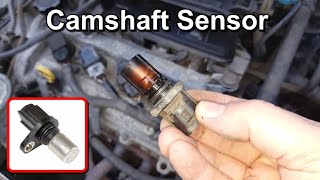
- Dirty or Debris-Covered Sensor Tip: The sensor is magnetic and can attract metallic particles or sludge over time. In some cases, simply removing the sensor and wiping the tip clean with a cloth has resolved the code. Do not use harsh solvents or sandpaper. 🎬 See this quick breakdown of the 7 most common causes.
Diagnosis Steps
- Read the code with an OBD-II scanner to confirm P0340 is present. Check for any other codes, especially P0335. Use the scanner to read freeze frame data, which shows engine conditions when the fault occurred.
- Check the Battery First: Use a multimeter to test the battery. It should be above 12.4V with the engine off. Start the engine and check the voltage again; it should be between 13.5V and 14.5V. If either test fails, address the battery or alternator issue before proceeding.
- Inspect the Sensor and Wiring: Visually inspect the wires and connector going to the camshaft position sensor for any obvious damage, corrosion, or loose connections. Remove the sensor (one 10mm bolt) and check the magnetic tip for any metallic debris or gunk; wipe it clean with a rag.
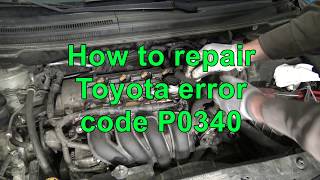
- Locate the Sensor: The sensor is on the top of the engine, on the passenger side of the cylinder head, held in by a single 10mm bolt. 🎬 Watch: A step-by-step walkthrough of the sensor replacement process.
- Test or Replace the Camshaft Position Sensor: If the battery and wiring are good, the next step is to test or replace the sensor. Test resistance across the sensor's two pins. It should be 1,630-2,740 Ω (cold) or 2,065-3,225 Ω (hot). If out of spec, replace it. It is highly recommended to use an OEM (Toyota) or Denso branded part.
- Clear the Code: Use the OBD-II scanner to clear the P0340 code.
- Test Drive: Drive the vehicle to see if the code returns. If it does, a more complex issue like a timing chain problem or faulty ECM may be the cause, which may require professional diagnosis.
Parts You'll Likely Need
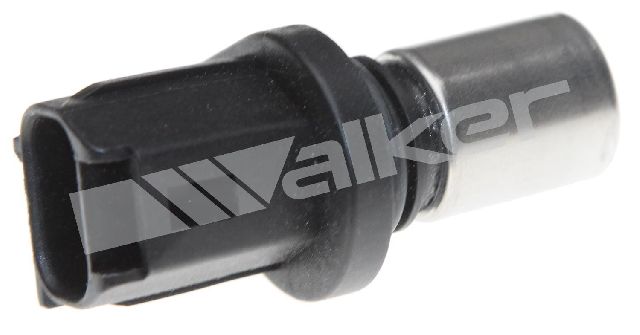
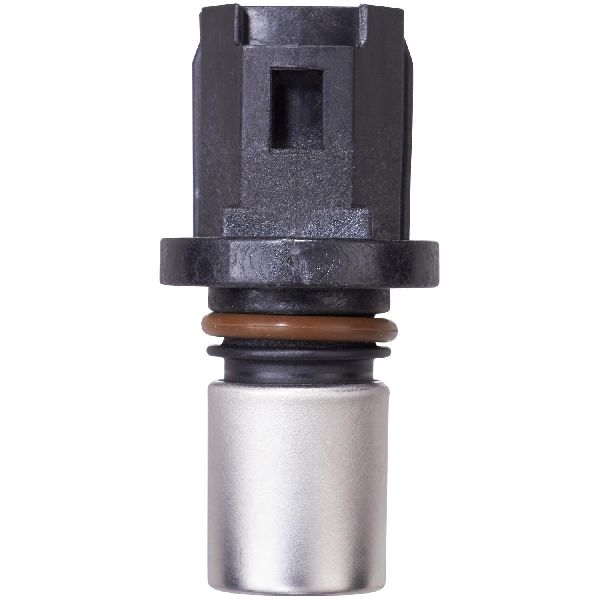
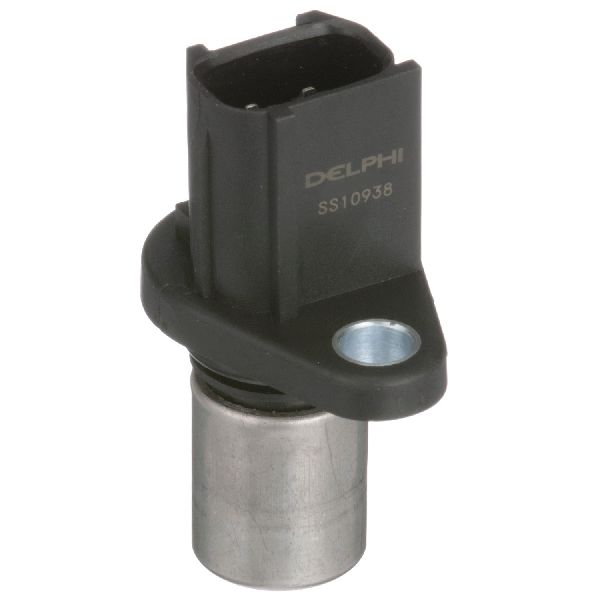
- Camshaft Position Sensor
(OEM #90919-05024)— This is the most common part to fail that directly causes the P0340 code, after ruling out battery issues. Owner experiences strongly suggest using the OEM Denso part for reliability.
Trusted brands: Denso (OEM Supplier), Toyota (Genuine), NGK/NTK
OEM price range: $60-$90
Aftermarket price range: $25-$50 - Car Battery — A weak or failing battery is a documented cause of P0340 on the Toyota ECHO, as per TSB T-TT-0010-10 Rev.
Trusted brands: Interstate, DieHard, Duralast
OEM price range: $150-$250
Aftermarket price range: $100-$180
Related Codes That Often Appear With This One
- P0335 — This is the code for the Crankshaft Position Sensor. The TSB for the Echo specifically mentions that low battery voltage can cause both P0340 and P0335 to appear together due to inconsistent engine rotational speed data during cranking.
Technical Service Bulletins (TSBs) & Recalls
- T-TT-0010-10 Rev: Notes that low battery voltage (below 11V during cranking) can contribute to a MIL "ON" for P0335 and/or P0340.
Platform-Specific Known Issues
- A Toyota Technical Service Bulletin (TSB #T-TT-0010-10 Rev) was issued noting that low battery voltage can cause a P0340 code, often accompanied by P0335. This is due to inconsistent engine rotational speed data being sent to the computer during startup when voltage drops below 11V.
- The 1NZ-FE engine uses a two-wire inductive camshaft position sensor. Its resistance can be checked and should be between 1,630-2,740 Ω when cold and 2,065-3,225 Ω when hot.
Mechanic-Grade Diagnostic Values
- Camshaft Position Sensor Resistance (cold) — expected: 1,630 to 2,740 Ω. Failure: Resistance is outside this range.
- Camshaft Position Sensor Resistance (hot) — expected: 2,065 to 3,225 Ω. Failure: Resistance is outside this range.
- Wiring Continuity (Sensor to ECM) — expected: Below 1 Ω. Failure: Resistance is 1 Ω or higher, indicating an open or high-resistance in the circuit.
Scan Tool Commands That Help
- Toyota Techstream: Read Freeze Frame Data — Use this function to see the exact engine conditions (speed, temperature, etc.) at the moment the P0340 code was triggered. This can help determine if the fault occurs during cranking, idling, or driving, which points towards different root causes (e.g., battery vs. wiring).
Wiring & Ground Locations
- C1 Connector — The electrical connector on the Camshaft Position Sensor itself, located on the top, passenger side of the cylinder head.. This is the primary connection point for the sensor. Corrosion, damage, or a loose fit here will directly cause a P0340 circuit code.
- E5 Connector (Pins 26 & 27) — One of the main connectors at the Engine Control Module (ECM), which is located behind the lower right side of the dash.. Pin E5-26 is the G2+ (cam sensor signal) and Pin E5-27 is the NE- (sensor ground). These are the specific pins to test for continuity back to the sensor connector to verify the wiring harness is intact.
- Ground Point EB — On the cylinder head.. This is a critical ground point for the engine harness. A loose or corroded connection here can introduce electrical noise or a poor ground reference for multiple sensors, including the camshaft position sensor, potentially causing a false P0340 code.
- Ground Point G134 — Top rear of the engine.. Another important engine ground. Verifying this ground is clean and tight is a key step when diagnosing any sensor circuit fault code.
Real Owner Repair Stories
- Tacoma World Forum User (2003 Toyota Tacoma V6 (Different vehicle, but same diagnostic principle)) — P0340 code with intermittent, significant power loss.
❌ Tried (didn't work) Replaced the camshaft position sensor., Corrected mechanical timing that was off by one tooth., Replaced the crankshaft pulley., Dealer performed electrical checks and found nothing wrong.
✅ What actually fixed it A wiring circuit overlay was performed. The final diagnosis was a disconnect in the wiring harness between the ECU and the camshaft position sensor that standard continuity tests missed. The overlay (running new wires) restored communication and cleared the code.
When the Usual Fixes Don't Work
- In one documented case involving a similar Toyota engine, a persistent P0340 code was not resolved by replacing the sensor or checking basic wiring. The ultimate fix was a wiring harness overlay, indicating a break or high resistance in the harness that was not easily detectable through simple continuity checks at the connectors. This highlights that even after a new sensor and a 'good' wiring test, the harness itself can still be the root cause.
OEM Part Supersession History
19300-BZ020→90919-05024— Standard part number update/consolidation by Toyota.
Heads up: The part numbers are interchangeable for this application. 90919-05024 is the most current and widely available OEM part number.
Helpful Videos
We Have This Part in Stock


The information in this article is provided for general reference and educational purposes only. Vehicle specifications, procedures, and part compatibility can vary by production date, trim level, and region. Always consult your vehicle's factory service manual and verify part numbers before purchasing or performing repairs. Safety-critical components such as airbags, seat belts, and braking systems should be installed by a qualified professional.
- Toyota ECHO:
- 🎬 Helpful Videos
- 🛍️ Shop This Part
- What's Unique About the 2000-2004 Toyota ECHO
- Diagnostic Flowchart
- Symptoms You May Notice
- Most Likely Causes
- Rare But Worth Checking
- Diagnosis Steps
- Parts You'll Likely Need
- Related Codes That Often Appear With This One
- Technical Service Bulletins (TSBs) & Recalls
- Platform-Specific Known Issues
- Mechanic-Grade Diagnostic Values
- Scan Tool Commands That Help
- Wiring & Ground Locations
- Real Owner Repair Stories
- When the Usual Fixes Don't Work
- OEM Part Supersession History
- 🎟️ Get 5% Off