

P0340 on 2008-2015 Toyota Avalon: Camshaft Sensor Circuit Causes and Fixes
On the 2008-2015 Toyota Avalon, P0340 often points to a failing camshaft position sensor, but a weak battery is a surprisingly common cause documented in a Toyota TSB. Always check battery voltage first before replacing sensors. The Bank 1 sensor is on the rear cylinder head (near the firewall) and is harder to access. A new sensor costs about $60-$120.
- Always check your battery first! A weak battery is a documented and common cause of P0340 on the 2GR-FE engine.
- If the battery is good, swap the Bank 1 (rear) and Bank 2 (front) intake camshaft sensors. If the code moves to P0345, you've confirmed a bad sensor.
- The Bank 1 sensor is near the firewall and is more difficult to access than the Bank 2 sensor.
- Thoroughly inspect the sensor's connector for corrosion or damage before buying a new sensor.
What's Unique About the 2008-2015 Toyota AVALON

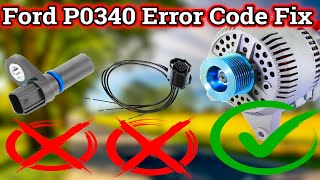
For the Toyota Avalon with the 2GR-FE engine, this code has a well-documented, non-obvious cause. A Technical Service Bulletin (T-TT-0010-10 Rev) issued by Toyota explicitly links P0340 to low battery voltage, which can cause inconsistent engine rotational speed and trigger the code. This means a simple battery test should be the first step, potentially saving owners from 🎬 Watch: How a simple battery check can fix code P0340. unnecessarily replacing a perfectly good sensor. Many owners in forums for the Avalon and its platform mates (like the Lexus ES 350 and Toyota Sienna) have confirmed that a new battery resolved the code.
Diagnostic Flowchart

Tap your situation to follow the diagnostic path that matches what you're seeing on this vehicle.
Generation note: The 2008-2015 range covers the end of the third generation (XX30, 2008-2012) and the start of the fourth generation (XX40, 2013-2015). Both generations used the 2GR-FE 3.5L V6 engine, so the causes, symptoms, and diagnostic procedures for P0340 are largely identical across this year range.
Symptoms You May Notice
- Check Engine Light is on
- Engine is hard to start or cranks for a long time before starting
- Engine stalls, especially when coming to a stop or at idle
- Rough idling and engine hesitation
- Reduced engine power and poor acceleration, sometimes described as 'limp mode'
- Decreased fuel economy
- Vehicle may have trouble shifting properly
- Replacing the camshaft position sensor without first checking the battery voltage. The TSB for this vehicle makes it clear that a weak battery is a primary suspect.
- Replacing the wrong sensor. P0340 refers to the intake sensor on Bank 1, which is the cylinder head against the firewall, not the easily accessible Bank 2 sensor at the front of the engine bay.
Most Likely Causes

- Low Battery Voltage / Weak Battery 🔴 High Probability A Toyota Technical Service Bulletin (T-TT-0010-10 Rev) directly states that low battery voltage can cause a P0340 code due to inconsistent engine rotational speed during cranking. This is a widely confirmed fix in owner forums for the 2GR-FE engine family.
How to confirm: Use a multimeter to test the battery voltage with the engine off. A healthy battery should read above 12.4V. Also, test the charging system; it should be between 13.5V and 14.5V with the engine running. Many auto parts stores will test your battery and alternator for free.
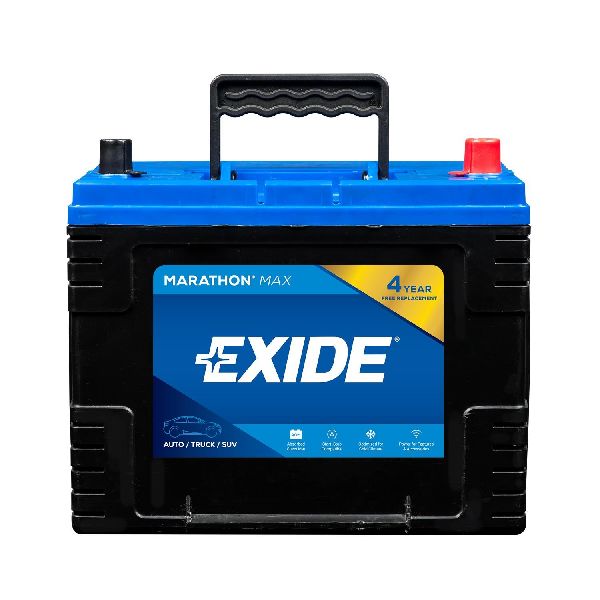
Typical fix: Charge or replace the vehicle's battery. The typical battery size is Group 24F.
Est. part cost: $150-$300 - Faulty Camshaft Position Sensor 🔴 High Probability The sensors are subject to high heat and vibration, leading to eventual failure. The Bank 1 (rear) sensor is in a particularly hot location, making it prone to failure.
How to confirm: After confirming the battery is good, test the sensor's signal with a multimeter. A common DIY method is to swap the Bank 1 and Bank 2 intake cam sensors; if the code changes to P0345 (Bank 2), the sensor is bad. The Bank 1 intake sensor is on the rear valve cover, and the Bank 2 intake sensor is on the front valve cover.
Typical fix: Replace the Camshaft Position Sensor for Bank 1 (Intake). It is held in by a single 10mm bolt.
Est. part cost: $60-$120 - Damaged Wiring or Connector 🟡 Medium Probability The plastic connector and wiring insulation can become brittle over time due to engine heat, leading to cracks, corrosion, or loose pins. Rodent damage is also a possibility.
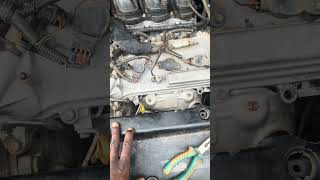
How to confirm: Visually inspect the wiring harness and connector for the Bank 1 camshaft position sensor. Look for frayed wires, corrosion in the connector pins, or a loose connection. A YouTube video for a 2008 Avalon with P0340 showed corroded and burnt pins inside the connector, which required replacing the pigtail. 🎬 Watch: This 2008 Avalon repair shows a corroded connector fix.
Typical fix: Repair the damaged wiring or replace the connector pigtail.
Est. part cost: $15-$40
Rare But Worth Checking
- Faulty VVT Oil Control Valve (OCV) / Solenoid: A dirty or failing VVT solenoid for Bank 1 can cause erratic camshaft timing, which the ECU may misinterpret as a sensor circuit fault. Before replacing the sensor, it's wise to remove and inspect the OCV. Check its small filter screen for sludge or debris, which can indicate a larger engine sludge problem.
- Stretched Timing Chain: While less common on the 2GR-FE, a significantly stretched timing chain can cause the camshaft and crankshaft to lose synchronization, which can trigger this code. This is usually accompanied by rattling noises from the engine, especially on startup.
- Faulty Crankshaft Position Sensor: The ECU compares signals from both the cam and crank sensors. A failing crankshaft sensor can sometimes lead the ECU to incorrectly flag the camshaft sensor circuit.
- Failing Engine Control Unit (ECU): This is very rare, but a faulty ECU can misinterpret sensor data. This should only be considered after all other possibilities, including wiring and all related sensors, have been exhausted.
Diagnosis Steps
- Check for any other stored trouble codes with an OBD-II scanner.
- Test the battery and charging system. Ensure battery voltage is above 12.4V (engine off) and alternator output is 13.5V-14.5V (engine on). Resolve any battery issues first. This is the most important first step.
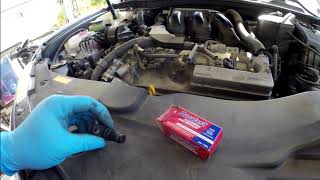
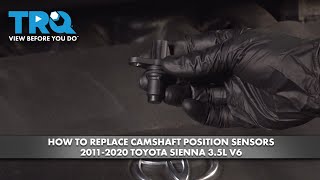
- Locate the Camshaft Position Sensor 'A' (Bank 1). On the 2GR-FE engine, Bank 1 is the cylinder head near the firewall. Sensor 'A' is for the intake camshaft. The sensor is located on top of the valve cover and is held by a single 10mm bolt. 🎬 See this walkthrough for accessing and replacing the V6 sensors.
- Inspect the sensor's electrical connector and wiring for any signs of damage, corrosion, or loose connections. Pay close attention to the pins inside the connector.
- If the wiring looks good, perform a sensor swap. Disconnect and remove the Bank 1 intake cam sensor (rear) and the Bank 2 intake cam sensor (front, near the radiator). They are identical parts. Swap their positions. Clear the codes and drive the vehicle. If the code returns as P0345 (for Bank 2), the sensor you moved is faulty and needs replacement.
- If the code remains P0340 after the swap, the issue is likely in the wiring to the Bank 1 sensor, the VVT system for Bank 1, or the ECU.
- Consider inspecting the Bank 1 VVT Oil Control Valve (solenoid). Remove it and check its filter screen for sludge or debris. A clogged OCV can cause timing issues that trigger P0340.
- If you have access to a multimeter, test for proper voltage (approx. 5V reference) and ground at the connector.
- If all else fails, the issue may be mechanical, such as a jumped timing chain tooth or a problem with the camshaft reluctor wheel, though this is rare and requires more advanced diagnostics.
Parts You'll Likely Need
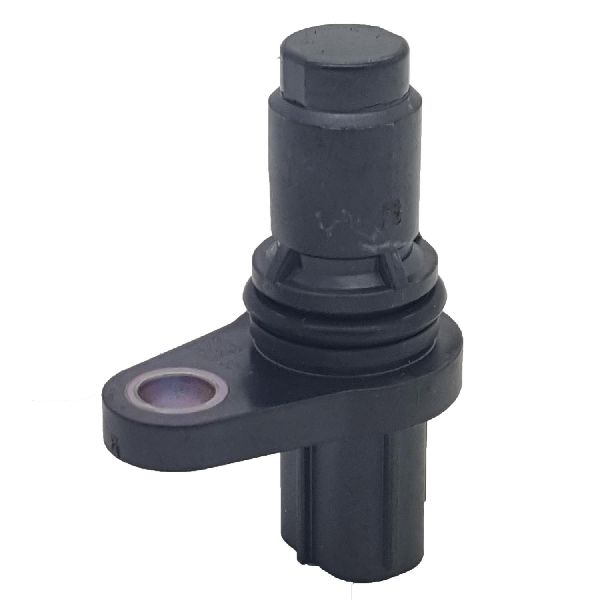
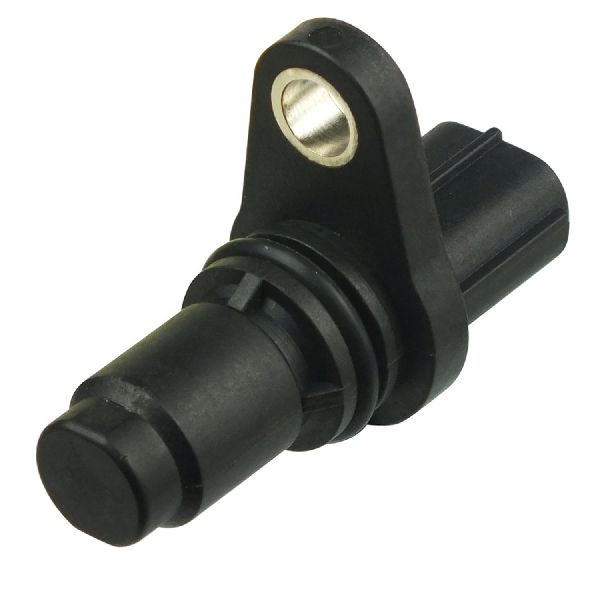
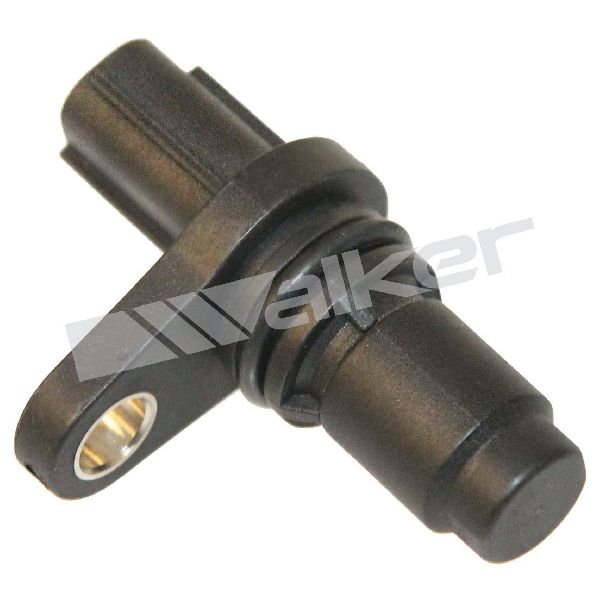
- Camshaft Position Sensor (Bank 1 Intake)
(OEM #90919-05060)— This is the most common part to fail that triggers the P0340 code, after ruling out battery issues. The 2GR-FE engine uses the same sensor for all four positions (Bank 1/2, Intake/Exhaust). Denso is the OEM supplier.
Trusted brands: Denso (OEM supplier), Toyota (Genuine), NTK
OEM price range: $90-$140
Aftermarket price range: $50-$90 - Car Battery
(OEM #Varies (e.g., 00544-24F60-575))— A weak or failing battery is a known cause of P0340 on this vehicle, as documented in a Toyota TSB. The common size is Group 24F.
Trusted brands: Interstate, DieHard, Duralast
OEM price range: $200-$350
Aftermarket price range: $150-$250
Related Codes That Often Appear With This One
- P0335 — Crankshaft Position Sensor Circuit Malfunction. The TSB T-TT-0010-10 Rev mentions that low battery voltage can trigger both P0340 and P0335 together.
- P0011 / P0012 / P0014 / P0015 — Camshaft Position Timing Over-Advanced/Retarded. These codes relate to the Variable Valve Timing (VVT) system and can appear if the cam sensor data is incorrect or if there's an underlying mechanical timing or oil pressure issue affecting the VVT actuator.
- P0345 — Camshaft Position Sensor 'A' Circuit Malfunction (Bank 2). This code will appear if you swap a faulty Bank 1 sensor to the Bank 2 position for diagnostic purposes.
Technical Service Bulletins (TSBs) & Recalls
- T-TT-0010-10 Rev: Notes that low battery voltage can contribute to a MIL "ON" condition for P0335 and/or P0340.
- T-EG018-09: Addresses MIL ON with DTCs P0340, P0342, P0343, P0345, P0347, or P0348 on some 2GR-FE equipped vehicles, recommending an ECM software update in some cases.
Platform-Specific Known Issues
- A Technical Service Bulletin (T-TT-0010-10 Rev) was issued by Toyota noting that low battery voltage can cause P0340 and/or P0335 codes. This makes checking the battery an essential first step before replacing any parts.
- Another TSB, T-EG018-09, addresses MIL ON with various camshaft sensor codes (including P0340) on 2GR-FE engines and involves an ECM update for some earlier models, though this is less common than the battery or sensor failure itself.
Mechanic-Grade Diagnostic Values
- Camshaft Sensor Reference Voltage at Connector — expected: 4.5V to 5.0V. Failure: Voltage significantly lower or higher than 5V indicates a wiring or ECU issue.
- Camshaft Sensor Signal Voltage (Static) — expected: ~5V with key on, engine off. Failure: 0V or significantly less than 5V suggests a problem with the sensor or wiring.
- Camshaft Sensor Signal Voltage (Dynamic) — expected: Voltage should drop to near 0V when a metal object is passed in front of the sensor tip.. Failure: Voltage does not change or drop, indicating a faulty sensor.
- Camshaft Sensor Ground Circuit Check — expected: Should read battery voltage (~12.6V) when probing from the battery positive terminal to the ground pin on the connector.. Failure: A reading of 0V or significantly less than battery voltage indicates a bad ground connection.
- Crankshaft Position Sensor Resistance (for reference) — expected: 1,630 to 2,740 Ω (cold); 2,065 to 3,225 Ω (hot). Failure: Resistance is outside the specified range.
Scan Tool Commands That Help
- Toyota Techstream: Live Data Graphing (NE, EV1+, EV2+) — To visually inspect the camshaft and crankshaft sensor signals in real-time while the engine is running. This helps identify intermittent signal dropouts that may not be caught with static multimeter tests.
- Toyota Techstream: Check Mode / Health Check — To retrieve any freeze frame data associated with the P0340 code, which provides a snapshot of engine parameters at the moment the fault occurred. This can help determine if the fault happens when cold, hot, or at a certain RPM.
Wiring & Ground Locations
- ECM (Engine Control Module) — Located in the left rear of the engine compartment for 2013+ models. Located behind the right side of the dash for 2009 models.. The ECM receives and interprets the signal from the camshaft position sensor. All wiring for the sensor terminates here, making it a critical point for advanced electrical testing.
- Bank 1 Camshaft Sensor Connector (Intake) — On the rear valve cover, near the firewall. It is a 3-pin oval-shaped connector.. This connector is a common failure point due to heat and vibration, which can cause corrosion, burnt pins, or a loose connection, directly triggering P0340.
- Ground Junction Connector A47 — Located on the left side of the engine compartment.. This is a shared ground point for multiple components in the engine bay. A loose or corroded connection here could potentially cause a floating ground and create erratic sensor readings.
Real Owner Repair Stories
- YouTube channel 'INSTANT FIX REPAIRS' (2008 Toyota Avalon) — Vehicle would stall while driving on the highway.
❌ Tried (didn't work) The video implies a new camshaft sensor was already installed.
✅ What actually fixed it The electrical connector (pigtail) for the Bank 1 camshaft position sensor was replaced. The original connector's pins were found to be corroded and burnt, causing a poor connection.
OEM Part Supersession History
90919-05060→90919-05060 (current)— This part number has remained stable. Other numbers like 90919-T5002 and 90080-05060 are sometimes cross-referenced by aftermarket suppliers.
Heads up: The four camshaft position sensors (Bank 1/2, Intake/Exhaust) on the 2GR-FE engine are identical and use the same part number. Ensure you are replacing the correct one for the code thrown.
Model Year Variations Within This Range
- 2009 and earlier: Some earlier 2GR-FE engines may be eligible for an ECM software update as per TSB T-EG018-09 to address various camshaft sensor codes, including P0340. This implies a logic change in later model year ECUs.
- Post-2009: According to owner forums, 2GR-FE engines produced after 2009 received a revised, all-metal VVT-i oil line, fixing a common issue where the original rubber section could burst and cause rapid oil loss. While not directly a cause of P0340, it's a significant engine reliability change within this vehicle's year range.
Helpful Videos
Used OEM Parts in Stock

New Aftermarket Parts Available


The information in this article is provided for general reference and educational purposes only. Vehicle specifications, procedures, and part compatibility can vary by production date, trim level, and region. Always consult your vehicle's factory service manual and verify part numbers before purchasing or performing repairs. Safety-critical components such as airbags, seat belts, and braking systems should be installed by a qualified professional.
- Toyota AVALON:
- 🎬 Helpful Videos
- 🛍️ Shop This Part
- What's Unique About the 2008-2015 Toyota AVALON
- Diagnostic Flowchart
- Symptoms You May Notice
- Most Likely Causes
- Rare But Worth Checking
- Diagnosis Steps
- Parts You'll Likely Need
- Related Codes That Often Appear With This One
- Technical Service Bulletins (TSBs) & Recalls
- Platform-Specific Known Issues
- Mechanic-Grade Diagnostic Values
- Scan Tool Commands That Help
- Wiring & Ground Locations
- Real Owner Repair Stories
- OEM Part Supersession History
- Model Year Variations Within This Range
- 🎟️ Get 5% Off