

P0340 on 2014-2018 Ram ProMaster 3.6L: Camshaft Sensor Causes and Fixes
P0340 on a 2014-2018 Ram ProMaster almost always means a failed camshaft position sensor for Bank 1. The 3.6L V6 has two sensors; one is easy to replace, while the Bank 1 sensor is difficult, requiring removal of the upper intake manifold. Expect to pay $25-$70 for a quality OEM Mopar sensor to avoid repeat failure. This is a widespread issue across many vehicles with the 3.6L Pentastar engine.
- P0340 on a 2014-2018 ProMaster with the 3.6L engine is most likely a failed Bank 1 (rear) camshaft position sensor.
- This is a known issue confirmed by manufacturer TSBs and is common across the entire 3.6L Pentastar engine family.
- Replacement of the Bank 1 sensor is labor-intensive due to its location under the intake manifold and the high likelihood of rusted manifold bolts.
- Using a genuine Mopar OEM sensor (part # 5149141AF) is strongly advised to ensure a lasting repair and avoid signal issues with the PCM.
What's Unique About the 2014-2018 Ram PROMASTER

The 2014-2018 Ram ProMaster primarily uses the 3.6L Pentastar V6 engine, which has two camshaft position sensors—one for each cylinder bank. Code P0340 specifically points to the sensor on Bank 1 (the rear bank, closer to the firewall). This specific sensor is notoriously difficult to access, as it is located underneath the upper intake manifold. A unique challenge on ProMaster vans is that the two bolts securing the upper intake manifold are in deep wells where water collects, causing them to rust severely and making removal extremely difficult.
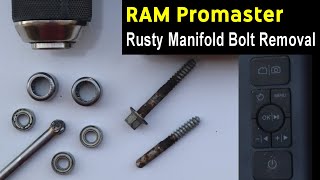
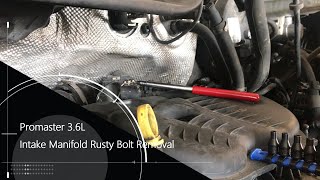
🎬 Watch: How to easily remove those rusty intake manifold bolts.Diagnostic Flowchart

Tap your situation to follow the diagnostic path that matches what you're seeing on this vehicle.
Symptoms You May Notice
- Check Engine Light is on
- Engine is hard to start or cranks but won't start
- Engine stalls, especially at low idle or when coming to a stop
- Rough or unstable idle
- Lack of acceleration and reduced engine power
- Decreased fuel economy
- Transmission shifting problems or getting stuck in limp mode
- Traction control or stability control light may also illuminate
- Replacing the Crankshaft Position Sensor
- Replacing the easily accessible Bank 2 (front) camshaft position sensor when the code is for Bank 1 (rear)
- Repeatedly replacing the sensor with cheap aftermarket parts, which often fail or do not meet the PCM's signal requirements.
Most Likely Causes

- Failed Camshaft Position Sensor (Bank 1) 🔴 High Probability This is a well-documented issue, cited in multiple manufacturer TSBs (#68080819A, #05149141A, #18-054-14) for early model years. The sensor is subject to heat and oil contamination, leading to failure. The 3.6L Pentastar engine family is known for being sensitive to sensor signal quality, making OEM parts highly recommended.
How to confirm: Scan for codes P0340 or P0344. Test the sensor's signal with a multimeter or oscilloscope, though this is difficult due to its location. Given the high failure rate and difficult access, many owners and shops replace it preventatively if other symptoms are present. If the code returns after replacing with an aftermarket sensor, the issue may be the sensor quality itself.
Typical fix: Replace the Bank 1 camshaft position sensor. Since accessing this sensor requires removing the upper intake manifold, it is highly recommended to use a high-quality OEM Mopar part (5149141AF) to avoid repeat labor. While the manifold is off, it is wise to replace the spark plugs, ignition coils, and the Bank 2 sensor as well.
Est. part cost: $40-$90 - Damaged Wiring or Connector 🟡 Medium Probability The engine bay wiring is exposed to heat and vibration, which can cause wires to become brittle, frayed, or shorted over time. The connector itself can also become loose or corroded.
How to confirm: Visually inspect the wiring harness leading to the camshaft position sensor for any signs of damage, melting, or corrosion. Check that the connector is securely plugged in and that the red locking tab is engaged. Use a multimeter to test for continuity and proper voltage (typically a 5V reference) at the connector.
Typical fix: Repair the damaged section of wiring or replace the connector pigtail.
Est. part cost: $10-$30
Rare But Worth Checking
- Failing Camshaft Phaser: On higher-mileage 3.6L Pentastar engines, the camshaft phasers (part of the VVT system) can fail. This can cause the camshaft's position to be erratic relative to the crankshaft, which the cam sensor correctly reports as a fault, triggering codes like P0340. This is a more serious mechanical issue often accompanied by a rattling noise on startup.
- Stretched or Slipped Timing Chain: While less common, a loose timing chain can cause the camshaft and crankshaft signals to be out of sync, which can trigger a P0340 code. This is a more serious mechanical issue that would likely be accompanied by rattling noises from the engine.
- Faulty Powertrain Control Module (PCM): In very rare cases, the PCM itself can fail and incorrectly report a sensor circuit malfunction. This should only be considered after all other possibilities (sensor, wiring, timing) have been definitively ruled out.
Diagnosis Steps

- Scan the PCM for all stored trouble codes. Confirm if P0340 is present, and note any other codes like P0344, P0365, P0016, or especially P06DD.
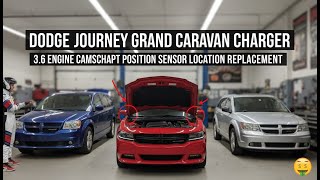
- Given the difficult access on the ProMaster, start by inspecting the wiring and connector for the easily accessible Bank 2 (front) sensor as a reference for what a good connection looks like. 🎬 See this video to find the exact sensor locations.
- Inspect the wiring harness leading to the Bank 1 (rear) camshaft position sensor as much as possible. Look for any visible damage, corrosion, or loose connections.
- If wiring appears intact, the next step is to test the sensor. This requires removing the upper intake manifold to gain access. A known-difficult part of this job is removing the two rearmost intake manifold bolts, which often rust in place and may need to be drilled out.
- Once the manifold is off, test the sensor with a multimeter by checking for 5V reference, ground, and a signal. However, given the high failure rate and labor involved, the most practical step is to replace the sensor with a new OEM Mopar part.
- While the intake manifold is removed, it is highly recommended to also replace the Bank 2 sensor, all six spark plugs, and the upper intake manifold gaskets.
- If a new OEM sensor and confirmed good wiring do not resolve the code, investigate potential mechanical timing issues (e.g., timing chain, cam phasers) or, as a last resort, a potential PCM fault.
Parts You'll Likely Need
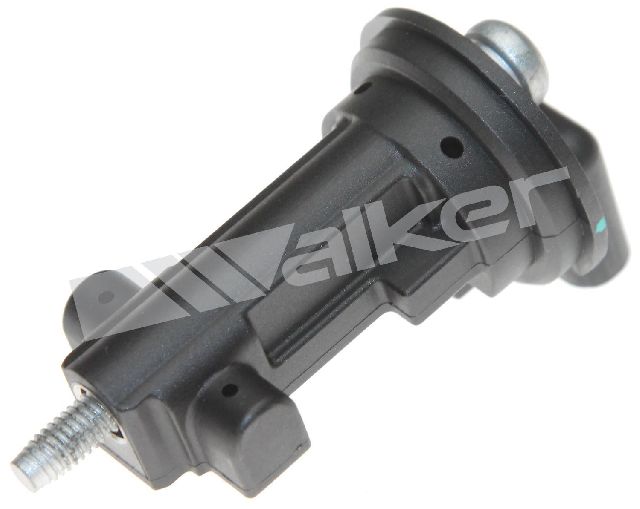
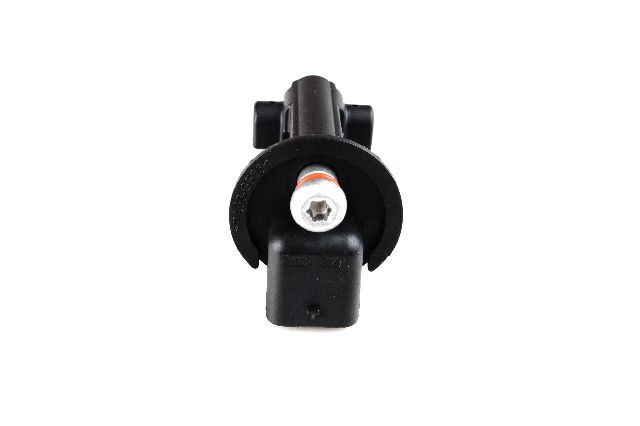
- Camshaft Position Sensor
(OEM #5149141AF)— This is the most frequent cause of code P0340 on this vehicle, as confirmed by owner experiences and manufacturer TSBs. Using the OEM Mopar part is critical for a lasting repair.
Trusted brands: Mopar (Highly Recommended), Delphi, NTK/NGK, Standard Motor Products
OEM price range: $50-$90
Aftermarket price range: $25-$70 - Upper Intake Manifold Gaskets
(OEM #5184562AC (Set of 6))— These must be replaced when the intake manifold is removed to access the Bank 1 camshaft position sensor. They are single-use.
Trusted brands: Mopar, Fel-Pro, Mahle
OEM price range: $20-$40
Aftermarket price range: $10-$25 - Intake Manifold Bolts
(OEM #6507741AA)— The two rear bolts that sit in deep wells are notorious for rusting and seizing. The heads often strip or the bolts break, requiring them to be drilled out and replaced.
Trusted brands: Mopar
OEM price range: $4-$8 per bolt
Related Codes That Often Appear With This One
- P0344 — P0344 indicates an intermittent signal from the same Bank 1 camshaft position sensor. It often appears with P0340 as the sensor or wiring connection begins to fail, causing the signal to drop out sporadically.
- P0365 / P0369 — These codes refer to a malfunction or intermittent signal from the Bank 2 camshaft position sensor. It's not uncommon for both sensors to fail around the same time due to age and operating conditions, so many owners choose to replace both at once.
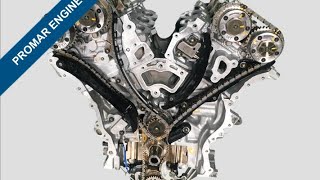
- P0016 — This code indicates a Crankshaft/Camshaft Timing Misalignment. If you see P0016 along with P0340, it points more strongly towards a mechanical issue like a stretched timing chain or a failing cam phaser, rather than just a bad sensor. 🎬 Watch: A mechanic explains other possible causes for these codes.
- P06DD — This code indicates 'Engine Oil Pressure Control Circuit Stuck Off'. On the 3.6L Pentastar, low oil pressure can prevent the VVT phasers from operating correctly. This can cause the camshaft timing to be incorrect relative to the crankshaft, which the cam sensor then reports, triggering P0340. Seeing these codes together suggests a mechanical engine issue (like a clogged oil pickup or failing oil pump) is the root cause.
Technical Service Bulletins (TSBs) & Recalls
- 68080819A: Mentions replacing the camshaft position sensor for P0340 and/or P0344 fault codes on 2014 models.
- 05149141A: Also mentions replacing the camshaft position sensor for P0340 and other related codes on 2014 models.
- 18-054-14: Addresses long crank times on 2014 models, potentially related to faulty Bank 1 cam sensors from a specific batch.
Platform-Specific Known Issues
- TSB #68080819A and #05149141A were issued for 2014 models, specifically mentioning code P0340 and instructing technicians to contact engineering before replacing the camshaft position sensor, indicating a known problem requiring data collection early in the vehicle's life.
- The location of the Bank 1 sensor under the intake manifold makes replacement labor-intensive compared to the more accessible Bank 2 sensor.
- A major hurdle specific to the ProMaster is the corrosion of the two rearmost intake manifold bolts. Water collects in the bolt wells from the cowl area, causing the bolt heads to rust away. Many owners and mechanics have documented the difficult process of drilling these bolts out to remove the manifold.
- TSB 18-054-14 also addresses long crank times on 2014 models and involves inspecting the serial number of the Bank 1 sensor and replacing it if it's from a faulty batch.
Mechanic-Grade Diagnostic Values
- Bank 1 Camshaft Sensor Connector - 5V Supply Voltage — expected: > 4.5 Volts DC. Failure: Voltage below 4.5V indicates an open/high resistance in the supply circuit (K856) or a PCM fault.
- Bank 1 Camshaft Sensor Connector - Ground Circuit Resistance — expected: < 3.0 Ohms. Failure: Resistance above 3.0 Ohms indicates an open or high resistance in the ground circuit (K900).
- Bank 1 Camshaft Sensor Signal Waveform — expected: A clean square wave signal that switches between approximately 0V and 5V when viewed on an oscilloscope while the engine is cranking or running.. Failure: A missing, noisy, or inconsistent waveform indicates a failed sensor or a wiring issue on the signal circuit (K44).
Scan Tool Commands That Help
- wiTECH (or equivalent professional scan tool): Cam/Crank Relearn — This procedure is required after replacing a camshaft position sensor, crankshaft position sensor, timing components, or the PCM. It synchronizes the signals for the PCM. To access it, select PCM -> Misc Functions -> Cam/Crank Relearn.
- wiTECH (or equivalent professional scan tool): ECU Reset — Often performed in conjunction with the Cam/Crank Relearn procedure to clear adaptive values from the Powertrain Control Module. It is found in the same 'Misc Functions' menu as the relearn.
Wiring & Ground Locations

- Bank 1 Cam Sensor Connector Pin 1 (Signal) — This is the signal wire from the sensor to the PCM. It is circuit K44 (typically a Dark Blue/Dark Green wire) and connects to Pin 22 of the C2 connector at the PCM.. This is the wire that carries the camshaft position signal. A short to ground or an open circuit here will directly cause a P0340.
- Bank 1 Cam Sensor Connector Pin 2 (5V Supply) — This is the 5-volt reference power from the PCM. It is circuit K856 (typically a Brown/Yellow wire) and originates from Pin 27 of the C1 connector at the PCM.. Without the 5V supply, the Hall-effect sensor cannot operate and will not produce a signal.
- Bank 1 Cam Sensor Connector Pin 3 (Ground) — This is the sensor ground provided by the PCM. It is circuit K900 (typically a Dark Blue/Dark Green wire) and connects to Pin 27 of the C2 connector at the PCM.. A poor ground connection will prevent the sensor from working correctly and can cause an intermittent or missing signal.
Real Owner Repair Stories
- YouTube user 'Parts shooter' (2017 Ram ProMaster 1500 3.6L Pentastar) — Check engine light with codes P06DD (oil pressure), P0521, and P1524.
❌ Tried (didn't work) The technician noted that relying on specific oil viscosity (5W-20) was not the solution, despite some claims.
✅ What actually fixed it The root cause was severe oil sludge clogging the oil pump pickup tube screen. This obstruction caused low oil pressure, which in turn can trigger VVT and cam/crank correlation issues like P0340. The fix was to drop the oil pan, clean the sludge, and replace the oil pump and pickup tube. - Reddit user on r/MechanicAdvice (2014 Ram ProMaster 3.6L) — Persistent P06DD code, especially during highway driving when fuel level drops below half. The van would enter limp mode.
❌ Tried (didn't work) Replaced oil sending unit twice. Replaced oil pump twice. Dealership stress tests could not replicate the issue.
✅ What actually fixed it The user did not post a final resolution, but the experience highlights that repeated part replacement without addressing a potential underlying cause (like sludge as seen in other cases, or a wiring harness issue) often fails to fix the problem.
OEM Part Supersession History
Unknown, likely 5149141A through 5149141AE→5149141AF— Improved reliability. The issuance of multiple TSBs for the 2014 model year regarding P0340 suggests the original sensors were prone to premature failure, and the 'AF' revision is the stable, recommended replacement part.
Model Year Variations Within This Range
- 2014: The 2014 model year was the subject of several early-life TSBs (e.g., #68080819A, #05149141A, #18-054-14) specifically for code P0340. These bulletins indicate a known issue with the original-spec camshaft position sensors, requiring technicians to follow special procedures or even contact factory engineers before replacement.
Helpful Videos


Used OEM Parts in Stock
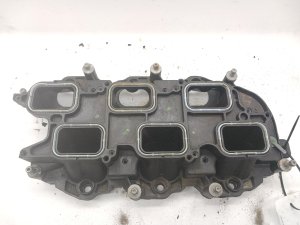

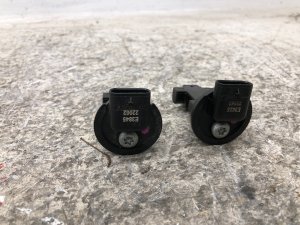

New Aftermarket Parts Available

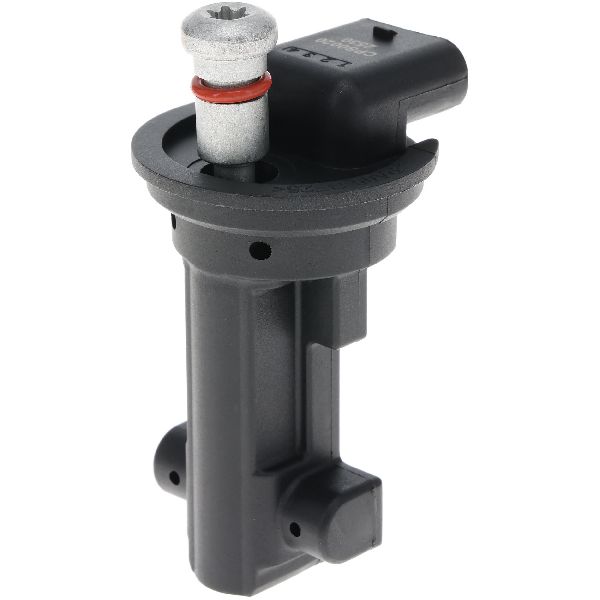
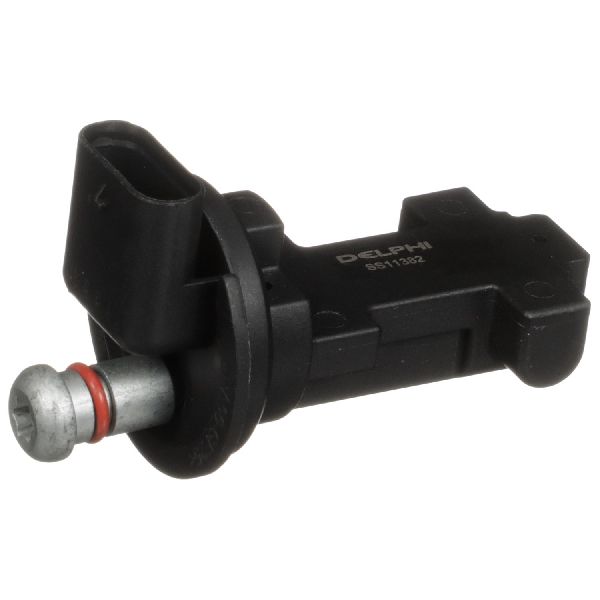

The information in this article is provided for general reference and educational purposes only. Vehicle specifications, procedures, and part compatibility can vary by production date, trim level, and region. Always consult your vehicle's factory service manual and verify part numbers before purchasing or performing repairs. Safety-critical components such as airbags, seat belts, and braking systems should be installed by a qualified professional.
- Ram PROMASTER:
- 🎬 Helpful Videos
- 🛍️ Shop This Part
- What's Unique About the 2014-2018 Ram PROMASTER
- Diagnostic Flowchart
- Symptoms You May Notice
- Most Likely Causes
- Rare But Worth Checking
- Diagnosis Steps
- Parts You'll Likely Need
- Related Codes That Often Appear With This One
- Technical Service Bulletins (TSBs) & Recalls
- Platform-Specific Known Issues
- Mechanic-Grade Diagnostic Values
- Scan Tool Commands That Help
- Wiring & Ground Locations
- Real Owner Repair Stories
- OEM Part Supersession History
- Model Year Variations Within This Range
- 🎟️ Get 5% Off