

P0340 on 2018 Jeep Wrangler: Camshaft Position Sensor Circuit Causes & Fixes
On a 2018 Jeep Wrangler, P0340 typically points to a failed camshaft position sensor on Bank 1 (passenger side). However, before replacing parts, check if your vehicle needs a powertrain control module (PCM) software update as specified in TSB 18-103-20, as this is a known fix for false codes. Also, verify if your vehicle falls under Safety Recall U87 for a faulty PCM which can cause identical symptoms.
- P0340 on a 2018 Wrangler means a circuit fault for the passenger-side camshaft position sensor.
- Before replacing the sensor, check for TSB 18-103-20 (a PCM software update) and Recall U87 (a potential PCM hardware fault), as these are known issues for this model year.
- Thoroughly inspect the sensor's wiring and connector for damage or loose pins, as this is a common cause for a 'circuit' code.
- If you replace the sensor, using an OEM Mopar part is recommended for best results.
- Symptoms often include stalling, difficulty starting, and the illumination of both the Check Engine and ESC lights.
What's Unique About the 2018-2018 Jeep WRANGLER

The 2018 model year is unique as it includes both the older Wrangler JK and the redesigned Wrangler JL, which have different engine options. While the P0340 code can appear on both the 3.6L V6 and 2.0L Turbo engines, a key issue for this model year is software. Jeep issued a Technical Service Bulletin (TSB 18-103-20) for the 2018 JK 3.6L to fix erroneous camshaft sensor codes with a PCM software update. Additionally, a recall (U87 / NHTSA 18V-524) was issued for some 2018 JK and JL models for a faulty voltage regulator within the PCM that could cause stalling, mimicking a sensor failure. These factors make it crucial to rule out PCM issues before replacing sensors.
Diagnostic Flowchart
Tap your situation to follow the diagnostic path that matches what you're seeing on this vehicle.
Generation note: The 2018 model year includes both the last of the 'JK' generation and the first of the 'JL' generation. The JK used the 3.6L V6, while the new JL offered a revised 3.6L V6 and a new 2.0L Turbo I4. The provided TSB 18-103-20 specifically mentions the 2018 JK 3.6L, but the code is known to occur on JL models as well, as documented in owner forums.
Symptoms You May Notice
- Check Engine Light is illuminated
- Engine is hard to start or cranks but won't start
- Engine stalls, sometimes while driving
- Rough idle or engine hesitation
- Noticeable loss of power and acceleration
- Electronic Stability Control (ESC) warning light may also illuminate
- Vehicle enters 'limp mode,' drastically reducing power
- Replacing the crankshaft position sensor instead of the camshaft position sensor.
- Immediately replacing the camshaft position sensor without first inspecting the wiring and connector for damage.
- Replacing hardware (sensors, PCM) before checking if the TSB 18-103-20 software update for the PCM applies and would resolve the issue.
- On 3.6L engines, repeatedly replacing sensors when the root cause is a mechanical timing issue like a failing cam phaser.
Most Likely Causes

- Failed Camshaft Position Sensor (Bank 1) 🔴 High Probability The sensor itself is a common failure point after years of heat cycles in the engine bay. Forum users frequently report replacing the sensor as the first step.
How to confirm: After confirming wiring is intact, test the sensor's output with a multimeter or swap it with the sensor from the other bank (on V6 models) to see if the code changes to P0345 (Bank 2). The 3.6L V6 has four sensors, while the 2.0L Turbo has two.
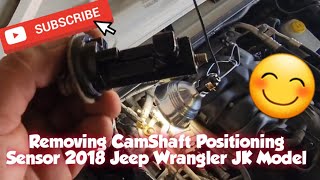
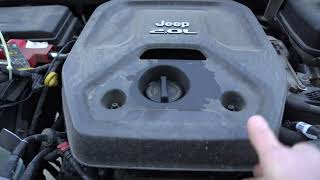
Typical fix: Replace the faulty camshaft position sensor. On the 3.6L V6, P0340 refers to the sensor on the passenger side cylinder head (Bank 1). 🎬 Watch: How to remove the sensor on a JK model On the 2.0L Turbo, the sensor is located under the engine cover, near the oil cap. 🎬 See this replacement walkthrough for the 2.0L Turbo engine
Est. part cost: $30-$75 - Wiring Harness or Connector Issue 🟡 Medium Probability The code P0340 indicates a circuit problem, not necessarily a bad sensor. Wires near the engine become brittle and crack, and connector pins can lose contact or back out. This is a common point of failure noted by mechanics in diagnostic videos.
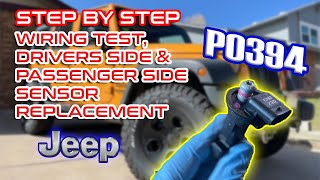
How to confirm: Visually inspect the wiring harness and connector for any signs of damage, corrosion, or loose pins. A YouTube video demonstrated a case where a pin had backed out 🎬 Watch: How to diagnose and fix sensor circuit wiring issues of the connector, causing the code. Use a multimeter to check for the correct voltage (typically 5V reference) and ground at the connector.
Typical fix: Repair the damaged section of wiring or clean/replace the connector pigtail. Ensure all pins are fully seated and make good contact.
Est. part cost: $5-$50 - Powertrain Control Module (PCM) Software Glitch 🟡 Medium Probability Jeep released TSB 18-103-20 specifically to address this and other false sensor codes on the 2018 JK 3.6L by updating the PCM software. The TSB was created to make the system less sensitive to brief, non-critical signal interruptions that could falsely trigger a code.
How to confirm: A Jeep dealership or a qualified shop with a wiTECH scan tool can check the current software version of the PCM and see if the update from TSB 18-103-20 is available and applicable.
Typical fix: Reprogram the PCM with the latest software version as per the TSB.
Est. part cost: $0-$200 (dealer labor)
Rare But Worth Checking
- Faulty Powertrain Control Module (PCM): While rare, some 2018 Wranglers were part of Safety Recall U87 / NHTSA 18V-524 for a defective voltage regulator chip inside the PCM, which could cause stalling and a no-start condition. This is a hardware failure, not a software glitch, and the remedy is a complete PCM replacement, free of charge.
- Weak Battery or Charging System Fault: Low system voltage can cause various electronic modules, including the PCM, to behave erratically and set false sensor codes. One forum user with a P0340 on a JL noted persistent low voltage readings and suspected it was related to the dual-battery system's charging logic.
- Timing Chain or Cam Phaser Issue: If the timing chain is stretched or a cam phaser is failing, the camshaft's actual position can deviate from what the PCM expects, triggering a sensor code even if the sensor is working correctly. This is a more serious mechanical issue known to occur on the 3.6L Pentastar engine across various platforms.
Diagnosis Steps

- Scan for all DTCs. Note if other cam/crank sensor codes are present, as this may point towards a PCM or wiring issue rather than a single bad sensor.
- Check for applicable TSBs and Recalls. Specifically, check for TSB 18-103-20 (PCM update for 3.6L JK) and Recall U87 (PCM replacement for certain JK/JL models).
- Visually inspect the camshaft position sensor connector and wiring on the passenger side cylinder head (Bank 1). Look for loose connections, corrosion, or damaged wires. Pay close attention to the connector pins, as they can back out.
- With the key on and engine off, use a multimeter to test the connector for a 5-volt reference signal and a good ground connection.
- If wiring seems okay, consider swapping the Bank 1 (passenger side) sensor with the Bank 2 (driver side) sensor on the 3.6L V6. Clear the codes and drive the vehicle. If the code changes to P0345 (Bank 2), the sensor is faulty.
- If the code remains P0340 after the swap, the problem lies in the wiring harness or the PCM's driver circuit for that sensor.
- If a new sensor and confirmed good wiring do not fix the issue, especially on a 3.6L V6, the issue may be mechanical. Investigate potential timing chain or cam phaser problems, which often require a more in-depth diagnosis by a professional.
Parts You'll Likely Need
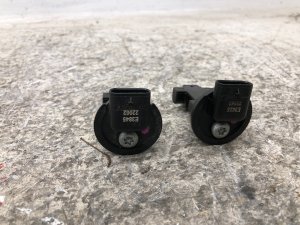
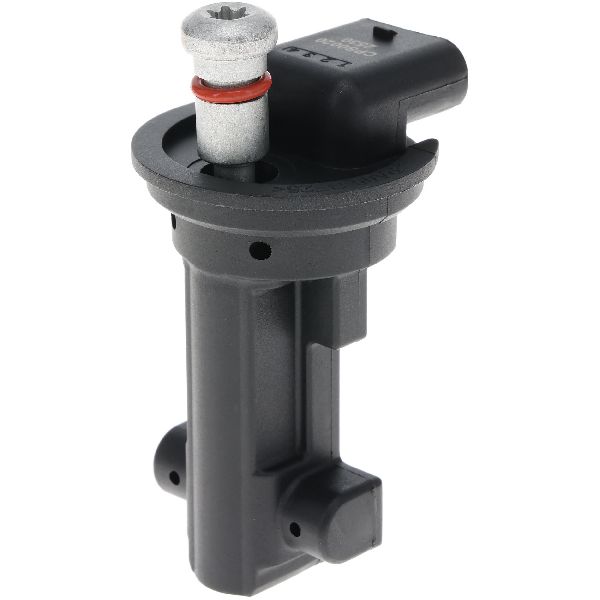
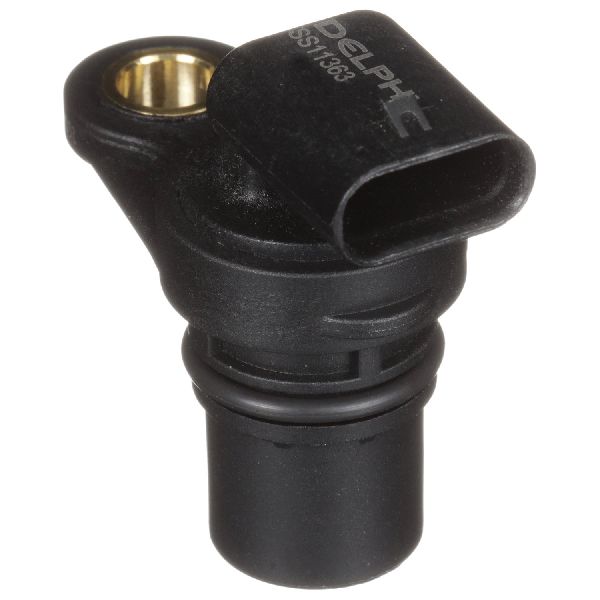
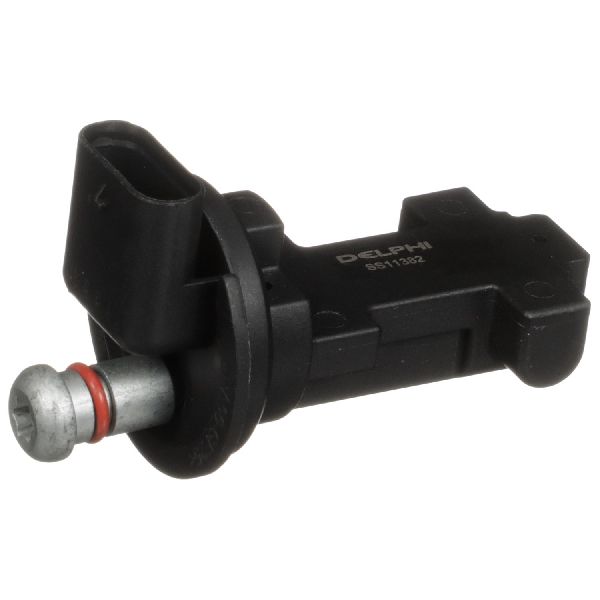
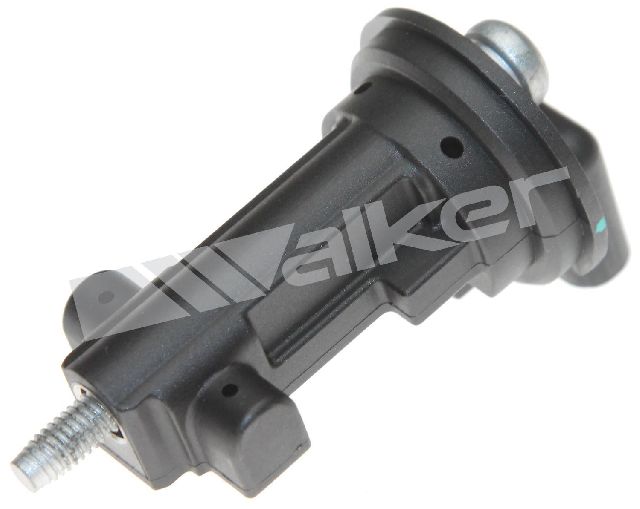
- Camshaft Position Sensor (3.6L V6)
(OEM #5149141AF)— This is the most common component to fail and cause a P0340 code on the 3.6L engine, assuming wiring and PCM software are ruled out. This part number is used for all four cam sensors on the 3.6L V6.
Trusted brands: Mopar, Delphi, NGK/NTK, Standard Motor Products
OEM price range: $50-$80
Aftermarket price range: $30-$60 - Camshaft Position Sensor (2.0L I4 Turbo)
(OEM #68331052AB)— This is the corresponding sensor for the 2.0L Turbo engine. While less commonly discussed for P0340, it is the correct part to replace if the sensor is diagnosed as faulty on this engine.
Trusted brands: Mopar
OEM price range: $40-$70
Aftermarket price range: $25-$50
Related Codes That Often Appear With This One
- P0344 — This is the intermittent version of the P0340 code for the same sensor (Camshaft Position Sensor Intermittent - Bank 1 Sensor 1).
- P0345, P0349, P0365, P0369, P0390, P0394 — These are all codes for the other camshaft position sensors on the 3.6L V6 engine. TSB 18-103-20 lists all of these together, suggesting a common root cause like a PCM software issue or a shared wiring problem could trigger multiple codes at once.
- P0335, P0339 — These codes relate to the Crankshaft Position Sensor. Since the cam and crank sensors work together for engine timing, a fault in one system can sometimes trigger codes for the other, especially if there's a widespread wiring or PCM issue.
Technical Service Bulletins (TSBs) & Recalls
- 18-103-20: Flash: Powertrain Control Module (PCM) Updates for multiple camshaft/crankshaft sensor DTCs. [⭐]
- U87 / NHTSA 18V-524: Safety Recall for Powertrain Control Module replacement due to potential voltage regulator failure.
Platform-Specific Known Issues
- TSB 18-103-20: PCM Software Update: A PCM software update was issued for the 2018 Wrangler JK 3.6L to correct false or intermittent camshaft and crankshaft position sensor codes, including P0340. This TSB addresses the PCM being overly sensitive to minor signal fluctuations.
- Safety Recall U87 / NHTSA 18V-524: PCM Failure: A recall was issued for some 2018 JK and JL Wranglers due to a potentially faulty voltage regulator chip in the PCM, which could lead to a stalling or a no-start condition, mimicking sensor failure. The remedy is a free replacement of the entire PCM at a dealership.
- Wiring Harness Vulnerability: Owners and technicians on forums like JK-Forum.com report that the engine wiring harness on the 3.6L engine is susceptible to chafing and loose connector pins, which can cause intermittent circuit faults like P0340.
Mechanic-Grade Diagnostic Values
- Camshaft Position Sensor 5-Volt Supply — expected: Approximately 5.0 volts with ignition on, engine off.. Failure: Voltage significantly lower than 5.0V or 0V indicates an open/short in the supply circuit or a PCM fault.
- Camshaft Position Sensor Ground Circuit Resistance — expected: Less than 5.0 Ohms between the ground pin at the connector and a known good ground (e.g., battery negative terminal).. Failure: High resistance (Ohms) indicates a corroded or open ground wire.
- Camshaft Position Sensor Signal (Hall-Effect Test) — expected: With the sensor connected and ignition on, the signal wire voltage should switch between ~0V and ~5V when a magnet is passed over the sensor tip.. Failure: Voltage does not switch, indicating a faulty sensor.
- Camshaft Position Sensor Signal (Oscilloscope) — expected: A clean digital square wave pattern that toggles between approximately 0V and 5V as the engine is cranked or running.. Failure: A missing, erratic, or misshapen waveform (e.g., a 'V' shape instead of a square) points to a sensor, wiring, or mechanical timing issue.
Scan Tool Commands That Help
- wiTECH (or equivalent professional scan tool): Cam/Crank Relearn — This procedure must be performed after replacing a Camshaft Position Sensor (CMP), Crankshaft Position Sensor (CKP), flywheel, or any valvetrain/timing components. Failure to perform the relearn can cause misfire faults or incorrect timing calculations even with new parts installed.
Wiring & Ground Locations

- Bank 1 Camshaft Position Sensor Connector (3.6L V6) — On the top of the passenger side (Bank 1) valve cover, towards the rear of the engine.. This is the primary point for testing voltage, ground, and signal for the P0340 code. The three pins are typically a 5V supply, signal, and ground.
- G102 / G103 — G102 is located near the passenger (right) side headlight assembly. G103 is on the right side of the engine block itself.. These are main grounding points for the engine wiring harness. A poor connection at these locations can cause erratic behavior and fault codes for multiple sensors, including the camshaft sensor.
Real Owner Repair Stories
- YouTube user 'p0340 p0345 Jeep Wrangler CAMSHAFT POSITION Sensor SOLVED' (2013 Jeep Wrangler JK (3.6L V6)) — Check Engine Light with multiple camshaft sensor codes for Bank 2 (P0345, P0349, P0390, P0394).
❌ Tried (didn't work) Initial diagnosis pointed towards a bad sensor since multiple codes for the same bank were present.
✅ What actually fixed it Testing at the sensor connector revealed a missing 5V reference on one pin. Further inspection showed the wire pin had backed out of the connector housing, creating a poor connection. The pin was pushed back into the connector securely, and contact cleaner was applied, which restored the 5V signal and resolved all codes. - JK-Forum.com user (2018 Jeep Wrangler JK, 3.6L V6, 39k miles) — Persistent P0340 code that would not clear. Engine ran smoothly otherwise, but a knock developed during dealer diagnosis.
❌ Tried (didn't work) Replacing the camshaft position sensor., Checking the wiring harness., Creating a jumper wire from the sensor to the PCM to bypass the main harness., Replacing the PCM., Replacing all rockers, lifters, and all four camshafts.
✅ What actually fixed it The user's final update indicated the dealer was going to replace the camshaft again at no labor cost, but the ultimate resolution was not posted. The story is valuable as an extreme case where throwing parts, including a new PCM and full valvetrain components, did not solve the persistent circuit code, pointing to a deeply hidden wiring issue or a rare mechanical problem with the cam phaser/tone wheel that was missed.
OEM Part Supersession History
05149141AE→5149141AF— Standard part number revision, likely for improvements in materials or internal electronics to increase durability and reliability.
Heads up: The parts are interchangeable, but it is always recommended to use the latest revision (5149141AF) when replacing.
Helpful Videos

Used OEM Parts in Stock
New Aftermarket Parts Available


The information in this article is provided for general reference and educational purposes only. Vehicle specifications, procedures, and part compatibility can vary by production date, trim level, and region. Always consult your vehicle's factory service manual and verify part numbers before purchasing or performing repairs. Safety-critical components such as airbags, seat belts, and braking systems should be installed by a qualified professional.
- Jeep WRANGLER:
- 🎬 Helpful Videos
- 🛍️ Shop This Part
- What's Unique About the 2018-2018 Jeep WRANGLER
- Diagnostic Flowchart
- Symptoms You May Notice
- Most Likely Causes
- Rare But Worth Checking
- Diagnosis Steps
- Parts You'll Likely Need
- Related Codes That Often Appear With This One
- Technical Service Bulletins (TSBs) & Recalls
- Platform-Specific Known Issues
- Mechanic-Grade Diagnostic Values
- Scan Tool Commands That Help
- Wiring & Ground Locations
- Real Owner Repair Stories
- OEM Part Supersession History
- 🎟️ Get 5% Off