

P0340 on 2012-2016 GMC Yukon Denali: Camshaft Sensor Causes and Fixes
P0340 on a Yukon Denali most often means the camshaft position sensor has failed. The part is inexpensive ($25-$60), but replacement difficulty varies by year. For 2012-2014 models, it's at the top rear of the engine block behind the intake manifold. For 2015-2016 models, it's on the front timing cover, requiring removal of the serpentine belt and tensioner for access.
- P0340 on your Yukon Denali almost always points to a bad camshaft position sensor or its wiring.
- The vehicle year is critical. 2012-2014 models use part #12591720, while 2015-2016 models use part #12623093 and have a different replacement procedure.
- If you have a 2013 model year Yukon built in late 2012, a TSB specifically suggests replacing the sensor if the code is intermittent and other tests are inconclusive.
- Always inspect the wiring and connector for damage before replacing the sensor, as this can save you the cost of a new part.
- Use a quality OEM (ACDelco) or reputable aftermarket brand (Delphi, NGK, Bosch) for the replacement sensor to ensure reliability.
What's Unique About the 2012-2016 Gmc YUKON DENALI
The 2012-2016 year range covers two different generations of the Yukon Denali (and its 6.2L V8 engine) which have different part numbers and drastically different sensor locations. The earlier 2012-2014 models (GMT900 platform with Gen IV V8) have the sensor located at the top rear of the engine block, behind the intake manifold, making it difficult to access. The 2015-2016 models (K2XX platform with Gen V V8) have the sensor located on the front timing cover, which is easier to see but requires removing other components for access. GM also issued TSBs for both generations addressing potential wiring issues and specific replacement advice.
Diagnostic Flowchart
Tap your situation to follow the diagnostic path that matches what you're seeing on this vehicle.
Generation note: Yes, this range spans two generations. The 2012-2014 models are the end of the GMT900 platform (Gen IV V8), while the 2015-2016 models are the beginning of the K2XX platform (Gen V V8). The camshaft position sensor is in a different location (rear vs. front) and is a different part number between these generations.
Symptoms You May Notice
- Check Engine Light is on
- Engine is difficult to start or cranks for a long time but won't start
- Engine stalling, especially at low speeds or idle
- Rough idle or hesitation during acceleration
- Reduced engine power and poor fuel economy
- Engine may go into limp mode, limiting power and performance
- Replacing the crankshaft position sensor. While related, the P0340 code specifically points to the camshaft sensor circuit. Always diagnose the code that is present. The two sensors are often confused due to similar names and functions.
- Replacing spark plugs or ignition coils. While a bad cam sensor can cause misfires, the P0340 code points to a specific circuit that should be addressed first.
- Assuming the sensor is bad without checking the wiring. Damaged wiring or corroded connectors are a frequent cause and can mimic a failed sensor perfectly.
Most Likely Causes
- Failed Camshaft Position Sensor 🔴 High Probability The sensor is a sensitive electronic component exposed to extreme heat cycles within the engine bay, which can cause internal failure over time. Oil leaks can also contaminate the sensor and its connector, leading to signal loss.
How to confirm: After confirming the wiring is intact, replacing the sensor is the most common and direct fix. For 2013 models built in Sept/Oct 2012, TSB #PIP5099A suggests replacing the sensor if other diagnostics don't find a cause.
Typical fix: Replace the camshaft position sensor and its O-ring. It is highly recommended to use an OEM (ACDelco) or reputable OE-supplier part (Delphi, NTK) to avoid premature failure of aftermarket parts.
Est. part cost: $25-$70 - Wiring Harness or Connector Damage 🟡 Medium Probability The wiring harness is subject to the same heat and vibrations as the sensor. Wires can become brittle and crack, or get damaged by rodents. On 2015-2016 models, TSB #PIP5335D specifically points to potential corrosion in connector X154 on the front cover. On earlier models, the harness can be stretched or damaged during other engine repairs.
How to confirm: Visually inspect the wiring going to the camshaft position sensor for any signs of cracking, melting, chafing, or corrosion. Wiggle the connector with the engine running to see if it affects engine behavior. Use a multimeter to check for 5V reference, ground, and signal at the connector with the key on.
Typical fix: Repair the damaged section of wiring or replace the pigtail connector. On 2015-16 models, clean any corrosion found in connector X154.
Est. part cost: $15-$40 - Blown Fuse ⚪ Low Probability
How to confirm: Check the fuse box diagram in the owner's manual to locate the fuse for the engine sensors (it may be labeled 'ECM', 'PCM', or 'Engine Sensors') and visually inspect it.
Typical fix: Replace the blown fuse. If it blows again, a short circuit exists in the wiring that must be found and repaired.
Est. part cost: $1-$5
Rare But Worth Checking
- Stretched Timing Chain: While not the most common cause, a stretched timing chain can cause the camshaft and crankshaft signals to be out of sync, triggering P0340. This is a more serious mechanical issue often seen on higher mileage engines (200k+ miles) and is usually accompanied by a rattling noise on startup and other timing-related codes (like P0016 or P0017).
- Failed Powertrain Control Module (PCM): This is very rare and should be the last resort. A recurring P0340 after replacing the sensor and verifying the entire wiring circuit may point to a faulty driver circuit within the PCM. This requires advanced diagnostics, often with a dealership-level scan tool, to confirm before replacement.
- Issues after Active Fuel Management (AFM/DOD) Delete: If the P0340 code appears after performing an AFM/DOD delete, it can be caused by several factors. The cam sensor wiring may have been damaged or stretched during the job, the new non-AFM camshaft requires a specific tune to work correctly, or a CASE (Crankshaft Angle Sensor Error) relearn procedure needs to be performed with a bi-directional scan tool to sync the new components.
Diagnosis Steps
- Read the codes with an OBD-II scanner to confirm P0340 is the primary code. Note any other codes like P0341 or P0335.
- Visually inspect the sensor's wiring harness and connector. Look for obvious damage like chafing, melting, corrosion, or rodent damage, which is a known issue.
- For 2015-2016 models: Per TSB #PIP5335D, inspect connector X154 (and X159 on 2015 models) on the front engine cover next to the vacuum pump for any signs of corrosion and clean if necessary.
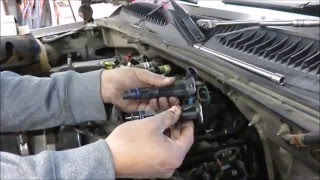
- For 2012-2014 models (GMT900): Locate the sensor at the top rear of the engine block, behind the intake manifold. Access is very limited. 🎬 Watch: This walkthrough shows how to reach the rear-mounted sensor. Inspect the connector and wiring as much as possible.
- For 2015-2016 models (K2XX): Locate the sensor on the front of the engine, on the timing cover. Access requires removing the intake tube, serpentine belt, and belt tensioner.
- If wiring looks good, the most probable cause is the sensor itself. Replace the camshaft position sensor, ensuring you use a quality OEM or OE-equivalent part.
- If replacing the sensor does not fix the issue, perform advanced diagnostics. Use a multimeter to check for a 5-volt reference signal, a good ground, and a fluctuating signal voltage from the sensor at the connector with the engine cranking.
- If all else fails, the issue may be mechanical (stretched timing chain, damaged reluctor wheel) or a faulty PCM, which may require professional diagnosis.
Parts You'll Likely Need
- Camshaft Position Sensor (2012-2014 Models)
(OEM #12591720)— This is the most common failure point for P0340 on the Gen IV 6.2L V8. This part is located at the rear of the engine. This part number supersedes 12585545 and 12568983.
Trusted brands: ACDelco (OEM), Delphi, NGK, Bosch
OEM price range: $40-$60
Aftermarket price range: $25-$45 - Camshaft Position Sensor (2015-2016 Models)
(OEM #12623093)— This is the most common failure point for P0340 on the Gen V 6.2L V8. This part is located on the front timing cover.
Trusted brands: ACDelco (OEM), Delphi, Dorman, Hitachi
OEM price range: $50-$75
Aftermarket price range: $30-$55 - Camshaft Position Sensor Connector Pigtail — Needed if the original connector or wiring is damaged, corroded, or brittle from heat. This allows for a clean repair of the circuit.
Trusted brands: ACDelco, Dorman, Wells
OEM price range: $20-$40
Aftermarket price range: $10-$25
Related Codes That Often Appear With This One
- P0341 — P0341 indicates a 'Camshaft Position Sensor 'A' Circuit Range/Performance' problem. It often appears with P0340 as the PCM may see the signal as both malfunctioning (P0340) and performing out of its expected range or intermittently (P0341).
- P0335 — This code is for the Crankshaft Position Sensor circuit. The PCM compares cam and crank signals for timing. A fault in one can sometimes cause the computer to flag a code for the other, or it can indicate a larger timing system problem.
Technical Service Bulletins (TSBs) & Recalls
- PIP5335D: Advises inspecting connector X154 on the front cover for corrosion on 2015-2016 models with the 4.3L, 5.3L, or 6.2L engine if P0340/P0341 codes are present and other diagnostics don't find a cause.
- PIP5099A: Advises replacing the cam position sensor on 2013 model year vehicles built in Sept or Oct of 2012 for an intermittent P0340 code if diagnostics do not find another cause.
Platform-Specific Known Issues
- A Technical Service Bulletin (TSB), #PIP5099A, was issued for some 2013 model year vehicles built in Sept/Oct 2012. It states that for intermittent P0340 codes where diagnostics do not lead to a resolution, the camshaft position sensor should be replaced.
- For 2015-2016 models, TSB #PIP5335D points to corrosion in connector X154 on the front cover as a potential cause for P0340 and P0341, advising inspection and repair if normal diagnostics fail. For 2015 models specifically, connector X159 is also mentioned.
- Owners who have performed an Active Fuel Management (AFM/DOD) delete may encounter a P0340 code if the wiring was damaged during the installation, or if a Crankshaft Position (CASE) relearn procedure was not performed.
Mechanic-Grade Diagnostic Values
- Sensor Circuit Voltage Check (3-wire sensor, Key On, Engine Off, Connector disconnected) — expected: 5V on the reference wire, 5V on the signal wire (both relative to battery ground), and battery voltage (~12.6V) between the battery positive post and the ground wire terminal.. Failure: Readings outside these ranges indicate a fault in the wiring or the PCM, not the sensor itself.
- Sensor Signal Voltage (3-wire sensor, connected, engine cranking/running) — expected: A fluctuating DC voltage, typically switching between 0V and 5V.. Failure: A steady 0V, 5V, or no voltage indicates a failed sensor or circuit issue.
- Camshaft Position Sensor Internal Resistance (Gen IV V8 style) — expected: Approximately 5.0 to 5.2 kOhms for a known-good OEM sensor.. Failure: Significantly higher resistance (e.g., 5.5 kOhms or more) was observed in a non-functional aftermarket sensor. This test can help identify out-of-spec aftermarket parts.
Scan Tool Commands That Help
- GDS2, Tech2, or other high-end bidirectional scanner: Crankshaft Position (CASE) Relearn — This procedure should be performed after replacing the crankshaft sensor, camshaft sensor, or any major timing components (chain, phasers). It synchronizes the crank and cam signals for accurate misfire detection and timing. Failure to perform it can sometimes lead to persistent, erroneous codes.
Wiring & Ground Locations
- Connector X154 / X159 — For 2015-2016 models, this connector is located on the front engine cover, next to the vacuum pump.. TSB #PIP5335D specifically identifies corrosion within this connector as a hidden cause for P0340/P0341. X159 is an additional point of inspection for 2015 models only.
- G102 — For 2012-2014 (GMT900) models, this ground is on the left side of the engine block, in the area of cylinder #3, below the exhaust manifold.. This is a primary engine block ground. A poor connection here can cause erratic behavior from multiple engine sensors, including the camshaft position sensor.
- G103 / G108 — For 2012-2014 (GMT900) models, these grounds are located on the back of the cylinder heads.. Experienced technicians report that loose or corroded grounds at these specific locations are a frequent cause of difficult-to-diagnose drivability problems.
Real Owner Repair Stories
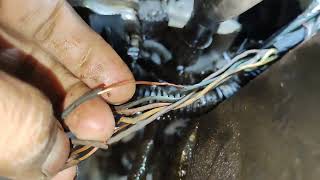
- YouTube channel 'your car technician' (2012 GMC Yukon) — Code P0340 and a long crank time before starting.
❌ Tried (didn't work) Initial thought was to replace the sensor.
✅ What actually fixed it The wiring leading to the camshaft position sensor was found to be stripped and damaged. The final fix was repairing the damaged wires using heat-shrink sleeves, which resolved the code and the long crank symptom. - YouTube channel 'Matt's Garage' (2015 Chevy Suburban (K2XX Platform, same as 2015+ Yukon)) — Code P0340, drivability issues.
❌ Tried (didn't work) The vehicle had a previous, poorly executed wiring repair that failed.
✅ What actually fixed it The technician found two broken wires in the camshaft position sensor harness. A proper repair of the wiring harness fixed the issue completely.
Model Year Variations Within This Range
- 2012-2014 vs 2015-2016: Complete platform change (GMT900 to K2XX). The camshaft position sensor moved from the top rear of the engine block to the front timing cover, and the part number is different.
- 2015 only: When diagnosing P0340 per TSB #PIP5335D, technicians should inspect both connectors X154 and X159 for corrosion. For 2016+ models, only X154 is mentioned as the primary concern.
- 2013 (built Sept/Oct 2012): TSB #PIP5099A advises that for intermittent P0340 codes on these specific vehicles, the sensor should be replaced if standard diagnostics do not find another cause.
Helpful Videos
We Have This Part in Stock


The information in this article is provided for general reference and educational purposes only. Vehicle specifications, procedures, and part compatibility can vary by production date, trim level, and region. Always consult your vehicle's factory service manual and verify part numbers before purchasing or performing repairs. Safety-critical components such as airbags, seat belts, and braking systems should be installed by a qualified professional.
- Gmc YUKON DENALI:
- 🎬 Helpful Videos
- 🛍️ Shop This Part
- What's Unique About the 2012-2016 Gmc YUKON DENALI
- Diagnostic Flowchart
- Symptoms You May Notice
- Most Likely Causes
- Rare But Worth Checking
- Diagnosis Steps
- Parts You'll Likely Need
- Related Codes That Often Appear With This One
- Technical Service Bulletins (TSBs) & Recalls
- Platform-Specific Known Issues
- Mechanic-Grade Diagnostic Values
- Scan Tool Commands That Help
- Wiring & Ground Locations
- Real Owner Repair Stories
- Model Year Variations Within This Range
- 🎟️ Get 5% Off