

P0340 on 2013-2015 Dodge Dart: Camshaft Sensor Circuit Causes and Fixes
P0340 on a Dodge Dart most often means a failed camshaft position sensor, an affordable part that's accessible for DIY replacement. However, a PCM software update might be the actual fix per a manufacturer TSB, and a 'cam-crank relearn' procedure with a proper scan tool is required after replacing the sensor. Ignoring the code can lead to stalling and no-start conditions.
- P0340 on a Dodge Dart is most commonly caused by a faulty intake camshaft position sensor.
- Before replacing parts on a 2.4L model, check if your vehicle needs a PCM software update per TSB #18-022-17 REV. A, as this could be the actual fix.
- If you replace the sensor, you MUST perform a 'cam-crank relearn' procedure with a bi-directional scan tool for the repair to be successful.
- Using an OEM Mopar sensor (Part # 68080819AD) is highly recommended over aftermarket alternatives to prevent recurring issues.
What's Unique About the 2013-2015 Dodge DART
 🎬 See how to perform the mandatory cam-crank relearn displaying a cam-crank relearn procedure." loading="eager" fetchpriority="high" style="max-width:100%;height:auto;border-radius:6px;display:block;box-shadow:0 2px 8px rgba(0,0,0,0.1);" />
For the Dodge Dart, P0340 isn't always a straightforward sensor failure. A key issue is a Technical Service Bulletin (TSB #18-022-17 REV. A 🎬 Watch: How to fix P0340 on the 2.4L engine) that groups this code with others, where the official fix is a PCM software update, not a new part. Additionally, unlike many vehicles, replacing the camshaft sensor on a Dart requires a 'cam-crank relearn' procedure with a bi-directional scan tool to sync the new sensor with the computer; skipping this step often results in the code returning. Owners report this relearn is a mandatory step for a successful repair.
Diagnostic Flowchart

Tap your situation to follow the diagnostic path that matches what you're seeing on this vehicle.
Symptoms You May Notice
- Check Engine Light is on
- Engine is difficult to start or cranks but won't start
- Engine stalls, especially at low speeds or when stopping
- Rough idle and engine hesitation
- Noticeable loss of power and poor acceleration
- Decreased fuel economy
- Replacing the crankshaft position sensor. While related, P0340 specifically points to the camshaft circuit. A crankshaft sensor issue would typically set code P0335.
- Replacing the camshaft sensor without performing the cam-crank relearn procedure. On the Dart, this often leads to the code returning even with a good part.
- Using a low-quality aftermarket sensor. Owners and mechanics report that Chrysler electronics can be sensitive, and using an OEM Mopar sensor is strongly recommended to avoid premature failure.
Most Likely Causes

- Failed Camshaft Position Sensor 🔴 High Probability The sensor is a common failure point due to heat cycles and electronic wear over time. Its location on the engine exposes it to significant heat and vibration. Oil from valve cover leaks can also contaminate the connection, disrupting the signal.
How to confirm: After checking wiring, replacing the sensor is the most direct diagnostic step. A scan tool may show erratic or no signal from the sensor. On the 2.0L/2.4L engines, P0340 refers to the intake sensor.
Typical fix: Replace the faulty camshaft position sensor and perform a cam-crank relearn procedure. Using a small amount of silicone paste on the new sensor's O-ring is recommended.
Est. part cost: $25-$90 - PCM Software Requires Update 🟡 Medium Probability Manufacturer TSB #18-022-17 REV. A specifically lists P0340 as a code that may be resolved by a PCM software update for 2013-2015 Darts with the 2.4L engine. The update addresses diagnostic improvements and issues like idle surge.
How to confirm: A Dodge dealership or a qualified shop with access to TechCONNECT can check the vehicle's VIN to see if this TSB is applicable and has not been performed.
Typical fix: The dealer performs a PCM reflash to the latest software version using the wiTECH tool.
Est. part cost: $0 (if under warranty) or ~$100-$200 (dealer labor) - Wiring or Connector Damage 🟡 Medium Probability The sensor wiring is located on top of the engine and is exposed to heat and vibration, which can make wires brittle or cause the connector's locking tab to break. Oil from valve cover leaks can also contaminate the connection, disrupting the signal.
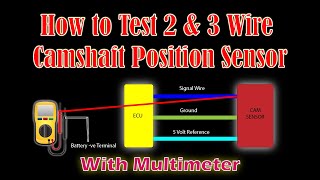
How to confirm: Visually inspect the wiring harness and connector for cracks, corrosion, oil saturation, or loose pins. Wiggle the connector while the engine is running to see if it causes a stall. Use a multimeter to test for power, ground, and signal continuity.
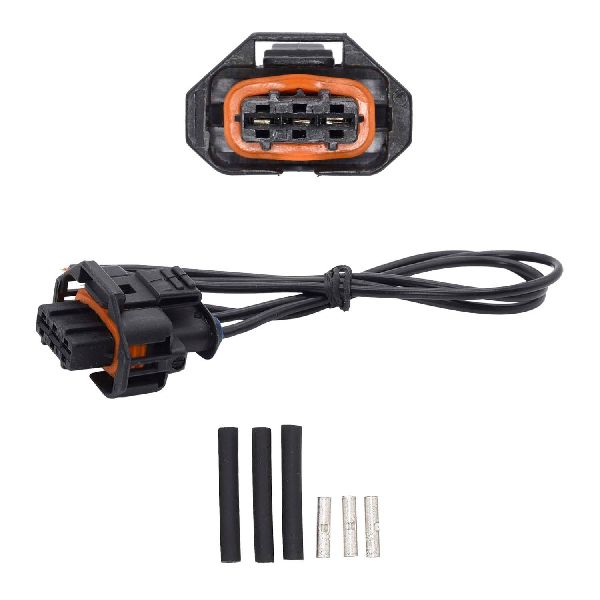
Typical fix: Repair the damaged section of wiring or replace the pigtail connector. Using marine-grade heat shrink connectors with built-in glue is recommended for a durable, moisture-proof repair.
Est. part cost: $15-$40
Rare But Worth Checking
- Stretched Timing Chain / Worn Timing Belt: The 2.0L/2.4L engines use a timing chain, while the 1.4L Turbo uses a belt. If timing is off due to slack, the cam and crank signals won't sync, which can trigger P0340. This is a more serious mechanical issue and may be accompanied by other codes like P0016.
- Failing Powertrain Control Module (PCM): This is a last-resort diagnosis. If the sensor, wiring, and software have all been confirmed good, the PCM itself may be faulty.
- Damaged Reluctor Wheel: The sensor reads a toothed wheel (reluctor) on the camshaft. Though rare, if this wheel is damaged or has broken teeth, it will send an inconsistent signal and trigger a P0340 code.
Diagnosis Steps
- Read all fault codes with an OBD-II scanner. Note any other codes that appear alongside P0340, such as P0335 or P0344.
- Perform a thorough visual inspection of the camshaft position sensor (intake side for P0340) and its electrical connector. Look for any signs of damage, oil leaks, or loose connections. The connector has a red locking tab that should be secure.
- Check if TSB #18-022-17 REV. A applies to your vehicle's VIN and if the update has been performed. A dealership can confirm this. If applicable, a PCM software update may be the required fix.
- If no TSB applies, inspect the wiring harness for damage. Check for continuity, power, and ground at the connector with a multimeter. A common failure point is brittle wiring due to engine heat.
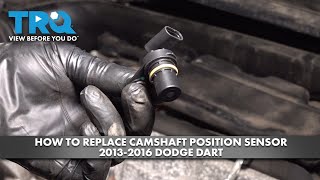
- If wiring and software are good, replace the camshaft position sensor. On the 2.0L and 2.4L engines, it's held by a single 10mm bolt. The OEM Mopar part is highly recommended.
- Crucial Step: After replacing the sensor, perform a 'cam-crank relearn' procedure using a compatible bi-directional scan tool (e.g., Autel, Appcar DiagFCA). This syncs the new sensor with the PCM. Skipping this step will likely cause the code to return.
- Clear the trouble codes and perform a drive cycle, including both steady-speed and stop-and-go driving, to confirm the repair was successful.
- If the code persists, the issue may be more complex, such as a timing chain problem or a faulty PCM, and may require professional diagnosis.
Parts You'll Likely Need
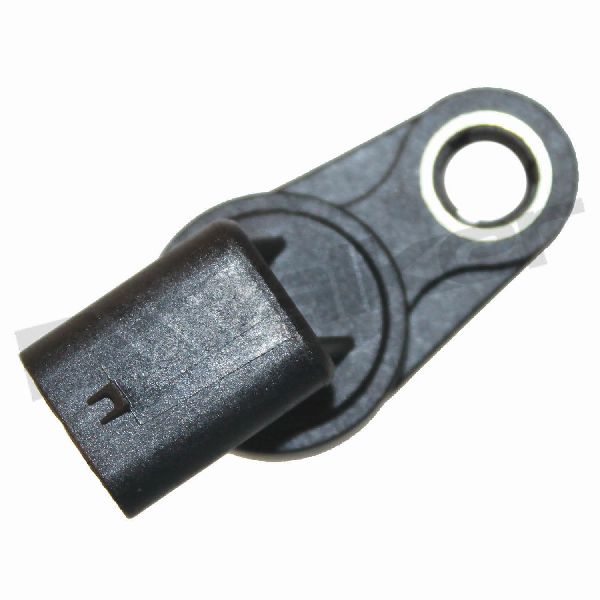
- Camshaft Position Sensor
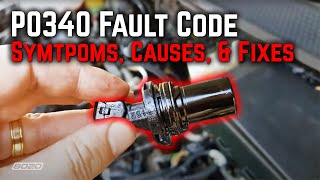
(OEM #68080819AD)— This is the most common component to fail, causing a loss of signal to the PCM. The 2.0L and 2.4L engines use two identical sensors (intake and exhaust); P0340 points to the 'A' sensor (intake). This part number supersedes 68080819AC, 68080819AB, and 5033308AB.
Trusted brands: Mopar (OEM - Recommended), NTK, Delphi, Standard Motor Products
OEM price range: $50-$90
Aftermarket price range: $21-$79
Related Codes That Often Appear With This One
- P0335 — This code is for the Crankshaft Position Sensor. Since the cam and crank sensors work together for timing, a fault in one system or its wiring can sometimes trigger a code for the other. TSB #18-022-17 REV. A also lists them together as being addressed by the same software update.
- P0344 — This code indicates an intermittent signal from the camshaft position sensor, often pointing to a wiring issue, a loose connection, or a sensor that is in the early stages of failure.
- P0365 — This is the code for the Camshaft Position Sensor 'B' Circuit (exhaust sensor). If both sensors are the same age, it's not uncommon for one to fail shortly after the other. Some owners choose to replace them in pairs.
Technical Service Bulletins (TSBs) & Recalls

- 18-022-17 REV. A: Applies to 2.4L engines. Involves reprogramming the PCM to correct false positives for several codes, including P0340 - Camshaft Position Sensor Circuit Bank 1 Sensor 1. It also addresses symptoms like engine startup flare and idle surge.
Platform-Specific Known Issues
- Mandatory Cam-Crank Relearn: After replacing the camshaft position sensor, a 'cam-crank relearn' (also called calibration) procedure is not optional. It must be performed with a bi-directional scan tool that has this special function. Failure to perform this step is a very common reason for the P0340 code to return immediately after the repair.
- PCM Software Update TSB: TSB #18-022-17 REV. A was issued for 2013-2015 Darts with the 2.4L engine to address several diagnostic trouble codes, including P0340, with a PCM software reflash. This update improves diagnostic logic and can fix the code without any parts being replaced.
- Sensor Location on 2.4L Engine: On the 2.4L Tigershark engine, there are two camshaft position sensors. The intake sensor ('A' for P0340) is at the rear of the engine, near the throttle body, and can be difficult to access. The exhaust sensor ('B') is at the front and is easier to reach.
Mechanic-Grade Diagnostic Values
- Camshaft Position Sensor Connector - Power Supply Voltage — expected: 5 Volts DC. Failure: A reading of 0V or significantly less than 5V indicates a problem with the power supply from the PCM or wiring.
- Camshaft Position Sensor Connector - Ground Circuit — expected: Approx. 12.6 Volts (Battery Voltage). Failure: A reading of 0V or low voltage indicates a poor or open ground connection.
- Camshaft Position Sensor Connector - Signal Wire Voltage (Engine Cranking) — expected: Fluctuating voltage between 0V and 5V. Failure: A steady 0V or 5V, or no reading, indicates a failed sensor or a problem in the signal circuit.
Scan Tool Commands That Help
- wiTECH (Dealer Tool): Cam/Crank Relearn — Required after replacing the camshaft or crankshaft sensor, or after any repair involving timing components, to synchronize the sensors with the PCM. Found under 'PCM' -> 'Misc Functions'.
- Appcar DiagFCA (Aftermarket): PCM Cam Crank Relearn — Required after replacing the camshaft position sensor to prevent the code from returning. This function is listed as a supported routine for the Dodge Dart.
- Autel (Aftermarket): Cam Crank Relearn / Crankshaft Position Relearn — Used to synchronize the new sensor's signal with the PCM after replacement. The function is typically found under 'Service' or 'Special Functions' after selecting the vehicle.
Wiring & Ground Locations
- Engine Ground Strap — On the passenger side of the engine, a ribbon-style cable connects the engine to the chassis on the strut tower.. A corroded or broken main engine ground can cause numerous electrical issues and sensor faults, including P0340, due to unstable voltage and poor grounding for the sensors.
- Battery Negative Cable Ground — The main battery negative cable grounds to the chassis in two spots behind the driver's side wheel fender.. Corrosion at these primary ground points can lead to intermittent electrical problems throughout the vehicle, affecting sensor readings and potentially triggering false codes.
- Camshaft Sensor Connector Pinout (Typical 3-wire) — The connector plugs directly into the camshaft position sensor on the engine's valve cover/cylinder head.. Knowing the pinout is essential for testing. It typically consists of a 5V power supply from the PCM, a ground wire, and a signal wire that sends data back to the PCM.
Real Owner Repair Stories
- dodge-dart.org forum user (2013 Dodge Dart 2.4L MultiAir) — Car stalled while driving and would not restart. Codes P0340 and P0335 were present.
❌ Tried (didn't work) Replacing the camshaft position sensor., Replacing the crankshaft position sensor.
✅ What actually fixed it The user discovered the engine was extremely low on oil. After adding 4 quarts of oil, the car started and ran normally. The MultiAir system relies on oil pressure to function, and low oil can cause stalling and trigger cam/crank codes. - Reddit user in r/MechanicAdvice (2013 Dodge Dart) — Check engine light with codes P0340, P0335, and others. Car was running poorly.
❌ Tried (didn't work) Initial diagnosis pointed towards sensor failure.
✅ What actually fixed it The final fix was a PCM software update performed by the dealership, as indicated by a Technical Service Bulletin (TSB). This resolved all the codes without replacing any parts.
OEM Part Supersession History
5033308AB, 68080819AB, 68080819AC→68080819AD— Standard part revision and improvement by the manufacturer.
Heads up: The latest part number, 68080819AD, is the recommended replacement for all previous versions and is specified for the 2.0L and 2.4L Dart engines. No incompatibilities are noted; using the latest revision is best practice.
Helpful Videos
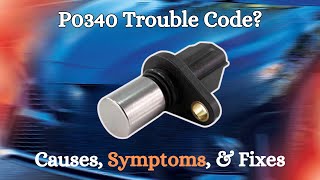
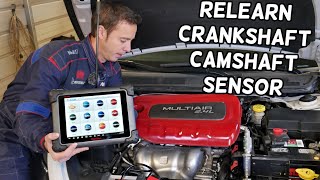
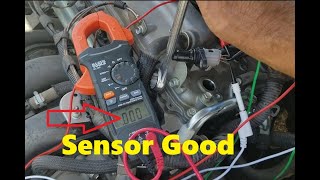
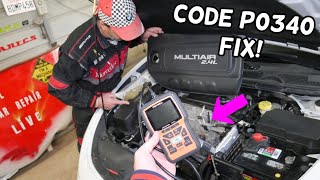
We Have This Part in Stock

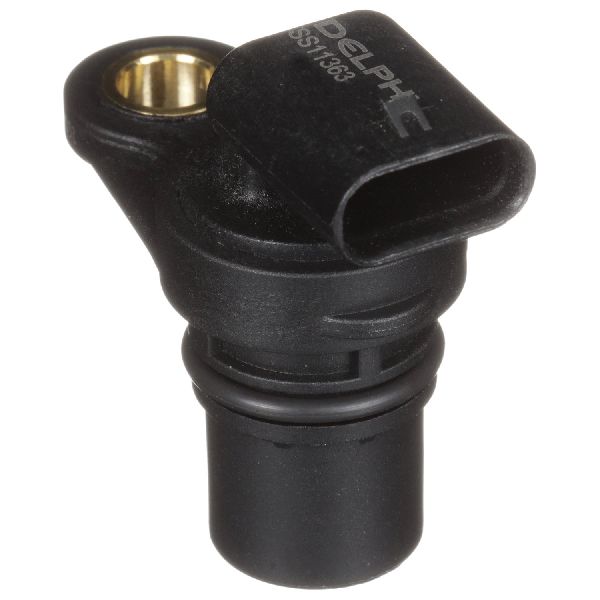
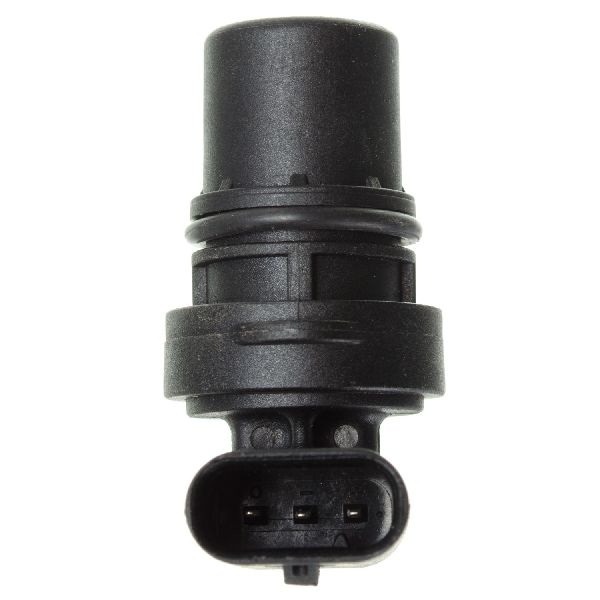

The information in this article is provided for general reference and educational purposes only. Vehicle specifications, procedures, and part compatibility can vary by production date, trim level, and region. Always consult your vehicle's factory service manual and verify part numbers before purchasing or performing repairs. Safety-critical components such as airbags, seat belts, and braking systems should be installed by a qualified professional.
- Dodge DART:
- 🎬 Helpful Videos
- 🛍️ Shop This Part
- What's Unique About the 2013-2015 Dodge DART
- Diagnostic Flowchart
- Symptoms You May Notice
- Most Likely Causes
- Rare But Worth Checking
- Diagnosis Steps
- Parts You'll Likely Need
- Related Codes That Often Appear With This One
- Technical Service Bulletins (TSBs) & Recalls
- Platform-Specific Known Issues
- Mechanic-Grade Diagnostic Values
- Scan Tool Commands That Help
- Wiring & Ground Locations
- Real Owner Repair Stories
- OEM Part Supersession History
- 🎟️ Get 5% Off