

P0340 on 2011-2012 Dodge Challenger: Camshaft Sensor Fault or PCM Software Glitch?
On a 2011-2012 Challenger, code P0340 is frequently caused by a software issue requiring a dealer PCM update, as noted in Dodge TSBs #18-010-13 and #18-067-15. Before replacing the camshaft position sensor (a ~$50 part), check if your vehicle needs this software flash to avoid an unnecessary repair. This issue is also common on platform mates like the Dodge Charger and Chrysler 300.
- **Check for Software Updates First:** Before buying parts for a P0340 code, contact a Dodge dealer with your VIN to see if your PCM needs a software update per TSBs #18-010-13 or #18-067-15. This is the most common and often misdiagnosed cause.
- **Know Your Engine Bank:** On the 3.6L V6, Bank 1 is the passenger side. On the 5.7L/6.4L Hemi V8, Bank 1 is the driver side.
- **Don't Rule Out the Sensor & Connector:** If the software is up-to-date, the camshaft position sensor is the next most likely cause. It is an affordable part and relatively easy to replace. Consider replacing the connector pigtail at the same time.
- **Stalling is a Real Risk:** Do not ignore this code. A faulty camshaft position sensor signal can cause the engine to stall without warning, posing a serious safety hazard.
What's Unique About the 2011-2012 Dodge CHALLENGER
For this specific Challenger and its platform mates (Charger, 300), Dodge issued multiple Technical Service Bulletins (TSBs) acknowledging that code P0340 can be triggered by a software glitch within the Powertrain Control Module (PCM). Many owners might replace the camshaft sensor hardware, but the true fix is often a simple PCM software update performed by a dealership. 🎬 See why you shouldn't replace the sensor before checking software. This makes checking for available software updates a critical first step before buying any parts.
Diagnostic Flowchart
Tap your situation to follow the diagnostic path that matches what you're seeing on this vehicle.
Symptoms You May Notice
- Check Engine Light is on
- Engine is difficult to start or requires long cranking time
- Engine cranks but will not start
- Intermittent stalling, especially at low speeds or idle
- Rough running, engine hesitation, or misfiring
- Reduced engine power and acceleration
- Transmission may enter 'limp mode' and not shift properly
- Replacing the camshaft position sensor when the root cause is outdated PCM software that needs a reflash.
- Confusing the camshaft position sensor with the crankshaft position sensor; they are different parts with different functions.
- Replacing the sensor on the wrong bank. Bank 1 is the passenger side on the 3.6L V6, but the driver side on the 5.7L/6.4L Hemi V8s.
- Replacing the sensor when the actual fault is a damaged connector pigtail or wiring harness.
Most Likely Causes
- Outdated Powertrain Control Module (PCM) Software 🔴 High Probability Dodge released specific TSBs (#18-010-13 and #18-067-15) to address this exact code being erroneously set. The fix is a software reflash. Later TSBs like 18-024-17 Rev. C also modified the sensitivity of the code, changing it to a two-trip fault, further showing its tendency to be triggered by software.
How to confirm: A Dodge dealership or a well-equipped independent shop can check your vehicle's software version against the latest available version from the manufacturer using your VIN.
Typical fix: Reprogramming the PCM with the updated software.
Est. part cost: $0 - Failed Camshaft Position Sensor 🟡 Medium Probability The sensor is an electronic component exposed to significant heat and vibration at the back of the engine, making it a common failure item over time. Oil contamination from a leaking valve cover gasket can also damage the sensor's o-ring and internal electronics.
How to confirm: After confirming the PCM software is up to date, the sensor itself can be tested with a multimeter for proper voltage (typically a 5V reference, ground, and signal wire). Observing its signal on an oscilloscope is the most definitive test. A simple swap with a new OEM sensor is also a common and effective diagnostic step.
Typical fix: Replace the Bank 1 camshaft position sensor. It is often recommended to replace the connector pigtail at the same time, as they are also a known failure point.
Est. part cost: $25-$75 - Wiring Harness or Connector Issue ⚪ Low Probability The sensor is located in the hot, tight space at the rear of the engine bay. Wires can become brittle, chafe against other components, or melt. The connector itself can become loose or the pins can corrode, leading to an intermittent or lost signal.
How to confirm: Visually inspect the wiring harness leading to the sensor for any signs of damage, melting, or corrosion. Wiggle the connector while the engine is running (if possible) to see if it affects engine behavior. Check that the connector is securely plugged in and the red locking tab is engaged.
Typical fix: Repair the damaged section of wiring or replace the connector pigtail.
Est. part cost: $5-$30
Rare But Worth Checking
- Stretched Timing Chain or Faulty Cam Phaser: If the physical timing between the camshaft and crankshaft is off, it can cause a P0340 code. This is a much more serious mechanical issue that would likely be accompanied by rattling noises from the engine. One owner on a Ram forum had a dealer replace a cam phaser for this code, although the issue returned, highlighting potential misdiagnosis.
- Weak Battery or Failing Starter: A low voltage condition during engine cranking can sometimes cause the PCM to incorrectly log a sensor circuit fault. If you have starting issues and a weak battery, address that first.
- Faulty Oil Control Valve (OCV) / VVT Solenoid: The Oil Control Valve is responsible for directing oil flow to the cam phasers to adjust timing. If the OCV is stuck or failing, it can cause the camshaft to be in an unexpected position, which can trigger a P0340 code even if the sensor itself is working correctly.
Diagnosis Steps
- Check for TSBs: The first and most important step. Call a Dodge dealer with your VIN and ask if TSB #18-010-13 or #18-067-15 apply and are open for your vehicle. This is the most common fix.
- Inspect the Wiring and Connector: Before buying parts, perform a thorough visual inspection of the camshaft position sensor's wiring and connector. Look for loose connections, corrosion, oil contamination, or any signs of heat damage or chafing. Ensure the red locking tab on the connector is secure.
- Identify Correct Sensor Location: For the 3.6L V6, Bank 1 is the passenger side (right). For the 5.7L and 6.4L Hemi V8s, Bank 1 is the driver side (left). The sensor is located on the rear of the cylinder head.
- Replace the Sensor (If Necessary): If the PCM software is confirmed to be up-to-date and the wiring is good, the next logical step is to replace the camshaft position sensor. Use an OEM Mopar part for best results. Some mechanics recommend replacing the connector pigtail as a preventative measure.
- Consider a Relearn Procedure: After replacing the sensor, the code should be cleared. Some sources suggest a relearn procedure may be needed for the PCM to adapt to the new sensor, though many vehicles will self-adapt after a drive cycle.
- Get PCM Reflashed: If a new sensor does not fix the issue, or if a TSB is outstanding, take the vehicle to a dealer or qualified shop to have the PCM reprogrammed.
- Investigate Mechanical Issues: If all else fails, a deeper mechanical diagnosis is needed to check for issues like timing chain stretch or a faulty cam phaser, which should be done by a professional.
Parts You'll Likely Need
- Camshaft Position Sensor (3.6L V6)
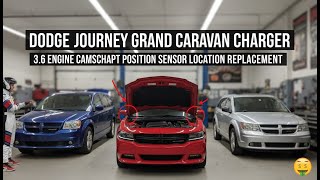
(OEM #5149141AF)— This is the sensor for Bank 1 (passenger side) on the V6 engine. 🎬 Watch: How to locate and replace the 3.6L cam sensor. It is the most likely hardware component to fail if the issue is not software-related. This part number is widely used across many Chrysler, Dodge, and Jeep vehicles with the 3.6L engine.
Trusted brands: Mopar, NTK, Bosch
OEM price range: $50-$70
Aftermarket price range: $25-$50 - Camshaft Position Sensor (5.7L/6.4L V8)
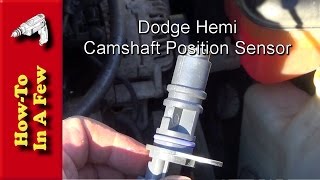
(OEM #5149054AC)— This is the sensor for Bank 1 (driver side) on the Hemi V8 engines. 🎬 Watch: Step-by-step Hemi camshaft position sensor replacement guide. It is the likely hardware culprit if software and wiring are ruled out. This part supersedes previous part numbers 5149054AA and 5149054AB.
Trusted brands: Mopar, Denso, Standard Motor Products
OEM price range: $55-$75
Aftermarket price range: $30-$55
Related Codes That Often Appear With This One
- U0401 — Mentioned in TSB #18-067-15 as another code that can be resolved by the same PCM software update.
- P0441 — Also mentioned in TSB #18-067-15 as part of a group of codes fixed by a software reflash.
- P0344 — This code indicates an intermittent signal from the same sensor (Bank 1, Sensor 1) and often points to a wiring/connector issue or a failing sensor. TSB 18-024-17 Rev. C addresses both codes.
Technical Service Bulletins (TSBs) & Recalls
- 18-010-13: Flash: MIL Illumination P0340- Camshaft Position Sensor Circuit - Bank 1 Sensor 1
- 18-067-15 REV A: U0140, U0401, P0441, P0340 Software Update
- 18-067-15: U0401-00, P0441, P0340 Software Update
- 18-024-17 REV C: Changes P0340 to a two-trip fault for 2016-2017 models, showing ongoing software adjustments for this code.
Platform-Specific Known Issues
- TSB #18-010-13: Specifically calls for a PCM reflash to fix MIL illumination for code P0340.
- TSB #18-067-15 / REV A: Lists P0340 as one of several codes that can be resolved with a software update, which also improves fuel pump relay cycling.
- Owner Experience (Ram Forum): A 2011 Ram 1500 owner with the 5.7L Hemi reported a persistent P0340 code. After replacing both cam and crank sensors himself, a dealer charged $1700 to replace the camshaft phaser, but the code returned shortly after, indicating a potential misdiagnosis or a deeper wiring/PCM issue.
Mechanic-Grade Diagnostic Values
- Camshaft Sensor Supply Voltage (Key On, Engine Off) — expected: 4.5V - 5.02V. Failure: Voltage below 4.5V or above 5.02V indicates a problem in the supply circuit or PCM.
- Camshaft Sensor Ground Circuit Resistance — expected: Below 5.0 Ohms. Failure: Resistance above 5.0 Ohms indicates an open or high resistance in the ground circuit (K900).
- Hemi V8 Camshaft Sensor Signal Voltage (Hot vs. Cold) — expected: When the sensor tip is grounded, voltage should drop to 0V. When un-grounded, it should return to 5V.. Failure: A heat-soaked sensor may fail to drop to 0V, instead sticking at a low voltage like 0.5V, indicating an internal fault.
- Hemi V8 Sensor Connector Voltages (Key On, Engine Off) — expected: 5V on both outer pins (supply and signal pull-up), and ground on the middle pin.. Failure: Missing voltage or ground points to a wiring issue between the PCM and the connector.
Hidden / Shadow Codes Worth Checking
- Cam/Crank Synchronization Event Monitor: This is not a DTC, but a special data log within the PCM that captures detailed event data when a cam/crank sync issue occurs. It provides much more granular information than a standard freeze frame. (see via Accessible via the wiTECH dealer scan tool under 'OBDII Monitors'. FCA requests this data for analysis when replacing sensors for P0340-series codes.)
Scan Tool Commands That Help
- wiTECH: Create PDF of Cam/Crank Synchronization Event Monitor — Before clearing any codes. This data is valuable for diagnosing intermittent or complex P0340 faults and is requested by Chrysler for warranty/engineering review.
- Professional Scan Tool (e.g., wiTECH): Cam/Crank Relearn — After replacing a camshaft position sensor, crankshaft position sensor, or performing any service on the timing chain, phasers, or valvetrain to ensure the PCM has the correct baseline correlation.
Wiring & Ground Locations
- K44, K856, K900 — These are circuit designators for the wiring between the PCM and the Bank 1 Camshaft Position Sensor.. K856 is the 5V supply, K900 is the sensor ground, and K44 is the signal circuit. A fault on any of these wires will cause P0340. Knowing these helps in tracing wires from end-to-end using a factory wiring diagram.
- G100 / G101 — G100 is on the left front of the engine compartment; G101 is on the right front of the engine compartment.. These are major engine grounds. A loose or corroded connection at these points can introduce electrical noise or unstable voltages, potentially causing the PCM to misinterpret sensor data and set a P0340 code.
Real Owner Repair Stories
- YouTube user 'FerKurl' (Dodge with 5.7L Hemi engine) — P0340 code, likely accompanied by hard starting or stalling.
❌ Tried (didn't work) The sensor tested correctly with a multimeter when it was cool.
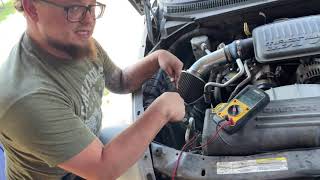
✅ What actually fixed it The sensor was failing only when it became hot. When heated, its signal voltage would get stuck at 0.5V instead of dropping to 0V. Replacing the sensor with a new OEM part resolved the issue. - YouTube user 'Car projects' (2012 Dodge Ram 5.7L) — Extended cranking time before the engine would start, P0340 code present.
✅ What actually fixed it Replacing the camshaft position sensor. The owner noted the importance of lubricating the new sensor's O-ring with a little oil to ensure it seats properly without tearing the seal.
OEM Part Supersession History
5149054AB→5149054AC— Standard part revision by the manufacturer for improved reliability or a change in supplier.5149054AA→5149054AB— Standard part revision by the manufacturer.
Helpful Videos

Used OEM Parts in Stock
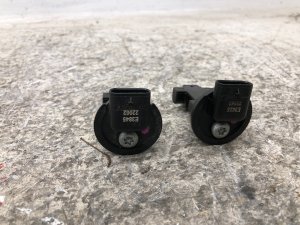
New Aftermarket Parts Available



The information in this article is provided for general reference and educational purposes only. Vehicle specifications, procedures, and part compatibility can vary by production date, trim level, and region. Always consult your vehicle's factory service manual and verify part numbers before purchasing or performing repairs. Safety-critical components such as airbags, seat belts, and braking systems should be installed by a qualified professional.
- Dodge CHALLENGER:
- 🎬 Helpful Videos
- 🛍️ Shop This Part
- What's Unique About the 2011-2012 Dodge CHALLENGER
- Diagnostic Flowchart
- Symptoms You May Notice
- Most Likely Causes
- Rare But Worth Checking
- Diagnosis Steps
- Parts You'll Likely Need
- Related Codes That Often Appear With This One
- Technical Service Bulletins (TSBs) & Recalls
- Platform-Specific Known Issues
- Mechanic-Grade Diagnostic Values
- Hidden / Shadow Codes Worth Checking
- Scan Tool Commands That Help
- Wiring & Ground Locations
- Real Owner Repair Stories
- OEM Part Supersession History
- 🎟️ Get 5% Off