

P0340 on 2011-2012 Chrysler 300: Cam Sensor, Wiring, or PCM Flash?
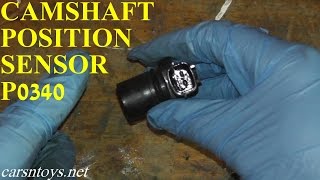
On a 2011-2012 Chrysler 300, P0340 is often caused by a software glitch fixed by a dealer PCM update, as noted in TSB #18-067-15 REV A. This is the most critical first step in diagnosis. If the software is current, the next most likely cause is a failed camshaft position sensor, which costs about $30-$100 for the part. Using an OEM Mopar part is highly recommended by owners to avoid repeat failures.
- Before buying any parts, check if your vehicle needs the PCM software update specified in TSB #18-067-15 REV A.
- If a part is needed, the most likely culprit is the Bank 1 (passenger side) camshaft position sensor.
- Use a high-quality OEM or reputable aftermarket sensor to avoid premature failure and repeat repairs.
- On 3.6L V6 models, be aware that this code can sometimes indicate a more serious underlying mechanical engine problem.
- Do not confuse the camshaft position sensor with the crankshaft position sensor; they are different parts.
What's Unique About the 2011-2012 Chrysler 300
For the 2011-2012 Chrysler 300 and its platform mates (Dodge Charger, Dodge Challenger), this code is frequently not a hardware problem. Chrysler issued Technical Service Bulletin #18-067-15 REV A stating that P0340, often appearing with U0401, can be resolved with a PCM software update for 2011-2012 models. Owners who immediately replace the sensor without checking for this software update may find the code returns, leading to unnecessary expense and frustration. This is a widely acknowledged first step in diagnosis for these specific models.
Diagnostic Flowchart
Tap your situation to follow the diagnostic path that matches what you're seeing on this vehicle.
Symptoms You May Notice
- Check Engine Light is on
- Engine is difficult to start or cranks for a long time (crank-no-start).
- Engine stalls, especially at low speeds, when coming to a stop, or during idle.
- Rough running, engine misfires, and hesitation.
- Noticeable loss of engine power and poor acceleration.
- Transmission may seem stuck in one gear (limp mode), which might reset after restarting the engine.
- Traction control or ABS light may illuminate due to implausible data from the engine controller.
- Replacing the camshaft position sensor without first checking if the PCM software update TSB applies.
- Replacing the crankshaft position sensor, which is a different part and circuit.
- Assuming the new camshaft position sensor is good when using a cheap, low-quality aftermarket part that may be faulty out of the box. Forum users frequently report that only OEM Mopar sensors solve the problem permanently.
Most Likely Causes
- Outdated Powertrain Control Module (PCM) Software 🔴 High Probability Chrysler issued TSBs #18-067-15 and #18-067-15 REV A specifically to correct this code with a software update, indicating a known software logic flaw that falsely triggers the P0340 DTC.
How to confirm: Contact a Chrysler dealership with your VIN to see if the TSB is open for your vehicle. A dealer's scan tool (like wiTECH) can read the current software calibration ID to see if the update has been applied.
Typical fix: A Chrysler dealer or a qualified shop with a J2534 pass-thru device needs to reprogram the PCM with the updated software. The TSB notes this is a 'selective erase and reprogram' process.
Est. part cost: $0 - Faulty Camshaft Position Sensor 🟡 Medium Probability The sensor is located in the engine bay and is subject to constant, extreme heat cycles which can cause the internal electronics to fail over time. Oil leaks from the valve cover or oil filter housing can also contaminate the sensor and its connector.
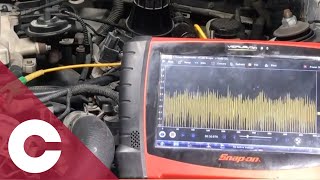
How to confirm: After confirming the PCM software is up-to-date, this becomes the most likely cause. A technician can use an oscilloscope to check the sensor's signal for hash or dropouts, but replacement with a known-good part is a common diagnostic step. On the 3.6L V6, you can swap the Bank 1 and Bank 2 sensors; if the code changes to P0345, the sensor is confirmed bad.
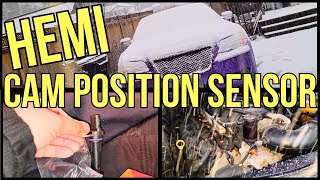
Typical fix: Replace the camshaft position sensor for Bank 1. The 5.7L HEMI has one sensor at the front of the engine. 🎬 Watch: See how to replace the sensor on a 5.7 Hemi. The 3.6L V6 has four sensors; P0340 refers to the intake sensor on the passenger-side cylinder head. Access to the Bank 1 sensor on the 3.6L is difficult and requires removing the upper intake manifold.
Est. part cost: $30-$100 - Wiring or Connector Issue ⚪ Low Probability The wiring harness near the sensor is exposed to high temperatures, which can make wires brittle and cause insulation to crack, leading to shorts or open circuits. The connector's locking tab can also become brittle and break.
How to confirm: Visually inspect the wiring harness and connector leading to the camshaft position sensor for any signs of damage, melting, or corrosion. Check for oil contamination inside the connector. Wiggle the connector with the engine running to see if it affects idle.
Typical fix: Repair the damaged section of wiring or replace the connector pigtail. Clean any oil out of the connector with electrical contact cleaner.
Est. part cost: $10-$30
Rare But Worth Checking
- Failing Alternator: A faulty alternator can produce excessive AC ripple (electrical noise) that interferes with the sensitive camshaft position sensor signal, triggering a false P0340 code. A technician can diagnose this with an oscilloscope by looking for excessive AC voltage on the DC power lines. 🎬 Watch: How a failing alternator can trigger cam sensor codes.
- Timing Chain / Phaser Issue (3.6L V6): On the 3.6L Pentastar engine, a P0340 code can be an early symptom of a stretched timing chain or a failing camshaft phaser. This is a much more serious mechanical issue, often accompanied by a rattling or ticking noise on startup. A technician can check for excessive play in the phaser by attempting to rotate the camshaft independently of the phaser.
Diagnosis Steps
- Check for Technical Service Bulletins (TSBs). This is the most critical first step. Contact a Chrysler dealer with your VIN to see if TSB #18-067-15 REV A is open for your vehicle. If so, performing the PCM software update is the primary fix.
- If no TSBs are open or the update has been done, inspect the wiring and connector for the Bank 1 camshaft position sensor. Look for any obvious signs of heat damage, corrosion, oil contamination, or loose pins.
- If the wiring is okay, the next step is to replace the camshaft position sensor. It is highly recommended to use an OEM Mopar part (Part No. 5149141AF for 3.6L, 5149054AC for 5.7L) or a high-quality aftermarket brand like NGK/NTK.
- After replacement, clear the codes and perform a test drive. If the code returns, you may have a more complex issue.
- Test the alternator's output for excessive AC ripple voltage using a multimeter with an AC voltage setting or an oscilloscope. Many auto parts stores can also perform this test.
- If all else fails, especially on a 3.6L V6 with startup rattle, the issue may be mechanical (timing chain/phasers). This requires professional diagnosis, likely involving removal of the valve cover to inspect for timing chain slack or phaser play.
Parts You'll Likely Need
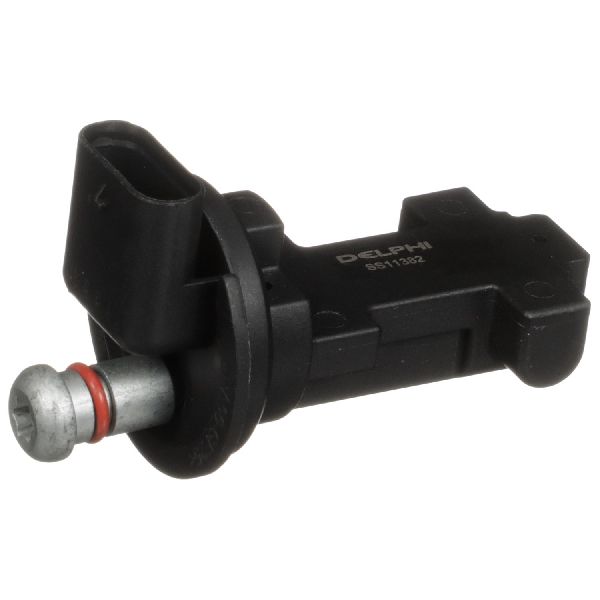
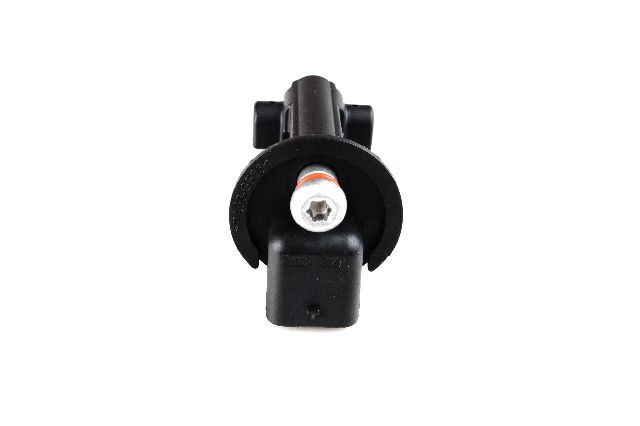
- Camshaft Position Sensor (3.6L V6)
(OEM #5149141AF)— This is the most common hardware failure after a PCM software update has been ruled out. The 3.6L engine uses two of these on Bank 1 (intake and exhaust); P0340 points to the intake sensor.
Trusted brands: Mopar, NGK/NTK, Delphi
OEM price range: $60-$100
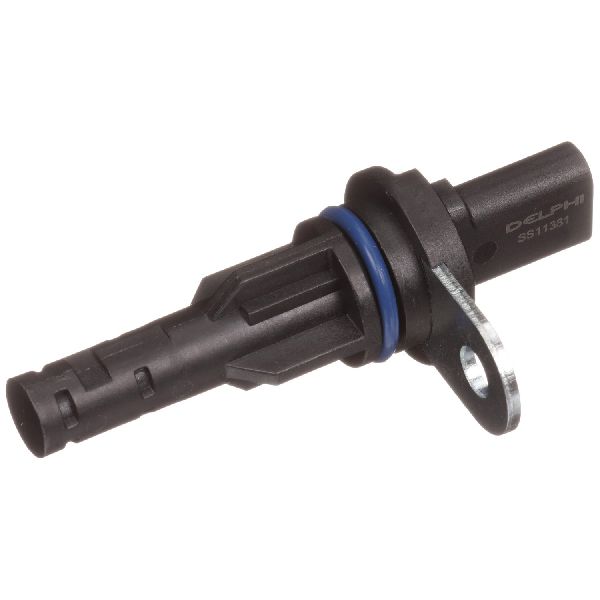
Aftermarket price range: $30-$60 - Camshaft Position Sensor (5.7L V8)
(OEM #5149054AC)— This is the single camshaft position sensor used on the HEMI V8. It's a very common failure point due to heat and vibration.
Trusted brands: Mopar, Bosch, Standard Motor Products (SMP)
OEM price range: $70-$110
Aftermarket price range: $40-$70 - PCM Software Update — This is not a physical part, but a service. It is the most common fix documented by Chrysler in TSB #18-067-15 REV A to resolve this specific code.
Trusted brands: Mopar (Dealer Service)
OEM price range: $150-$250
Related Codes That Often Appear With This One
- U0401 — Implausible Data Received From ECM/PCM. TSB #18-067-15 REV A explicitly links this code with P0340, noting both can be resolved by the same PCM software update.
- P0441 — Evap Purge System Performance. This is another code mentioned in TSB #18-067-15 as being part of the same software glitch.
- P0345 — Camshaft Position Sensor 'A' Circuit - Bank 2. If this code appears after swapping the Bank 1 and Bank 2 sensors on a 3.6L V6 for diagnosis, it confirms the original sensor was faulty.
Technical Service Bulletins (TSBs) & Recalls
- 18-067-15 REV A - Calls for a PCM software update to resolve P0340, often seen with U0401 and P0441, on 2011-2012 models.
- 18-067-15 - The original bulletin also linking P0340 to a software update.
Platform-Specific Known Issues
- A known software issue requires a PCM reflash to fix erroneous P0340 codes, as detailed in TSB #18-067-15 and its revision.
- On the 3.6L Pentastar V6, this code can be a precursor to a more significant failure of the camshaft phasers or rocker arms, which is a much more expensive and labor-intensive repair. This may be indicated by a ticking or rattling noise at startup.
- Access to the Bank 1 camshaft position sensor on the 3.6L V6 is significantly more difficult than on the 5.7L V8, as it requires removal of the upper intake manifold.
Mechanic-Grade Diagnostic Values
- Camshaft Position Sensor (3-wire Hall Effect) Supply Voltage — expected: 4.5V - 5.2V DC at the sensor connector with key on, engine off.. Failure: Voltage below 4.5V or above 5.2V points to a problem with the wiring or the PCM's 5V reference circuit.
- Camshaft Position Sensor (3-wire Hall Effect) Ground Circuit — expected: Approximately 12.6V (battery voltage) when measuring between the positive battery terminal and the ground pin on the sensor connector.. Failure: A reading significantly lower than battery voltage indicates a poor ground connection for the sensor circuit.
- Camshaft Position Sensor (3-wire Hall Effect) Signal Voltage — expected: The signal wire should toggle between ~5V and ~0V as the engine is manually rotated or a magnet is passed over the sensor tip. On an oscilloscope, this should appear as a clean square wave.. Failure: A signal that is stuck high (5V), stuck low (0V), or shows a noisy/rounded waveform on an oscilloscope indicates a failed sensor or interference.
- Alternator AC Ripple Voltage — expected: Less than 0.5V AC measured at the battery terminals with the engine running at 1500 RPM and electrical loads (like headlights and blower fan) turned on.. Failure: Consistent AC voltage above 0.5V (some sources say up to 1.5V is a hard failure) indicates failing alternator diodes, which can create electrical noise that disrupts the cam sensor signal.
Scan Tool Commands That Help
- wiTECH, Autel, HP Tuners, or other professional scan tools: Cam/Crank Relearn (also called Crankshaft Position Variation Learn or CASE Relearn) — This procedure is required after replacing the camshaft sensor, crankshaft sensor, timing components, or the PCM. It synchronizes the signals from the sensors to the PCM. Failure to perform this relearn can cause the P0340 code to persist even with new, functional parts.
Wiring & Ground Locations
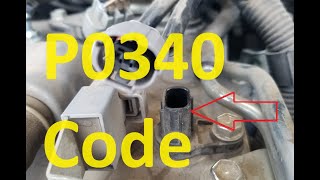
- Bank 1 Camshaft Position Sensor Connector (3.6L V6) — On the passenger side cylinder head, under the upper intake manifold.. This is the primary connector to test for the P0340 code. The 3.6L uses a 4-wire connector for each sensor assembly, which services both the intake and exhaust cams for that bank. P0340 (Bank 1, Sensor 1) refers to the intake cam circuit on the passenger side.
- Bank 1 Camshaft Position Sensor Connector (5.7L V8) — On the front of the engine, near the top of the timing cover.. This is the 3-pin connector for the single camshaft sensor on the HEMI engine. Pin 1 is the 5V supply, Pin 2 is the signal, and Pin 3 is the sensor ground.
- PCM Connector C2 (3.6L V6) — This is one of the main connectors at the Powertrain Control Module.. Contains the specific pins for the cam sensor circuit. Pin 85 is the CMP Signal (Circuit K44), Pin 66 is the Sensor Ground (Circuit K900), and Pin 67 provides the 5 Volt Supply (Circuit F855). This allows for testing continuity from the sensor back to the PCM.
- Cylinder Head Grounds — There are threaded studs on both the passenger and driver side cylinder heads that serve as grounding points.. The PCM and its sensors rely on a clean ground reference. A loose or corroded ground on the cylinder head can introduce electrical noise or voltage offsets, causing the PCM to misinterpret the cam sensor signal and set a false P0340 code.
Real Owner Repair Stories
- Oz Mechanics YouTube Channel (Ford Mustang (demonstrating a common cross-platform issue)) — Check engine light with code P0340.
❌ Tried (didn't work) Initial diagnosis pointed towards replacing the camshaft position sensor.
✅ What actually fixed it The root cause was a failing alternator with a bad diode, producing excessive AC ripple (electrical noise) on the DC circuit. This was diagnosed using an oscilloscope to view the cam sensor signal, which showed the noise, and then confirming AC voltage at the alternator's B+ terminal. Replacing the alternator cleaned up the signal and resolved the code. - Reddit user in r/MechanicAdvice (2014 Jeep Wrangler (with the same 3.6L Pentastar engine)) — Limp mode, traction control light, and 'Camshaft Slow Response' codes (P000a-d) after major service including timing set and phaser replacement.
❌ Tried (didn't work) Replacing cam position sensors., Replacing crank position sensor., Replacing VVT solenoids.
✅ What actually fixed it The final fix was a poor ground connection. The user found intermittent high resistance when tracing ground wires from the solenoids and realized the battery terminal clamp wasn't tight. The ultimate resolution was cleaning and securing a ground wire on the back of the cylinder head, which provided a stable reference for the sensors and PCM.
OEM Part Supersession History
5149054AA, 5149054AB→5149054AC— Standard part revision and improvement by the manufacturer.
Heads up: The newest part number (5149054AC) is the correct and compatible replacement for the 5.7L HEMI engine.
Model Year Variations Within This Range
- 2011-2012: These specific model years are subject to TSBs #18-067-15 and #18-067-15 REV A, which state that an erroneous P0340 code can be fixed with a PCM software update. This is the primary diagnostic step before any hardware replacement for these years.
Helpful Videos
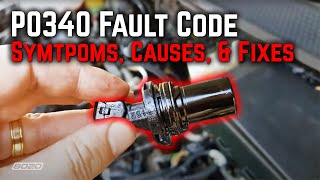
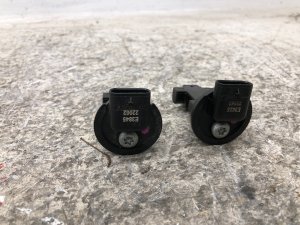
Used OEM Parts in Stock


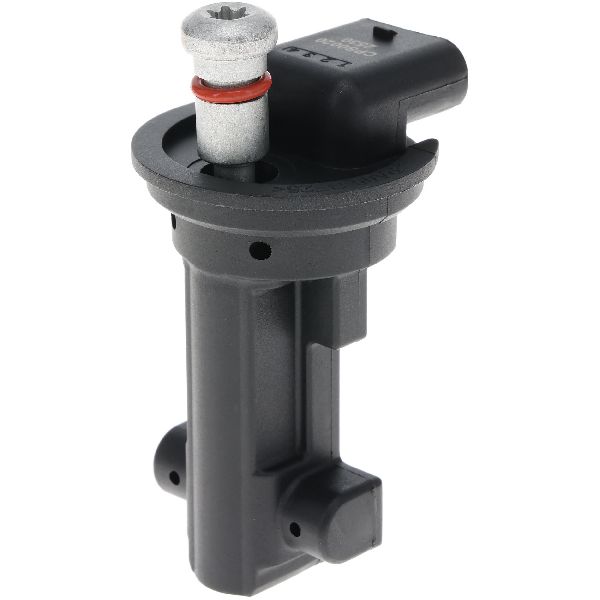
New Aftermarket Parts Available


The information in this article is provided for general reference and educational purposes only. Vehicle specifications, procedures, and part compatibility can vary by production date, trim level, and region. Always consult your vehicle's factory service manual and verify part numbers before purchasing or performing repairs. Safety-critical components such as airbags, seat belts, and braking systems should be installed by a qualified professional.
- Chrysler 300:
- 🎬 Helpful Videos
- 🛍️ Shop This Part
- What's Unique About the 2011-2012 Chrysler 300
- Diagnostic Flowchart
- Symptoms You May Notice
- Most Likely Causes
- Rare But Worth Checking
- Diagnosis Steps
- Parts You'll Likely Need
- Related Codes That Often Appear With This One
- Technical Service Bulletins (TSBs) & Recalls
- Platform-Specific Known Issues
- Mechanic-Grade Diagnostic Values
- Scan Tool Commands That Help
- Wiring & Ground Locations
- Real Owner Repair Stories
- OEM Part Supersession History
- Model Year Variations Within This Range
- 🎟️ Get 5% Off